Complimentary FedEx 2-Day on orders over $250 Complimentary Overnight shipping on orders over $400 Live Arrival Guarantee on every order Family-owned insect farm - Houston, Texas

Shop

Showing 177–192 of 499 resultsSorted by latest

  • Sale! Armadillidium flavoscutatum Red Head isopods on bark and moss in a bioactive terrarium setup

    Armadillidium flavoscutatum 'Red Head'

    $24.99 - $179.99

    Pronounced: ar-ma-dill-IH-dee-um flah-vo-skoo-TAH-tum

    Care Level: Beginner to intermediate

    Adult Size: About 15 to 18 mm

    Reproductive Rate: Moderate once established

    Temperature: 68 to 78°F

    Humidity: Low to medium with a moist retreat and steady ventilation

    Scientific Name: Armadillidium flavoscutatum Strouhal, 1927

    Appearance: Dark brown to blackish conglobating body with a bold red-orange head capsule, and yellow markings on the tergites that give the species its scientific name

    Red Head Isopods for Sale: Live cultures of a colorful Balkan pill bug with a striking red-orange head, suited to display cultures and collector Armadillidium shelves alongside other klugii-group species.

    Best For: Display vivariums, planted terrariums, collector Armadillidium shelves featuring Balkan and Mediterranean species, and intermediate keepers who want bold color without high-humidity tropical care.

    Red Head is the hobby trade name for Armadillidium flavoscutatum, a colorful Balkan pill bug described by Austrian zoologist Hans Strouhal in 1927. The species name flavoscutatum is Latin for “yellow-shielded,” combining flavus (yellow) and scutatus (bearing a shield) to describe the yellow markings on the body tergites. The “Red Head” trade name refers specifically to the bright red-orange head capsule that contrasts with the darker body. Schmalfuss’s 2013 revision places this species in the Armadillidium klugii-group alongside the better-known Clown isopod (A. klugii).

    Select optionsLoading Done This product has multiple variants. The options may be chosen on the product page
  • Sold Out Sale! Armadillidium badium isopods on bark and moss in a bioactive terrarium setup

    Armadillidium "Badium"

    $29.99 - $149.99

    Pronounced: Ar-ma-dill-IDD-ee-um BAY-dee-um

    Care Level: Beginner to intermediate

    Adult Size: About 15 to 20 mm depending on hobby line and maturity

    Reproductive Rate: Slow to moderate

    Temperature: 65 to 78°F

    Humidity: Low to medium overall with one moist retreat and strong ventilation

    Scientific Name: Armadillidium badium Budde-Lund, 1885

    Appearance: Rounded rolling body with earthy brown, reddish-brown, tan, or yellowish coloration depending on line

    Armadillidium badium Isopods for Sale: A live A. badium culture sold for collectors and keepers who want a documented Sicilian endemic rolling isopod with real type-locality provenance from the Budde-Lund 1885 original description.

    Best For: Collector display cultures, Mediterranean-style planted vivariums, keepers building a multi-locality Armadillidium set across European regions, and bioactive setups where moderate humidity and strong ventilation suit the species’ native island habitat.

    Armadillidium badium is a Mediterranean island endemic rolling pill woodlouse formally described by Gustav Budde-Lund in 1885, with Sicily listed as the type locality on the original taxonomic record. The species also occurs on Malta, Sardinia, and the Pelagian Islands, where the subspecies A. badium pelagicum was described by Arcangeli in 1957. Adults reach 15 to 20 mm and show earthy brown, reddish-brown, tan, and yellowish tones that vary between hobby lines such as Casteldaccia, High Yellow, Yellow Mix, and Calico.

    Select optionsLoading Done This product has multiple variants. The options may be chosen on the product page
  • Sold Out Sale! Armadillo tuberculatus isopods on bark and moss in a bioactive terrarium setup

    Armadillo tuberculatus

    $34.99 - $149.99

    Pronounced: ar-ma-DIL-oh too-ber-kyoo-LAH-tus

    Care Level: Intermediate

    Adult Size: About 10 to 15 mm, with some lines reported larger

    Reproductive Rate: Slow to moderate

    Temperature: 68 to 78°F

    Humidity: Moderate with a moist retreat and a drier feeding area

    Scientific Name: Armadillo tuberculatus Vogl, 1876

    Appearance: Rounded, compact body with raised tubercles across the back, gray, brown, slate, or bluish tones with lighter patches

    Armadillo tuberculatus Isopods for Sale: Live starter cultures of a Mediterranean rolling isopod with a heavily textured back, best suited to intermediate keepers building a collector culture with a moisture-gradient setup.

    Best For: Display cultures, collector shelves, Mediterranean and temperate isopod projects, and drier-leaning bioactive setups where a moist retreat is always available.

    Armadillo tuberculatus is a Mediterranean rolling isopod with a heavily bumpy dorsal surface, gray to bluish-brown coloration, and the ability to conglobate into a tight ball. Unlike most tropical display isopods, this species handles a drier setup well as long as a moist retreat is always available. It is a slower-breeding collector species, valued more for its rugged textured look than for speed or vivid color.

    Select optionsLoading Done This product has multiple variants. The options may be chosen on the product page
  • Sale! Agabiformius lentus isopods on bark and moss in a bioactive terrarium setup

    Agabiformius lentus

    $6.99 - $29.99

    Pronounced: ah-gah-bee-FOR-mee-us LEN-tus

    Care Level: Beginner to intermediate

    Adult Size: About 5 to 7 mm

    Reproductive Rate: Moderate to good once established

    Temperature: 70 to 78°F

    Humidity: Moderate to humid with a moisture gradient

    Scientific Name: Agabiformius lentus (Budde-Lund, 1885)

    Appearance: Small brownish body with feeble tubercles, pale background coloration, and three faint darker longitudinal stripes

    Agabiformius lentus Isopods for Sale: Live cleanup crew cultures of a small Mediterranean-origin woodlouse best suited to bioactive terrariums, planted vivariums, and small maintenance setups that need a discreet working colony.

    Best For: Bioactive terrariums, planted vivariums, reptile and amphibian enclosures with appropriate moisture, and keepers who want a small functional cleanup species rather than a display animal.

    Agabiformius lentus is a small, Mediterranean-origin cleanup crew isopod that works quietly under leaf litter and bark in bioactive enclosures. Adults reach about 6 mm, with a pale brown body, faint tubercles, and three ill-defined darker stripes running the length of the body. This species is built for function, not display, and pairs well with springtails in vivariums where a larger isopod would be too visible or get eaten.

    Select optionsLoading Done This product has multiple variants. The options may be chosen on the product page
  • Sale! Porcellionides Pruinosus " Red Koi"

    Porcellionides Pruinosus " Red Koi"

    $14.99 - $699.99

    Pronounced: Por-sell-ee-on-EYE-deez proo-ih-NO-sus

    Care Level: Beginner

    Adult Size: 1 to 1.25 cm

    Reproductive Rate: High once established

    Temperature: 68 to 80°F

    Humidity: Moderate, with a moist side and a drier side

    Scientific Name: Porcellionides pruinosus “Red Koi”

    Appearance: Variable red, orange, and pale markings with a soft powder-coated finish, long-legged and quick on the surface


    Red Koi Isopods for Sale: Live Porcellionides pruinosus “Red Koi” used as a display culture, breeding project starter, and supplemental cleanup crew in bioactive vivariums and terrariums.

    Best For: Display cultures where pattern variation is the main draw, breeding projects, and collectors building a varied Porcellionides pruinosus lineup.

    A designer captive-bred morph of Porcellionides pruinosus with red, orange, and pale markings that resemble koi fish patterning. Individuals vary across the colony, with some showing stronger red tones and others leaning more orange or lighter, which is part of the appeal of this morph. Red Koi sits in a higher tier than the standard solid Powder morphs and is currently sold in smaller pack sizes, so most customers pick it as a starter culture for display or breeding rather than as a bulk cleanup crew.

    Select optionsLoading Done This product has multiple variants. The options may be chosen on the product page
  • Sale! Porcellio flavomarginatus isopods on natural bark and moss in a bioactive terrarium setup

    Porcellio flavomarginatus

    $9.99 - $359.99
    • Pronounced: por-SELL-ee-oh flay-vo-mar-jin-AH-tus
    • Care Level: Intermediate to advanced
    • Adult Size: Around 0.75 to 0.8 inches (roughly 18 to 20 mm)
    • Reproductive Rate: Moderate once established, but cultures crash quickly if conditions slip
    • Temperature: 68 to 78°F
    • Humidity: Sharp moisture gradient with a clearly dry zone and a damp retreat
    • Scientific Name: Porcellio flavomarginatus
    • Appearance: Dark gray to nearly black body with a bright white serrated skirt, often with two rows of pale dots along the back

    Porcellio flavomarginatus for Sale: Live captive-bred Porcellio flavomarginatus from TC INSECTS, sold as a less-common Greek collector Porcellio for experienced keepers building a dedicated display or breeding culture.

    Best For: Collector display cultures, dedicated breeding projects, ventilated enclosures with a sharp moisture gradient, and intermediate-to-advanced keepers comfortable managing a less-forgiving large Porcellio.

    Despite the Latin name (flavo = yellow, marginatus = margined), this species has a bright white skirt against a dark gray-to-black body, not yellow. The contrast is striking, and the body often shows two rows of pale dots running along the back. This is one of the less-common Porcellio species in the hobby, with a reputation for being demanding. Cultures reward careful airflow and a clearly defined dry zone but crash quickly when those slip.

    Select optionsLoading Done This product has multiple variants. The options may be chosen on the product page
  • Sale! Cubaris murina Pearls isopods on cork bark in a humid terrarium setup

    Cubaris murina “Pearls”

    $39.99 - $279.99

    Pronounced: koo-BARE-iss myoo-REE-nuh pearls

    Care Level: Beginner to intermediate

    Adult Size: About 8 to 12 mm

    Reproductive Rate: Moderate to fast once established

    Temperature: 70 to 78°F

    Humidity: Moderate to high, with a moist side and a slightly drier side

    Scientific Name: Cubaris murina “Pearls”

    Appearance: Creamy white, off-white, light gray, and pale pearly tones with natural variation between individuals

    Cubaris Murina Pearls Isopods for Sale: Live captive-bred pale Cubaris murina sold as a starter colony for keepers building a multi-morph Murina lineup, display setups, and beginner-friendly bioactive cultures.

    Best For: Keepers expanding a Cubaris murina collection, display jars where pale tones contrast with dark substrate, planted vivariums, and beginner-to-intermediate bioactive setups.

    Cubaris murina “Pearls” is the pale-toned member of our Cubaris murina lineup. The body carries creamy white, off-white, light gray, and soft pearly tones across the colony, which reads cleanly against dark substrate and bark. Care is beginner-to-intermediate and matches the other Cubaris murina morphs in the catalog, so this is a sensible addition for keepers already running Anemone or Florida Orange.

    Select optionsLoading Done This product has multiple variants. The options may be chosen on the product page
  • Sale! Cubaris sp. Happy Nun isopods on moss and bark in a humid terrarium setup

    Cubaris sp. “Happy Nun”

    $39.99 - $249.99

    Pronounced: KOO-bah-riss sp. HAPP-ee NUN

    Care Level: Intermediate

    Adult Size: Approximately 10 to 15 mm

    Reproductive Rate: Moderate once established

    Temperature: 72 to 78 F

    Humidity: Moderate to high with a stable moist zone and a small drier feeding area

    Scientific Name: Cubaris sp. “Happy Nun” (hobby trade name, provisional genus assignment)

    Appearance: Dark gray to black base, white cheek patches and skirt, variable bronze and copper translucent markings.

    Happy Nun Isopods for Sale: A Thai Cubaris with a distinctive dark base, white cheek patches, and variable bronze markings, suited to intermediate keepers who want a more day-active collector Cubaris.

    Best For: Intermediate Cubaris keepers wanting a more visible display species, collectors who value the unique dark and white nun-pattern coloration, and bioactive vivariums where day activity matters.

    Happy Nun Isopods are a Thai Cubaris with a dark gray to black base, white cheek patches, and white skirt around the body edge. The morph name comes from the white facial markings, which evoke the look of a nun’s habit on a round Cubaris face. Individual animals show variable bronze and copper translucent markings between the dark plates, which creates real visual variation across a single culture. Adults reach 10 to 15 mm and roll into a ball when disturbed. Compared to most Cubaris, Happy Nun is more active and visible during daytime and evening hours.

    Select optionsLoading Done This product has multiple variants. The options may be chosen on the product page
  • Sale! Cubaris sp. Citrus isopods on moss and bark in a humid terrarium setup

    Cubaris sp. “Citrus” 

    $49.99 - $279.99
    • Pronounced: KOO-bah-riss Citrus
    • Care Level: Intermediate — beginner-accessible for the Cubaris genus
    • Adult Size: About 12 to 18 mm
    • Reproductive Rate: Moderate to prolific once established
    • Temperature: 75 to 80°F preferred
    • Humidity: Medium-high — 60 to 80% with a moisture gradient
    • Origin: Southeast Asia — Malaysia and Thailand
    • Scientific Name: Cubaris sp. “Citrus” (formally undescribed)
    • Appearance: Warm orange to peach citrus tones throughout — no white bands, no dark segments — the double morph of the Panda King

    Cubaris Citrus Isopods for Sale: Live captive-bred Cubaris sp. “Citrus” from TC INSECTS — the double morph of the Panda King line, combining the Red Panda‘s color change with the Black Panda‘s white-band suppression, producing a uniformly warm citrus-orange body with no panda patterning visible.

    Best For: Collectors completing the panda Cubaris color-and-pattern matrix, keepers who want a warm all-over citrus tone without the dark segments of Panda King or the remaining bands of Red Panda, beginner-to-intermediate keepers ready for a well-adaptive accessible Cubaris, and tropical display vivariums where a warm orange-peach tone suits the color palette.

    Citrus carries both the Red Panda color mutation and the Black Panda pattern mutation in the same animal. The double expression removes the panda visual entirely, leaving a uniformly warm citrus-toned Cubaris. For full Cubaris genus background, see the Rubber Ducky page.

    Select optionsLoading Done This product has multiple variants. The options may be chosen on the product page
  • Sale! Cubaris sp. Red Panda isopods on moss and bark in a humid terrarium setup

    Cubaris sp. ‘Red Panda’

    $49.99 - $399.99
    • Pronounced: Koo-BARE-iss sp. Red Pan-dah
    • Care Level: Beginner to intermediate — the most accessible Cubaris in the TC INSECTS range
    • Adult Size: About 12 to 15 mm
    • Reproductive Rate: Good once established — more productive than ducky-form Cubaris
    • Temperature: 70 to 78°F — cooler than ducky types; high temperatures cause stress
    • Humidity: Medium-high — 60 to 80% with a moisture gradient and ventilation
    • Origin: Color morph developed from Cubaris sp. “Panda King,” a Vietnam cave species; Red coloring isolated in captivity
    • Scientific Name: Cubaris sp. “Red Panda” (formally undescribed; color morph of Panda King)
    • Appearance: Orange-red body sections with two bright white bands near the head, white legs and antennae, and red eyes — the Red Panda recolor of the classic Panda King pattern

    Cubaris Red Panda Isopods for Sale: Live captive-bred Cubaris sp. “Red Panda” from TC INSECTS — the gateway Cubaris in the range, a captive-developed orange-red color morph of the Panda King with the same distinctive two-white-band pattern in warm colors instead of black and white.

    Best For: Keepers entering the Cubaris genus for the first time who want a visually striking species without the demanding care of ducky types, collectors who want the full panda-pattern look in orange-red rather than gray, tropical bioactive terrariums where a more productive and accessible Cubaris is the goal, and anyone building a progression from Red Panda toward the more advanced Cubaris species in this catalog.

    The Red Panda is not a separate species — it is a color morph of the Panda King, isolated in captivity from a single mutant individual. The orange-red replaces the Panda King’s dark gray segments while preserving the

    white bands and white legs. Care is more forgiving than the Rubber Ducky, Blonde Ducky, or Platinum Ducky. For full Cubaris genus background, see the Rubber Ducky page.

    Select optionsLoading Done This product has multiple variants. The options may be chosen on the product page
  • Sale! Armadillidium vulgare wild type isopods on natural leaf litter

    Armadillidium vulgare “Wild Type”

    $9.99 - $59.99

    Pronounced: Ar-ma-dill-IDD-ee-um vul-GAH-ray

    Care Level: Beginner

    Adult Size: About 12 to 18 mm

    Reproductive Rate: Moderate to high once established

    Temperature: 65 to 78°F

    Humidity: Moderate with a moist retreat and a drier main area

    Scientific Name: Armadillidium vulgare Latreille, 1804

    Common Names: Common pillbug, roly poly, doodle bug, potato bug, slater, carpenter, common pill woodlouse

    Armadillidium vulgare Wild Type Isopods: A live, natural-coloration A. vulgare culture sold as the catalog’s entry-level isopod for first-time keepers, bioactive cleanup crew builders, and anyone who wants a hardy, well-studied, worldwide species before moving into designer morphs.

    Best For: First isopod cultures, beginner bioactive terrariums, reptile and amphibian cleanup crews, planted vivariums with moderate humidity, educational setups, and keepers who want a dependable workhorse species before exploring collector lines.

    Armadillidium vulgare “Wild Type” is the common pillbug or roly-poly — the foundational species of the isopod hobby and the most extensively studied terrestrial isopod in scientific research. Described by Latreille in 1804, native to Mediterranean Europe, and now naturalized in almost every suitable ecosystem worldwide. Adults reach 12 to 18 mm and show natural gray, slate, charcoal, brown, and earthy mottled coloration without the selective breeding seen in designer morphs. Hardy, beginner-friendly, and dependable as a bioactive cleanup crew.

    Select optionsLoading Done This product has multiple variants. The options may be chosen on the product page
  • Sale! Armadillidium vulgare Gem Mix isopods in a live culture

    Armadillidium Vulgare 'Gem Mix'

    $19.99 - $149.99

    Pronounced: ar-ma-dill-IH-dee-um vul-GAH-ree

    Care Level: Beginner

    Adult Size: About 12 to 18 mm

    Reproductive Rate: Moderate to high once established

    Temperature: 65 to 78°F

    Humidity: Low to medium with a moist retreat and steady ventilation

    Scientific Name: Armadillidium vulgare Latreille, 1804

    Appearance: Conglobating pill bug body with an unpredictable mixed-morph color expression that can include orange, yellow, gray, mottled, pearlescent, white, peach, and Dalmatian patterns

    Armadillidium vulgare Gem Mix Isopods for Sale: Live mixed-morph cultures of the common pill bug, blending multiple selectively bred color lines in one starter pack for beginner-friendly bioactive cleanup and ongoing morph experimentation.

    Best For: First-time isopod keepers, bioactive vivariums, color-curious collectors, and hobbyists interested in selectively breeding their own morph lines from a mixed starting culture.

    Gem Mix is a hobby mixed-morph culture of Armadillidium vulgare, the most extensively studied terrestrial isopod species in the world. Latreille described the species in 1804 from Mediterranean Europe, and centuries of selective breeding by hobbyists have produced dozens of color morphs. A typical Gem Mix culture combines several of the most common morph lines (often Magic Potion, Orange Vigor, Wild Type, and High Yellow, with possible white, purple, Dalmatian, and peach variants) into one starter pack. Each animal is a small genetic lottery, and continuous breeding within the culture produces new mixtures over time.

    Select optionsLoading Done This product has multiple variants. The options may be chosen on the product page
  • Sold OutGiant Banahaw isopods on bark and moss in a humid terrarium setup

    Filipinodillo sp. Giant Banahaw

    $119.99 - $399.99

    Pronounced: Fill-ih-pin-oh-DILL-oh

    Care Level: Intermediate

    Adult Size: Hobby-reported around 2.5 to 3 cm

    Reproductive Rate: Slow to moderate

    Temperature: 72 to 78°F

    Humidity: Moderate-high to high with steady airflow

    Scientific Name: Filippinodillo sp. “Giant Banahaw”

    Appearance: Broad, thick, armored body with darker brown to near-black tones and subtle pattern variation

    Giant Banahaw Isopods for Sale: A live tropical isopod culture sold for collectors and intermediate keepers who want a large, display-focused Philippine species rather than a fast cleanup crew.

    Best For: Collector display cultures, tropical bioactive setups with stable humidity, and keepers who already manage moisture gradients and airflow confidently.

    Giant Banahaw isopods are a large, heavy-bodied Philippine collector species sold under the hobby-trade name Filippinodillo sp. “Giant Banahaw.” Keepers buy this culture for its size and armored appearance rather than for fast cleanup work. The colony settles slowly after shipping, so plan a stable tropical enclosure with strong moisture gradients before introducing them.

    Select optionsLoading Done This product has multiple variants. The options may be chosen on the product page
  • Sale! Shiny Gator isopods for sale on moist bark and leaf litter

    Isopoda sp. “Shiny Gator”

    $149.99 - $499.99

    Pronounced: SHY-nee GAY-tor (hobby trade name)

    Care Level: Advanced, despite the small body size

    Adult Size: About 6 to 8 mm

    Reproductive Rate: Moderate at best, slow in many cultures

    Temperature: 70 to 80°F (low to mid 70s ideal)

    Humidity: Medium-high with a moisture gradient and steady but moderate ventilation

    Scientific Name: Armadillidae gen. sp. “Shiny Gator” (variably sold as Cubaris sp. or Isopoda sp. in older listings)

    Appearance: Compact dark glossy body with raised nub-like spikes, dark-tipped antennae, conglobates when disturbed

    Shiny Gator Isopods for Sale: Live cultures of a small Thai dwarf isopod with raised spikes and a glossy dark body, suited to advanced collectors building a dedicated dwarf Asian isopod shelf rather than a vivarium cleanup crew.

    Best For: Dedicated collector cultures, premium dwarf isopod shelves featuring Thai species, and advanced keepers who can manage stable moisture, calm enclosures, and patient colony building.

    Shiny Gator is a small dark-bodied Thai dwarf isopod with raised nub-like spikes and a glossy texture that gives it the “gator” trade name. Current hobby taxonomy places this culture in family Armadillidae with genus undetermined, though older listings still use Cubaris sp. or simply Isopoda sp. It is one of the more difficult species in the hobby, with high price reflecting both scarcity and the husbandry demands of a fragile dwarf culture.

    Select optionsLoading Done This product has multiple variants. The options may be chosen on the product page
  • Sale! Pineapple Spiky isopods for sale on moist bark and leaf litter

    Cristarmadillidium muricatum "Pineapple spiky"

    $74.99 - $499.99

    Pronounced: kris-tar-ma-dill-IH-dee-um mur-ih-KAY-tum

    Care Level: Beginner to intermediate care, collector-tier price

    Adult Size: About 8 mm

    Reproductive Rate: Moderate, slower than common cleanup species

    Temperature: 72 to 78°F

    Humidity: Moderate with a moisture gradient and steady ventilation

    Scientific Name: Cristarmadillidium muricatum (Budde-Lund, 1885)

    Appearance: Small rounded conglobating pill bug body with heavy raised tubercles, warm orange to yellow-orange coloration, almost pineapple-textured under light

    Pineapple Spiky Isopods for Sale: Live starter cultures of a Spanish collector-tier pill bug with a vivid orange tuberculated body, suitable for display setups and humid bioactive enclosures managed by intermediate keepers.

    Best For: Display cultures, collector shelves featuring textured pill bugs, planted vivariums with stable humidity, and keepers building a true pill bug (Armadillidiidae) collection alongside Armadillidium morphs.

    Pineapple Spiky isopods are a small collector-tier pill bug from Spain with a heavily tuberculated body and warm orange to yellow-orange coloration that gives them their trade name. They sit in family Armadillidiidae alongside Armadillidium pill bugs, conglobate when disturbed, and stay manageable in size around 8 mm. The species name muricatum means “armed with sharp points” in Latin, which is exactly how the back of an adult reads under good light.

    Select optionsLoading Done This product has multiple variants. The options may be chosen on the product page
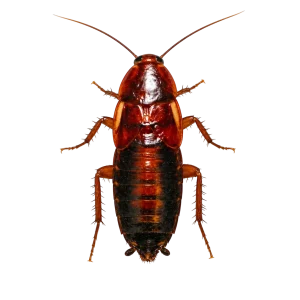
  • Adult female Red Runner Roach on white background

    Adult | Female | Red Runner Roaches

    $25.00 - $550.00

    Adult Female Red Runner Roaches are dark red, wingless feeder roaches that are great for reptiles, amphibians, arachnids, and other insectivores. They are active, nutritious, and ideal for keepers who want a reliable feeder or breeder-quality roach.

    Select optionsLoading Done This product has multiple variants. The options may be chosen on the product page