


Porcellio flavomarginatus for Sale
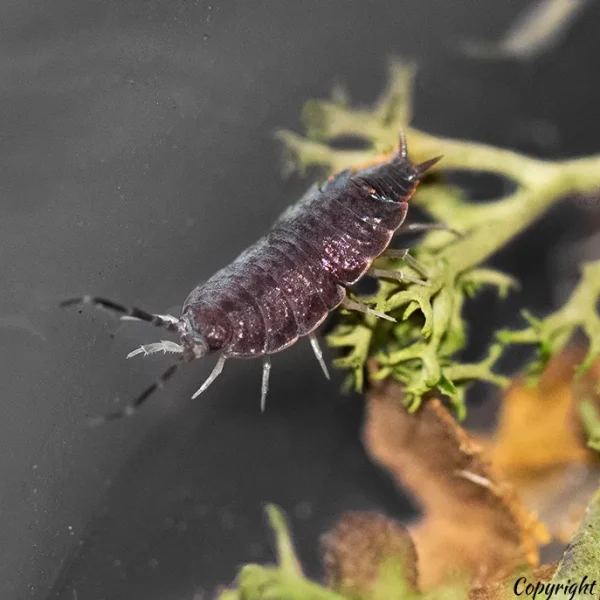
TC INSECTS ships live captive-bred Porcellio flavomarginatus as a mixed-size starter group. This is a striking, less-common Greek Porcellio with a dark gray-to-black body and a bright white serrated skirt. Furthermore, the species was originally described in 1853 from Crete and remains relatively uncommon in the hobby. Therefore, we recommend it for collectors and experienced keepers rather than beginners.
Overview
Porcellio flavomarginatus Lucas, 1853 is a Greek species with a type locality in Crete. In the wild, it occurs across parts of Greece and some neighboring Turkish islands. Adults reach roughly 0.75 to 0.8 inches (about 18 to 20 mm), which makes them smaller than Titans but visibly larger than dwarf species.
The body is dark gray to nearly black, with a bright white serrated skirt running along the edge. Many individuals also show two rows of pale dots along the back. As a result, the colony displays cleanly against dark substrate, cork bark, and leaf litter.
However, this species is not forgiving. Multiple experienced breeders report that cultures crash quickly when airflow drops, when the moisture gradient blurs, or when the dry zone gets damp. Consequently, we list this species as intermediate-to-advanced. Keepers who can manage a sharper moisture gradient than typical Porcellio usually do well with it over time.
Why Keep Porcellio flavomarginatus?
- Genuine collector appeal. This species is one of the less-common Greek Porcellio in the hobby. Therefore, it stands out in a larger collection of more typical cleanup crew species.
- Striking dark-and-white contrast. Additionally, the white serrated skirt against a dark base shows cleanly in a display setup, especially on cork bark and dark substrate.
- Day-active and visible. Furthermore, they tend to forage during daylight hours when conditions are stable, which makes the colony more rewarding to watch than many shy Porcellio species.
- Historic taxonomic record. Specifically, Lucas described the species in 1853 from Crete, so this is a long-established Greek isopod with a clear type locality.
- Smaller but still visible. However, they are not as large as Titans or Sevillas. The trade-off is a more contained colony footprint with strong display value.
Honest Note on the “Yellow” Name vs. White Appearance
The scientific name flavomarginatus translates roughly to “yellow-margined” (Latin flavus = yellow, marginatus = bordered). However, the living animal does not actually show yellow margins. The skirt is bright white, not yellow.
This name-vs-color mismatch trips up new buyers regularly. We mention it here because buyers searching for a yellow-bordered isopod based on the Latin name should know the actual appearance up front. If you specifically want a yellow-edged species in your collection, this is not it. On the other hand, if a bold dark-and-white contrast appeals to you, this species fits.
Honest Note on Crash Risk and Husbandry Difficulty
This is one of the less-forgiving Porcellio species in the hobby. Multiple experienced breeders report that cultures crash quickly when ventilation drops, when the dry zone becomes damp, or when the moisture gradient blurs into uniform humidity.
Therefore, we honestly list this species as intermediate to advanced, not beginner-friendly. Keepers without isopod experience should generally start with Dwarf Whites, Powder species, or Giant Canyons first. Furthermore, even experienced keepers should treat their first flavomarginatus culture as a careful learning project rather than dropping the colony into an existing bioactive enclosure.
Care and Setup
Setup Framework
Care for Porcellio flavomarginatus centers on four priorities: strong airflow, a clearly defined dry zone, a smaller damp retreat, and stable temperatures. Each section below explains what that part of the setup does for the colony.
Temperature
Hold the culture between 68 and 78°F. Room temperature in most homes works well. Avoid direct sun, heat lamps pointing at the container, and sudden temperature swings. Generally, stable conditions matter more than chasing a precise number.
Humidity
This species needs a sharper moisture gradient than typical Porcellio. Keep most of the enclosure clearly dry, with cork bark, hardwood bark, and dry leaf litter for cover. Then, designate a smaller damp zone with sphagnum moss or moist substrate as the retreat.
The dry zone should stay dry. Mist only the damp side. Furthermore, if condensation builds across the lid or the dry side feels humid, increase ventilation immediately. Stagnant humidity across the whole enclosure is the most common cause of crashes in this species.
Substrate
Use a substrate blend with organic matter built in. Coco fiber, decaying hardwood, and leaf litter mixed through work well. Two to four inches of depth suits most starter cultures. The damp side should hold moisture without spreading it across the dry zone.
Food
Keep dried hardwood leaves and decaying wood available continuously. These form the base of the diet. On top of that, offer small amounts of vegetables once or twice per week. Carrot, squash, sweet potato, and zucchini all work.
Additionally, add a light protein source such as TC INSECTS Isopod Food, fish flakes, or dried shrimp in small portions. Remove uneaten fresh food before mold spreads. Also keep calcium available at all times through TC Calcium Ultra Fine, cuttlebone, or crushed eggshell.
Ventilation
Strong airflow is non-negotiable for this species. Use a fully ventilated lid plus cross-vents on the sides if possible. A larger bin with strong airflow outperforms a small sealed container every time. As a result, ventilation is the single most important variable separating successful flavomarginatus keepers from crashed cultures.
Bioactive Use
Bioactive use is possible but limited. This species does not suit standard tropical or wet bioactive setups. Instead, it works best in a dedicated drier culture or a custom bioactive enclosure with a clearly designed dry zone. Pair with Springtails to handle mold on the damp side only.
Breeding Notes
Females carry developing young in a brood pouch called a marsupium and release tiny pale mancae once developed. The colony breeds at a moderate pace once established. However, new cultures often take weeks or months to settle before visible juvenile production begins.
To support breeding, keep calcium available, maintain the sharp moisture gradient, provide leaf litter continuously, and minimize substrate disturbance. Additionally, avoid overfeeding fresh vegetables, which can foul the damp side quickly and trigger a crash.
As the colony grows, split it into a second container if density climbs. This step protects the main colony and gives a backup culture in case the primary bin crashes from a husbandry slip.
Best For
- Collector display cultures focused on less-common Porcellio species
- Dedicated breeding projects with a long-term horizon
- Intermediate-to-advanced keepers comfortable with a sharp moisture gradient
- Ventilated culture bins with strong cross-airflow
- Larger Greek and Mediterranean Porcellio collections
- Keepers who already maintain other drier-leaning Porcellio successfully
Not Best For
- First-time isopod keepers. Therefore, start with Dwarf Whites, Powder species, or Giant Canyons first.
- Tropical bioactive vivariums or wet amphibian setups. The species crashes in uniformly humid enclosures.
- Small sealed containers with limited airflow. Stagnant humidity is the most common crash trigger.
- Buyers expecting yellow margins based on the Latin name. The actual color is white.
- Feeder use. Size, slow establishment, and price point all make them a poor reptile food option.
- Enclosures with reptiles or other predators that eat adults faster than the colony replaces them.
Origin and Locality Notes
Lucas originally described Porcellio flavomarginatus in 1853 from material collected in Crete. WoRMS (World Marine, Freshwater and Terrestrial Isopod Crustaceans database) lists Greece as the type locality. The species also occurs across parts of mainland Greece and some neighboring Turkish islands.
However, the specific locality of hobby lines sold under this name is not always documented. TC INSECTS does not claim a precise wild collection point for this culture. Instead, the care framework focuses on what the species needs in captivity: a Mediterranean-style setup with strong airflow, stable warmth, and a sharp moisture gradient.
Receiving and Acclimation
Open your package soon after delivery in a calm indoor area. Inspect the culture carefully. Some isopods may hide in moss or packing material after shipping. Move the packing material directly into the prepared enclosure rather than picking out individuals, since juveniles are easy to miss.
Prepare the enclosure before opening the culture. The damp side should be lightly moist, not soaked. The dry side should already feel dry to the touch. Place leaf litter, bark hides, and a calcium source before adding the isopods. Set them near the damp retreat under cover.
Then leave them mostly undisturbed for several days. Hiding for the first week is normal. Resist the urge to dig through the substrate or move hides while the colony settles.
Recommended Add-Ons
- TC INSECTS Isopod Food for supplemental protein and balanced nutrition.
- TC INSECTS Assorted Hardwood Leaf Litter as the foundation grazing and cover layer.
- TC INSECTS Ultra Isopod Habitat Kit for a richer starter setup suited to a demanding collector species.
- TC Calcium Ultra Fine to support molting and exoskeleton development.
- Springtails to manage mold and fine debris on the damp side.
Frequently Asked Questions
Why is the species called “yellow-margined” if the skirt is white?
The Latin name flavomarginatus literally translates to “yellow-margined.” However, the living animal shows a bright white skirt, not yellow.
This is a real mismatch in the published taxonomy, and it confuses new buyers. We mention it directly because we would rather lose a sale than ship a species the buyer expected to look different. If you specifically want yellow margins, this is not the right species.
Is this species really crash-prone, or are people exaggerating?
It is genuinely crash-prone compared to most Porcellio. Multiple experienced breeders independently describe the same issue: cultures collapse quickly when ventilation drops or when the dry zone gets damp.
Therefore, keepers who can hold a sharp moisture gradient and strong airflow steadily do well. Keepers who treat it like a typical tropical isopod usually lose the colony within weeks.
How is this species different from Titans or Sevilla isopods?
All three are drier-leaning Mediterranean Porcellio, but they differ in size, ease of care, and origin. Titans are much larger (over 1.5 inches) and Iberian. Sevilla isopods are mid-sized (around 1 inch), active, and accessible to beginners with gradient experience. Flavomarginatus is smaller (~0.75 inch), Greek, and demands a sharper gradient with strong airflow.
What size enclosure works best for a starter culture?
A ventilated 6 to 10 quart bin or a small terrarium suits most starter cultures. Furthermore, ventilation matters more than size at this stage. A larger sealed container still crashes. A smaller bin with strong cross-airflow can succeed if the moisture gradient is sharp.
Can I keep Porcellio flavomarginatus in a reptile enclosure?
Generally no. Most reptile enclosures lack the sharp moisture gradient and strong airflow this species needs. Additionally, the colony breeds too slowly to keep up with reptile activity, and the price point makes predation losses expensive. For reptile cleanup crew use, Giant Canyon isopods or Dwarf Whites work much better.
How long until I see juveniles in a new culture?
Most new cultures take several weeks to several months before visible juvenile production begins. Furthermore, stable conditions matter more than active intervention during this window. Resist the urge to dig through the substrate, mist heavily, or rearrange hides. Once the colony settles, juvenile production becomes more visible.
Learn More About Porcellio flavomarginatus
- WoRMS: Porcellio flavomarginatus Lucas, 1853. The World Marine, Freshwater and Terrestrial Isopod Crustaceans database entry confirms the type locality (Greece) and references the original 1853 description by Lucas from Crete. Useful for keepers who want to verify the published taxonomic record.
- The terrestrial Isopods of Greece (Schmalfuss, Sfenthourakis, and colleagues). A scientific overview of the Greek isopod fauna, including distribution data for Mediterranean Porcellio species. Useful context for understanding the broader biogeography of the genus in Greece, Crete, and the Aegean.
- PMC / NCBI: Conglobation and water conservation in terrestrial isopods. Peer-reviewed research on how isopod pleopodal structures interact with humidity and water loss. This paper explains in biological terms why a sharp moisture gradient (not constant wetness) is the right husbandry approach for drier-leaning species like Porcellio flavomarginatus.



Reviews
There are no reviews yet.