
Porcellionides Pruinosus “Powder Blue”
Overview
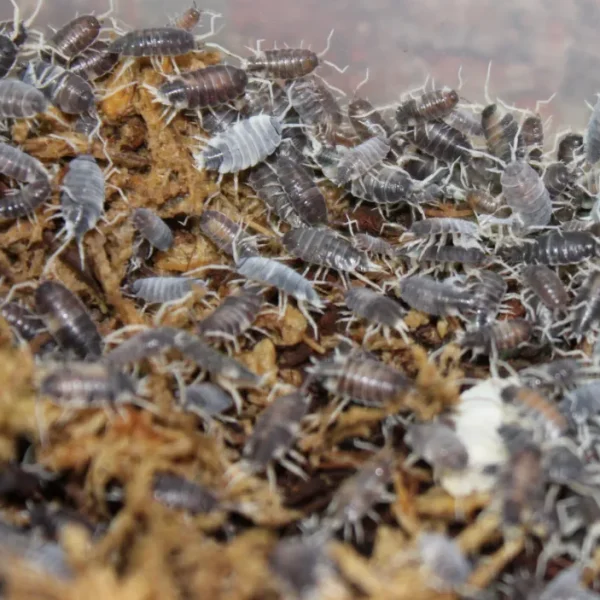
Powder Blue Isopods are one of the most widely kept morphs of Porcellionides pruinosus in the hobby. They are quick on the surface, fairly visible during the day, and noticeably faster moving than the heavier Armadillidium and Cubaris species most keepers compare them to. Our colonies have been bred in-house from a mother culture started in 2017, so the line is established and acclimated to standard isopod husbandry rather than freshly wild-collected stock.
This is a generalist species, which is part of why it works for so many different keepers. It is not the showiest collector morph, and it will not stand still long enough to be a passive display animal, but it is one of the more flexible and forgiving cultures you can run alongside a reptile, amphibian, or invertebrate setup.
Why Keep Powder Blue Isopods?
Three main reasons keepers reach for this morph:
- Cleanup crew work. Powder Blues will process leaf litter, decaying hardwood, mold, biofilm, and animal waste in a bioactive enclosure. They will not replace regular tank maintenance, but they noticeably reduce buildup when the colony is healthy.
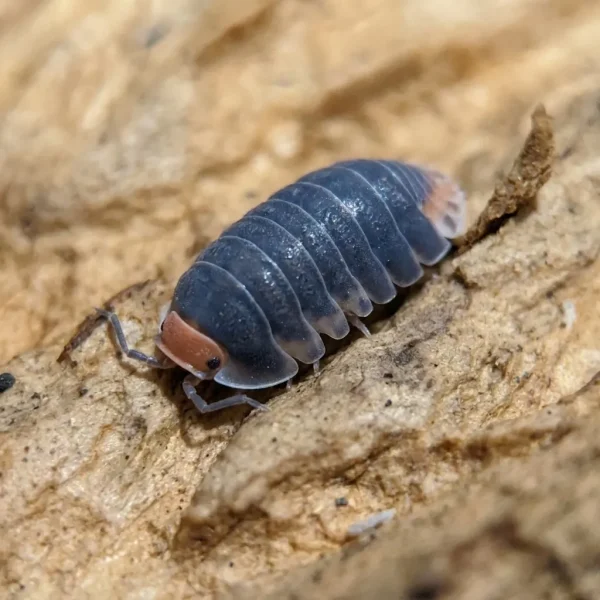
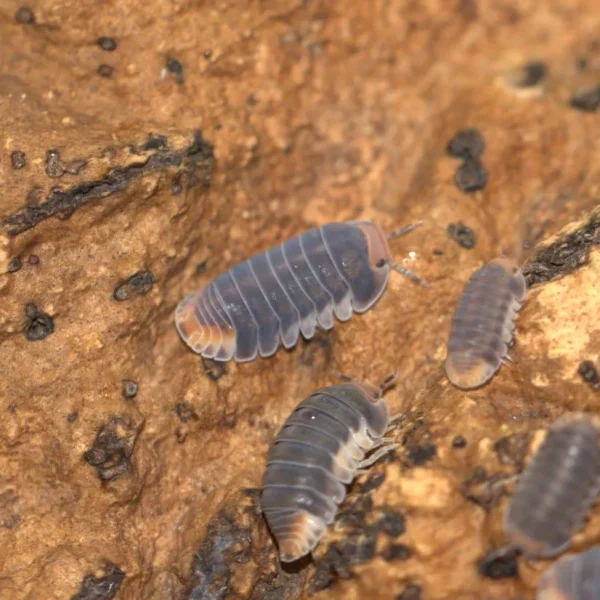
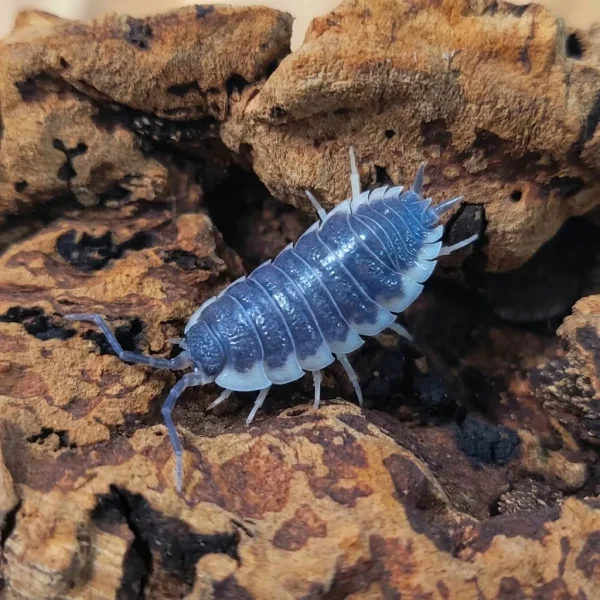
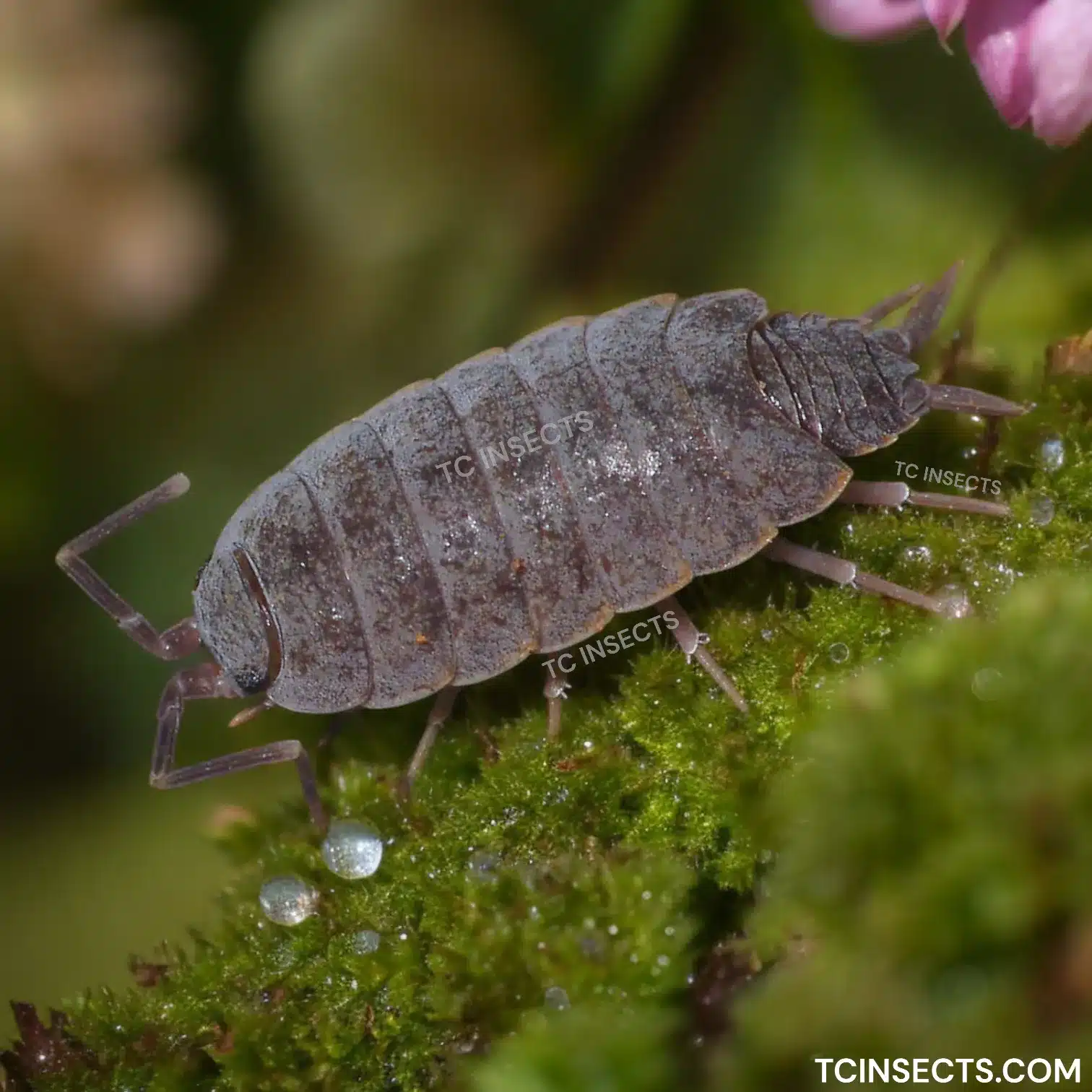
- Display value. They are diurnal and active on the surface, so unlike many burrowing isopods you will actually see them moving. The powder-blue coloration over a darker base reads well against dark substrate and leaf litter.
- Occasional feeder use. The exoskeleton is softer than most Porcellio species, which makes them a more digestible occasional snack for dart frogs, small geckos, juvenile chameleons, and other small insectivores. They should not be a staple feeder, but they work as a calcium-dusted supplement.
Care and Setup
Powder Blues are tolerant, but tolerant is not the same as indestructible. Stable conditions with a humid retreat consistently produce better results than trying to push the extremes of their range.
Temperature
70 to 85°F works well. They will slow down at the cooler end and breed faster at the warmer end. Avoid sustained temperatures above the mid-80s without strong ventilation.
Humidity
Aim for roughly 45 to 80%, with one corner kept reliably moist. Powder Blues handle a drier overall enclosure better than many isopods, but they still need access to a humid zone for molting and reproduction. A moist sphagnum moss corner or a damp leaf litter pile usually does the job.
Substrate
A mix of coconut fiber, flake soil or decomposed hardwood, and a generous top layer of leaf litter. Calcium sources like crushed cuttlebone, eggshell, or limestone help support exoskeleton development.
Food
Decaying hardwood (avoid pine and cedar), leaf litter, magnolia pods, and a rotation of vegetable matter like sweet potato, mushrooms, and freeze-dried peas. Protein sources like shrimp meal, fish food, or insect frass help boost reproduction. A balanced prepared diet such as TC INSECTS Isopod Food simplifies this.
Ventilation
Cross-ventilation is important. Stagnant, oversaturated bins are the most common cause of crashed Powder Blue cultures. A vented lid with a moist corner is a better setup than a sealed lid with uniform high humidity.
Bioactive Use
Powder Blues pair well with springtails in standard tropical and temperate bioactive vivariums. In drier enclosures, like some leopard gecko or bearded dragon setups, they can survive if a protected humid hide is always available, but they will not breed as productively as they do in a more typical bioactive build.
Breeding Notes
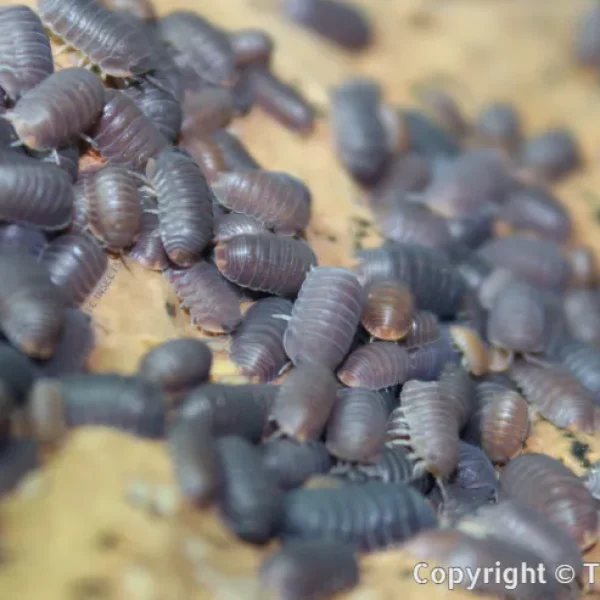
Powder Blues breed quickly once the colony is established. Females develop a visible white marsupium between the legs when carrying young, and tend to be slightly larger than males. Mancae (juveniles) are tiny and often hide under leaf litter and bark for the first weeks. A starter group will usually take a few months to become a clearly visible population.
Best For
- Bioactive vivariums with dart frogs, mourning geckos, day geckos, crested geckos, and similar small species
- Keepers who want a culture that is visible and active rather than hidden
- Starter colonies for new bioactive builders
- Occasional soft-bodied feeders for small insectivores
- Productive feeder backup cultures alongside dubia, red runners, or fruit flies
Not Best For
- Fully dry enclosures with no humid retreat zone
- Keepers chasing rare collector morphs (Powder Blue is widespread and affordable, not a rarity flex)
- Use as a primary staple feeder, since the soft body and rapid movement make them better as a supplement than a daily diet
- Sealed, no-ventilation tubs, which tend to develop mite blooms and crash colonies
Origin and Locality
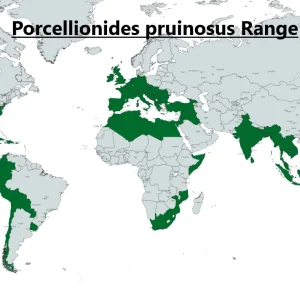
Porcellionides pruinosus is a widely distributed species recorded across the Mediterranean, parts of Europe, and southwest Asia, and it has been spread well beyond that range through trade. The “Powder Blue” name is a hobby trade designation for a specific color form, not a separate species or a confirmed wild locality. This page focuses on practical captive care rather than claiming a precise wild origin for this morph.
Recommended Add-Ons
- TC INSECTS Ultra Habitat Kit for a ready-to-use vented 6qt setup with substrate, sphagnum moss, leaf litter, and starter feed
- TC INSECTS Isopod Food for a calcium-supported balanced diet that supports reproduction
- Springtails to round out the microfauna and help control mold and biofilm
Learn More About Isopod Biology
- University of Nebraska-Lincoln Department of Entomology: Sowbugs and Pillbugs
- Natural History Museum (UK): Woodlice overview
Powder Blue Isopod FAQs
Are Powder Blue Isopods beginner-friendly?
Yes. They tolerate a wider moisture range than many isopods, and they breed quickly once the colony is established. The most common beginner mistake is a sealed enclosure with no ventilation, which usually causes mites and a culture crash.
How fast do Powder Blue Isopods reproduce?
Once the colony settles in, reproduction is very high for an isopod. A starter group of 10 to 25 will usually take a few months to show a clearly visible population, then ramp up quickly with stable temperatures, moisture, and protein in the diet.
Can Powder Blue Isopods be used as feeders?
They work as an occasional soft-bodied feeder for dart frogs, small geckos, and similar insectivores, especially when dusted with calcium. They are not a good primary staple feeder because of their speed and small size.
Will Powder Blues work in a drier reptile enclosure?
They can survive in drier setups like some leopard gecko or bearded dragon builds, but only if a protected humid retreat with moist sphagnum or leaf litter is always available. Reproduction will be slower than in a more typical bioactive vivarium.
Do Powder Blue Isopods need springtails in the same enclosure?
They do not require springtails to survive, but pairing the two is standard practice in bioactive setups. Springtails help with mold and biofilm at a smaller scale than isopods can reach.
Powder Blue Isopod’s Natural Habitat
The Powder Isopods Origins are from the Mediterranean. Later being discovered in South West Asia and Europe. Travel and Trade in recent history have spread this species worldwide and now can even be found in cosmopolitan settings.