
Cubaris Murina Isopods for Sale
TC INSECTS ships live captive-bred Cubaris murina “Little Sea” for bioactive terrarium keepers, collectors, and anyone entering the Cubaris genus. This is the type species of Cubaris Brandt, 1833 — the founding animal that defines the entire genus. It is the only formally named Cubaris in the TC INSECTS catalog.
Every other species in the range carries only the label “Cubaris sp.” — unnamed and undescribed. Cubaris murina has carried its full two-part scientific name since 1833.
Overview — The Type Species
Cubaris murina Brandt, 1833 is a formally named species in the family Armadillidae. German naturalist Johann Friedrich von Brandt described it in 1833 — the same year he established the genus Cubaris. It is the type species, meaning it defines what Cubaris means in taxonomy.
All later Cubaris species use it as their reference. Every cave-origin Southeast Asian form in this catalog — every panda-line and ducky-line species — gets placed in the genus Cubaris because of its relationship to this species. In the hobby, this species goes by “Little Sea” — a name with a specific and charming origin that the next section covers.
Appearance — Dark Gray with Orange Tail Marks
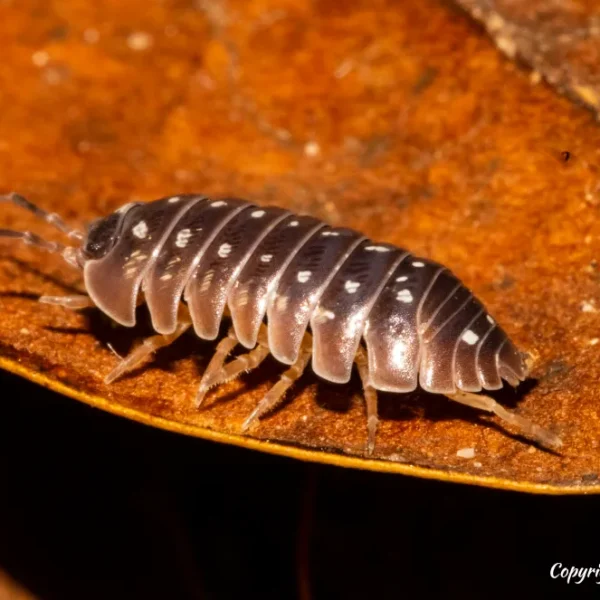
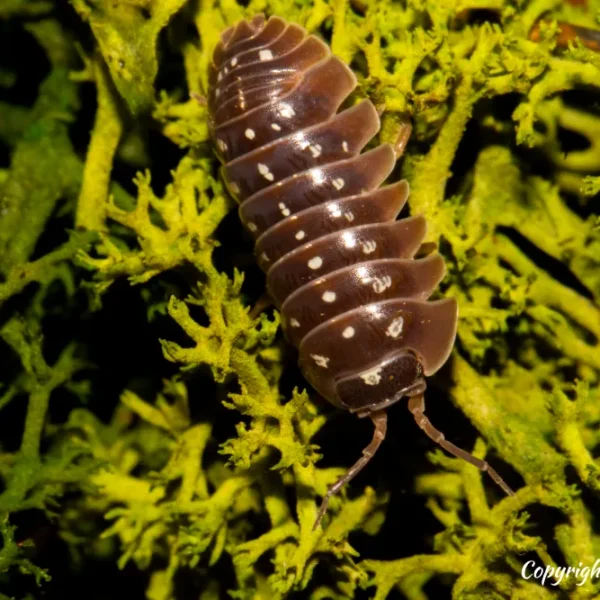
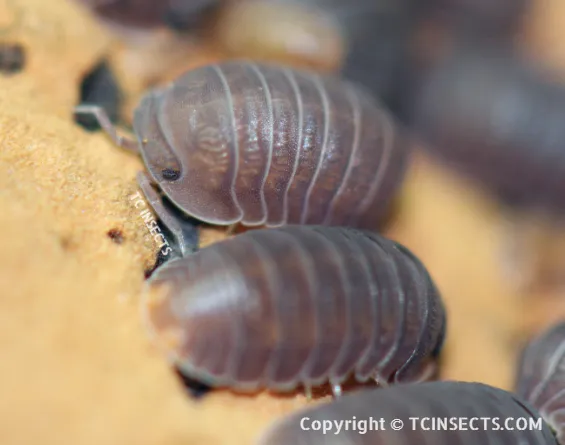
The standard wild-type “Little Sea” shows a dark gray body — sometimes with faint blue or purple tones in good lighting. It has two small bright orange marks at the rear pleon segments. These orange uropod accents are the defining feature of the species. Some animals show faint see-through patterning under close inspection.
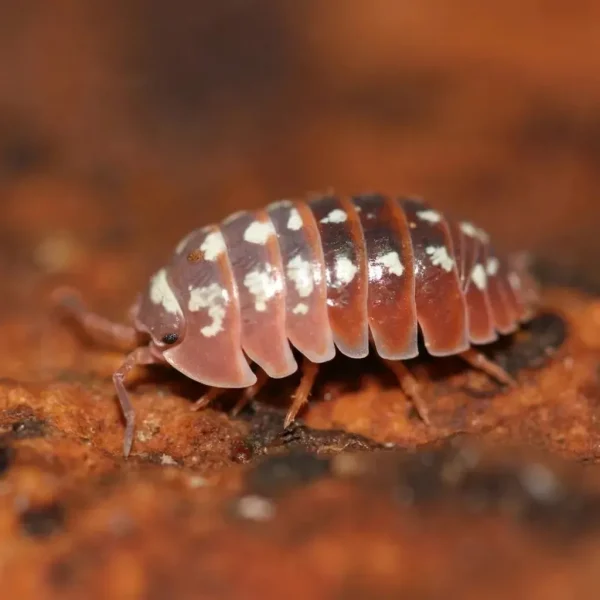
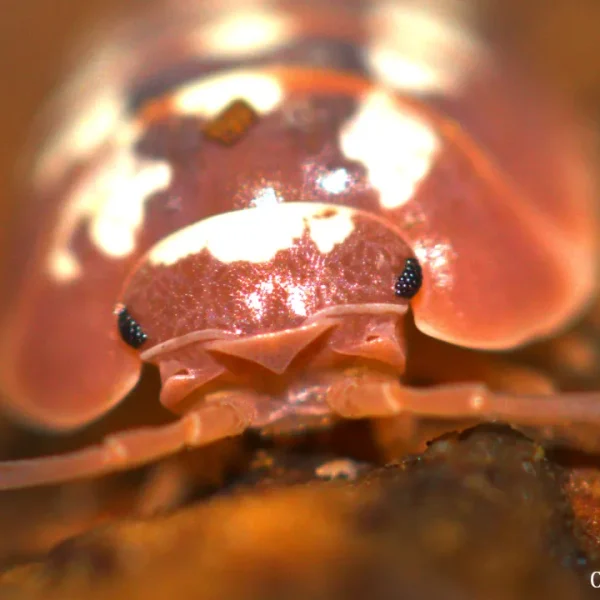
The overall look is clean, compact, and smooth. It reads as understated next to the patterned panda-line species. But the orange tail marks are a specific visual feature no other species in this catalog shares. Several captive color lines exist in the hobby — Papaya (pink), Glacier (white), Anemone (orange-speckled), Florida Orange (solid orange). The TC INSECTS listing is the standard gray wild-type with orange tail marks.
A Worldwide Species — Found on Six Continents
Cubaris murina is one of the most widely spread isopods in the world. It occurs across warm and tropical regions including North America, the Caribbean, and Central and South America. It also appears in Africa, tropical Asia, Southeast Asia, Australasia, and the Pacific.
It grows along the Gulf Coast of the United States and throughout Florida — one of the few Cubaris you can find in the wild in the US. This global spread makes C. murina unlike every other Cubaris in this catalog. The ducky-type and panda-type species are location-specific — tied to particular cave systems or forest habitats in Thailand, Vietnam, or Malaysia. Cubaris murina is a habitat generalist. That flexibility directly explains its easier care level in captivity.
Why “Little Sea”?
The name has a specific and charming origin. The animal has a smooth, dark, rounded body. When observers first found it in the wild, they mistook it for a tiny sea creature rather than a land-dwelling isopod.
Its coastal habitat — mangroves and near-shore areas — added to that sea-like impression. It is not aquatic. It is a fully land-dwelling isopod. But the “Little Sea” identity stuck, and the name has stayed in the hobby ever since.
The Easiest Cubaris to Keep
Among all Cubaris in the TC INSECTS range, Cubaris murina is the most forgiving and easy to keep. It handles a wider temperature range, grows in varied habitat types, and tolerates care variation better than panda-line or ducky-line species. Specialty sources call it the “undisputed entry-level Cubaris” and the “default *Cubaris* for tropical bioactive terrariums.”
TC INSECTS’ own advice has always been to start here. Anyone planning to keep more demanding Cubaris — Rubber Ducky, Panda King, ducky variants — builds the right habits with Cubaris murina first.
Bioactive Performance — Daytime Active Cleanup
Cubaris murina is one of the few Cubaris active during the day. Most species in this catalog — panda-line and ducky-line — are strictly nocturnal burrowers. Cubaris murina forages during the day and returns to cover at night. This makes it a truly visible cleanup crew in a tropical vivarium, not just an animal you assume is working because the enclosure stays clean.
An established colony breaks down leaf litter, decaying wood, and organic debris well. Daytime activity, bioactive work, worldwide range, and an affordable price together make “Little Sea” the most practical Cubaris for high-humidity enclosures. It is the best value bioactive Cubaris in this catalog.
Honest Note: Plant-Eating Reports
Multiple hobby sources report that Cubaris murina sometimes eats soft plant material, especially ferns and tender plant shoots, in heavily planted vivariums. Many keepers never observe this. But it is worth noting if your setup has delicate or rare plants.
For densely planted exotic terrariums, a separate dedicated culture bin is safer than direct introduction. In standard tropical bioactive setups with hardy plants, this risk is low for most keepers.
Honest Note: Protein Appetite
Cubaris murina has a stronger protein appetite than most panda-line Cubaris. Offer protein foods — dried shrimp, fish flakes, TC INSECTS Isopod Food — more often than you would for panda-type species. Because this culture runs humid, place protein on the drier side or remove it within 24 hours to prevent rapid mold and mite problems.
Care
Setup Framework
Use a ventilated enclosure with 2 to 4 inches of organic substrate. Keep one side moist with sphagnum moss and the other side slightly drier with cork bark hides and leaf litter. Maintain 70 to 80°F and 70 to 90% humidity.
The tolerance range here is wider than any other Cubaris in this catalog. Room temperature in most tropical-setup homes works without extra heating. The humidity window is broad enough to allow for moderate ventilation without stressing the colony.
Calcium
Provide TC Calcium Ultra Fine or cuttlebone alongside limestone. Limestone is preferred, as with all Cubaris care. Keep calcium available at all times for healthy molts.
Food
Keep TC INSECTS Assorted Hardwood Leaf Litter and decaying hardwood available at all times as the base diet. Offer protein more often than for panda-line species — two to three times per week through TC INSECTS Isopod Food, dried shrimp, or fish flakes. Place protein on the drier side and remove it within 24 hours.
Springtails
Pair with Springtails. The two species work different cleanup layers — C. murina handles macro debris while springtails control mold and fine fungal material. Together they form a complete tropical bioactive system.
As a Feeder
Unlike most Cubaris in this catalog, Cubaris murina is safe as an extra feeder for compatible animals. TC INSECTS confirms this. The softer shell compared to Armadillidium makes it suitable prey. Offer it sometimes, not regularly.
Treat the culture first as a bioactive cleanup crew. Heavy feeder use depletes the colony faster than it can recover. A depleted colony loses its bioactive function in the enclosure.
Best For
- Keepers entering Cubaris for the first time — the easiest and most forgiving species in the genus
- Tropical bioactive terrariums and vivariums where a daytime-active cleanup crew Cubaris is the goal
- Collectors building a complete Cubaris reference collection — the type species of the genus is an essential entry
- Humid reptile and amphibian enclosures that need a visible, active organic debris processor
- Keepers who want genuine Cubaris character — the Armadillidae body shape, conglobation, and humidity needs — at the most accessible care level and price in the range
Not Best For
- Densely planted vivariums with delicate ferns or tender exotic plants — plant-eating reports exist.
- Primary feeder use — the moderate breeding rate cannot handle heavy predation pressure.
- Dry or arid setups — the 70 to 90% humidity floor applies even at this easy care level.
Receiving and Acclimation
Open the package in a calm indoor area soon after delivery. Place all packing material directly into the prepared enclosure. Position animals near the moist zone. Leave the culture mostly undisturbed for several days. This species recovers from shipping faster than most Cubaris — daytime activity should return within the first week.
Recommended Add-Ons
- TC Calcium Ultra Fine alongside limestone for steady calcium access.
- TC INSECTS Assorted Hardwood Leaf Litter as the diet base — leaf litter is the core of this species’ nutrition.
- TC INSECTS Isopod Food for the protein rotation — offer more often than for panda-line species.
- TC INSECTS Isopod Habitat Kit for a complete beginner-ready starter setup at the easy care level this species needs.
- Springtails — the ideal partner; together they cover all bioactive layers in a tropical setup.
Frequently Asked Questions
How is this different from the Panda King and other Cubaris in this catalog?
Cubaris murina differs from every other Cubaris in this catalog in three key ways. First, it is formally named — a valid species with a full scientific name since 1833. Second, it is found worldwide — in tropical regions including Florida, not only Southeast Asian cave systems. Third, it is daytime active, while panda-line and ducky-line species are mostly nocturnal.
It is also the easiest to keep, the best bioactive performer, and the most affordable species in the range.
What are the orange marks at the tail?
The two small bright orange marks at the rear of the body appear on the uropods — the tail limbs at the back end. They are a natural feature of the standard wild-type “Little Sea” coloring. Juveniles may show lighter marks that become more defined as they mature.
These marks are the most reliable visual ID feature for the standard wild-type form. They are distinct from the color lines — Papaya, Florida Orange, Anemone, Glacier — which show different coloring throughout the whole body.
Can I use these as feeders?
Yes, sometimes. TC INSECTS describes them as safe as an extra snack for compatible animals. The softer shell compared to Armadillidium makes them easier prey. However, treat the culture first as a bioactive cleanup crew. Heavy feeder use depletes the colony faster than it can recover, removing its bioactive value from the enclosure.
Why is this called the type species of Cubaris?
When Brandt described the genus Cubaris in 1833, he also named Cubaris murina as its first and founding species. The type species is the reference animal that defines the genus. Every later Cubaris species gets placed in the genus because it resembles and relates to Cubaris murina.
The hundreds of unnamed “Cubaris sp.” in the hobby all hold to that standard — even though they remain without formal names of their own.
Are there color morphs available?
This listing is the standard wild-type “Little Sea” — dark gray with orange tail marks. Several color lines of Cubaris murina exist in the broader hobby: Papaya (pink), Glacier (all white), Anemone (calico orange and gray), and Florida Orange (solid orange from wild-caught Florida animals). These are separate lines from different sellers. TC INSECTS’ “Little Sea” listing is the natural wild-type form.
Is this a good choice for a dart frog or tree frog vivarium?
Cubaris murina is one of the most suitable Cubaris for frog vivariums. Its daytime activity makes it a visible and effective vivarium maintenance species. The small size suits dart frog enclosures. The softer shell means frogs can catch and eat it as extra prey.
Keep a backup culture outside the vivarium. Frog predation can deplete a colony over time. Avoid vivariums with rare or delicate ferns given the plant-eating reports on this species.
Learn More About Cubaris murina
These sources give useful context on the species, its formal taxonomy, and its worldwide distribution.
-
Wikipedia: Cubaris murina. The species article for Cubaris murina Brandt, 1833. It covers the worldwide spread across six continents and ocean basins, the known captive color lines (Papaya, Glacier, Anemone, Florida Orange), and the species’ role as the type species of the genus. This is the only Cubaris in the TC INSECTS catalog with its own Wikipedia species article — a sign of its formally named status and wide scientific record.
-
GBIF: Cubaris murina Brandt, 1833. The Global Biodiversity Information Facility species record for Cubaris murina, with records from North America, the Caribbean, South America, Africa, Southeast Asia, and the Pacific — including verified records from the southeastern United States. The distribution map shows clearly why this species behaves differently in captivity from Southeast Asian cave forms. It evolved as a habitat generalist. Cave-specialist species from Thailand and Vietnam did not.
-
World Register of Marine Species (WoRMS): Cubaris murina Brandt, 1833. The official taxonomy record for the species, maintained by Flanders Marine Institute. It links to the original 1833 description by Brandt and all later synonyms — including Armadillo cubensis, Cubaris javanensis, and others. These synonyms show the worldwide discovery history: naturalists in different regions found the same animal and gave it different names before researchers confirmed they were the same species. The synonym list confirms both the wide range and the long formal history of Cubaris murina.