



Panda King Isopods for Sale
TC INSECTS ships live captive-bred Cubaris sp. “Panda King” as a mixed-size starter group for display cultures, breeding projects, and tropical bioactive setups. This is the wild-type Vietnam base species of the panda Cubaris line — the original pattern from which the Red Panda and other color variants were developed. For full background on the Cubaris genus, Armadillidae family biology, and cave-origin care context, see the Rubber Ducky product page.
Overview
Cubaris sp. “Panda King” is a formally undescribed species in the family Armadillidae, originating from Vietnam. It is one of the most established and accessible Cubaris species in the hobby — often recommended as the first Cubaris for keepers who want to work with the genus before moving to more demanding forms like the Rubber Ducky. The Panda King is more tolerant of care variation than the cave-specialised Thai ducky species and breeds well once settled.
Why It Is Called “Panda King” — The Pattern Logic
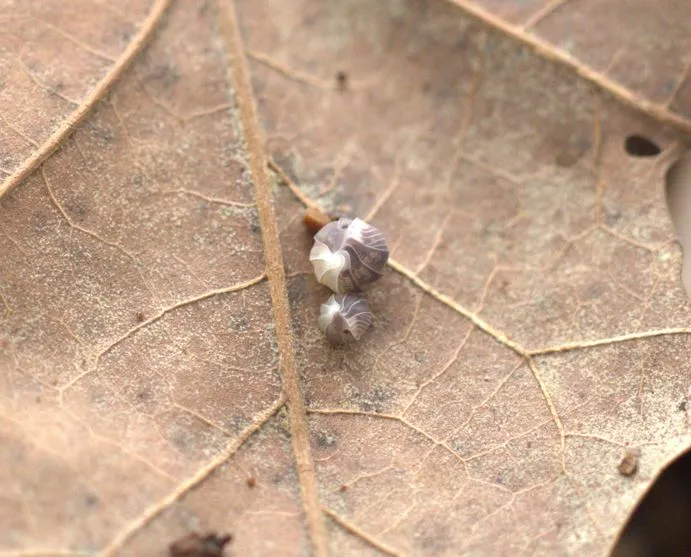
The Panda King has a dark gray body with two bright white bands near the front — specifically across the second through fourth body segments — plus completely white legs and antennae. This combination creates a white-on-dark pattern that closely resembles the Giant Panda (*Ailuropoda melanoleuca*): white across the shoulders and chest of a predominantly dark animal.
The “King” half of the name distinguishes this form from smaller panda-patterned isopods in the Cubaris murina group, which show similar banding on a much smaller body. The Panda King is the large-body representative of the panda pattern in Cubaris. The white-against-dark contrast in the standard gray form is the sharpest of any panda-line variant — including the Red Panda — because dark gray creates more visual difference from white than orange-red does.
The Base Species — Original and Reference Form
Every color variant in the panda Cubaris line traces back to this wild-type form. The Red Panda morph was isolated from a brown individual within a Panda King colony in captivity in the United States. Other color lines developed in the hobby originate from the same base species.
Keeping Panda Kings means keeping the reference stock. The white bands, white legs, and white antennae in the standard form are natural wild traits — not mutations or captive selections. The natural dark gray provides the maximum panda-pattern contrast. Collectors who want the base line specifically — or who plan to maintain both the standard and color-variant morphs — choose Panda King as the anchor culture.
Honest Note: Natural Pattern Varies Between Individuals
In a healthy breeding colony, individual Panda Kings may show slight variation in the width and sharpness of the white banding. This is natural. Some individuals carry more defined bands; others show slightly less distinct borders at the band edges. Wide, clean, well-defined white bands on each individual are the hallmark of a well-fed, well-calcified colony. Narrow or poorly defined bands in otherwise healthy animals may indicate calcium needs. Check calcium access first if banding quality declines across the colony.
Care
Setup Framework
Use a ventilated enclosure with 3 to 5 inches of organic substrate. Keep roughly half the floor space moist with sphagnum moss and decaying hardwood. Keep the other half slightly drier with cork bark hides and leaf litter. Maintain 72 to 80°F and 60 to 80% humidity with moderate cross-ventilation.
The Panda King is more temperature-tolerant than the Thai ducky-form species. Room temperature in most homes is adequate. The 72 to 80°F range is a comfortable working window. Unlike Red Panda, which performs best below 76°F, the standard gray Panda King handles the full range without the same high-temperature sensitivity.
Calcium
Keep TC Calcium Ultra Fine, cuttlebone, or limestone available at all times. Calcium directly affects the quality and sharpness of the white banding — well-calcified individuals show cleaner, more defined bands. Remove soiled or wet calcium and replace regularly.
Food
Keep TC INSECTS Assorted Hardwood Leaf Litter and decaying hardwood available at all times as the base diet. Offer protein twice per week through TC INSECTS Isopod Food, dried shrimp, or fish flakes. Fruits high in carotenoids — mango, carrot, sweet potato — are well-received. Feed small portions and remove uneaten fresh food within 24 to 48 hours to prevent mold.
Springtails
Pair with Springtails for mold control in the moist zone. A springtail culture supports the colony’s humid environment without the mold buildup that high humidity otherwise produces.
Breeding Notes
Females carry developing young in a marsupium. Once settled, the Panda King produces mancae at a moderate to good rate. Mancae burrow into the substrate immediately after release and stay hidden for weeks. Surface activity increases as juveniles mature.
Stability drives breeding. Avoid frequent substrate disturbance, temperature swings, and calcium gaps. A mature colony — 20 or more adults — produces mancae reliably throughout the year. Split part of the colony into a backup bin once the population grows. This protects the line if conditions in the main enclosure shift.
Panda King and Red Panda — Original and Color Variant
Panda King and Red Panda are the same species — same care, same body structure, same white-band pattern. The Red Panda replaces the standard dark gray segments with orange-red, adds red eyes, and shows slightly higher temperature sensitivity at the upper end of the range. Standard Panda King retains dark gray, normal eyes, and handles the full 72 to 80°F range more comfortably.
For collectors, the two cultures complement each other. Panda King is the reference original; Red Panda is the US-developed color variant. Keeping both provides the full visual range of the panda Cubaris line. Keep them in separate bins if maintaining each form as a distinct visual line matters, since mixed pairings produce varied offspring over time.
Best For
- Keepers entering Cubaris who want the original natural wild-form species rather than a captive color variant
- Collectors who want the sharpest dark-on-white panda contrast — the gray form produces more visual difference between the white bands and the body segments than any color-reduced variant
- Tropical bioactive terrariums at 72 to 80°F where the Panda King’s natural temperature tolerance suits the enclosure without supplemental heat
- Keepers building toward the more demanding ducky-type Cubaris who want the skills and confidence that successful Panda King management provides
- Collectors maintaining the base parent stock alongside the Red Panda color variant
Not Best For
- Dry or arid setups. The 60 to 80% humidity requirement supports healthy molts and white-band quality.
- Keepers wanting a daytime-active surface species. Panda King is nocturnal and burrowing.
- Large-volume cheap cleanup crew use. Powder Orange, Powder Blue, or Dwarf White isopods serve that function more efficiently.
Receiving and Acclimation
Open the package in a calm indoor area soon after delivery. Some animals may conglobate after shipping — leave them undisturbed for a few minutes before moving them. Place all packing material into the prepared enclosure. Position animals near the moist zone under bark or leaf litter.
First Week Priorities
Enclosure should be at target humidity and temperature before the animals arrive. During the first week, feed very lightly — leaf litter, a small protein offering, and calcium. Check whether food has been eaten before the next feeding. Hiding for several days is normal. Leave the culture mostly undisturbed for at least one week after arrival.
Recommended Add-Ons
- TC Calcium Ultra Fine for continuous calcium access — critical for white-band quality and molting success.
- TC INSECTS Assorted Hardwood Leaf Litter as the diet foundation and surface cover.
- TC INSECTS Isopod Food for the twice-weekly protein rotation.
- TC INSECTS Isopod Habitat Kit for a complete beginner-ready starter setup.
- Springtails for mold control in the humid zone.
Frequently Asked Questions
What is the difference between Panda King and Red Panda?
Panda King is the wild-type Vietnam base species. The dark gray segments contrast with pure white banding, white legs, and white antennae. Red Panda is a captive-developed color morph of the Panda King, with orange-red replacing the dark gray, red eyes replacing normal eyes, and slightly higher sensitivity to warm temperatures. Both share identical care, body structure, and banding pattern. See the Red Panda page for the full color morph story.
Why does my Panda King have white legs and antennae?
White legs and antennae are natural traits of the wild Panda King species from Vietnam — not mutations or unusual characteristics. All healthy standard Panda Kings show fully white appendages. These white elements are part of the complete Giant Panda pattern: white bands near the head, white limbs, and white sensory organs against the dark body.
Why do some individuals have sharper bands than others?
Band sharpness reflects calcium status and overall colony health. Well-calcified individuals show clean, well-defined white borders. Individuals with softer, less distinct band edges may need better calcium access. Ensure cuttlebone, limestone, or TC Calcium Ultra Fine is always available. Band quality typically improves in animals that have successfully completed multiple molts under good calcium conditions.
Is Panda King a good first Cubaris?
Yes. The Panda King and its Red Panda variant are consistently recommended as the entry point into the Cubaris genus. The species is more tolerant of care variation than the Thai cave-origin ducky types, more forgiving of temperature variation, and more productive after establishment. Multiple hobby sources position it as the recommended preparation species before keepers move to Rubber Ducky, Blonde Ducky, or Platinum Ducky.
Can I keep Panda King and Red Panda together?
Yes, without harm. Both are the same species. However, mixed pairings produce offspring with varied or intermediate coloring over time. Some juveniles may appear gray, some orange-red, and some intermediate. If maintaining the dark gray Panda King pattern specifically matters, keep the two forms in separate cultures.
What does “King” mean in the name?
In hobby *Cubaris* naming, “King” generally indicates a larger-body form. The Panda King is distinguished from smaller panda-patterned isopods in the *Cubaris murina* group, which carry similar white banding on bodies roughly half the size. The “King” signals the larger, more prominent body that makes the panda markings visually impactful at display scale.
Learn More About Panda King and Cubaris
- iNaturalist: Cubaris.
The global observation record for the genus, with a notable concentration of verified records in Vietnam and surrounding Southeast Asian regions. The Vietnam distribution data contextualises why Panda King — a Vietnam-origin species — shows different temperature tolerance and accessibility compared with the deep limestone cave species from northern Thailand that produce the ducky forms. Vietnam’s tropical forest habitats maintain broader temperature ranges than enclosed cave systems, which may explain the Panda King’s greater flexibility in captive care.
-
Wikipedia: Armadillidae. The family overview covering the ~80 genera and 700+ species that include Cubaris. The “strongly convex body” characteristic of Armadillidae is specifically what makes the Panda King’s white bands so visually prominent — the convex curvature catches light differently across the dark and white zones, enhancing the contrast that gives the pattern its name. The article also covers the Southeast Asian distribution concentration that explains the diversity of described and undescribed species in the genus.
-
PMC / NCBI: Water conservation in terrestrial isopods. Research on gill-structure water management in terrestrial isopods. Relevant to the Panda King specifically because band quality correlates with molt success, and successful molts require humidity above the threshold the gill structures need. Humidity below 60% causes failed molts in cave-origin species — including Panda King — and failed molts are where band definition deteriorates most visibly. Maintaining the 60 to 80% humidity range keeps molts clean and preserves band sharpness.



Susan Tinch (verified owner) –
I bought 10 of these cuties for their own little bioactive enclosure. They are doing well!