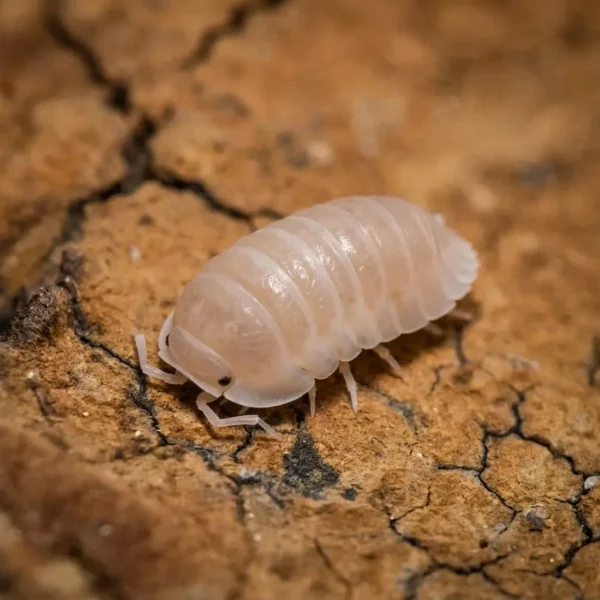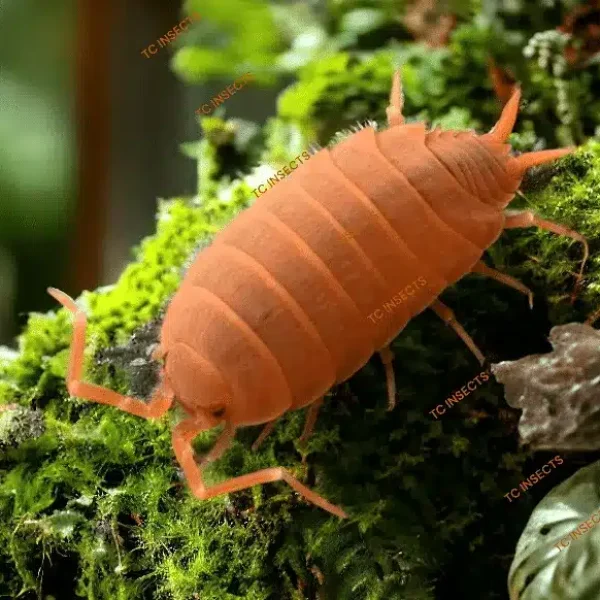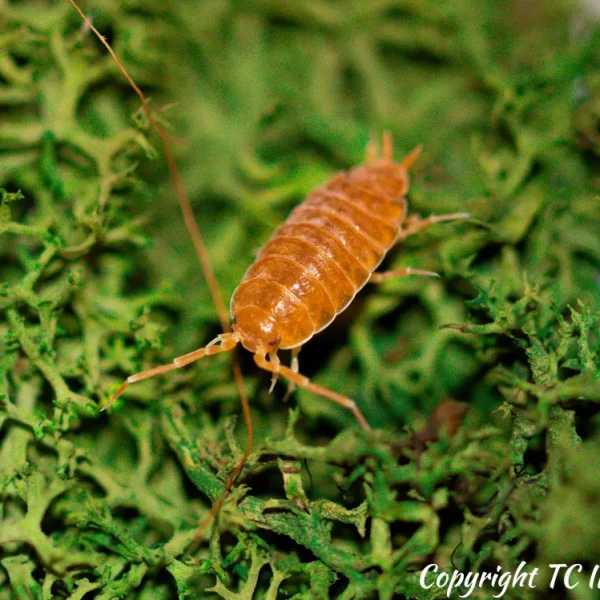


Dairy Cow Isopods for Sale
TC INSECTS ships live captive-bred Porcellio laevis “Dairy Cow” as a mixed-size starter group for bioactive terrariums, cleanup crews, display cultures, and starter breeding colonies. This is the most beginner-friendly Porcellio in the TC INSECTS range and one of the most widely used bioactive isopods in the hobby. Therefore, it suits first-time keepers and experienced collectors alike.
Overview
Latreille described Porcellio laevis in 1804. The species name means “smooth” in Latin — a reference to the polished, glossy dorsal surface that separates this species from rougher relatives like P. scaber. The species is cosmopolitan, now found on every inhabited continent after spreading globally through human activity. It was first recorded in Britain in the 13th century and likely originated in North Africa.
The Dairy Cow Pattern
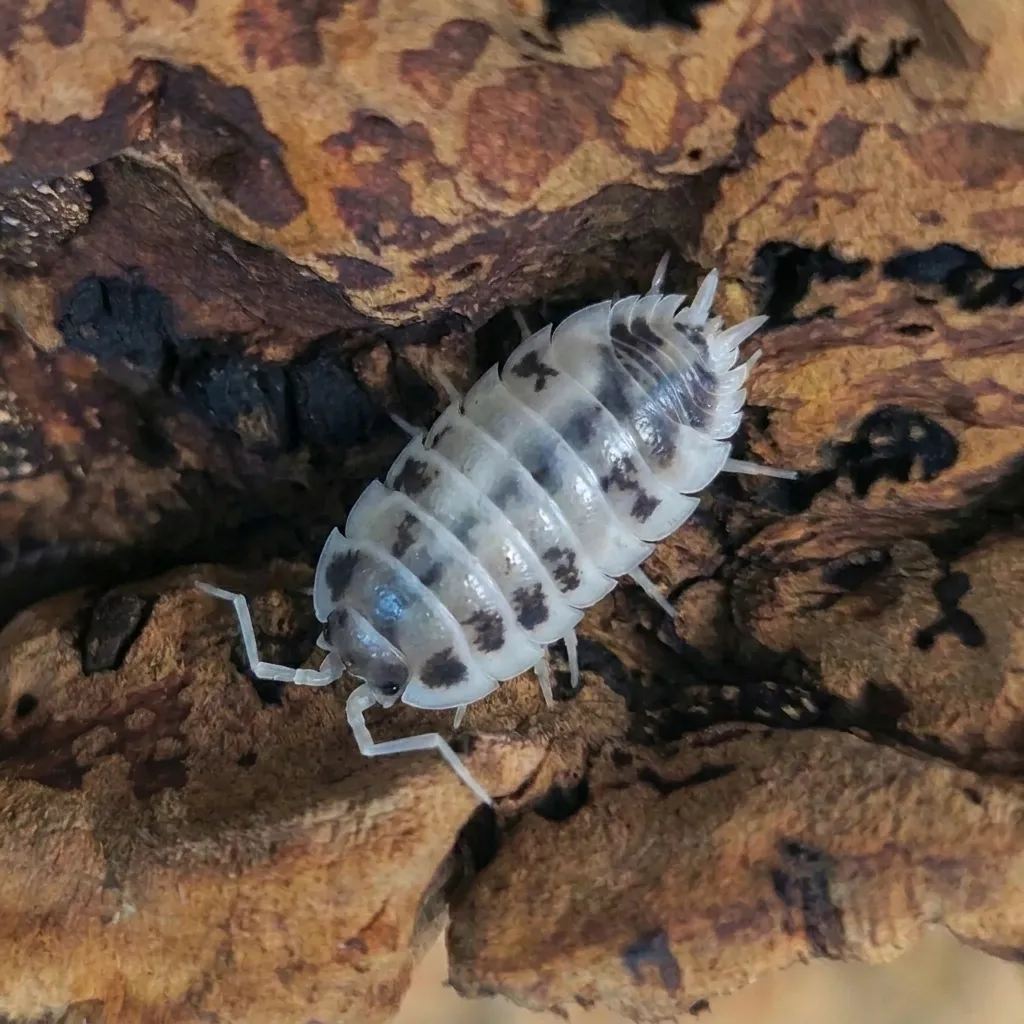
The Dairy Cow morph is a piebald color form produced by the same type of pigment-absence gene that creates spotted patterns in Dalmatians — sometimes called the “Dalmatian gene” in the hobby. Irregular patches of the exoskeleton lack pigment, creating bold black-and-white spots against the glossy shell. Because pigment absence varies between individuals, no two animals in the colony look exactly the same. As a result, a mature Dairy Cow culture is visually varied in a way most single-color species are not.
Honest Note: Protein Requirements and Bite Risk
Porcellio laevis has a notably high protein requirement compared with most beginner isopods. When protein is consistently available, this species is an excellent, non-aggressive bioactive cleanup crew. However, when protein is insufficient, the colony may seek it from available sources in the enclosure — including nibbling at small soft-bodied animals such as thumbnail frogs, soft-skinned reptiles, or very small co-inhabitants.
This is not predatory behavior. It is a protein-deficiency response. Therefore, the solution is simple: feed protein regularly alongside leaf litter and vegetables. A well-fed Dairy Cow colony is safe alongside most reptiles and moderate-sized amphibians. Use extra caution with very small, soft-bodied, or recently molted co-inhabitants, and keep protein topped up consistently.
Honest Note: Adults Compete at the Food Bowl
At feeding time, adults are strong competitors and may push juveniles away from fresh food. This is not cannibalism. It is normal competitive feeding behavior in a high-density species. To support the whole colony, offer multiple feeding spots spread across the enclosure rather than one central food placement. Additionally, smaller protein pieces scattered near leaf litter give juveniles access that a single large feeding station does not.
The Swift Woodlouse and Alternating-Turns Defense
The Dairy Cow’s other common name — the Swift Woodlouse — comes from the species’ ability to run in fast bursts when disturbed or threatened. Unlike the wedging defense of *P. werneri* or the play-dead behavior of *P. dilatatus*, *P. laevis* runs. Specifically, it runs in a maze-like zigzag pattern called alternating turns, changing direction repeatedly to confuse a predator tracking its movement.
Research has documented this behavior across several isopod species. Individuals exposed to predators more frequently use alternating turns more consistently. In captivity, this behavior is visible when you open the enclosure and disturb feeding adults — watch them change direction repeatedly rather than running straight. It is one of the more entertaining observable behaviors in the hobby.
Care and Setup
Setup Framework
Dairy Cow isopods use a moderate-to-humid care framework: one moist side, one drier side, good ventilation, deep leaf litter, and protein in the rotation. This is the most accessible setup in the TC INSECTS *Porcellio* catalog. Below, each section explains what the colony needs and why.
Temperature
Hold the culture between 68 and 78°F. This species tolerates a practical range of about 65 to 80°F. Room temperature suits most homes. Notably, warmer temperatures within the safe range support faster colony growth and breeding, so the upper end of the range is often preferable for keepers building a large cleanup crew quickly. Avoid direct sun, heat lamps, and cold drafts.
Humidity
Keep one side of the enclosure moist with sphagnum moss and one side slightly drier with bark and leaf litter. This gradient lets the colony self-regulate moisture. However, unlike most dry-leaning Iberian *Porcellio* in this catalog, Dairy Cows prefer moderate-to-humid conditions overall. A consistently moist moss side and a slightly drier opposite side is the target — not the sharp two-thirds-dry contrast that haasi or magnificus need.
Avoid fully wet, stagnant substrate. Also avoid bone-dry setups. Both extremes stress the colony and slow breeding. Good airflow prevents the moist side from becoming swampy.
Substrate and Depth
Use at least three to four inches of substrate with organic matter throughout. Coco fiber, decaying hardwood, and leaf litter mixed through work well. Additionally, this species tolerates high population density, which means the substrate gets worked through faster than in lower-density specialist cultures. Plan to refresh or supplement substrate every few months in an active colony.
Food
Keep dried hardwood leaf litter available at all times. This is the foundation of the diet and breaks down slowly. On top of that, offer vegetables two to three times per week. Carrot, squash, sweet potato, and zucchini all work well in small pieces.
Additionally, rotate in protein through TC INSECTS Isopod Food, dried shrimp, or fish flakes two to three times per week. This is more important for Dairy Cows than for most other catalog species, because of their high protein demand. Also keep TC Calcium Ultra Fine, cuttlebone, or crushed eggshell available at all times to support molts and growth.
Ventilation
Use a ventilated lid with some side airflow. Good ventilation prevents stagnant moisture buildup on the moist side. In contrast to the dry Iberian species, Dairy Cows do not need aggressive cross-ventilation — moderate airflow with a standard mesh lid works well for most setups.
Bioactive Use
Dairy Cows are one of the most effective bioactive cleanup crews in the hobby. They process shed skin, leftover food, decaying leaves, and organic debris actively. For bioactive use, add TC INSECTS Assorted Hardwood Leaf Litter before introducing the colony. Then pair with Springtails to cover the micro-debris and mold layer that isopods miss. Together, these two cleanup species handle the vast majority of organic waste in a bioactive enclosure.
Breeding Notes
Females carry developing young in a marsupium and release pale mancae once ready. The colony breeds fast under stable conditions — warmth, moisture, protein, and calcium all accelerate colony growth. Furthermore, Dairy Cows tolerate high population density, which means a large working colony can be built faster than with any specialist *Porcellio* in this catalog.
To support breeding, maintain the moisture gradient, keep protein in the rotation, provide leaf litter at all times, and offer multiple feeding spots so juveniles can access food. As the colony grows, split into a second bin or seed part of the culture into a bioactive enclosure. Splitting both expands the cleanup crew and provides a dedicated breeding backup.
Best For
- Bioactive terrariums with moderate to humid conditions — the most effective large-bodied cleanup crew in the catalog
- Reptile enclosures needing a hardy, fast-breeding cleanup crew that processes shed skin and leftover food efficiently
- First-time isopod keepers who want a beginner-friendly, fast-growing, highly visible species
- Display cultures where surface activity and bold black-and-white patterning are the visual appeal
- Starter colonies for keepers building toward a bioactive system before adding animals
- Any keeper who wants a productive, reliable colony that grows without demanding specialist care
Not Best For
- Enclosures with very small, soft-bodied, or recently molted animals and inconsistent protein feeding. Keep protein topped up to prevent nipping behavior.
- Setups with smaller or slower-breeding isopod species you want to protect. Dairy Cows outcompete smaller species.
- Bone-dry arid setups. This species needs moderate humidity and will decline in truly dry conditions.
Origin Notes
Porcellio laevis is fully cosmopolitan — found on every inhabited continent. The species likely originated in North Africa and was first recorded in Britain in the 13th century. Since then it has spread globally through human trade and introduced populations. The Dairy Cow pattern is a captive hobby form with no documented specific wild locality. Care focuses on the species’ general moderate-humidity needs rather than any narrow origin habitat.
Receiving and Acclimation
Open your package soon after delivery in a calm indoor area. Some isopods may appear inactive after shipping. This is normal — give them a few minutes at room temperature before judging the culture. Move all packing material into the prepared enclosure rather than picking out individuals, since small juveniles are easy to miss.
First Week Priorities
Prepare the enclosure before opening the culture. The moist side should be in place with sphagnum moss. Leaf litter, bark hides, and calcium should already be set. Place the isopods near the moist side under cover. Then leave the enclosure mostly undisturbed for the first week while the colony settles.
Feed lightly at first. Offer a small amount of protein and some vegetables, then watch how fast the colony consumes it before the next feeding. Increase portions gradually as the colony grows.
Recommended Add-Ons
- TC INSECTS Isopod Food for the regular protein rotation this high-demand species needs.
- TC INSECTS Assorted Hardwood Leaf Litter as the primary food and cover foundation.
- TC INSECTS Isopod Habitat Kit for a complete beginner-friendly starter setup.
- TC Calcium Ultra Fine for continuous calcium access supporting fast growth and molting.
- Springtails to complete the bioactive cleanup crew pairing.
Frequently Asked Questions
Are Dairy Cow isopods safe with my reptile or amphibian?
Yes, in most cases. However, keep protein consistently available in the enclosure. When protein is insufficient, P. laevis may nip at small, soft-bodied, or recently molted animals. This is not predatory behavior — it is a protein-deficiency response. A well-fed colony is safe alongside most moderate-sized reptiles and amphibians. Use extra caution with very small thumbnail frogs or juvenile soft-skinned animals.
Why does the Dairy Cow pattern vary between individuals?
The black-and-white piebald pattern is produced by a pigment-absence gene — sometimes called the Dalmatian gene in the hobby. Because pigment absence occurs in irregular patches that vary between animals, no two individuals in the colony look exactly the same. As a result, a mature Dairy Cow culture is visually varied, with some animals showing more black, some more white, and some with distinctly different patch arrangements.
Why are my isopods running in a zigzag pattern?
This is the alternating-turns defense behavior of P. laevis. When disturbed, this species runs in a maze-like pattern rather than a straight line, changing direction repeatedly to confuse any perceived threat tracking it. It is normal behavior and a sign of a healthy, alert colony.
How does this compare to other Porcellio in this catalog?
Dairy Cow is the only beginner-friendly, moderate-humidity, fast-breeding *Porcellio* in the TC INSECTS range. Every other *Porcellio* product in the catalog is an intermediate-to-advanced dry-leaning collector species. Therefore, Dairy Cow is the right choice if you want a productive, reliable cleanup crew. The specialist Iberian products like haasi “Bright”, magnificus, or Titans are right if you want display species with specific natural history.
Can I keep Dairy Cow isopods with other isopod species?
Use caution. Dairy Cows are large, active, and competitive at food sites. They will outcompete smaller isopod species and may stress slower or more delicate cultures sharing the same enclosure. Keep Dairy Cows in dedicated bins or with isopods of comparable size and activity level. They pair well with Springtails, which occupy a different niche and complement rather than compete with the Dairy Cow colony.
What does laevis mean?
Laevis is Latin for “smooth.” Latreille named the species in 1804 for its polished, smooth dorsal surface — noticeably different from the rougher, granulated texture of its close relative *Porcellio scaber* (*scaber* means “rough”). The smoothness of the shell is also what gives the Dairy Cow’s black-and-white pattern its particularly striking glossy appearance against the exoskeleton surface.
Learn More About Porcellio laevis
- British Myriapod and Isopod Group: Porcellio laevis. The BMIG species account for this woodlouse, covering the smooth dorsal surface, common name “swift woodlouse,” size, and UK distribution. Useful for understanding the taxonomy and physical characteristics that define the species, including the smoothness that gives the Dairy Cow morph its glossy appearance.
- iNaturalist: Porcellio laevis. Global observation records showing the species’ truly cosmopolitan range across Europe, North Africa, North America, Australia, and beyond. The habitat images show the wide variety of moist, sheltered environments this species thrives in — compost areas, gardens, stables, and leaf litter — which explains its tolerance for diverse captive setups.
- University of Missouri Extension: Sowbugs and Pillbugs. Extension resource explaining how terrestrial isopods feed on decaying organic matter and function as natural decomposers. Directly relevant to the bioactive cleanup crew role that makes Dairy Cow isopods so widely used in reptile and amphibian enclosures alongside leaf litter and other organic material.
Natural Habitat
Porcellio Laevis was first recorded in Europe. The wild type was first documented in Britain in the 13th century but is argued amongst scholars that Laevis originated in Northern Africa. Thanks to world trade throughout the centuries this species has been distributed all over the world. Now being found in the wild of Australia, North and South America, Japan, Southwestern Asia, and even some Pacific Islands.