




Feeder Insect Variety: Why Reptiles Need More Than One Bug
Feeder Insect Variety Matters More Than Most Beginners...


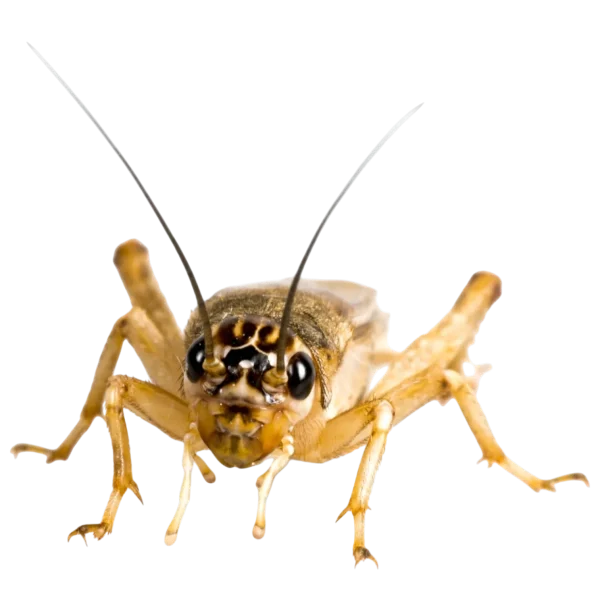
Live feeder crickets are available in multiple sizes, so you can choose the best option for your animal. Pinhead crickets are best for very small reptiles, amphibians, arachnids, and young insect-eating pets, while larger crickets are better for adult animals that can safely handle bigger prey.
Use cricket size as a guide, but always match the feeder to your animal’s mouth size, hunting ability, and species needs.
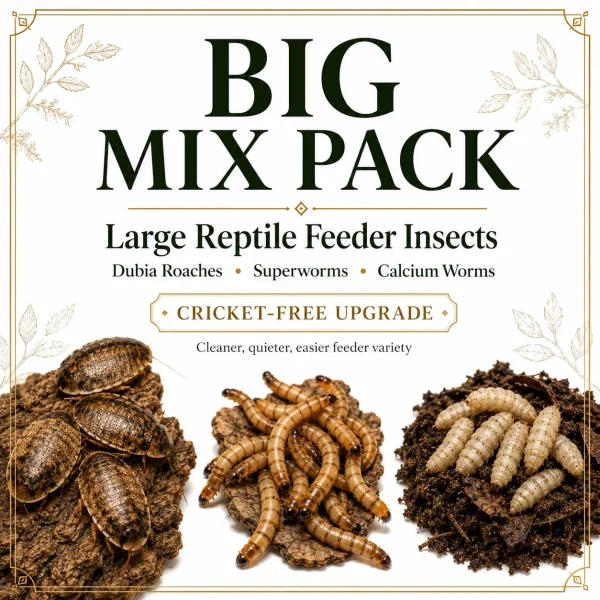
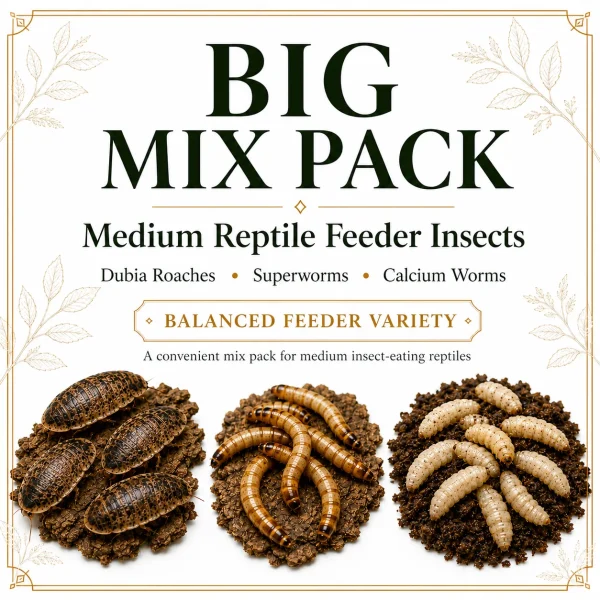
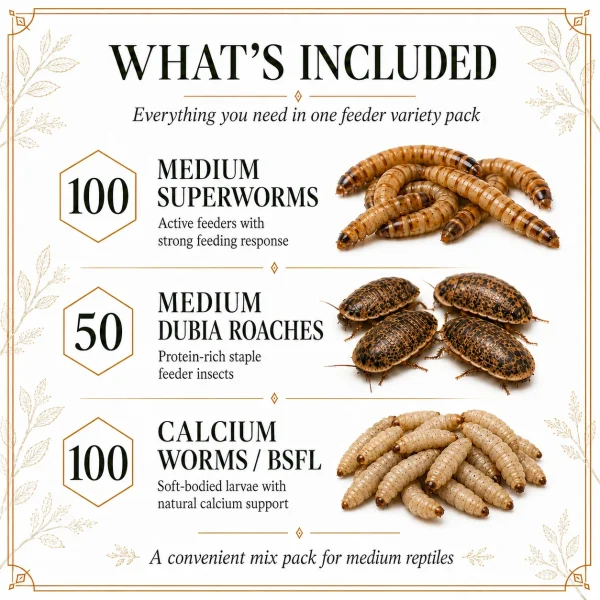
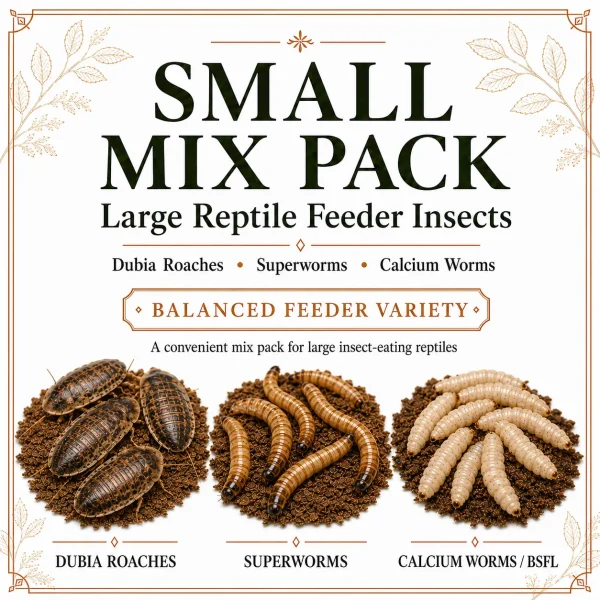
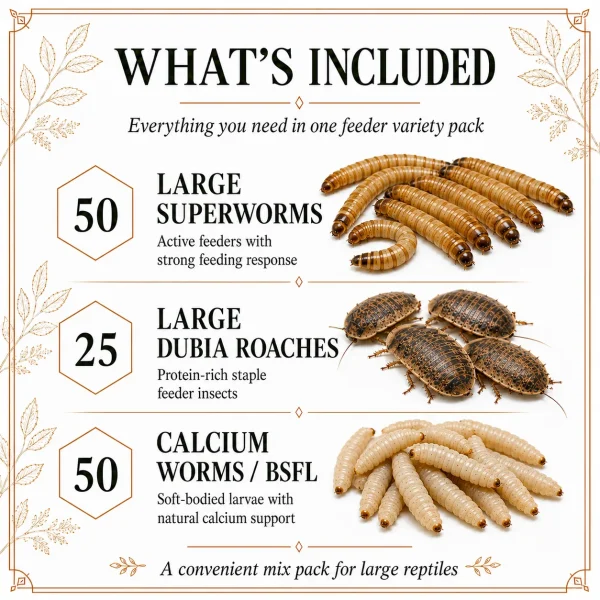
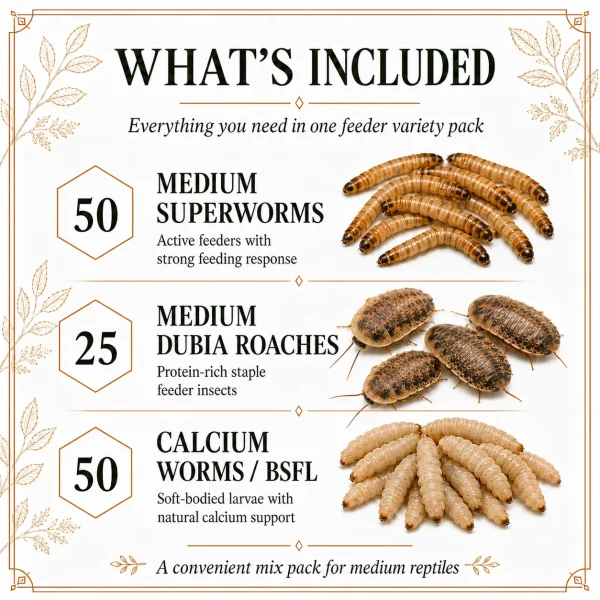
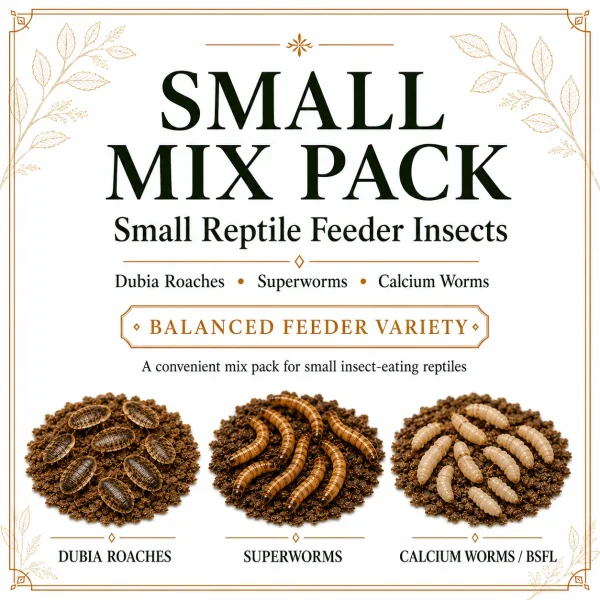
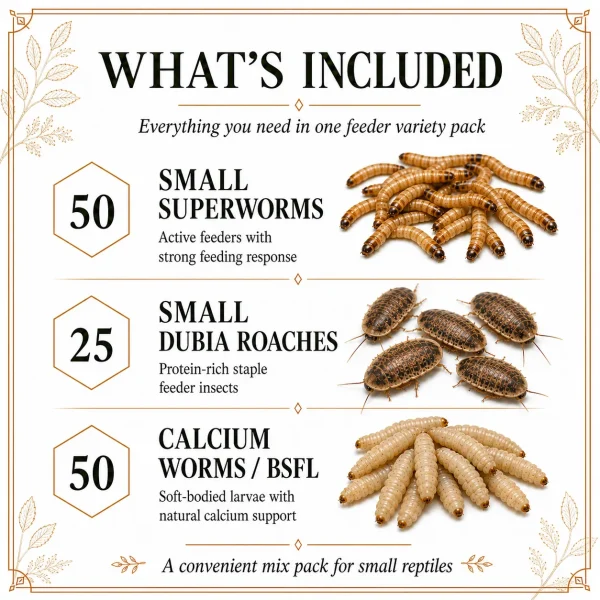
Cricket mix packs are a convenient way to add variety to your pet’s feeder insect diet. These packs combine crickets with other quality feeder insects so reptiles, amphibians, and insect-eating pets are not relying on only one type of prey.
Feeder variety can help provide different textures, movement patterns, and nutrition profiles, which is especially useful for keepers feeding bearded dragons, geckos, chameleons, frogs, skinks, monitors, and other insectivores.
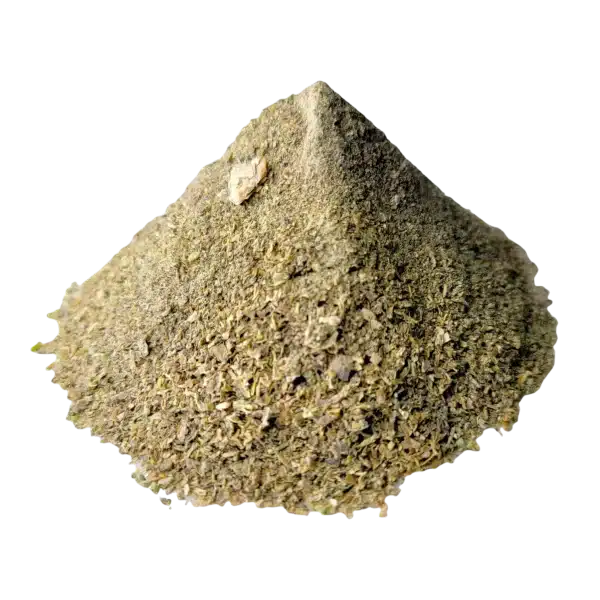
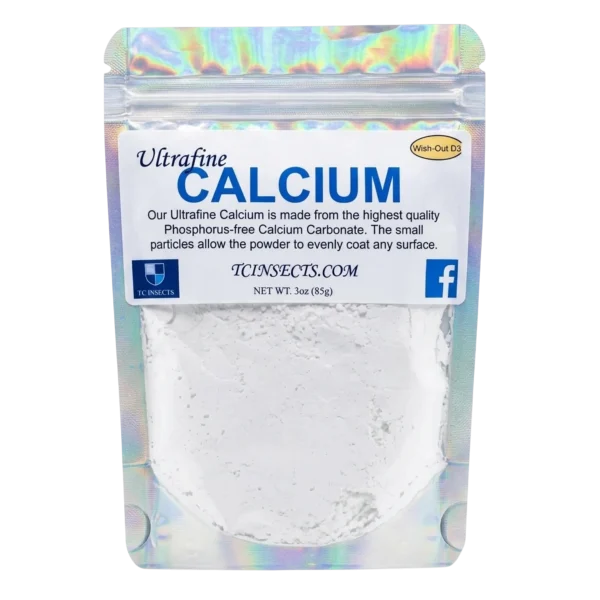
Cricket supplies help keep feeder crickets healthier before feeding. Premium cricket feed can be used for gut loading, while calcium powder helps support proper reptile nutrition when crickets are dusted before feeding.
For best results, keep crickets in a ventilated container with food, hydration, hiding space, and proper temperature. Healthy feeder crickets are easier to feed, easier to manage, and better for your animals.
Choosing the right cricket size is important for safe feeding. As a general rule, feeder crickets should be no larger than the space between your reptile or amphibian’s eyes, unless your species has different feeding requirements. Smaller animals usually need pinhead or small crickets, while larger reptiles can often handle medium or large crickets.
Pinhead crickets are useful for baby reptiles, small frogs, tiny geckos, mantises, jumping spiders, and other small insect-eating animals. Small and medium crickets are common choices for juvenile reptiles and amphibians. Large crickets are usually better for adult reptiles that can safely eat larger prey.
Crickets are one of the most common feeder insects because they move actively, stimulate hunting behavior, and are accepted by many insect-eating animals. They are often used for bearded dragons, leopard geckos, chameleons, anoles, skinks, frogs, tarantulas, mantises, and other insectivores.
However, crickets should not be the only feeder insect in every diet. Many keepers rotate crickets with Dubia roaches, hornworms, mealworms, superworms, silkworms, black soldier fly larvae, waxworms, and other feeders to provide more variety.
Gut loading means feeding crickets nutritious food before offering them to your pet. This helps improve the value of the feeder insect before it is eaten. Premium cricket feed, fresh vegetables, and safe hydration sources can help keep crickets active and useful before feeding.
Many reptile keepers also dust crickets with calcium powder or vitamin supplements before feeding. Dusting needs depend on the animal’s species, age, UVB exposure, diet, and veterinary guidance, so always follow care recommendations for your specific pet.
Choose cricket size based on your animal’s size and feeding ability. Pinhead crickets are best for very small animals, while medium and large crickets are better for larger juveniles and adults.
Yes. Crickets are commonly used as feeder insects for many reptiles and amphibians. They are active, widely accepted, and useful when properly gut-loaded and dusted.
Keep crickets in a ventilated container with hiding space, food, hydration, and appropriate temperature. Avoid overcrowding, moisture buildup, and poor airflow.
Yes. Gut loading crickets before feeding can improve their nutritional value for reptiles, amphibians, and other insect-eating pets.
Some animals can eat crickets regularly, but feeder variety is usually better. Rotating crickets with other feeders can help provide a broader diet and reduce boredom.
Crickets may die from poor ventilation, too much moisture, overcrowding, lack of food, lack of hydration, or temperatures that are too hot or too cold.
Live crickets can be part of a healthy feeder rotation when they are properly sized, gut-loaded, and dusted for the animal being fed. For general reptile feeding guidance, we have compiled some great reading resources below; be sure to check out our cricket care blog.
Reptile nutrition basics from VCA Animal Hospitals
https://vcahospitals.com/know-your-pet/feeding-reptiles
General cricket information from University of Kentucky Entomology
https://entomology.ca.uky.edu/ef006
Calcium and reptile nutrition guidance from Merck Veterinary Manual
https://www.merckvetmanual.com/exotic-and-laboratory-animals/reptiles/nutrition-in-reptiles
Feeder Insect Variety Matters More Than Most Beginners...

Preface: Basic Springtail Care Sheet Being the largest...

Cricket Care: A Beginner’s Guide Crickets are a...

Mealworms are a popular choice for pet owners who are...
© 2026 | TCINSECTS | All RIGHTS RESERVED