
Estimated reading time: 12 minutes
Feeder Insect Variety Matters More Than Most Beginners Realize
When people first get a bearded dragon, gecko, chameleon, frog, or other insect-eating pet, it is easy to fall into the habit of feeding the same insect every time. It’s important to remember, however, that Reptile Feeder Insects Variety is key to providing proper nutrition. It feels simple. The animal eats it. Everything seems fine.
But long-term, variety is one of the most important parts of good feeder insect nutrition.
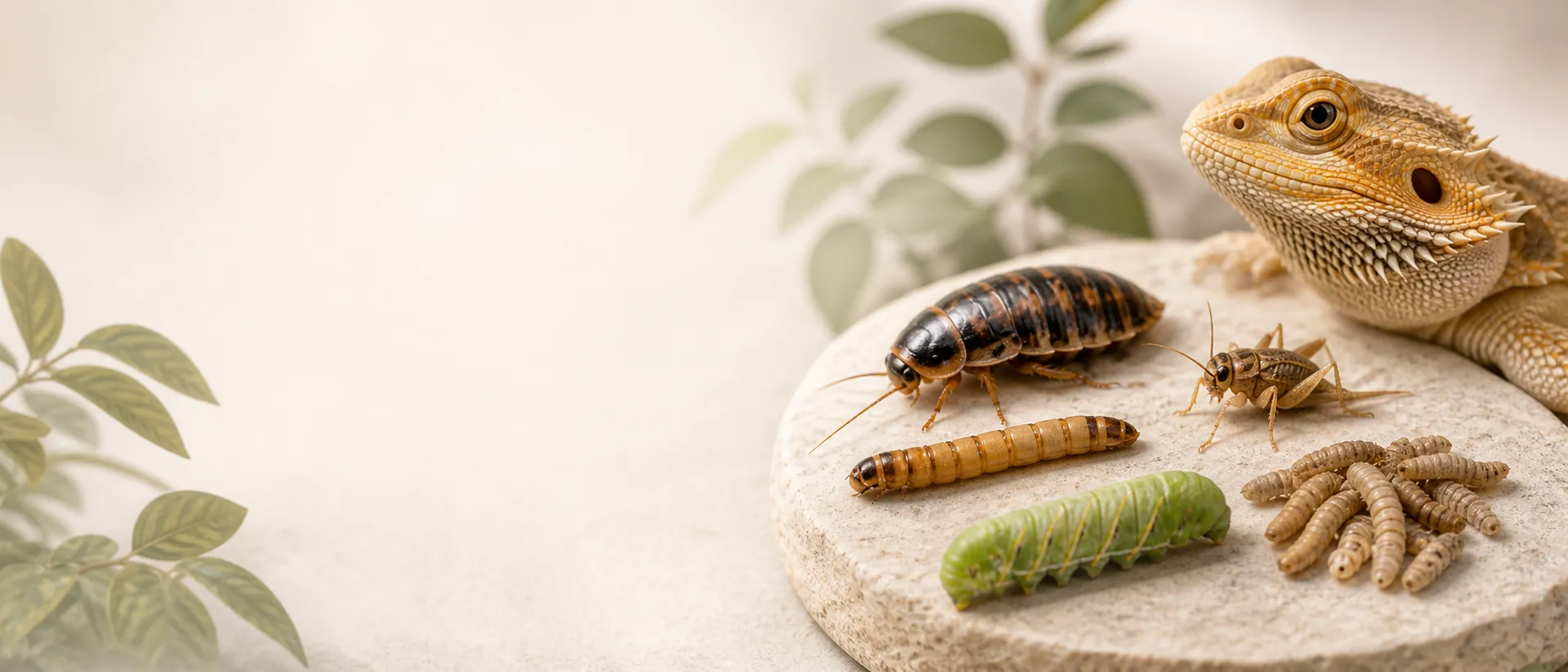
Different feeder insects offer different benefits. Some are better as everyday staples. Some are useful for hydration. Some are higher in fat and should be used more like treats. Some are great for picky eaters because they move in a way that triggers a strong feeding response.
At TC INSECTS, we raise and sell a wide variety of live feeder insects because no single feeder does everything perfectly. A better feeding plan usually comes from rotating several high-quality feeders instead of depending on only one.
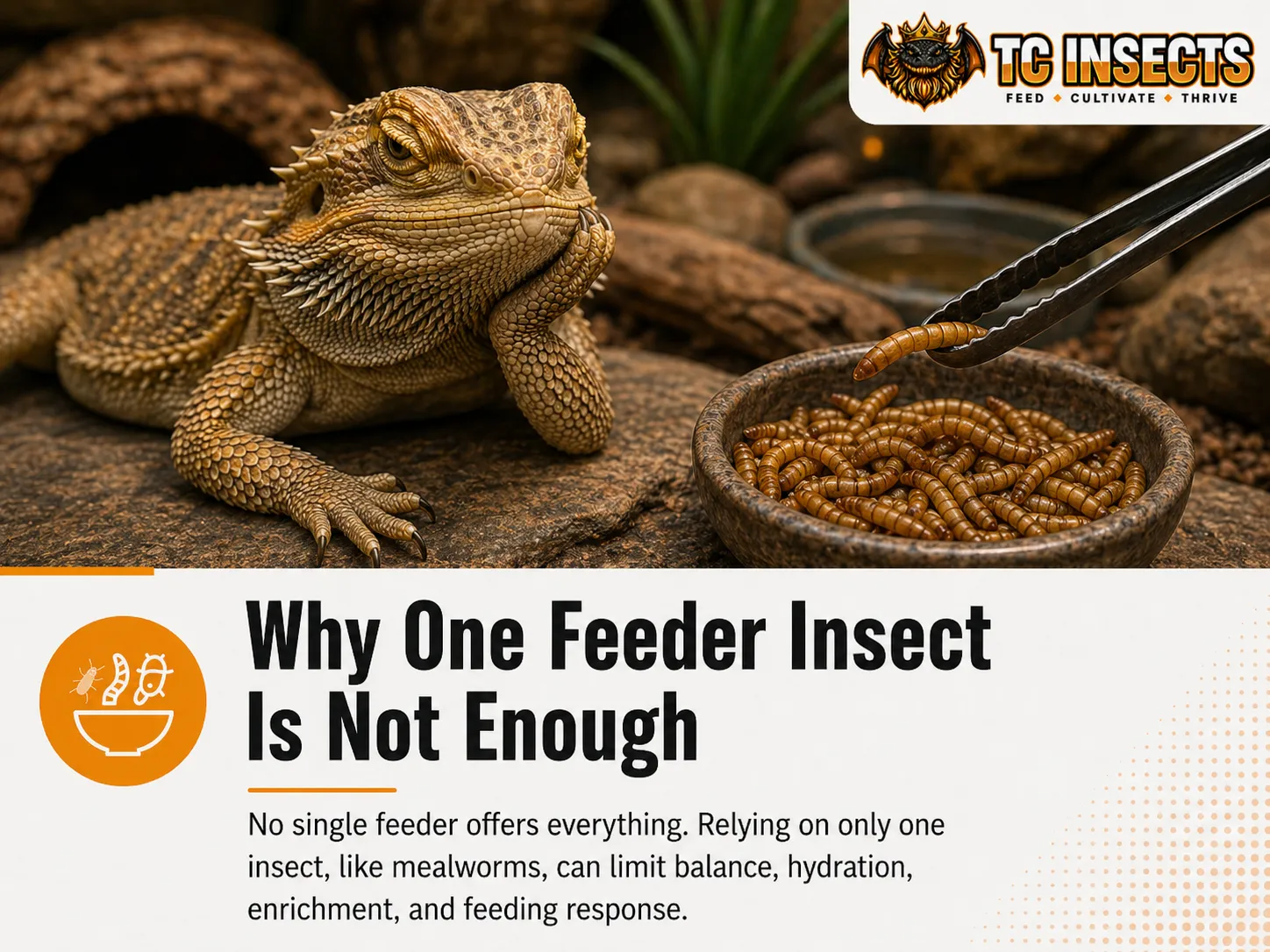
Why One Feeder Insect Is Not Enough
Every feeder insect has a different balance of protein, fat, moisture, fiber, minerals, and digestibility. Even good feeders can create problems if they are the only thing being offered.
A diet built around only one insect can lead to:
◦ Poor nutritional balance
◦ Food boredom or picky eating
◦ Too much fat from overusing rich feeders
◦ Not enough moisture from dry feeders
◦ Missed opportunities for natural hunting behavior
◦ Greater risk of relying on one food source if your pet suddenly refuses it
Veterinary nutrition references also point out that many common feeder insects are naturally low in calcium compared to phosphorus, which is why gut loading and calcium supplementation are important parts of reptile feeding.
That is why variety, gut loading, and proper supplementation should work together.
Think of Feeder Insects Like a Balanced Menu
A good feeder rotation is not about randomly throwing bugs into a bowl. It is about using each feeder for what it does best.
For example:
Dubia roaches are often used as a strong staple feeder because they are meaty, active, easy to size, and useful for many insect-eating reptiles.
Black soldier fly larvae, also called BSFL or calcium worms, are valued because they are naturally higher in calcium than many other feeder insects. TC INSECTS offers BSFL as part of its live feeder insect selection.
Mealworms and superworms are useful feeders, especially for variety and feeding response, but they should usually be balanced with softer-bodied or more moisture-rich feeders.
Hornworms are excellent for hydration and are often accepted quickly because of their size, color, and movement.
Silkworms are soft-bodied feeders that many reptiles love, and they can be a great way to add variety for keepers who want something different from roaches and worms.
Fruit flies are important for tiny reptiles, amphibians, baby mantises, small frogs, and other small insectivores that need appropriately sized prey.
TC INSECTS carries categories such as Dubia roaches, hornworms, mealworms, superworms, silkworms, BSFL, fruit flies, insect cultures, and feeder insect mix packs, giving keepers multiple ways to build a better feeding rotation. Check out the link below for Mix Packs

The 80/20 Rule for Feeder Insect Variety
A simple beginner-friendly way to think about feeder variety is the 80/20 rule.
About 80% of the diet should come from dependable staple feeders that fit your animal’s species, size, and age.
The other 20% can come from rotation feeders that add hydration, enrichment, feeding excitement, or occasional higher-fat variety.
For many keepers, that may look like this:
Main staples: Dubia roaches, BSFL, silkworms, appropriately sized feeder mixes
Rotation feeders: Mealworms, superworms, hornworms, fruit flies, red runners, waxworms, or other feeders, depending on the animal
Treat feeders: Higher-fat feeders used in smaller amounts, not as the entire diet
This does not mean every reptile should eat the same insects. A baby bearded dragon, adult leopard gecko, chameleon, frog, tarantula, mantis, and small gecko may all need different prey sizes and feeding schedules.
The key idea is simple: build a rotation instead of relying on one bug forever.

Feeder Size Is Just as Important as Feeder Type
New keepers often focus on what insect to feed, but size matters just as much.
Feeder insects should be appropriately sized for the animal eating them. Prey that is too large can be harder to swallow, harder to digest, and more stressful for smaller reptiles or amphibians.
A good beginner rule is to choose feeder insects that are no wider than the space between your reptile’s eyes, especially for many lizards. For very small animals, fruit flies, small BSFL, small roaches, or tiny larvae may be better choices.
This is one reason TC INSECTS offers feeders in different sizes. Size options help keepers match the insect to the animal instead of forcing the animal to handle prey that is too large.
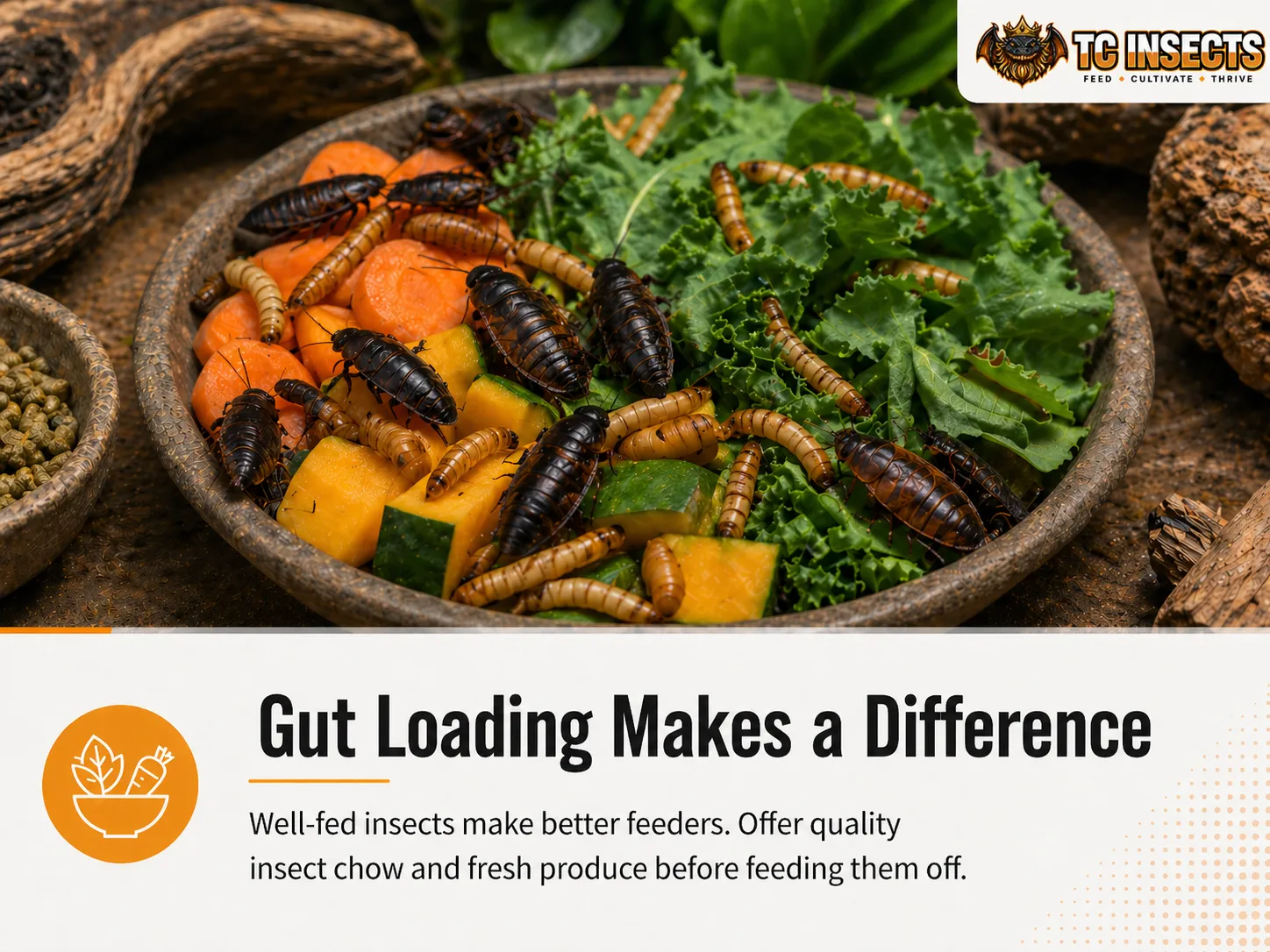
Gut Loading Makes Your Feeders More Valuable
Feeder insects are only as good as what goes into them.
Gut loading means feeding the insects nutritious food before offering them to your reptile or amphibian. This helps turn the feeder insect into a better nutritional package.
For example, Dubia roaches, mealworms, and superworms can be fed quality insect chow, vegetables, and other appropriate foods before feeding. Veterinary references commonly recommend improving feeder nutrition before feeding, especially because many insects naturally need calcium support.
TC INSECTS offers feeder foods such as Dubia food and worm feed options that can be used to help keep feeders healthier before they are fed off.

Do Not Forget Calcium and Supplements
Even with variety, many insect-eating reptiles still need proper calcium and vitamin supplementation. This is especially important for growing reptiles, breeding females, and species with high calcium needs.
Many feeder insects have an imbalanced calcium-to-phosphorus ratio unless they are properly gut loaded or dusted. Merck Veterinary Manual notes that many insects offered to reptiles are low in calcium and that correcting the calcium-to-phosphorus balance is important.
For beginners, this usually means:
◦ Use the right calcium powder for your animal
◦ Dust feeders as recommended for the species
◦ Gut load feeders before feeding
◦ Provide proper UVB when required by the species
◦ Do not rely on one feeder insect to do everything
Always research the specific needs of your animal, because a bearded dragon, leopard gecko, crested gecko, chameleon, frog, and turtle may all need different supplementation routines.
Shop calcium here
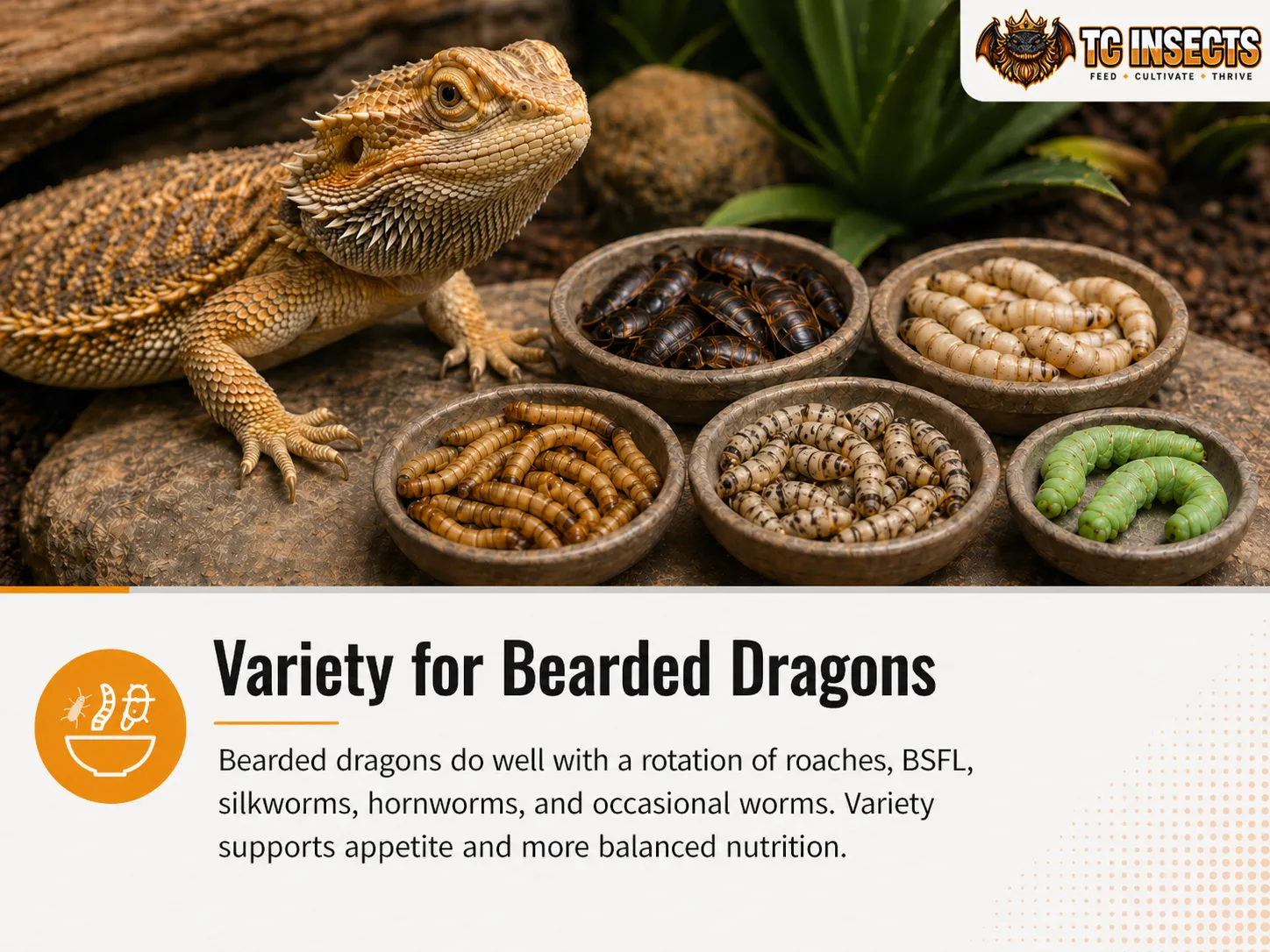
Best Feeder Insect Variety for Bearded Dragons
Bearded dragons are one of the best examples of why feeder variety matters.
Young bearded dragons usually eat more insects because they are growing quickly. Adult bearded dragons usually need more plant matter and fewer insects compared to babies, but high-quality feeder insects are still an important part of the diet.
A strong feeder rotation for many bearded dragon keepers may include:
◦ Dubia roaches
◦ BSFL
◦ Silkworms
◦ Hornworms
◦ Mealworms or superworms in moderation
◦ Feeder insect mix packs
Dubia roaches can provide a strong staple base, BSFL can add calcium value, hornworms can help with hydration, and silkworms can add soft-bodied variety.
The goal is not to overfeed every insect. The goal is to use each feeder wisely.
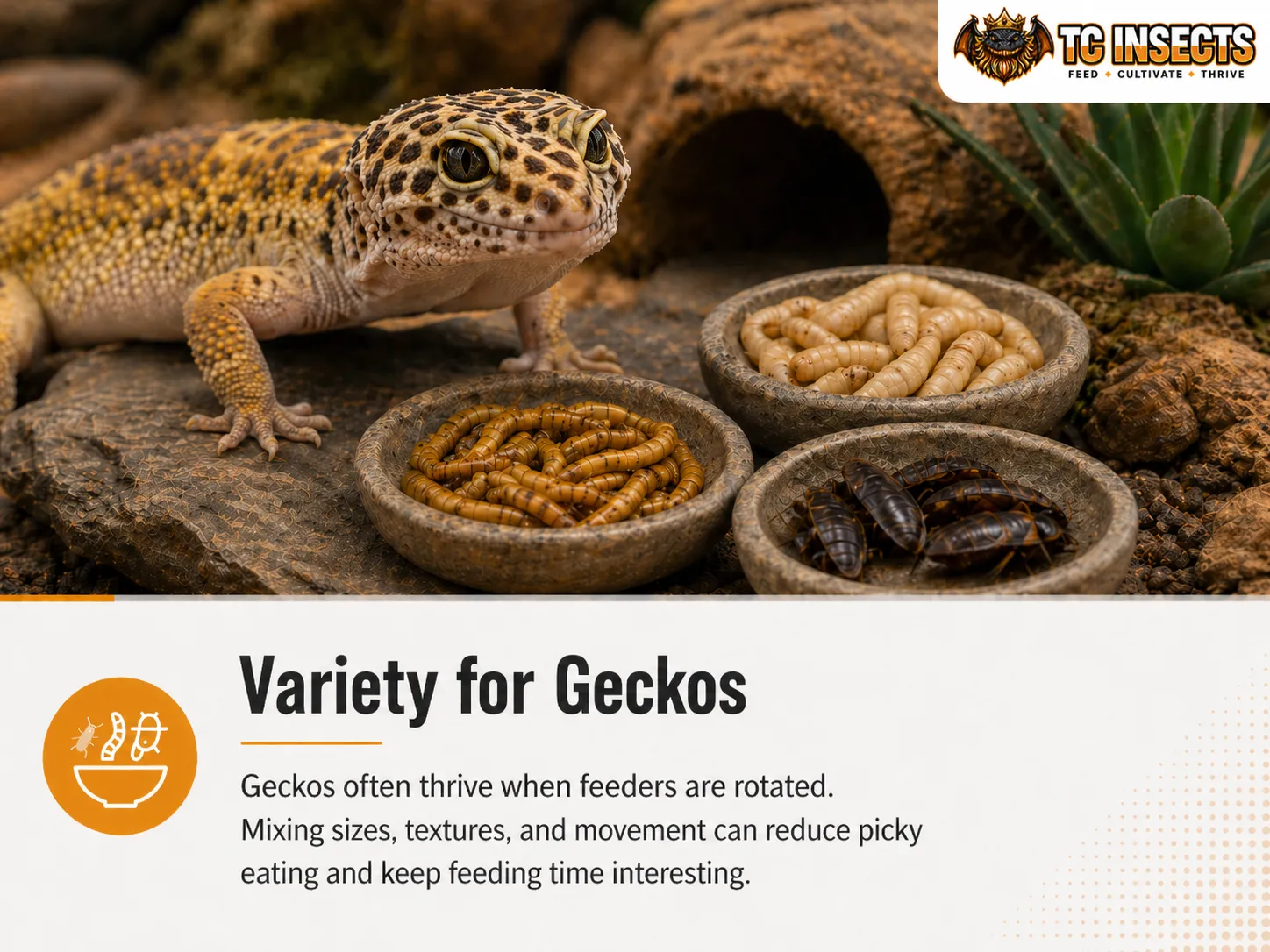
Best Feeder Insect Variety for Geckos
Many geckos benefit from a mix of movement, size variety, and digestible feeders.
Leopard geckos, African fat-tailed geckos, tokay geckos, day geckos, and other insect-eating geckos may accept different prey depending on their size and personality.
Good feeder options may include:
◦ Dubia roaches
◦ Mealworms
◦ Superworms for larger geckos
◦ BSFL
◦ Silkworms
◦ Small hornworms
◦ Fruit flies for very small species or babies
For geckos, variety also helps prevent picky feeding. Some animals get locked onto one feeder and refuse others. Rotating feeders early can help keep them flexible.

Best Feeder Insect Variety for Chameleons
Chameleons are visual hunters. They often respond strongly to movement, shape, and variety.
A chameleon that eats the same feeder every day may eventually lose interest. Rotating feeders can help keep feeding behavior strong and natural.
Common feeder options may include:
◦ Dubia roaches
◦ Silkworms
◦ Hornworms
◦ BSFL
◦ Superworms in moderation
◦ Fruit flies for babies or very small species
Hydration is especially important for chameleons, so moisture-rich feeders like hornworms and silkworms can be helpful as part of a varied plan.
Best Feeder Insect Variety for Frogs and Amphibians
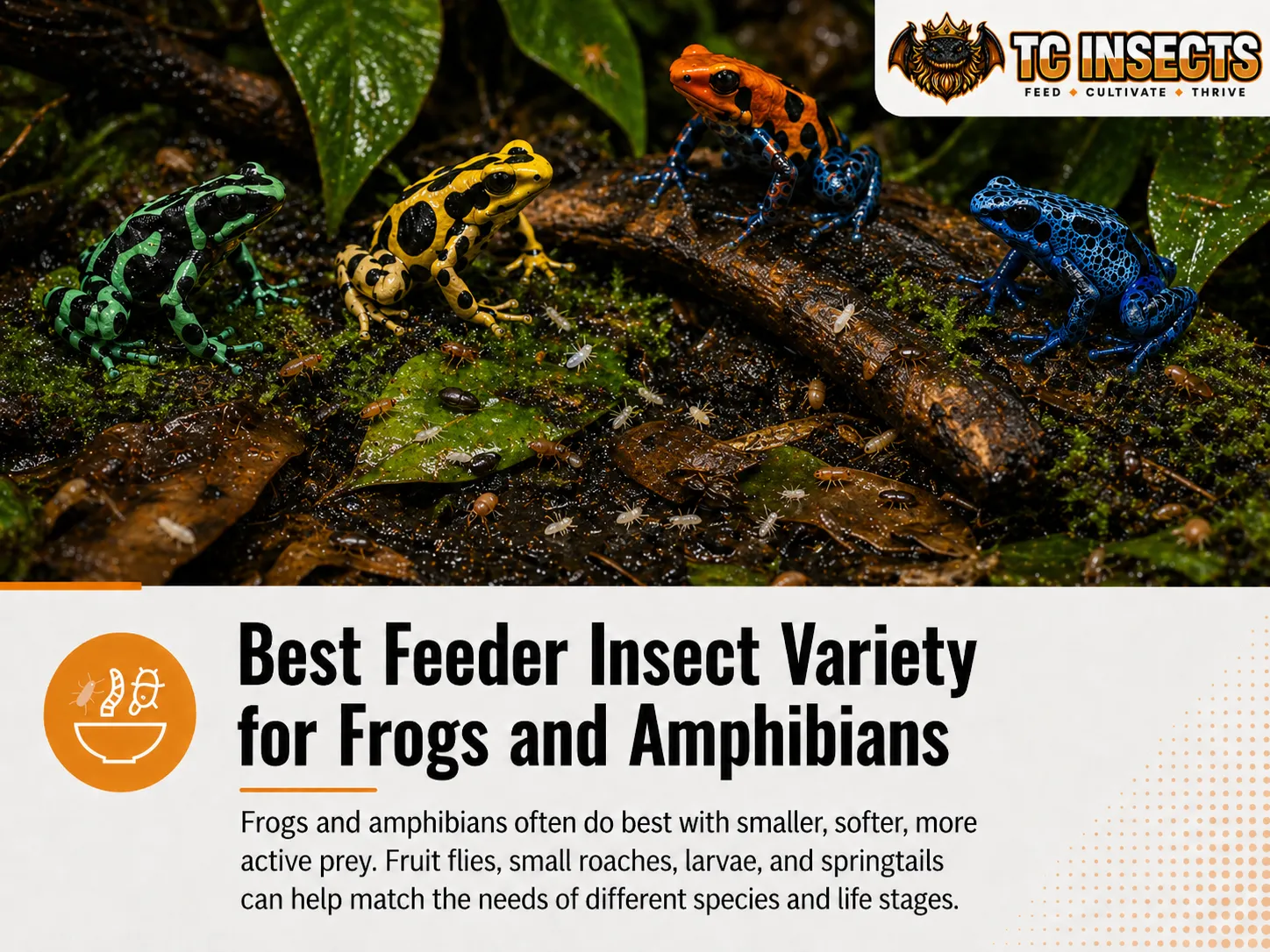
Frogs and amphibians often need smaller, softer, or more active prey depending on species and size.
Tiny frogs may need fruit flies or small larvae. Larger frogs may accept roaches, worms, and other feeders.
Possible feeder options include:
◦ Fruit flies
◦ Small BSFL
◦ Small roaches
◦ Mealworms for suitable species
◦ Hornworms for larger animals
◦ Springtails for very small amphibians or bioactive setups
Springtails are also useful in bioactive enclosures because they help clean up mold, waste, and decaying organic matter. TC INSECTS carries live springtails and bioactive insects, making it easier for keepers to build both a feeding plan and a cleaner enclosure system.
Why Feeder Insect Mix Packs Are a Smart Option
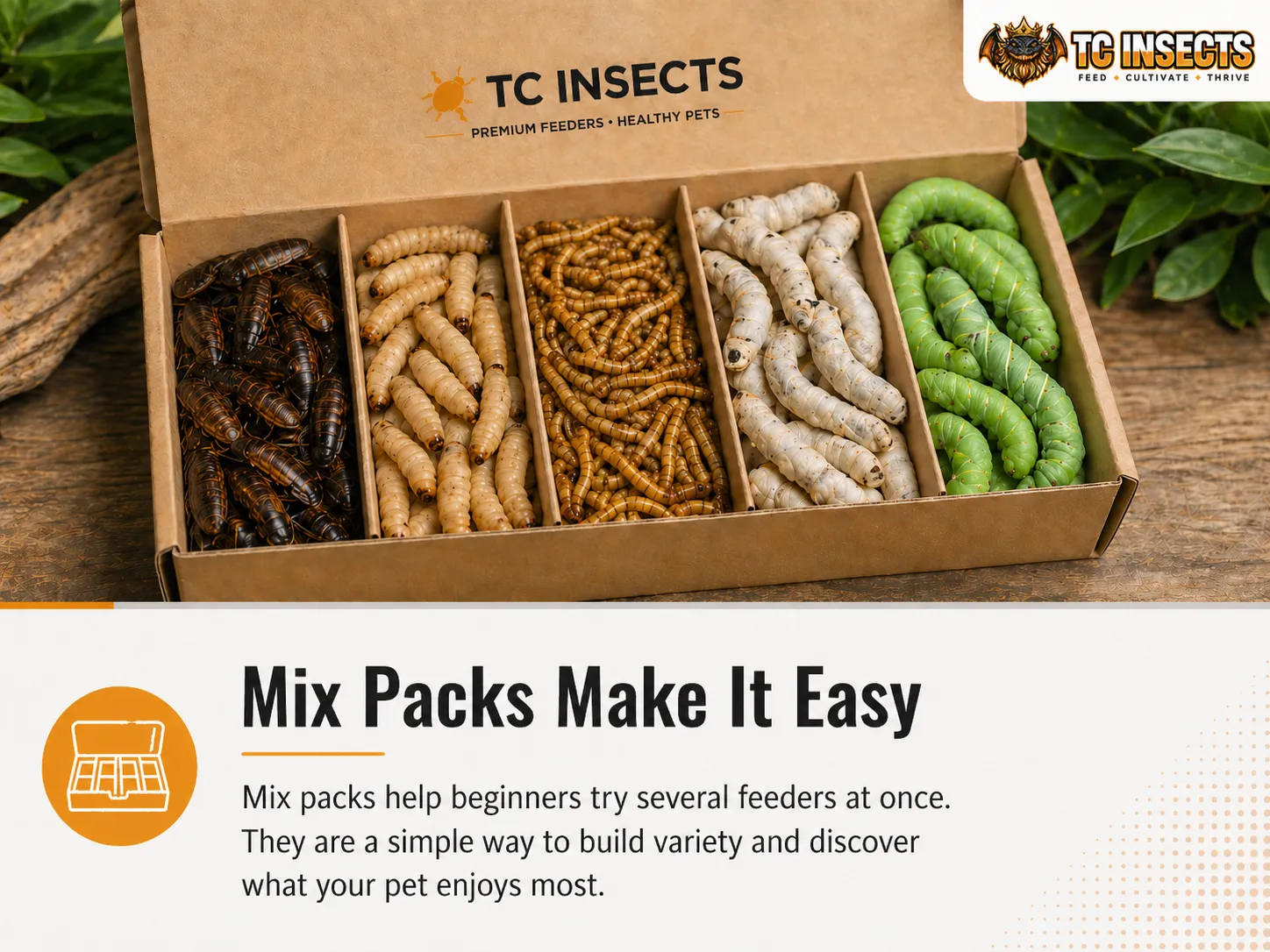
For beginners, choosing the right insects can feel overwhelming. That is where feeder insect mix packs can help.
A good mix pack gives keepers an easy way to try multiple feeders without buying large quantities of every insect separately.
Mix packs are useful because they:
◦ Help prevent diet boredom
◦ Introduce new feeders gradually
◦ Make it easier to test what your animal likes
◦ Support a more balanced feeding routine
◦ Reduce the guesswork for new keepers
TC INSECTS offers feeder insect mix packs as part of its live feeder insect category, which is helpful for keepers who want variety without building every order from scratch.
How to Start a Simple Feeder Rotation
Here is an easy beginner plan:
Start with one reliable staple feeder your animal already eats well.
Add one calcium-supporting or nutrient-diverse feeder, such as BSFL.
Add one hydration feeder, such as hornworms or silkworms.
Use richer feeders, such as superworms or waxworms, more sparingly.
Gut load your feeders before feeding.
Dust with calcium or vitamins based on your animal’s needs.
Adjust the plan based on your reptile’s age, size, species, body condition, and appetite.
For many keepers, a simple rotation is better than trying to make feeding complicated. The goal is consistency, quality, and balance.
Why Buy Feeder Insects from TC INSECTS?
Feeder insects are not just “bugs.” They are part of your animal’s nutrition.
That is why quality matters.
TC INSECTS has built its brand around live insects, bioactive cleanup crews, and feeder insect care. The company offers a wide selection of live feeder insects, including Dubia roaches, BSFL, hornworms, mealworms, superworms, silkworms, fruit flies, springtails, isopods, and feeder insect mix packs.
When you buy from TC INSECTS, you are buying from a company that understands live insect care, reptile feeding, and the importance of providing healthy feeders in the right sizes.
Whether you are feeding one pet gecko or managing a large reptile collection, feeder quality and variety can make a real difference.
Learn More About TC here.
Final Thoughts: Better Variety Means Better Feeding
Feeder insect variety is one of the easiest ways to improve your reptile or amphibian’s feeding routine.
You do not need to make it complicated. Start with quality feeders, rotate different insect types, gut load when appropriate, use supplements correctly, and choose the right prey size.
A better feeder rotation can support:
◦ Stronger appetite
◦ Better nutrition
◦ More natural hunting behavior
◦ Less food boredom
◦ Better hydration
◦ A more complete feeding routine
At TC INSECTS, we make it easier to build that rotation with a wide selection of live feeder insects, feeder insect mix packs, insect foods, and bioactive supplies.
Ready to build a better feeder rotation? Browse our live feeder insects and feeder insect mix packs below.
Products by Category
-
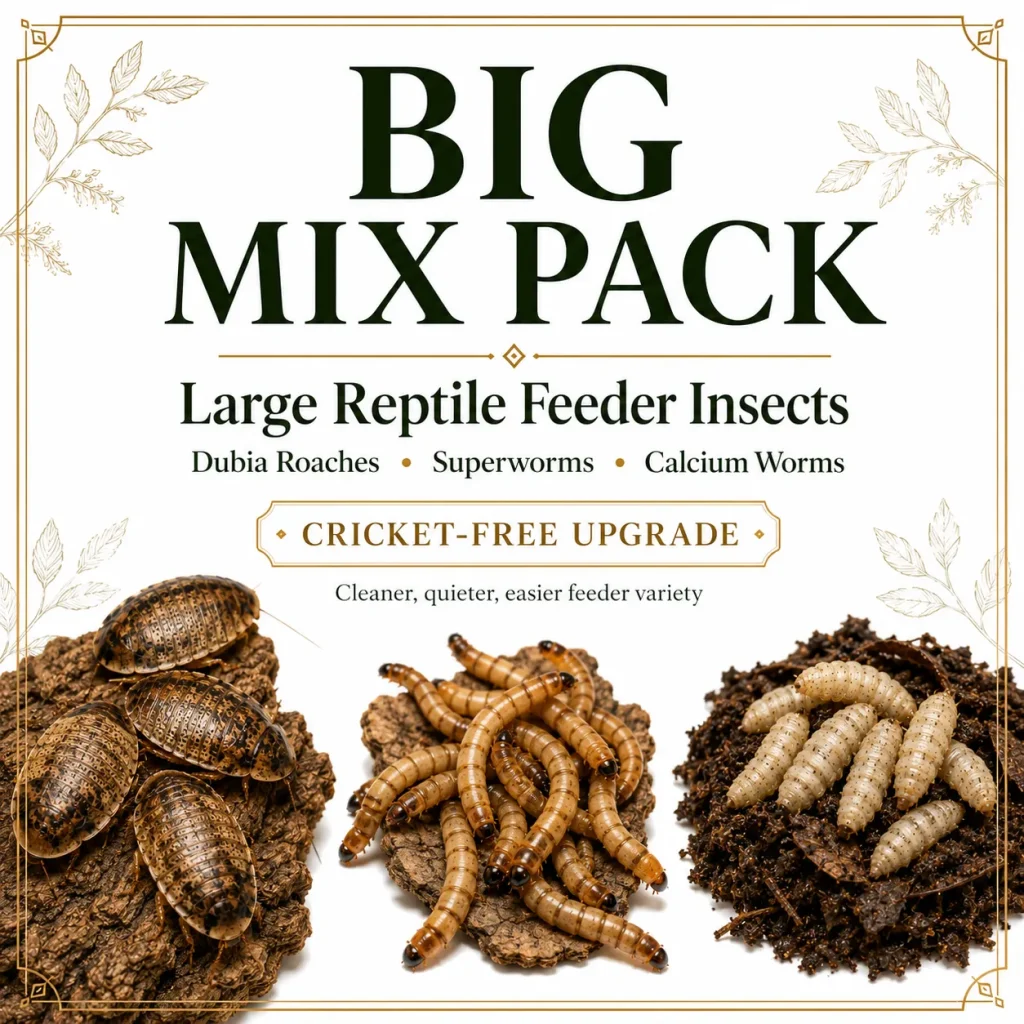
BIG Mix Pack: Large Reptile Feeder Mix Pack
$24.99 -
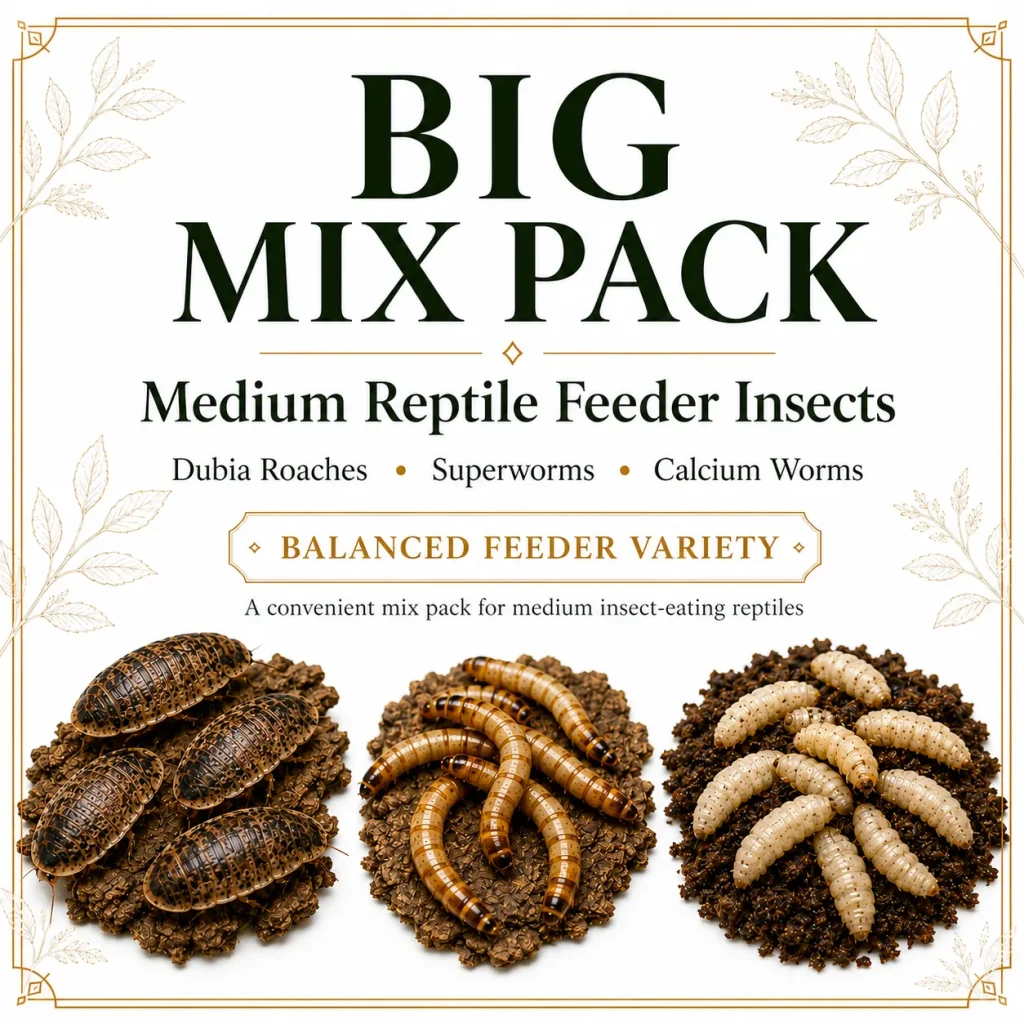
BIG Mix Pack: Medium Reptile Feeder Mix Pack
$19.99 -
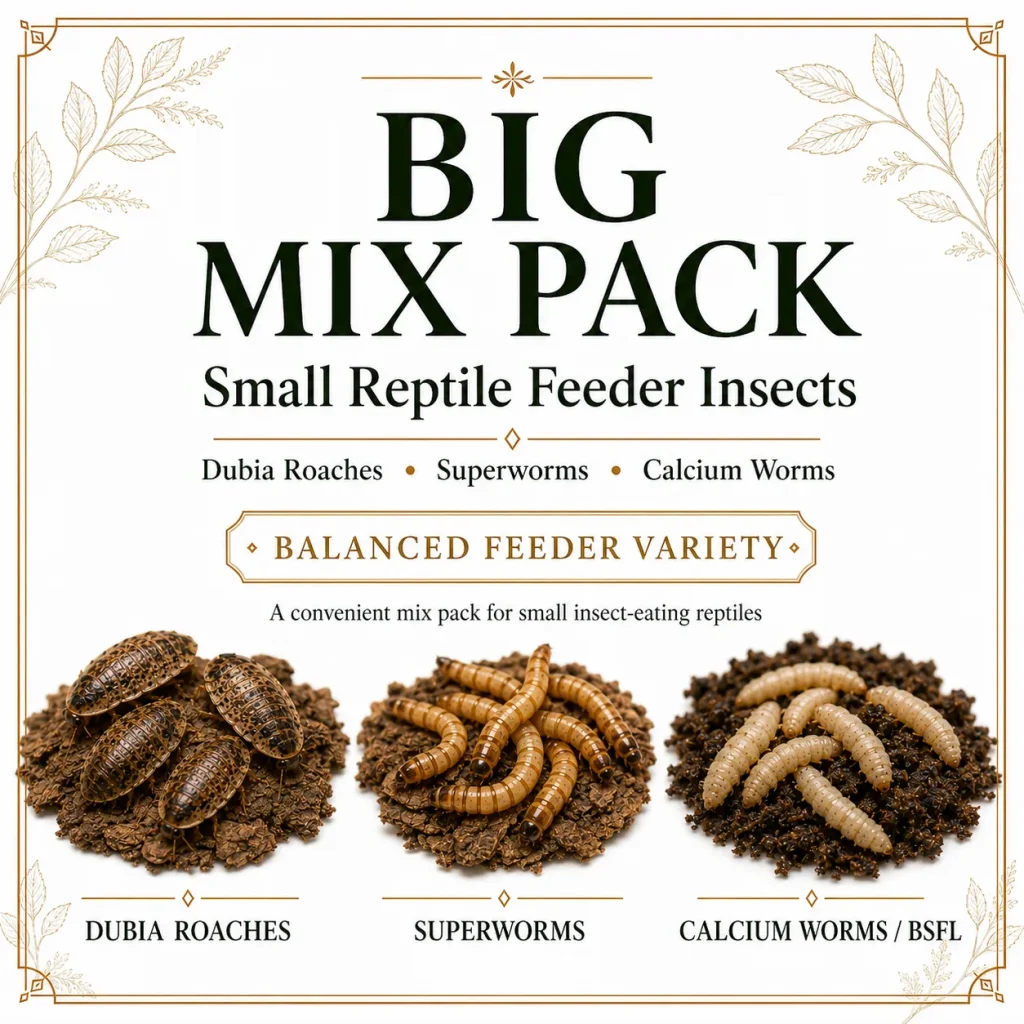
BIG Mix Pack: Small Reptile Feeder Mix Pack
$18.99 -

Small Mix Pack: Large Size Insects
$15.50 -

Small Mix Pack: Medium Reptile Feeder
$13.99 -
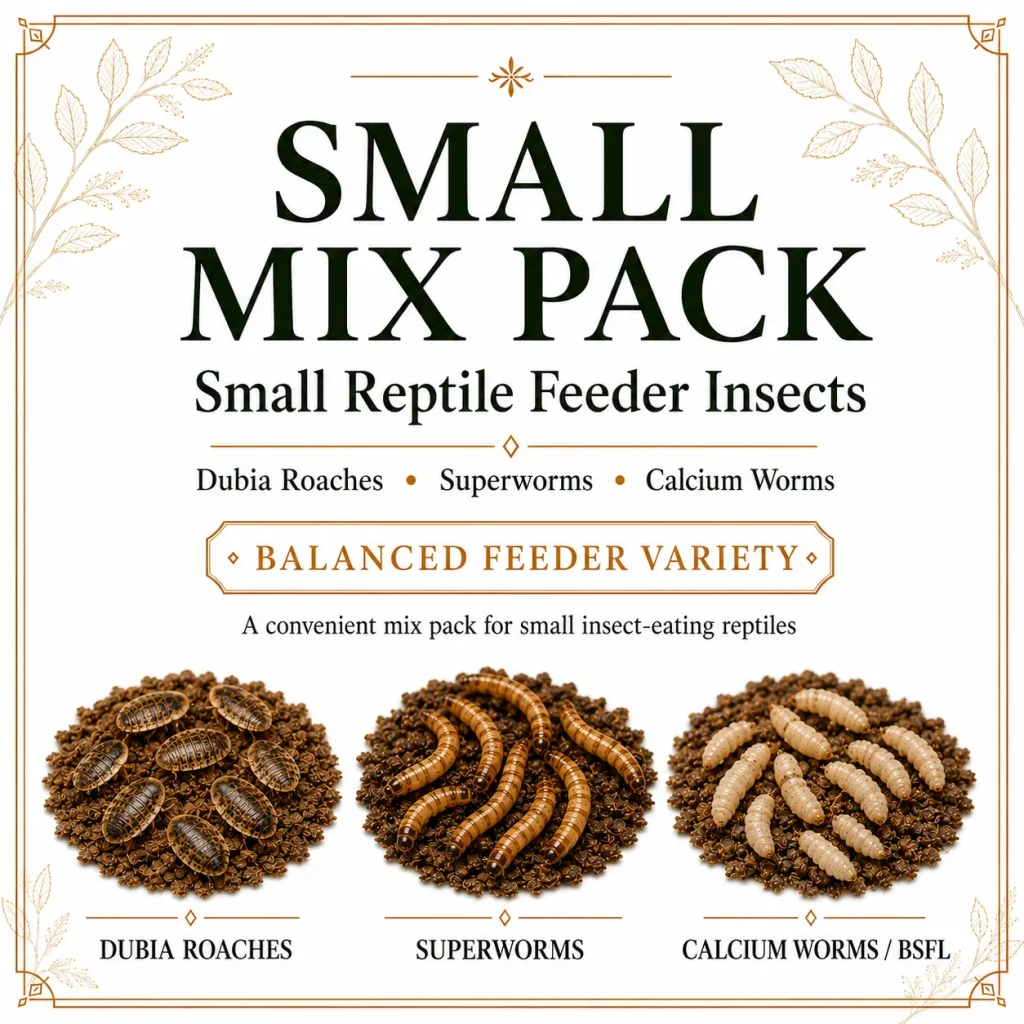
Small Mix Pack: Small Reptile Feeder
$12.99 -

SUPER WORMY SAMPLER | 5 Types of Worms | 125ct Total
$34.99 -

WORM PACK | 12ct Silkworms | 12ct Hornworms
$19.99 -
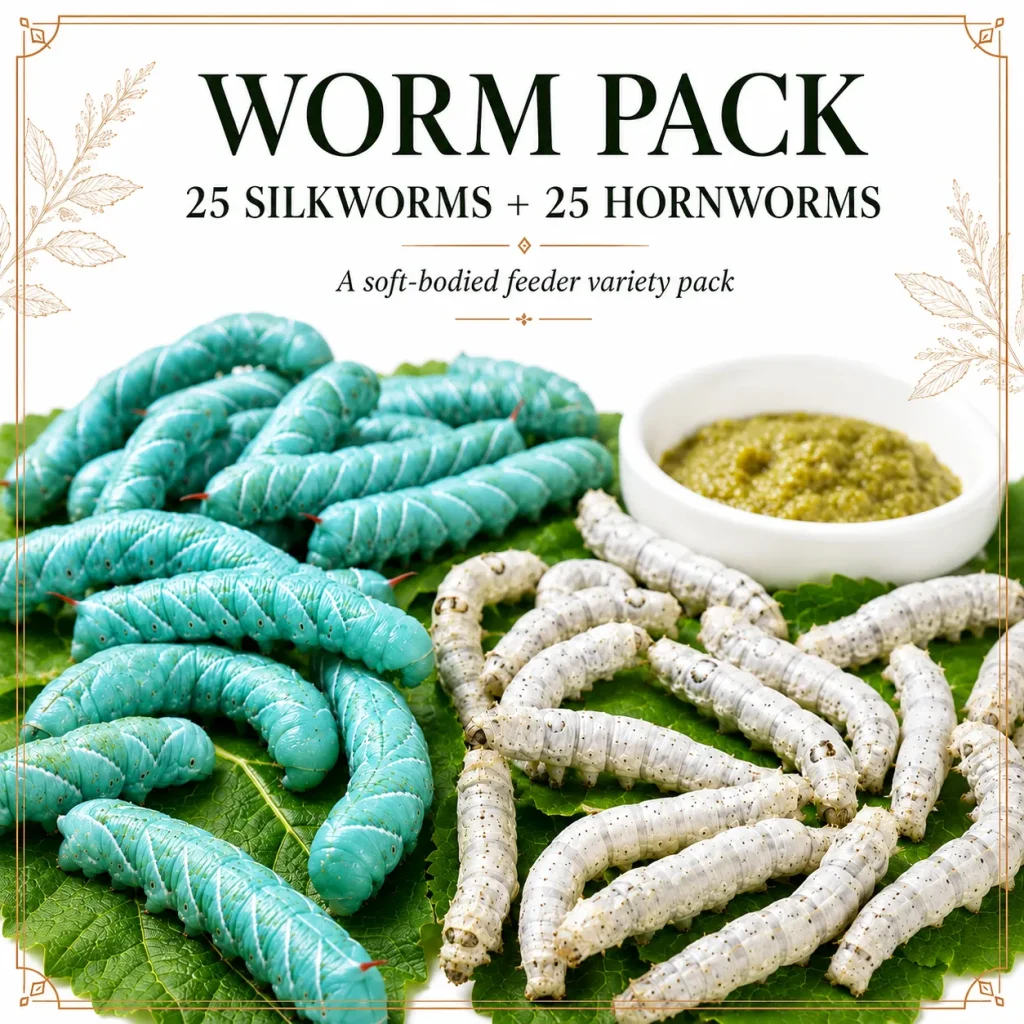
WORM PACK | 25ct Silkworms | 25ct Hornworms
$27.99