
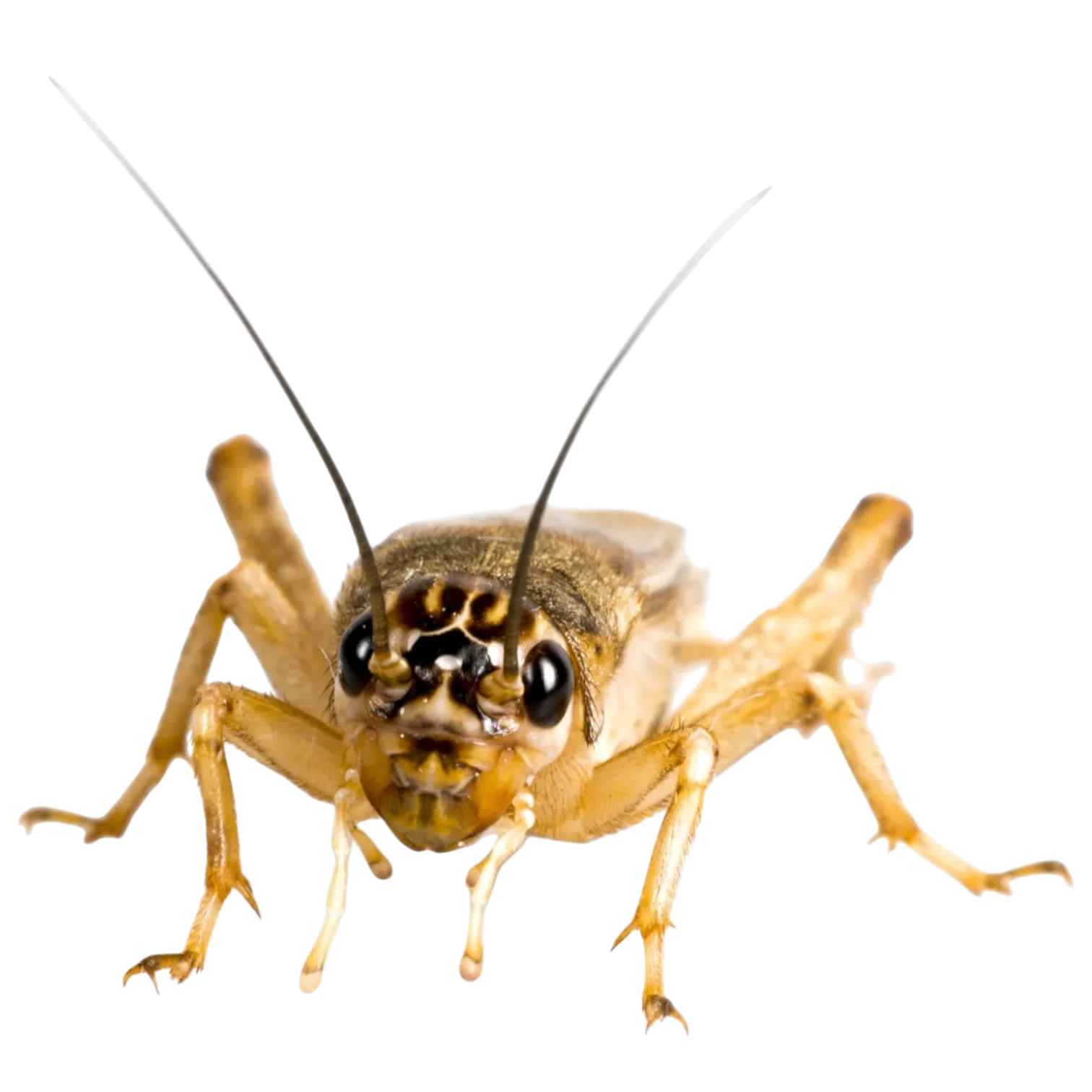
Small Crickets for Sale
Small crickets are the 1/4″ size, the step up from pinheads. They are usually the house cricket, Acheta domesticus. This size suits young lizards, geckos, skinks, and frogs that have grown past the smallest feeders. They are lean, high in protein, and arrive gut-loaded. Because they are sturdier than delicate pinheads, they also hold up better in the days after they arrive.
A Practical Size for Young Reptiles
At 1/4″, small crickets work as a everyday staple for many young insectivores. Their active movement draws a strong feeding response, which helps with reluctant eaters. So they make a dependable middle ground between pinheads and the larger sizes.
Dust With Calcium Before Feeding
Like all crickets, these are low in usable calcium and carry more phosphorus. So dust them with a supplement such as TC Calcium Ultra Fine before feeding. Keeping them gut-loaded helps too, especially for growing animals that need steady calcium.
Keeping Small Crickets
Keep them warm and well ventilated, with egg-crate or cardboard for hiding. Provide moisture through a gel or water crystals, or a slice of vegetable, rather than an open dish that they can drown in. Keep the container closed, since crickets jump and escape. They last longer than pinheads, though it still helps to use them within a reasonable time.
Choosing a Size
Small crickets sit between the pinhead 1/8″ and medium 1/2″ sizes. So size up as your animal grows, and match the cricket to the width of its mouth for safe feeding.
Best For
- Young lizards, geckos, skinks, and frogs.
- Small insectivores that have outgrown pinheads.
- Reluctant eaters that respond to active prey.
- Keepers who want a reliable small staple feeder.
Not Best For
- Hatchlings and very small animals, which suit pinheads.
- Larger animals, which need the medium or large size.
- Keepers who will not dust feeders, since crickets are low in calcium.
Recommended Add-Ons
- TC Calcium Ultra Fine to dust the crickets before feeding.
- Pinhead Crickets for smaller or younger animals.
- Medium Crickets for when your animal grows.
- Small BSFL as a calcium-rich feeder to rotate in.
- 32oz Deli Cup to hold and portion the crickets.
Frequently Asked Questions
What are small crickets?
They are 1/4″ feeder crickets, usually Acheta domesticus, a step up from pinheads. The size suits young lizards, geckos, skinks, and frogs.
Do I need to dust them with calcium?
Yes. Crickets are low in calcium and carry more phosphorus, so dust them before feeding. This matters for growing animals.
What animals eat 1/4″ crickets?
Young lizards, geckos, skinks, frogs, and similar small juveniles that have outgrown pinheads.
How are they different from pinheads?
They are bigger and sturdier, so they keep more easily and suit slightly larger animals. See the pinhead size for the smallest animals.
How do I keep them?
Keep them warm and ventilated with hides, give moisture through gel or vegetables rather than a dish, and keep the lid secure.
What size comes next?
Move up to the medium 1/2″ size as your animal grows.
Learn More About Feeder Crickets
These sources cover cricket nutrition and why dusting and gut-loading matter.
- Journal of Insect Science: Nutrient Content of the House Cricket. Peer-reviewed research on the nutrition of Acheta domesticus and how diet changes it.
- ScienceDirect: Gut Loading (veterinary overview). A reference on gut-loading and supplementing feeder insects, with crickets as the classic example.
- ABVP: Feeder Insect Nutrition. A veterinary overview noting the inverse calcium-to-phosphorus ratio common to crickets and most feeders.
Reviews
There are no reviews yet.