

Titan Isopods for Sale
TC INSECTS ships live Porcellio hoffmannseggii “Titan” isopods as a mixed-size starter group for display cultures, dedicated breeding projects, and larger bioactive setups. This is one of the largest terrestrial isopod species commonly available in the hobby, and the colony rewards keepers who can give it space, airflow, and a drier-leaning moisture gradient.
Overview
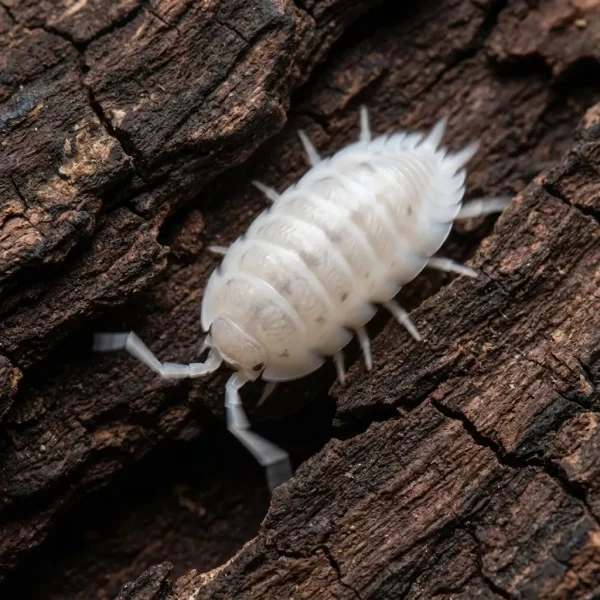
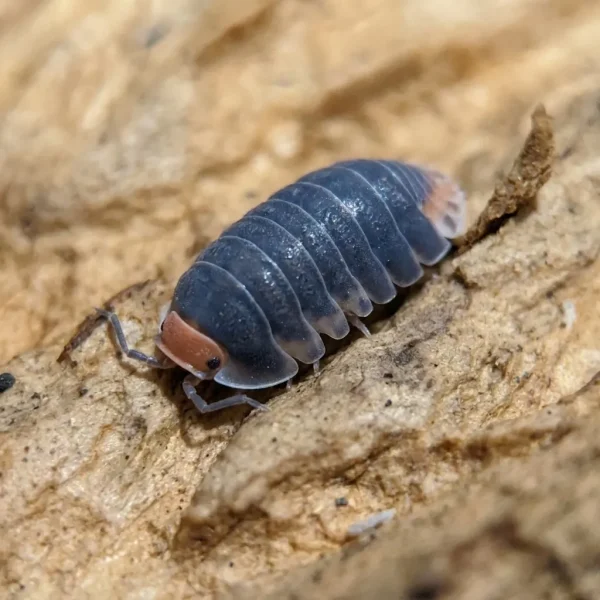
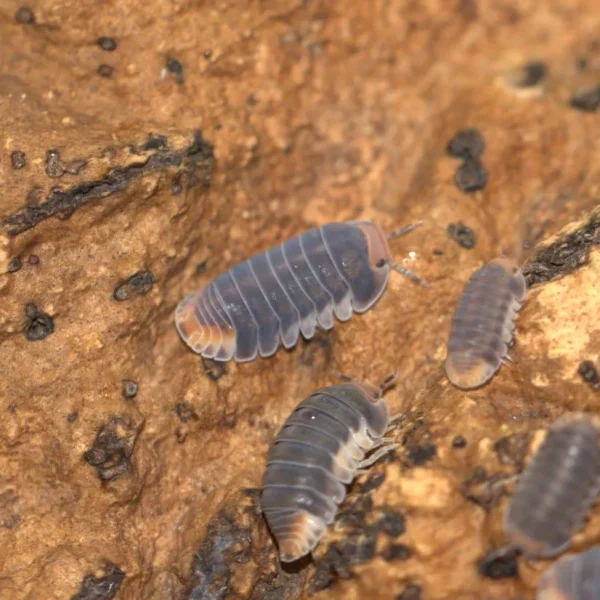
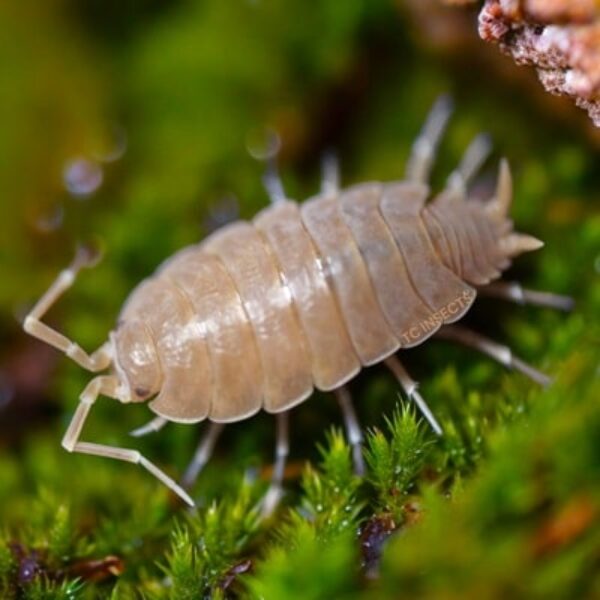
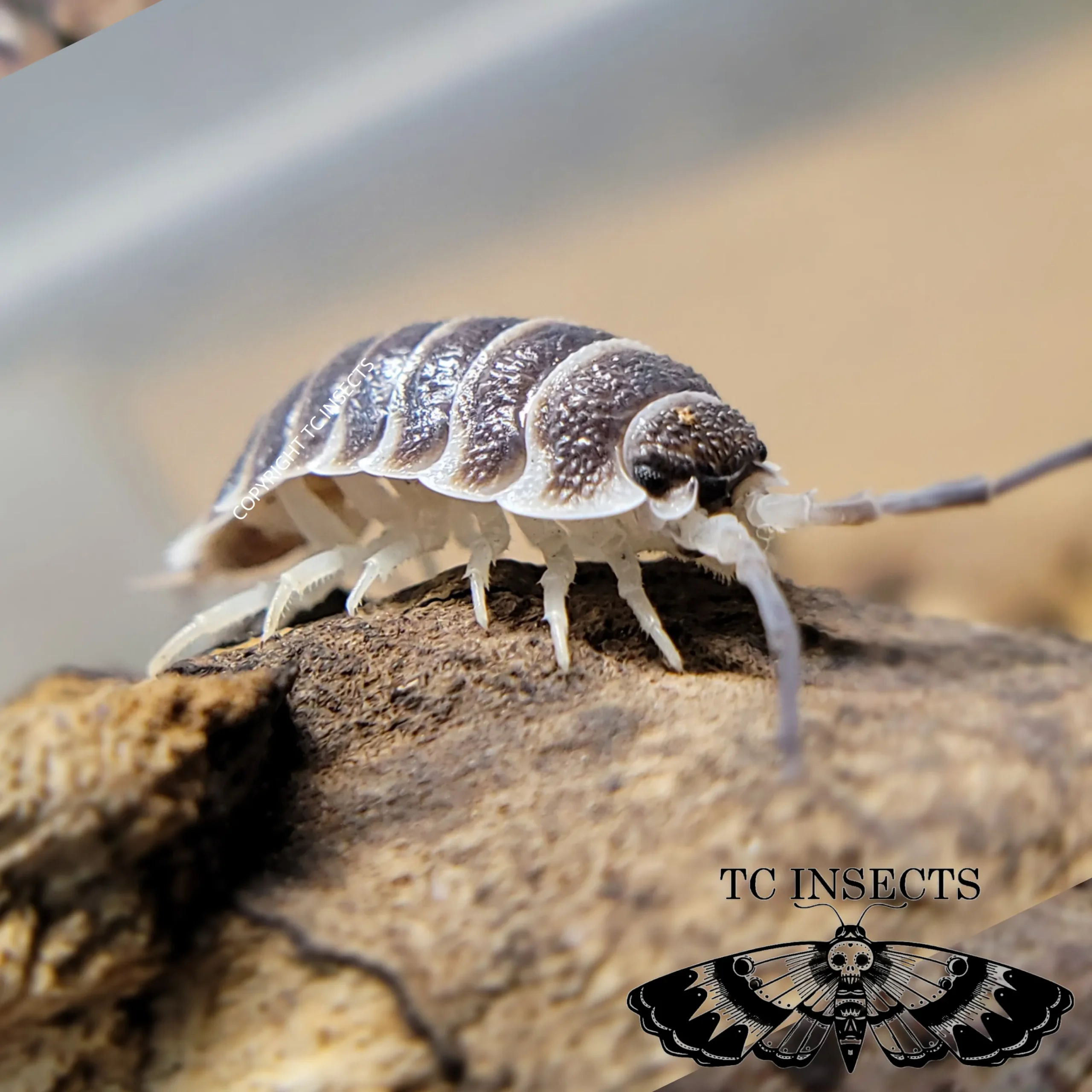
Titan isopods are a giant Mediterranean Porcellio species with a broad, flattened body, dark gray to charcoal coloration, and a thin pale skirt along the edge of the body. Adults can exceed 1.5 inches (about 38 mm) under stable, well-fed conditions.
Mature males show noticeably longer uropods than females, which is one of the easier ways to sex the colony once individuals reach adult size.
This species has two traits that set it apart from most isopods in the hobby. First, it does not conglobate. Unlike pill bugs (Armadillidium species), Titan isopods cannot roll into a ball when disturbed. Second, females have been observed guarding their young after release from the marsupium, which is unusual maternal behavior for a woodlouse. Neither trait is guaranteed in every culture, but both are documented in the scientific literature and have been observed by experienced keepers.
Most customers buy this species for display purposes, breeding projects, or to add a centerpiece colony to a dedicated isopod room. Titan isopods are not a working cleanup crew. They are slower-reproducing than dwarf or Powder species, they need more space per individual, and they do best in a setup built around their needs rather than dropped into a generic bioactive enclosure.
Why Keep Titan Isopods?
- Genuine size. Adults can grow past 1.5 inches, which puts them among the largest terrestrial isopod species in the hobby.
- Striking appearance. Additionally, the dark charcoal body with a thin pale skirt and long uropods on mature males gives the colony a dramatic look in a planted display.
- Unusual behavior. However, what most keepers find compelling is that this species does not conglobate and has been documented guarding young. Few woodlice show this kind of parental behavior.
- Mediterranean climate match. Specifically, they handle a drier overall gradient than most tropical isopods, which suits keepers who prefer well-ventilated, less-wet setups.
- Long-term harvestable culture. As a result, a properly maintained colony can be harvested into multiple display enclosures over time once it establishes.
Honest Note on the Name and Spelling
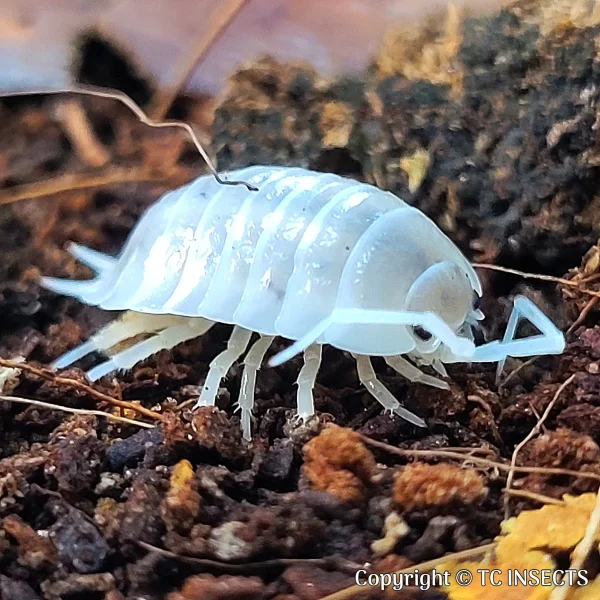
Porcellio hoffmannseggii is frequently misspelled as Porcellio hoffmannseggi (missing the final “i”), and the abbreviated form “P. hoffmannseggii” is shared with a completely unrelated species called Platyarthrus hoffmannseggii. The two are not the same animal. Platyarthrus hoffmannseggii is a tiny white woodlouse around 4 mm long that lives inside ant nests. Our product is the giant Iberian Porcellio, sometimes over 1.5 inches at maturity. If you have seen “P. hoffmannseggii” listed elsewhere and are unsure which species the seller actually has, ask which genus is on the label. The TC INSECTS culture is Porcellio hoffmannseggii.
Honest Note on Breeding Speed and Patience
Titan isopods are not a fast-breeding species. New colonies often need several months of quiet, stable conditions before visible juvenile production begins. They are also more sensitive to overcrowding, stagnant air, and constantly wet substrate than tropical species. As a result, keepers who expect rapid colony explosions like dwarf whites or Powder isopods will be disappointed. The reward with Titans is a long-term breeding culture that produces a steady supply of large, impressive juveniles once established, not a quick cleanup crew turnover.
Care and Setup
Titan isopod husbandry comes down to space, ventilation, a drier overall gradient with a reliable moist retreat, and steady feeding.
Each part of the framework below addresses a real need of the species.
Temperature
Hold the culture between 70 and 78°F. Room temperature in most homes works well. Avoid direct sun, heat lamps aimed at the culture, and sudden temperature swings. The species comes from a Mediterranean climate, so stable warmth matters more than chasing tropical heat.
Humidity
Keep one section of the enclosure lightly moist with sphagnum moss or a moisture-retaining substrate corner. The rest of the enclosure should stay drier, with bark and leaf litter for cover but no standing dampness. A common rule of thumb is to keep roughly one-fifth to one-quarter of the enclosure moist. Avoid soaking the whole substrate. This species is documented as preferring drier captive conditions than most tropical Porcellio, and stagnant moisture is one of the most common causes of colony failure.
Substrate
Use a substrate blend with organic matter built in: coco fiber, decaying hardwood, leaf litter, and a small amount of clean black earth or topsoil work well.
Two to four inches of substrate is enough for most starter cultures. The substrate should hold moisture on the damp side without staying wet across the whole container.
Food
Keep dried hardwood leaves and decaying wood available continuously. These are the foundation of the diet. On top of that, offer small amounts of vegetables (carrot, squash, sweet potato, zucchini) once or twice per week, and a light protein source such as TC INSECTS Isopod Food, fish flakes, or dried shrimp in small portions. Remove uneaten fresh food before it molds. Titan isopods eat slower than fast-breeding species, so overfeeding is one of the easier mistakes to make.
Ventilation
Use a ventilated lid plus cross-ventilation on the sides if possible. Strong airflow is one of the most important parts of Titan husbandry. Stagnant air promotes mold, mites, and colony stress in this species more than in most isopods.
A larger culture bin with cross-vents almost always outperforms a small sealed deli cup for this species.
Bioactive Use
Titan isopods can work in bioactive setups, but only in larger, well-ventilated enclosures with a clear drier zone and a reliable moist retreat. They are a poor match for small, humid frog vivariums or any enclosure with limited airflow. Add a layer of TC INSECTS Assorted Hardwood Leaf Litter before introducing the isopods, and seed the enclosure with Springtails first to handle the mold and fine debris layer.
Breeding Notes
Titan isopods are slow to moderate breeders that reward patience and stability. Females carry developing young in a brood pouch called a marsupium and release tiny pale mancae that look like miniature versions of the adults. After release, female Porcellio hoffmannseggii have been documented guarding their young, which is unusual behavior for a woodlouse and worth observing carefully if you can.
To support breeding, give the colony stable temperatures, a calcium source such as TC Calcium Ultra Fine, plenty of leaf litter, multiple hides, and as little disturbance as possible during establishment. Mature males can be territorial in larger Porcellio species, so multiple hides reduce pressure inside the colony.
Avoid moving hides, mixing substrate, or sifting the enclosure for the first several weeks. New colonies often need several months before reliable juvenile production begins.
Best For
- Display isopod cultures where size and visual impact matter
- Intermediate-to-advanced keepers comfortable managing airflow and moisture gradients
- Larger culture bins with cross-ventilation
- Dedicated breeding projects with a long-term horizon
- Bioactive setups with drier zones, leaf litter, and a guaranteed moist retreat
- Educational displays and animal-room centerpieces
Not Best For
- First-time isopod keepers. Try Dwarf Whites, Dairy Cows, or Powder species first.
- Small, sealed enclosures with limited airflow. Stagnant air will stress this colony quickly.
- Very wet amphibian or rainforest vivariums. The species prefers a drier overall gradient.
- Keepers who want fast cleanup crew turnover. For that, dwarf whites or Porcellionides pruinosus morphs fit better.
- Feeder isopod use. Their size, slow breeding, and price point make them a poor choice as reptile food.
- Enclosures shared with aggressive animals or reptiles likely to eat large adults faster than the colony can replace them.
Origin and Locality Notes
Porcellio hoffmannseggii is native to the southern Iberian Peninsula (Portugal and southern Spain), Morocco, and the Balearic Islands. In the wild, it is associated with Mediterranean habitats and is often found under stones, in dune environments, and in woodland and meadow sites across that range. The species also has multiple recognized subspecies, and TC INSECTS does not claim a specific subspecies designation for this culture. Instead, we focus on practical captive husbandry that suits the species as a whole: stable warmth, strong ventilation, a drier overall gradient with a reliable moist retreat, leaf litter, decaying wood, and calcium.
The Mediterranean origin matters because it explains why this species fails in the kind of wet, stagnant setups that work for tropical Cubaris. Keepers who match the climate profile (warmer, drier, well-ventilated, with shaded moist retreats) typically have far better long-term results.
Receiving and Acclimation
Open your package soon after delivery in a safe indoor area. Inspect the culture gently. Some isopods may be hiding under packing material, leaves, or substrate, which is normal after shipping.
Move the packing material directly into the prepared enclosure rather than picking individuals out one by one, since smaller juveniles are easy to miss.
Prepare the enclosure before opening the culture. The moist side should be lightly damp (not soaked), leaf litter and bark should already be in place, ventilation should be set up, and a small amount of food should be available near a hide. Place the isopods near the moist retreat under cover, then leave them mostly undisturbed for the first several days. Hiding for the first week is normal. It does not mean the colony is failing. Resist the urge to dig through the substrate or move hides while they settle.
Recommended Add-Ons
- TC INSECTS Isopod Food for steady supplemental protein and nutrition.
- TC INSECTS Assorted Hardwood Leaf Litter as the foundation cover and grazing layer.
- TC INSECTS Ultra Isopod Habitat Kit for the richer substrate and habitat base this species prefers.
- TC Calcium Ultra Fine to support molting and exoskeleton development in a large-bodied species.
- Springtails to manage mold and fine debris alongside the Titan colony.
Frequently Asked Questions
How big do Titan isopods actually get?
Adult Porcellio hoffmannseggii can exceed 1.5 inches (about 38 mm) at full size, which makes them one of the largest terrestrial isopod species commonly kept in the hobby. Individual size varies by subspecies, genetics, and culture conditions, so not every individual in a starter group will reach the maximum. However, with proper care and time, full-grown adults are visibly larger than almost any other isopod most keepers have seen.
Do Titan isopods roll into a ball like pill bugs?
No. Porcellio species generally do not conglobate, and Titan isopods are no exception. If you want a rolling pill bug, look at Armadillidium species instead. Titans flatten against bark or duck under leaf litter when disturbed rather than rolling up.
Is it true that Titan isopods guard their young?
Maternal guarding behavior has been observed and documented in Porcellio hoffmannseggii, which is unusual for a woodlouse. It is not guaranteed in every culture or every brood, but it has been recorded by researchers and experienced keepers. If you have a stable, undisturbed colony, watch for adults staying near tiny pale juveniles in the leaf litter. That said, the behavior is subtle and easy to miss.
How is this different from the Giant Canyon isopod?
Giant Canyon isopods (Porcellio dilatatus) reach about 15 mm at full size and are widely available as a working cleanup crew species. Titan isopods (Porcellio hoffmannseggii) reach over twice that length, breed much slower, need more space and ventilation, and are sold as a display and breeding species rather than a working colony. They are not interchangeable. Choose Titans if you want a centerpiece, and choose Giant Canyons if you want a steady leaf-litter processor.
Why are my Titan isopods hiding all the time?
Hiding is normal, especially during the first several weeks after arrival or any time the culture is disturbed. They tend to surface more during low light, after the moist side is misted, and when fresh food is added. If they are still hiding constantly after several months, check ventilation, humidity gradient, and substrate depth. Stagnant air or constantly wet substrate is the most common cause of stress in this species.
Can I keep Titan isopods with a bearded dragon, leopard gecko, or other reptile?
Generally no, at least not as the main cleanup crew in those enclosures. Titans breed too slowly to keep up with reptile activity, they are expensive enough that reptile predation makes the math difficult, and many arid-leaning reptile enclosures lack the moist retreat the colony needs. For reptile bioactive cleanup, consider Giant Canyon isopods or Dwarf Whites instead. Keep Titans in a dedicated culture or display enclosure where the colony can establish without constant predation.
Learn More About Titan Isopods
For keepers who want to verify the species and read more about its natural history and biology, the following sources are worth a look.
-
GBIF: Porcellio hoffmannseggii subsp. hoffmannseggii. Global Biodiversity Information Facility taxonomic record with confirmed distribution data from Portugal, southern Spain, and northern Morocco, plus references to the original taxonomic literature. Useful for keepers who want to confirm they are buying the genuine species.
-
iNaturalist: Titan Isopod (Porcellio hoffmannseggii). Current observation records and crowd-sourced photographs showing the species in its native Iberian and North African range, including habitat photos that explain why the captive setup should lean drier and well-ventilated.
-
PMC / NCBI: Conglobation and water conservation in terrestrial isopods. A peer-reviewed look at how isopod pleopodal “lungs” interact with humidity and water loss. This paper explains in real biological terms why a moisture gradient matters more than constant wetness, which is especially relevant for drier-leaning species like Titans.