

Giant Canyon Isopods for Sale
Overview
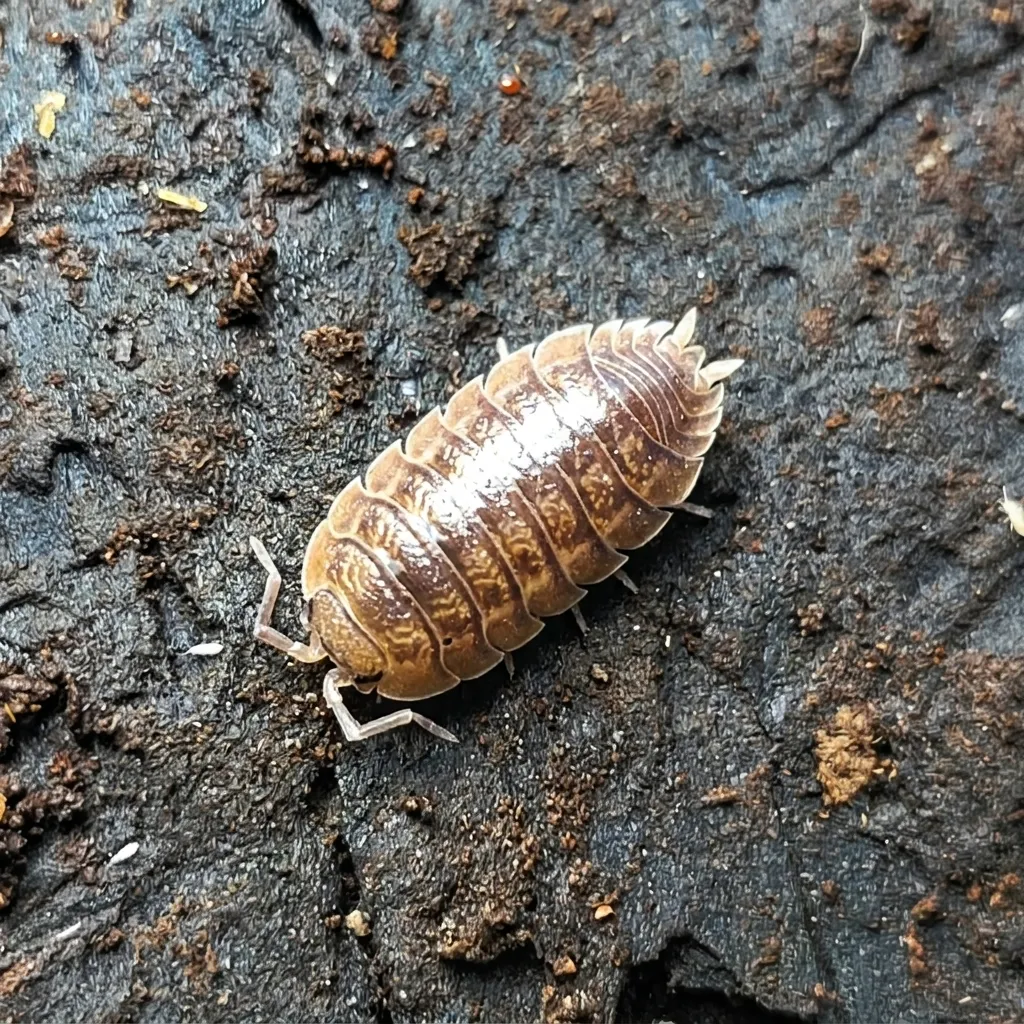
Giant Canyon isopods are a hardy European species, Porcellio dilatatus, formally described by Johann Friedrich von Brandt in 1833. The species is widespread across Europe and has also established introduced populations in North America. As a result, husbandry data for this species is unusually reliable compared with many hobby-trade lines.
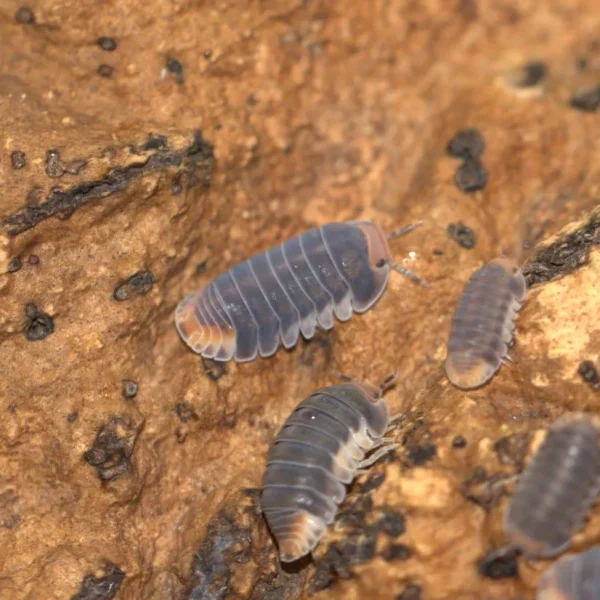
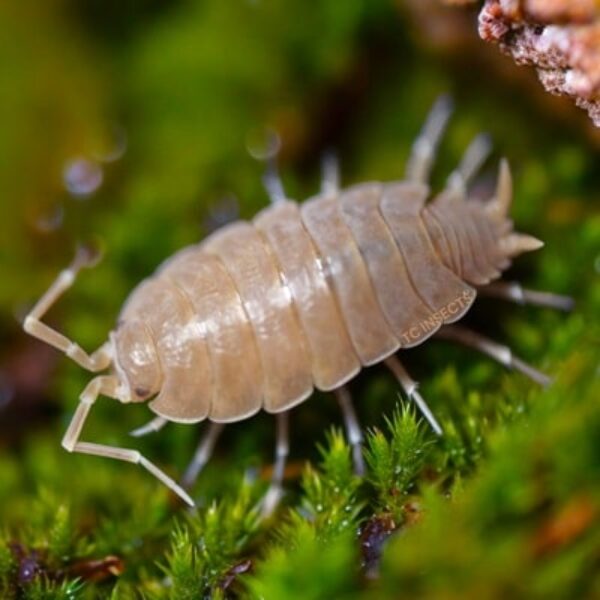
Adults grow to around 15 mm at typical adult size, with some hobby reports reaching closer to 20 mm. The body is broad and flattened with subtle darker striping over a brown to grey-brown base. Additionally, this species is drought-tolerant in captivity, which makes it one of the easier larger isopods to keep in drier setups.
Why Keep Giant Canyon Isopods?
- Hardy cleanup crew: First, this species handles drier conditions better than most isopods, which makes it useful in reptile setups where humidity stays low.
- Larger body size: Additionally, adult size around 15 mm gives more biomass per animal than dwarf cleanup species like Dwarf White isopods.
- Well-documented species: The biology of P. dilatatus is established in scientific literature, so care decisions rest on real data rather than hobby guesswork.
- Reasonable lifespan: Furthermore, hobby reports suggest 2 to 3 year colony cycles under stable conditions, which supports multiple breeding cohorts.
- Forgiving for beginners: Finally, drought tolerance and a wide temperature range make this one of the most forgiving larger isopods to start with.
Honest Note on the “Giant Canyon” Name
The hobby name “Giant Canyon” is a trade name, not a reference to documented wild canyon habitat. Many hobby care guides describe this species as native to “xeric canyons, arroyos, and caves,” but that framing does not match peer-reviewed ecology. According to the British Myriapod and Isopod Group, P. dilatatus is actually a synanthropic species, meaning it lives alongside humans in stables, cow sheds, dairy farms, manure heaps, and damp outbuildings.
The species is genuinely drought-tolerant, which is the basis for the captive husbandry recommendations below. However, the wild ecology is damp human-modified farmland, not arid canyons. We mention this because the husbandry advice still works, but the marketing-name origin story circulating in the hobby is misleading.
Honest Note on Rolling Behavior
Giant Canyon isopods do not fully roll into a ball. As a Porcellio species, the body partly tucks when disturbed, but the underside stays exposed. Therefore, if you are buying a “pillbug” because you want the complete conglobation behavior, this is not the species for you. Look at Armadillidium species instead, since those genuinely roll into a sealed ball.
Care and Setup
Giant Canyon isopods do well in a drier setup with deep substrate and one always-available moist retreat zone. The following sections cover the practical husbandry framework we recommend.
Temperature
Target 68 to 80°F across most of the year. Brief swings inside that range are fine. However, sustained heat above the mid-80s stresses the colony, while cold rooms slow breeding noticeably. Room temperature works for most home setups.
Humidity
Aim for low to medium humidity overall, roughly 40 to 60 percent across most of the enclosure. Then maintain one clearly moist retreat zone with damp sphagnum moss and hydrated substrate. As a result, the colony can self-select between drier and damper areas.
Substrate
Use a moisture-holding mix of soil, rotted hardwood, and organic matter at a depth of 3 to 4 inches. The species is known to burrow, so deeper substrate supports tunneling behavior. Add a generous layer of TC INSECTS Assorted Hardwood Leaf Litter on top as both food and cover.
Food
Lead with leaf litter and decaying hardwood as the base diet. Then supplement with TC INSECTS Isopod Food for added protein and minerals, plus a calcium source like TC Calcium Ultra Fine. The larger body of this species turns over more calcium at each molt than dwarf species, so keep calcium consistently available.
Ventilation
Use cross-ventilation or controlled lid ventilation. Specifically, low humidity is easier to maintain with stronger airflow than with high-humidity tropical species. As a result, you can run a drier enclosure without creating stagnant pockets.
Bioactive Use
Giant Canyon isopods work well in drier bioactive enclosures, including many reptile setups. However, pair them with cool-tolerant springtails and a moist retreat zone so the colony has consistent moisture access. Additionally, run a backup culture in a dedicated bin before introducing them to a display enclosure.
Breeding Notes
Giant Canyon isopods breed at a moderate pace once settled. Females carry developing mancae in a brood pouch, and stable conditions with consistent moisture access support successful broods. Generally, the colony grows steadily over months rather than producing fast population spikes.
For best results, leave the colony undisturbed during the first six to eight weeks. Then add fresh leaf litter before the existing layer is fully consumed, and avoid frequent digging through the substrate. Juveniles often emerge from burrows during evening surface activity rather than at peak daylight.
Best For
- Drier reptile bioactive enclosures where high-humidity species struggle
- Beginner keepers who want a forgiving larger cleanup species
- Terrarium setups with low to medium humidity (40 to 60 percent)
- Cleanup crew roles in mid-size to larger enclosures
- Keepers wanting a real workhorse species rather than a collector display animal
Not Best For
- Sealed tropical setups suited to high-humidity Cubaris species
- Buyers expecting full pillbug rolling behavior
- Feeder use, since the flattened body and harder exoskeleton make this a poor feeder pick
- Co-housing with other Porcellio species in collector cultures, since hybridization risk is real
- Surface-only display tanks, since this species burrows and spends time underground
Origin and Locality Notes
Porcellio dilatatus was described in 1833 by Johann Friedrich von Brandt. Five subspecies are currently recognized in scientific literature. The species is widespread across Europe and has been introduced to North America from Western Europe, where it has established populations.
According to the British Myriapod and Isopod Group, the wild habitat is most often associated with stables, cow sheds, dairy farms, and manure heaps. Specifically, this is a synanthropic woodlouse that lives alongside human agricultural activity, often in association with Porcellionides pruinosus. Therefore, the captive husbandry recommendations below reflect drought tolerance rather than a genuine arid-canyon natural history.
Receiving and Acclimation
Open your package promptly when it arrives and inspect the cup calmly before moving anything. Giant Canyon isopods are larger and faster than dwarf species, so close the cup quickly if you need to set it aside.
Prepare the enclosure before opening the cup. The habitat should already have drier substrate with one damp retreat zone, deep leaf litter, bark, and a calcium source. Then place the shipping material into the enclosure and let the isopods move out on their own. Finally, keep the setup quiet for the first week while the colony settles.
It is normal for new arrivals to burrow during the first several days. Specifically, this species spends real time underground, so a quiet colony is not necessarily a struggling colony.
Recommended Add-Ons
- TC INSECTS Isopod Habitat Kit — a complete starter setup that gives this culture proper substrate, leaf litter, moss, and feed from day one.
- TC INSECTS Assorted Hardwood Leaf Litter — the core food and cover layer for Giant Canyon, fed in deeper layers than for tropical species.
- TC INSECTS Isopod Food — supplemental protein and minerals beyond leaf litter for steady colony growth.
- TC Calcium Ultra Fine — supports healthy molts and exoskeleton development for this larger-bodied species.
- Springtails — pair well with Giant Canyon in bioactive setups to help manage mold around the moist retreat zone.
Frequently Asked Questions
Are Giant Canyon isopods beginner-friendly?
Yes. They tolerate a wide temperature and humidity range, which makes them one of the more forgiving larger isopod species. First-time keepers usually do well with this culture, especially in drier setups where tropical species like Cubaris murina would struggle.
Do they really live in canyons?
Not in the way hobby care guides often describe. The “Giant Canyon” name is a hobby trade name. According to the British Myriapod and Isopod Group, the wild habitat is most often stables, cow sheds, dairy farms, and manure heaps, not arid canyons. However, the species is genuinely drought-tolerant, which is why the canyon framing took hold in the hobby.
Do they roll into a ball?
No. As a Porcellio species, the body partly tucks when disturbed, but the underside stays exposed. Specifically, this species does not fully conglobate. If you want a true pillbug, look at Armadillidium species like Armadillidium klugii “Pudding” instead.
How fast do they breed?
Moderate once established. They do not produce the explosive booms seen with Dairy Cow isopods or Powder Orange. Generally, plan for steady colony growth over months with multiple breeding cohorts across the 2 to 3 year lifespan range.
Can I use them as feeders?
We do not recommend it. The body is flattened and the exoskeleton is harder than common feeder species. Additionally, the per-animal value is too high for this role. Use proper feeder species like Dubia roaches for reptile feeding instead.
Can I mix them with other Porcellio species?
Generally, no. Mixed-genus cultures can cause hybridization risk between closely related Porcellio species, which blurs line identity over generations. Keep this culture separate from Porcellio laevis lines like Porcellio laevis “Orange”.
Learn More About Porcellio dilatatus
Because P. dilatatus is a fully described and widely studied European species, the following non-competitor references give keepers solid background for husbandry decisions.
-
British Myriapod and Isopod Group: Porcellio dilatatus. The recognized authority on British woodlice, with field notes on real habitat associations including stables, cow sheds, and manure heaps. Useful for understanding the actual wild ecology behind this drought-tolerant species.
-
World Register of Marine Species: Porcellio dilatatus Brandt, 1833. The authoritative taxonomic record, with the accepted name, original Brandt description, and current synonym and subspecies list. Useful for buyers who want to verify the species and its history.
-
PubMed Central: Terrestrial isopods, soil, and litter interactions. An open-access review of how land isopods interact with leaf litter, moisture, and substrate. Useful for keepers who want the science behind why deep substrate and consistent calcium matter for a larger cleanup species like this one.


Reviews
There are no reviews yet.