
Porcellio laevis White Isopods for Sale
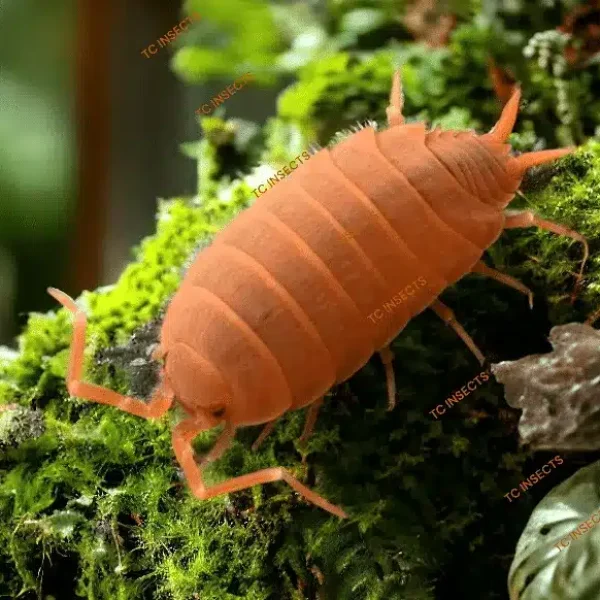
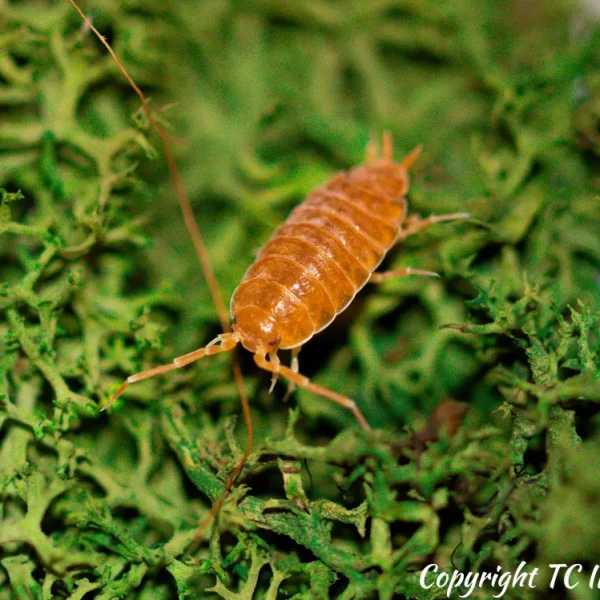
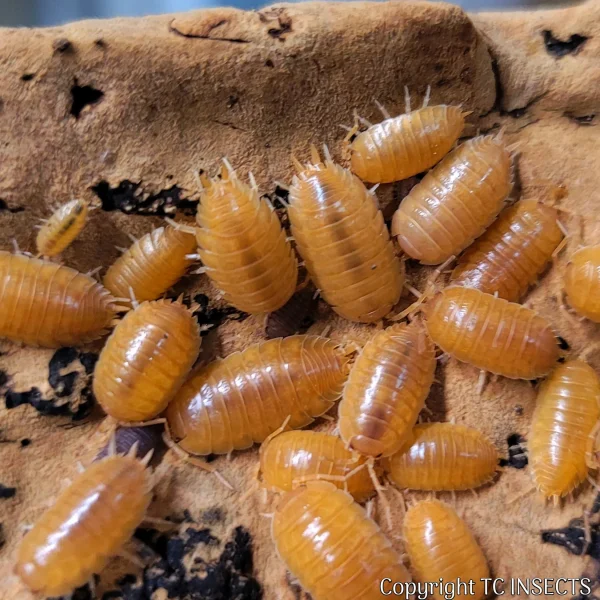
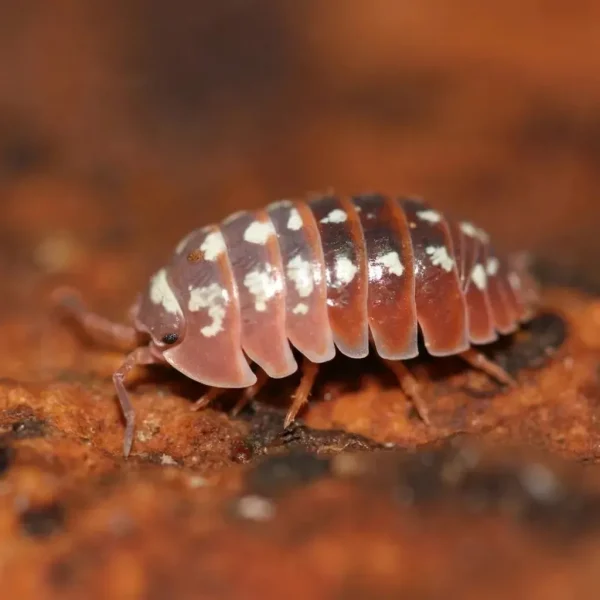
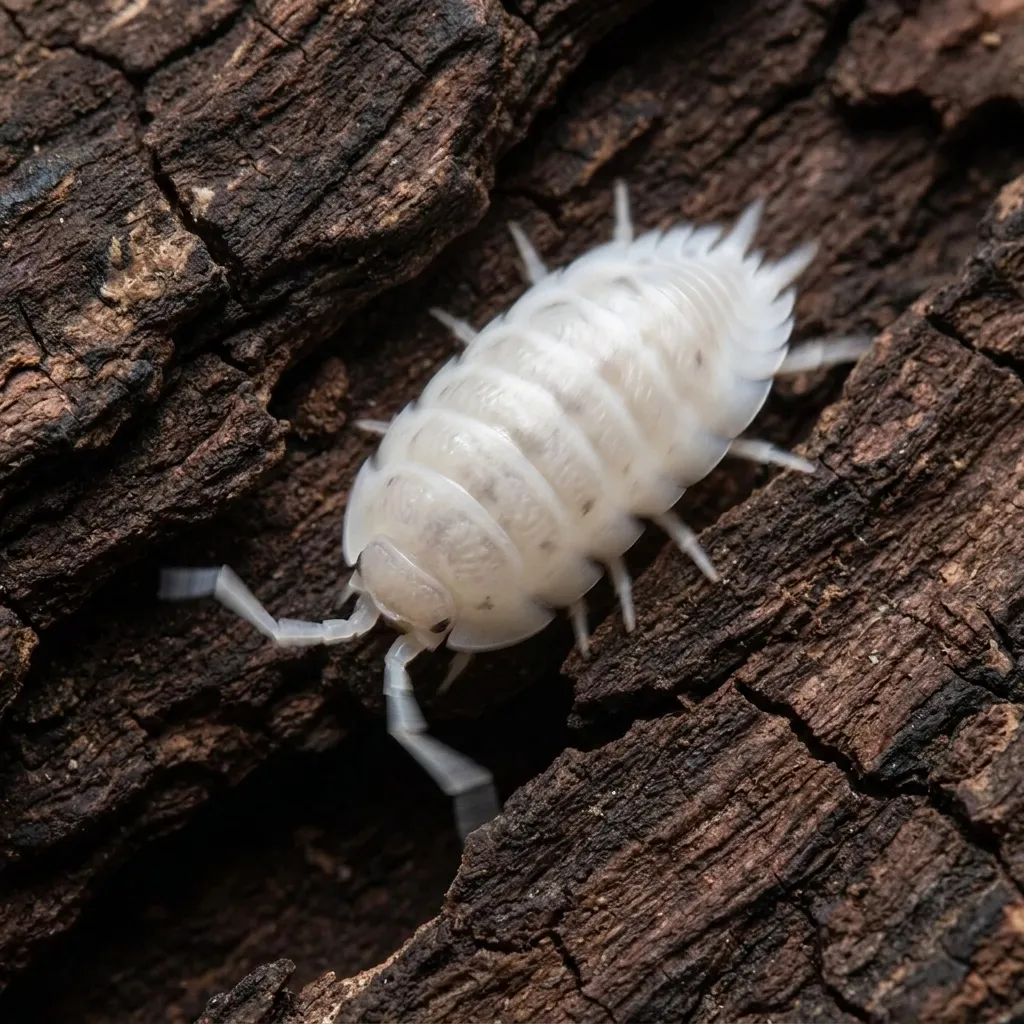
TC INSECTS ships live captive-bred Porcellio laevis “White” as a mixed-size starter group for display cultures, bioactive cleanup crews, and planted vivarium setups. This is the morph in the TC INSECTS laevis range with complete pigment absence — the same fast-breeding, beginner-friendly species as Dairy Cow and Orange, in the highest-contrast color of the three. Therefore, the buying decision between the three morphs is entirely one of color preference and display intent.
Overview
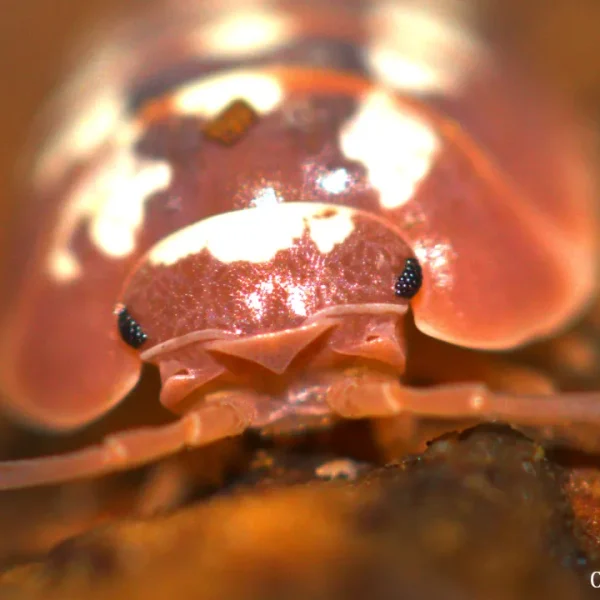
Porcellio laevis Latreille, 1804, is a cosmopolitan woodlouse found on every inhabited continent, known for its smooth glossy shell (*laevis* = smooth), fast breeding, and strong bioactive performance. The White morph was isolated from within the Dairy Cow line, representing a more complete expression of the same pigment-absence biology that produces the piebald spots in Dairy Cow. As a result, where Dairy Cow shows black-and-white spotting from partial pigment absence, White shows a clean, solid uniform white from complete pigment absence on the same glossy surface.
White vs. the Other laevis Morphs
All three TC INSECTS laevis morphs share identical care, behavior, breeding pace, and husbandry needs. The differences are color mechanism and display effect. Dairy Cow uses partial pigment absence to create varied black-and-white spots. Orange uses recessive pigment expression to produce solid orange. White uses complete pigment absence to produce solid white. Furthermore, White adults reach 15 to 20 mm — matching Dairy Cow and larger than Orange’s 12 to 18 mm.
Honest Note: White, Dairy Cow, and Orange Are the Same Species
The White morph is Porcellio laevis — the same species as Dairy Cow and Orange. Care, behavior, and colony management are identical across all three. Therefore, if you already keep either of the other morphs and are considering adding White, the keeping experience is the same in a different color.
Additionally, all three morphs can be kept together without harm. However, over time mixed pairings produce intermediate or mixed-color offspring rather than pure white, pure piebald, or pure orange. Keep morphs in separate bins if color purity matters. For full species education on P. laevis — including the protein bite risk, alternating-turns defense behavior, and *laevis* = smooth naming story — see the Dairy Cow product page.
The White Morph Was Isolated from Dairy Cow
The White morph’s origin is specific and documented. It was isolated from within the Dairy Cow line itself — representing a more complete expression of the pigment-absence gene that produces Dairy Cow’s piebald spotting. In Dairy Cow, pigment is absent in irregular patches while the rest of the body stays dark, creating spots. In White, pigment absence is complete across the whole body, producing a clean solid white.
This shared genetic origin means White and Dairy Cow are particularly closely related within the laevis morph family. Consequently, a keeper who owns Dairy Cow is, in a sense, already keeping the parent line from which White was derived.
The Contrast Advantage in Dark-Substrate Setups
The practical case for specifically choosing White over Dairy Cow or Orange is contrast. Pure white against dark soil, dark bark, or densely planted substrate gives the highest visual contrast of any laevis morph. As a result, White is the easiest of the three morphs to observe in an active bioactive enclosure at a glance.
This matters in two ways. First, for display cultures where watching isopod activity is part of the appeal, white animals on dark substrate are visible immediately, including small juveniles that would blend in as pale orange or pale gray in another morph. Second, for keepers who monitor cleanup crew population in an active reptile or amphibian enclosure, white individuals give the clearest, quickest population signal without opening the enclosure or disturbing the animals.
Protein Note
Porcellio laevis has high protein requirements. Feed protein two to three times per week to keep the colony satisfied and prevent nipping behavior around small soft-bodied co-inhabitants. This applies to White exactly as it does to Dairy Cow and Orange. For the full explanation of the protein bite risk and how to prevent it, see the Dairy Cow product page.
Care and Setup
Setup Framework
Care for P. laevis “White” is identical to Dairy Cow and Orange: moderate-to-humid overall, one moist side, one slightly drier side, good ventilation, protein in the rotation, and leaf litter always available. Below, each section covers the practical points specific to this morph.
Temperature
Hold the culture between 70 and 80°F. Room temperature works well for most home setups. Warmer conditions within this range support faster colony growth. Avoid direct sun, heat lamps, and cold drafts. Generally, consistent stable temperature matters more than targeting the high end of the range.
Humidity
Keep one side moist with sphagnum moss and the other side slightly drier with bark and leaf litter. Moderate to humid overall suits this morph well. Avoid bone-dry conditions and fully stagnant waterlogged substrate. Good airflow prevents mold buildup on the moist side while keeping the humidity available for the colony.
Substrate and Food
Use three to four inches of substrate with organic matter throughout. Keep dried hardwood leaf litter available at all times. Additionally, offer vegetables in small pieces two to three times per week, and rotate in a protein source such as TC INSECTS Isopod Food, dried shrimp, or fish flakes two to three times per week. Also keep TC Calcium Ultra Fine, cuttlebone, or crushed eggshell available at all times.
Bioactive Use
White laevis works across the same bioactive setup types as Dairy Cow and Orange. Add TC INSECTS Assorted Hardwood Leaf Litter before introducing the colony. Then pair with Springtails for complete organic waste coverage. In dark-soil planted terrariums specifically, the white morph provides the clearest visual monitoring signal of any laevis cleanup crew option.
Breeding Notes
Females carry developing young in a marsupium and release pale mancae once ready. The colony breeds fast under stable conditions. Furthermore, because White uses complete pigment absence, offspring from a White-only culture will be white. Mixing White with Dairy Cow or Orange produces mixed-color offspring over time in that bin.
As the colony grows, split into a second bin or seed into a bioactive enclosure. Offer multiple feeding spots so juveniles can access food alongside the larger adults. This is particularly helpful in a fast-growing colony where adult competition at food sites can outpace juvenile access.
Best For
- Bioactive terrariums and planted vivariums with dark soil where maximum cleanup crew contrast and visibility are the priorities
- Keepers who monitor cleanup crew population in reptile or amphibian enclosures and want the clearest visual signal
- Display cultures where the stark contrast of pure white on dark bark and leaf litter is the design goal
- Collectors building a complete laevis morph trio alongside Dairy Cow and Orange
- Beginner keepers who want the same hardy, fast-breeding laevis experience in the most visually striking morph
- Any setup where the Dairy Cow piebald pattern or Orange solid hue is not the right aesthetic fit
Not Best For
- Keepers who want a different care experience from Dairy Cow. It is identical.
- Enclosures with very small soft-bodied animals and no consistent protein feeding. See the protein note above.
- Keepers who want the Dairy Cow’s varied piebald pattern or the Orange morph’s warm color. These morphs are visually distinct by design.
Receiving and Acclimation
Open your package soon after delivery in a calm indoor area. Move all packing material directly into the prepared enclosure. The enclosure should already have the moist side set, leaf litter in place, and calcium available. Place the isopods near the moist side under cover and leave the enclosure mostly undisturbed for the first week.
First Week Priorities
Feed lightly at first. Offer a small amount of protein and vegetables and check how quickly the colony eats before the next feeding. Then increase portions as the colony establishes its feeding rhythm. Avoid flooding the enclosure, overfeeding fresh produce, or disturbing the substrate daily. Give the colony time to settle into the prepared habitat.
Recommended Add-Ons
- TC INSECTS Isopod Food for the regular protein rotation this high-demand species needs.
- TC INSECTS Assorted Hardwood Leaf Litter as the primary food and cover foundation.
- TC INSECTS Isopod Habitat Kit for a complete beginner-friendly starter setup.
- TC Calcium Ultra Fine for continuous calcium access supporting fast growth and molting.
- Springtails to complete the bioactive cleanup crew pairing.
Frequently Asked Questions
Where did the White morph come from?
The White morph was isolated from within the Dairy Cow line. It represents a more complete expression of the same pigment-absence biology that produces Dairy Cow’s partial piebald spotting. In Dairy Cow, pigment is absent in irregular patches, creating black-and-white spots. In White, pigment absence is complete across the whole body. As a result, White and Dairy Cow share the same genetic heritage, with White representing the deeper expression of pigment absence from that same line.
What is the difference between White, Dairy Cow, and Orange laevis?
All three are Porcellio laevis with identical care. White uses complete pigment absence producing solid white. Dairy Cow uses partial pigment absence producing black-and-white piebald spots. Orange uses recessive pigment expression producing solid orange. White and Dairy Cow share a genetic relationship through the Dairy Cow isolation history. Orange developed through a separate recessive mutation. Additionally, White and Dairy Cow adults reach 15 to 20 mm; Orange adults reach 12 to 18 mm.
Why choose White specifically over the other two morphs?
The practical case is contrast. Pure white provides the maximum visual contrast of any laevis morph against dark soil, dark bark, and heavily planted substrate. Therefore, White is the easiest morph to monitor at a glance in an active bioactive enclosure. Keepers who track cleanup crew presence, check on juveniles, or want a dramatic single-color visual in a dark-soil display will find White provides a clearer picture than either Dairy Cow’s varied spotting or Orange’s warmer tone.
Can I mix White with my Dairy Cow or Orange colony?
Yes, without harm to either. All three are the same species. However, mixed pairings produce offspring with intermediate or mixed coloring over time rather than pure white, pure piebald, or pure orange. Keep morphs in separate bins if maintaining color purity matters for your collection.
Are my White isopods showing some dark areas — is something wrong?
Check whether the animal has recently molted. All P. laevis individuals, including White ones, may appear slightly gray or show faint coloration immediately after molting while the new shell hardens and pigmentation settles. In White morph animals specifically, juveniles may look slightly translucent or pale gray at first and brighten to full white as they mature. This is normal. However, if adults consistently show persistent dark areas across much of the colony, check substrate conditions and calcium access, as both affect exoskeleton development.
Is this safe with my reptile or amphibian?
Yes, in most cases, when protein is consistently available. Porcellio laevis may nip at small soft-bodied animals when protein is insufficient. Feed protein two to three times per week to prevent this. For the full explanation and context, see the Dairy Cow product page.
Learn More About Porcellio laevis
These sources give useful context on the taxonomy, natural history, and morph biology behind this species.
- Wikipedia: Porcellio laevis. The species article includes a morph table documenting the White morph as a mutation isolated from the Dairy Cow line, representing more complete whitening than the piebald Dairy Cow pattern. Useful for understanding the relationship between the White and Dairy Cow morphs and the recessive inheritance behind both.
- iNaturalist: Porcellio laevis. Global observation records showing the truly cosmopolitan range of this species. The habitat images — compost areas, garden walls, damp leaf litter, stables — show the moist, sheltered environments that explain why moderate to humid captive setups suit this species well across all its color morphs.
- University of Maryland Extension: Pillbugs and Sowbugs. Beginner-friendly educational resource explaining that terrestrial isopods are land-adapted crustaceans that feed on decaying organic matter and need moisture to survive. Directly relevant to understanding why leaf litter and a moist retreat are non-optional for any P. laevis culture, including the White morph.
Natural Habitat:
Porcellio Laevis was first recorded in Europe. The wild type was first documented in Britain in the 13th century but is argued amongst scholars that Laevis originated in Northern Africa. Thanks to world trade throughout the centuries this species has been distributed all over the world. Now being found in the wild of Australia, North and South America, Japan, Southwestern Asia, and even some Pacific Islands.