

Cubaris Red Panda Isopods for Sale
TC INSECTS ships live captive-bred Cubaris sp. “Red Panda” as a mixed-size starter group for display cultures, breeding projects, and tropical bioactive setups. This is the gateway Cubaris in the TC INSECTS range — the
most accessible species in the genus at this price point. It suits keepers entering the Cubaris world for the first time and collectors adding the panda-pattern line to an existing ducky collection.
Overview
Cubaris sp. “Red Panda” is a color morph of Cubaris sp. “Panda King,” a formally undescribed species in the family Armadillidae originating from Vietnam. The base Panda King is widely considered one of the most
beginner-friendly Cubaris in the hobby — more tolerant of care variation than ducky-form species. The Red Panda morph preserves this accessibility while replacing the standard gray-and-white panda pattern with a warm
orange-red and white one.
For background on the Cubaris genus, Armadillidae family biology, cave-origin care rationale, and conglobation behavior, see the Rubber Ducky product page.
What “Red Panda” Means as a Pattern
The standard Panda King has a dark gray body with two bright white bands near the head — specifically across the second to fourth body segments — plus white legs and antennae. That white-on-dark pattern resembles a
Giant Panda’s shoulder markings, which is where the “Panda King” name originates.
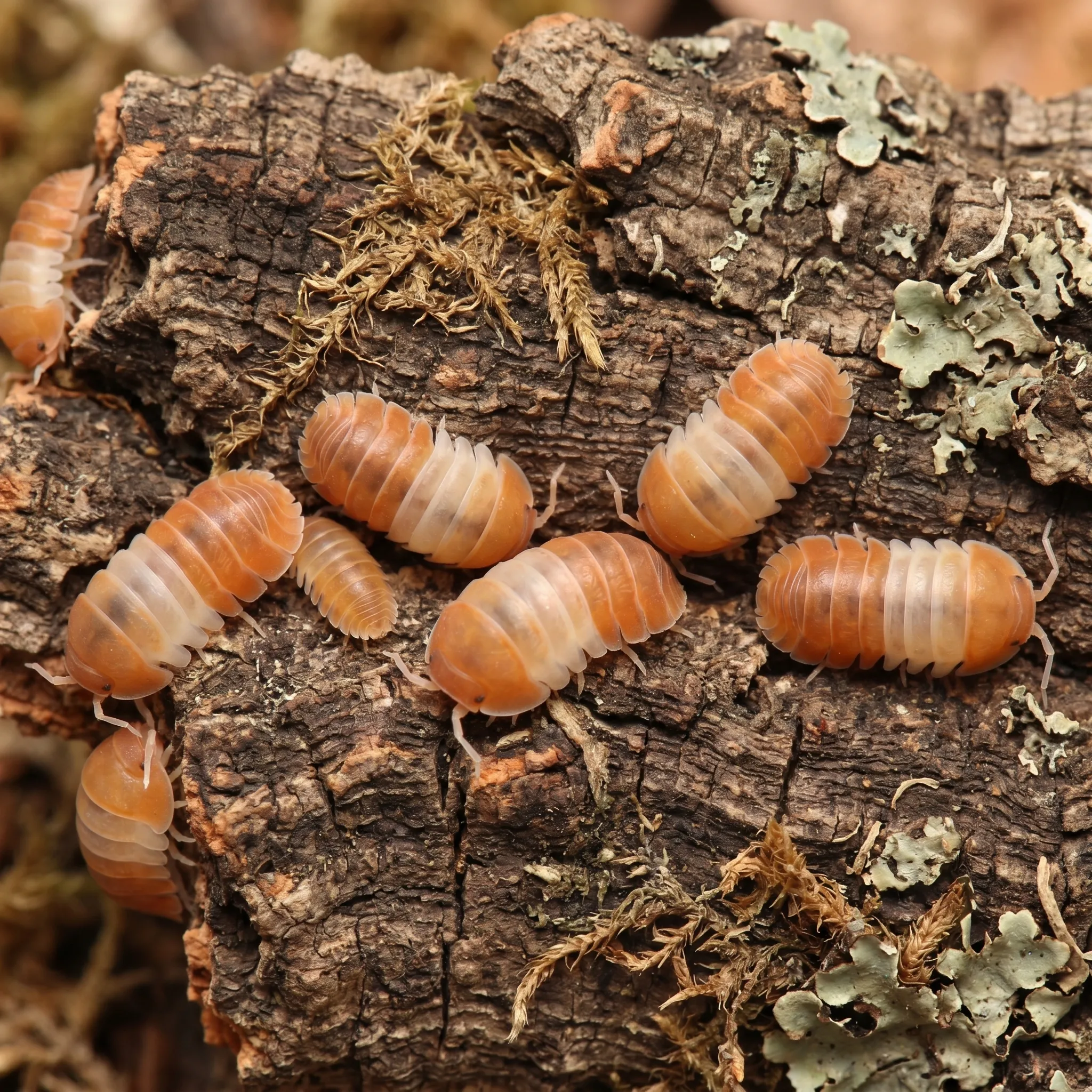
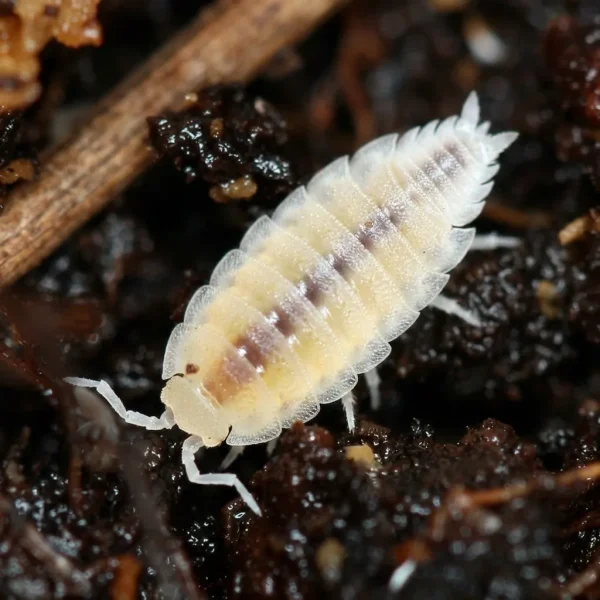
The Red Panda replaces the dark gray with orange-red while keeping the white bands, white legs, and white antennae intact. The result is a warm two-color pattern — orange-red body sections framed by bright white
banding near the head — that reads like the actual red panda animal (*Ailurus fulgens*): reddish-orange body with distinctive pale markings. Red Panda individuals also show red eyes, a characteristic of the color-reduced
mutation.
Honest Note: The Red Coloring Is Captive-Developed
The Red Panda’s orange-red coloring is not a wild form collected from Vietnam. It is a captive mutation isolated in the United States from a single individual that appeared with unusually brown/red coloring in a Panda
King colony. That individual was selectively bred to establish the color line, which now breeds true for the orange-red replacement of the standard gray segments.
The base species — Panda King — is wild-origin from Vietnam. The Red coloring is a captive breeding achievement. Both are captive-bred in the hobby trade. TC INSECTS’ Red Panda culture descends from this established
captive line.
Honest Note: Temperature Sensitivity
The Red Panda prefers a slightly cooler temperature range than the ducky-form Cubaris. While ducky types do best at 75 to 80°F, the Red Panda performs better at 70 to 78°F. Some keepers specifically target 70 to 75°F.
Higher sustained temperatures — above 80°F — cause stress and elevated mortality in this morph. Keep the culture away from heat lamps, warm windows, and any enclosure that regularly pushes above 78°F.
This temperature distinction is the most practically important difference between Red Panda and the ducky-type Cubaris in this catalog. It also makes Red Panda compatible with a wider range of home environments
without supplemental heating.
The Gateway Cubaris
The Panda King line — including the Red Panda morph — is widely described as the recommended starting point for keepers who want to work with the Cubaris genus before moving to more demanding species. Multiple
hobby sources position it specifically as preparation for the Rubber Ducky and similar high-care-demand Cubaris.
Red Panda shares the same cave-origin humidity needs and the same conglobation behavior as the ducky types. It teaches the keeper the genus temperament — shy, nocturnal, burrowing, humidity-sensitive — without the
strict warm-temperature requirements and very slow breeding timelines of the ducky range. Once a keeper manages a Red Panda colony successfully, the skills transfer directly to the more demanding species.
Care
Setup Framework
Use a ventilated enclosure with 3 to 5 inches of organic substrate. Keep roughly half the floor space moist with sphagnum moss and decaying wood. Keep the other half slightly drier with bark hides and leaf litter. Maintain 70 to 78°F and 60 to 80% humidity with moderate cross-ventilation. Unlike ducky types, this species does not need the setup pushed to the 75–80°F upper range — room temperature in most homes is adequate without supplemental heat.
Calcium
Provide TC Calcium Ultra Fine, cuttlebone, or limestone. Multiple sources available simultaneously serve the colony better than a single source. Calcium supports molts and reduces failed moltings, which are the most common sign of inadequate calcium or humidity in this species.
Food
Keep TC INSECTS Assorted Hardwood Leaf Litter and decaying white wood available at all times. Offer protein twice per week through TC INSECTS Isopod Food, dried shrimp, or fish flakes. Small pieces of fruit — mango, banana, carrot, pumpkin — are well-received by Panda King-type Cubaris. Feed small portions and remove uneaten fresh food within 24 to 48 hours to prevent mold in the humid setup.
Springtails
Pair with Springtails for mold control in the moist zone. Springtails are not optional in the humid setup this species needs. They prevent mold buildup in the areas the isopods cannot manage alone.
Breeding Notes
Females carry developing young in a marsupium. Once the colony settles — typically faster than ducky-type Cubaris — females produce mancae regularly. The Red Panda is a good breeder for the genus. Multiple sources
describe the Panda King line as prolific after establishment.
Mancae burrow immediately after release and spend their first weeks deep in the moist substrate. Do not interpret absence of visible young as colony failure. Watch for baby isopods emerging from the substrate edge near
the moist zone at night. Stable conditions, calcium access, and minimal disturbance drive breeding success.
How Red Panda Compares to the TC INSECTS Ducky-Type Cubaris
Red Panda is a different body type, a different origin, and a different care experience from the three ducky-form Cubaris in this catalog.
The Rubber Ducky, Blonde Ducky, and Platinum Ducky all show the distinctive Armadillidae rounded cephalon that creates a duck-face silhouette. Red Panda does not — it has the standard oval patterned body of the
Panda King line. Additionally, ducky types require 75 to 80°F and are slow breeders. Red Panda prefers 70 to 78°F and breeds well once established. Furthermore, ducky types are intermediate to advanced; Red Panda i
s beginner to intermediate. Red Panda is the natural first *Cubaris* before moving toward ducky types.
Best For
- Keepers entering the Cubaris genus for the first time — the most accessible species in the TC INSECTS Cubaris range
- Collectors who want the panda-pattern visual in warm orange-red and white rather than the standard gray and white
- Tropical bioactive terrariums at 70 to 78°F where ducky-type Cubaris require more warmth than the enclosure naturally provides
- Keepers building a progression toward Rubber Ducky and other demanding Cubaris species
- Display cultures where a banded tricolor pattern — orange-red, white, red eyes — is the visual goal
Not Best For
- Enclosures that run consistently above 78°F. Sustained high temperatures stress this morph.
- Keepers wanting a daytime-active, visible surface species. Red Panda is nocturnal and burrowing.
- Dry or arid setups. The 60 to 80% humidity requirement is non-negotiable for successful molts.
Receiving and Acclimation
Open the package in a calm indoor area soon after delivery. Some animals may conglobate after shipping — leave them undisturbed for several minutes before moving them. Place all packing material directly into the prepared enclosure. Position animals near the moist zone under bark or leaf litter cover.
First Week Priorities
Keep the enclosure between 70 and 78°F before the animals arrive. Set the moist side and drier side in place. Feed very lightly for the first week — leaf litter, a small protein offering, and calcium. Check whether food disappears before adding more. Hiding and hiding for days after arrival is normal. Do not excavate the substrate. Leave the culture undisturbed for at least one week.
Recommended Add-Ons
- TC Calcium Ultra Fine alongside cuttlebone or limestone for continuous calcium access.
- TC INSECTS Assorted Hardwood Leaf Litter as the primary diet foundation and surface cover.
- TC INSECTS Isopod Food for the twice-weekly protein rotation.
- TC INSECTS Isopod Habitat Kit for a complete beginner-friendly starter setup suited to this accessible species.
- Springtails for mold control in the humid zone.
Frequently Asked Questions
Is Red Panda the same as Panda King?
Red Panda is a color morph of the Panda King — same species, same body structure, same basic care. The standard Panda King has dark gray segments with two white bands near the head. The Red Panda replaces the dark
gray with orange-red while keeping the white bands, white legs, and white antennae. The Red coloring is a captive mutation isolated in the US, not a separate wild collection.
Why does this species prefer cooler temperatures than the ducky types?
The Panda King and its color morphs originate from Vietnam’s tropical caves and forest habitats, which maintain warm but not hot temperatures year-round. The Red morph specifically shows sensitivity to the upper heat
range. Multiple keepers report stress and elevated mortality above 78 to 80°F for Red Panda specifically, compared with the ducky types which perform best at 75 to 80°F. Hold the Red Panda at 70 to 78°F and avoid any
sustained heat exposure above that range.
My Red Panda isopods are never visible during the day. Is something wrong?
No — this is completely normal. Red Panda and all Panda King-type Cubaris are nocturnal burrowers. They spend most daylight hours hidden under bark, in substrate, or in the moist zone. Surface activity appears at
night. Check the enclosure during low-light periods or after adding fresh food. Colonies that look inactive during the day are often actively foraging after dark.
How does Red Panda compare to the Rubber Ducky as a first Cubaris?
Red Panda is consistently recommended as the better first choice. It is more forgiving of care variation, does not require 75 to 80°F, breeds more readily once settled, and costs less. After a keeper manages a Red Panda
colony successfully, the temperature sensitivity, setup requirements, and humidity management of the Rubber Ducky feel more achievable. Starting with Red Panda is the skill-building path toward the demanding ducky
species.
What makes the white bands appear in the Red Panda pattern?
The white banding between the 2nd and 4th body segments is a trait of the Panda King species itself — not something that varies with the Red morph. Standard gray Panda Kings show white bands on a dark body; Red
Pandas show the same white bands on an orange-red body. The white legs and antennae are also a species trait, not specific to the Red morph. The Red mutation affects only the dark gray segments, replacing them with
orange-red, while every white element remains exactly as in the standard Panda King.
Can I keep Red Panda isopods with my tropical frogs or reptiles?
Yes, in the right enclosure. Red Panda works well in tropical bioactive setups at 70 to 78°F — dart frog vivariums, small tropical snake enclosures, and similar builds. Keep the temperature check in mind: some frog or
gecko setups run warmer than Red Panda tolerates. Additionally, always maintain a separate backup culture outside the main enclosure, since predation from the animals can deplete a small colony faster than it rebuilds.
Learn More About Cubaris Red Panda
These sources give useful context on the genus, the Panda King line’s Vietnam origin, and the biology behind this color morph.
-
GBIF: Cubaris Brandt, 1833. The Global Biodiversity Information Facility record for the genus showing the concentration of observation data in Southeast Asia, including Vietnam. The Panda King line’s Vietnam origin falls within this distribution zone. The GBIF data illustrates why Cubaris from Vietnam share humidity, temperature, and cave-habitat characteristics distinct from — and generally more forgiving than — the deep-cave Thai limestone populations that produce the ducky-form species.
-
Wikipedia: Cubaris Brandt, 1833. The genus article notes that many hobby Cubaris are undescribed and that the hobby has expanded rapidly through collector interest in color morphs and display species. The article specifically mentions that some Cubaris have been reclassified into other genera — context for why the Red Panda (sold as Cubaris sp.) carries the working trade name without confirmed formal taxonomy.
-
PMC / NCBI: Water conservation in terrestrial isopods. Research on how terrestrial isopod gill structures manage water loss in relation to ambient humidity. Relevant here specifically to the Red Panda’s humidity minimum — the 60 to 80% range reflects the gill biology of a cave-origin species that cannot tolerate the dehydration rates that dry-adapted species like Iberian Porcellio manage through behavioral and physiological adaptations. Humidity below 60% causes failed molts in this species for the same biological reason.

Reviews
There are no reviews yet.