
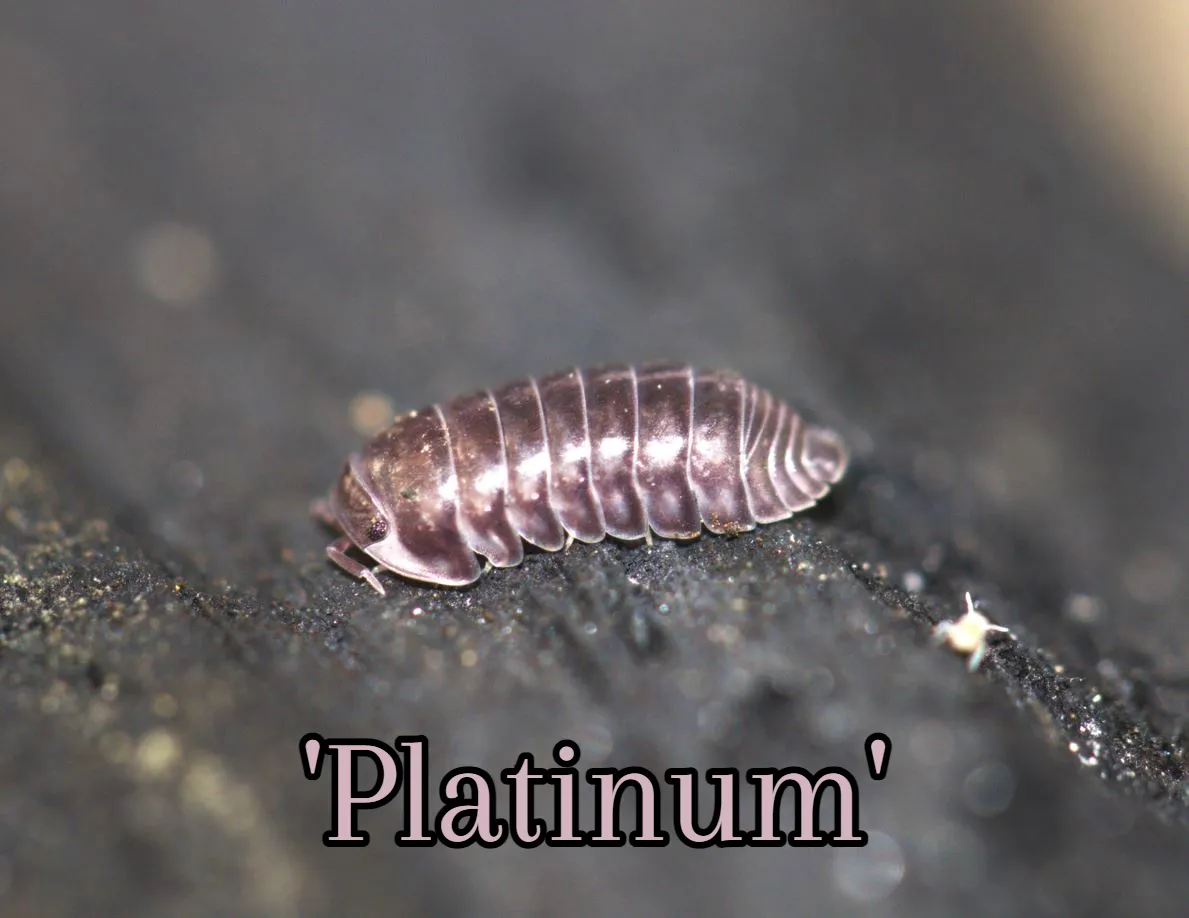

Platinum Ducky Isopods for Sale
TC INSECTS ships live captive-bred Cubaris sp. “Platinum Ducky” for collectors, experienced keepers, and display vivarium projects. This is the metallic ducky-form Cubaris in the TC INSECTS range. It differs from the Rubber Ducky and Blonde Ducky in appearance, behavior, and colony productivity. For full background on the Cubaris genus, cave-origin care rationale, and baseline ducky-type husbandry, see the Rubber Ducky product page.
Overview
Cubaris sp. “Platinum Ducky” is a formally undescribed Armadillidae isopod from Thailand. Most hobby sources list it as Cubaris sp., though at least one specialist taxonomic source classifies it as Armadillidae gen. sp. — meaning the genus placement is not fully confirmed. This page uses Cubaris sp. as the working trade name while noting the uncertainty.
Like all ducky-form Cubaris, this species shares the rounded Armadillidae body shape, conglobation capability, and high-humidity cave-origin care needs. What sets it apart are three specific traits: its metallic exoskeleton sheen, its wood-hide behavior, and its breeding productivity after establishment.
The Platinum Sheen — What It Is and Why It Looks That Way
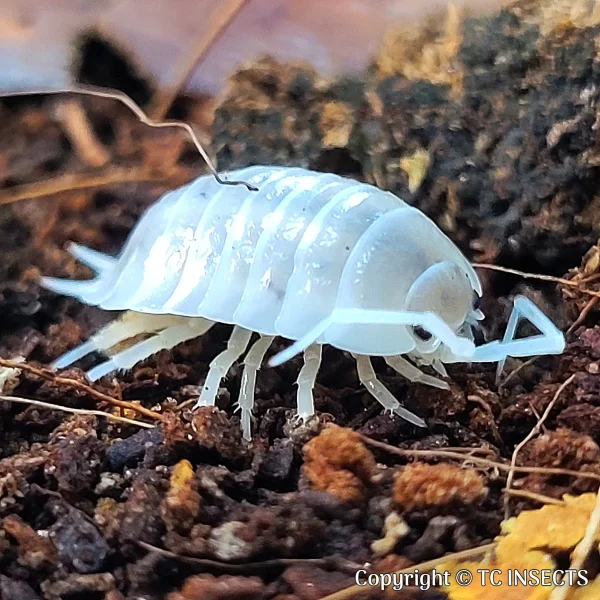
The “Platinum” name describes an optical quality of the exoskeleton, not a pale color. The Platinum Ducky’s shell is extremely smooth and highly polished. This smooth surface reflects light with a cool metallic quality that reads as silver-platinum rather than the warm yellow-orange of the Rubber Ducky or the pale-cream and orange of the Blonde Ducky.
The sheen shows most dramatically under direct light or against dark substrate. In lower ambient light, the animal appears more silver-gray. Under brighter conditions, the polished surface creates a distinct metallic gloss. This optical effect makes the Platinum Ducky visually unlike any other ducky-form Cubaris and one of the most striking display isopods in the hobby.
The Wood-Hide Preference — A Behavioral Distinction
The Rubber Ducky hides in substrate, under bark, and in moist cave-like pockets throughout the enclosure. The Platinum Ducky does something more specific. It prefers the undersides of quality rotting wood and bark — spending most of its active and resting time clinging to the lower surface of wood hides rather than burrowing into or under substrate.
This behavioral difference has a direct setup implication. Quality rotting hardwood is not just food for the Platinum Ducky — it is habitat. The enclosure should have multiple pieces of moist, rotting hardwood that the colony can access from below. Flat cork bark and broad hardwood bark sections laid over substrate also work well. A setup with only deep substrate and scattered hides will not suit this species as well as one built around substantial rotting wood structure throughout.
Additionally, the wood-hide preference means the Platinum Ducky may be more visible to observers than the Rubber Ducky. Lifting a wood hide reveals active animals on its underside rather than requiring substrate excavation.
Honest Note: Establishment Is Still Required
Every source describing the Platinum Ducky uses the phrase “once established.” There is a quiet initial phase after arrival where the colony settles, begins feeding consistently, and starts breeding. This establishment period requires the same patient, stable care as other ducky-type Cubaris.
However, the payoff is different. Where the Rubber Ducky and Blonde Ducky remain slow breeders even in ideal conditions, the Platinum Ducky becomes a notably productive colony after establishment. Keepers who work through the initial phase report much faster colony growth than the other ducky types. Patience during establishment leads to a meaningfully different colony-building experience afterward.
Care
The Platinum Ducky uses the same care framework as all ducky-type Cubaris: high humidity, strong ventilation, warm temperatures, deep substrate, and limestone calcium. The practical differences from the Rubber Ducky are the wood emphasis in setup and the 70/30 damp-to-dry humidity ratio. Full care rationale for the genus appears on the Rubber Ducky page. The section below covers the Platinum-specific setup priorities.
Setup Framework
Build the enclosure around rotting hardwood. Add several pieces of quality rotting white wood and broad bark sections that the colony can cling to from below. Then add deep substrate — at least 6 inches — with sphagnum moss and leaf litter throughout. Keep approximately 70% of the enclosure moist and 30% drier. Use strong cross-ventilation to maintain humidity without stagnation.
Hold temperature at 72 to 80°F throughout. Avoid temperature drops — even brief cold spells slow establishment and stress the colony. Prepare the full setup before the animals arrive.
Calcium
Provide limestone as the primary calcium source alongside TC Calcium Ultra Fine or cuttlebone as secondary. Keep both available simultaneously. As with all cave-origin ducky-type Cubaris, limestone outperforms cuttlebone alone in supporting active breeding and reducing failed molts.
Food
Keep TC INSECTS Assorted Hardwood Leaf Litter and quality rotting white wood available at all times. Rotting wood serves as both food and habitat structure for this species — replace pieces as they break down fully. Offer protein twice per week through TC INSECTS Isopod Food, dried shrimp, or fish flakes. Vegetables high in carotenoids — carrot, sweet potato, pumpkin — are optional but useful additions. Feed small portions and remove uneaten fresh food within 24 to 48 hours.
Springtails
Pair with Springtails. The high humidity this species needs creates mold-growth conditions that springtails control in the moist zone. A springtail culture is not optional for a stable Platinum Ducky enclosure.
Breeding Notes
Females carry developing young in a marsupium and release mancae once ready. After the establishment phase, this species produces mancae at a much stronger rate than the Rubber or Blonde Ducky. Stable conditions, quality rotting wood, consistent calcium, and minimal disturbance drive breeding success.
Keep disturbance low during the establishment phase especially. Do not excavate the substrate looking for babies. Mancae spend their earliest time hidden deep in the moist substrate zone or under wood. Surface activity builds as the colony matures.
How Platinum Ducky Compares to the Other TC INSECTS Ducky Types
The three ducky-type Cubaris in this catalog share genus, family, and the same care framework. They differ in appearance, behavior, and colony productivity.
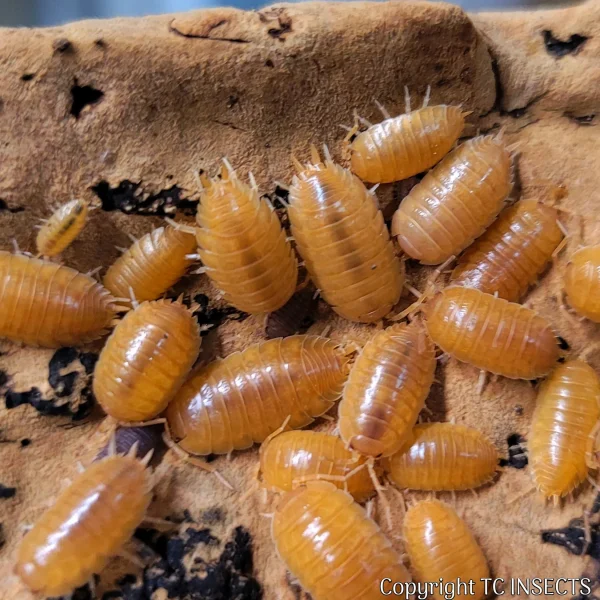
The Rubber Ducky has vivid yellow-orange coloring with the original duck-face silhouette. It is slow breeding and caves into substrate and bark hides equally. The Blonde Ducky shows pale yellow face against vivid orange body, comes from a different Southeast Asian locality, and is the slowest breeder of the three. The Platinum Ducky shows a metallic silver sheen, prefers the undersides of rotting wood specifically, and is the most prolific of the three once established.
Best For
- Collectors who want the metallic optical sheen that makes the Platinum Ducky visually unlike any other ducky-form Cubaris
- Keepers who want ducky-form Cubaris with stronger long-term colony productivity than the Rubber or Blonde Ducky
- Display vivarium builds where the platinum metallic sheen under lighting is the centerpiece visual
- Experienced keepers ready to invest in an establishment phase that pays off with noticeably faster colony growth
- Ducky-range completists adding the metallic fourth member to a collection that already includes Rubber Ducky and Blonde Ducky
Not Best For
- Beginner isopod keepers. The establishment phase and specialized wood-hide setup require experience.
- Keepers expecting immediate activity. The establishment phase is real and requires patience.
- Setups without quality rotting hardwood. This species needs rotting wood as habitat structure, not just food.
- Keepers who cannot maintain 72 to 80°F consistently. Temperature stability drives both establishment and breeding.
Receiving and Acclimation
Open the package in a calm, warm indoor area soon after delivery. Some animals may conglobate after shipping — leave them undisturbed for several minutes before moving them. Place all packing material directly into the prepared enclosure. Position the animals near or on top of a wood hide in the moist zone. Leave the culture undisturbed for at least two weeks.
First Week Priorities
Reach target temperature and humidity before the animals arrive. During the first two weeks, feed very lightly. Offer a small vegetable piece, a protein offering, and leaf litter. Check whether food disappears before adding more. Hiding under wood and in substrate is normal and expected. Do not excavate or move wood hides repeatedly. Stability is the only thing that helps during establishment.
Recommended Add-Ons
- TC Calcium Ultra Fine as secondary calcium alongside limestone.
- TC INSECTS Assorted Hardwood Leaf Litter as continuous grazing surface and base diet.
- TC INSECTS Isopod Food for the twice-weekly protein rotation.
- TC INSECTS Ultra Isopod Habitat Kit for a richer substrate base and included rotting wood components.
- Springtails — required for mold control in this high-humidity setup.
Frequently Asked Questions
What does “platinum” actually look like on this isopod?
The Platinum Ducky has a very smooth, highly polished exoskeleton that reflects light with a cool metallic quality. Under direct light or against dark substrate, the sheen reads as silver-platinum — similar to polished metal. In lower ambient light it appears more silver-gray. This is an optical surface quality produced by the extremely smooth exoskeleton, not a pale or off-white color. The Platinum Ducky does not look like a lighter Rubber Ducky. It looks metallic.
Why does this species prefer rotting wood over substrate?
The Platinum Ducky specifically gravitates to the undersides of rotting wood and bark — a behavior multiple hobby sources have noted distinguishes it from the Rubber Ducky. The exact reason is not documented in the formal literature, but the wood-underside habitat in cave environments provides consistent moisture, food in the form of wood decay fungi and soft rotting material, and a firm surface for clinging. Providing quality rotting hardwood as a structural element — not just as decoration — is the most important setup difference for this species versus the other ducky types.
Is the Platinum Ducky really more prolific than the Rubber Ducky?
Yes, according to multiple independent hobby sources. Tropical Isopods specifically describes Platinum Ducky as “very prolific compared to regular duckies.” Isopod Depot calls them “great breeders once established.” The qualifier in every source is “once established” — there is still a settlement phase. After establishment, however, the colony grows at a pace that distinguishes it clearly from the notoriously slow Rubber and Blonde Ducky.
How is this different from the Rubber Ducky and Blonde Ducky?
Three key differences. First, appearance: the Platinum Ducky shows a metallic silver sheen; the Rubber Ducky shows deep yellow-orange throughout; the Blonde Ducky shows pale yellow face against vivid orange body. Second, behavior: the Platinum Ducky prefers the undersides of rotting wood specifically; the others hide in substrate and under general bark hides. Third, colony productivity: the Platinum Ducky becomes a notably productive breeder after establishment; the Rubber and Blonde Ducky remain slow breeders even under ideal conditions.
What does “gen. sp.” mean in the species classification?
At least one specialist taxonomic source lists this form as “Armadillidae gen. sp.” rather than the more common “Cubaris sp.” used in the hobby trade. “Gen. sp.” means the genus is not confirmed — it belongs to the family Armadillidae but may not definitively sit in the genus Cubaris. Wikipedia notes that several hobby Cubaris have been reclassified into other genera after formal study. TC INSECTS uses the trade name Cubaris sp. “Platinum Ducky” as the working label, consistent with most hobby sources, while acknowledging the formal taxonomy is unresolved.
My Platinum Ducky colony is hiding and not breeding yet. Is something wrong?
Probably not. The establishment phase is real. A new colony spends weeks to months settling before consistent breeding activity appears. Check temperature first — hold 72 to 80°F. Check humidity — maintain the 70/30 damp-to-dry ratio. Confirm quality rotting wood is in the enclosure and accessible from below. Then leave the colony alone. The Platinum Ducky rewards minimal disturbance during establishment more than any intervention.
Learn More About Platinum Ducky and Cubaris
-
Wikipedia: Cubaris Brandt, 1833. The genus article notes that many hobby Cubaris are undescribed or unidentified, and that some have been reclassified into other genera after formal study. This directly explains why the Platinum Ducky carries a tentative genus label from some specialist sources — formal taxonomy for Southeast Asian cave isopods moves more slowly than the hobby trade that collects and names them.
-
iNaturalist: Cubaris. Observation records for the genus concentrated in Southeast Asia, particularly Thailand. The diversity of undescribed cave-dwelling forms in Thailand’s limestone cave systems explains how the Platinum Ducky, Rubber Ducky, and Blonde Ducky can all originate from the same general region while showing distinct morphology, coloring, and behavior — and why each form’s wood or substrate habitat preference reflects its specific microhabitat within that system.
-
PMC / NCBI: Water conservation in terrestrial isopods. Research on how terrestrial isopod gill structures manage water loss. Relevant here specifically to the Platinum Ducky’s wood-hide preference — the underside surface of moist rotting wood maintains a consistently humid microclimate even in a well-ventilated enclosure, providing exactly the gill-adjacent humidity these cave-origin isopods need while still allowing fresh airflow across the rest of the setup.

Reviews
There are no reviews yet.