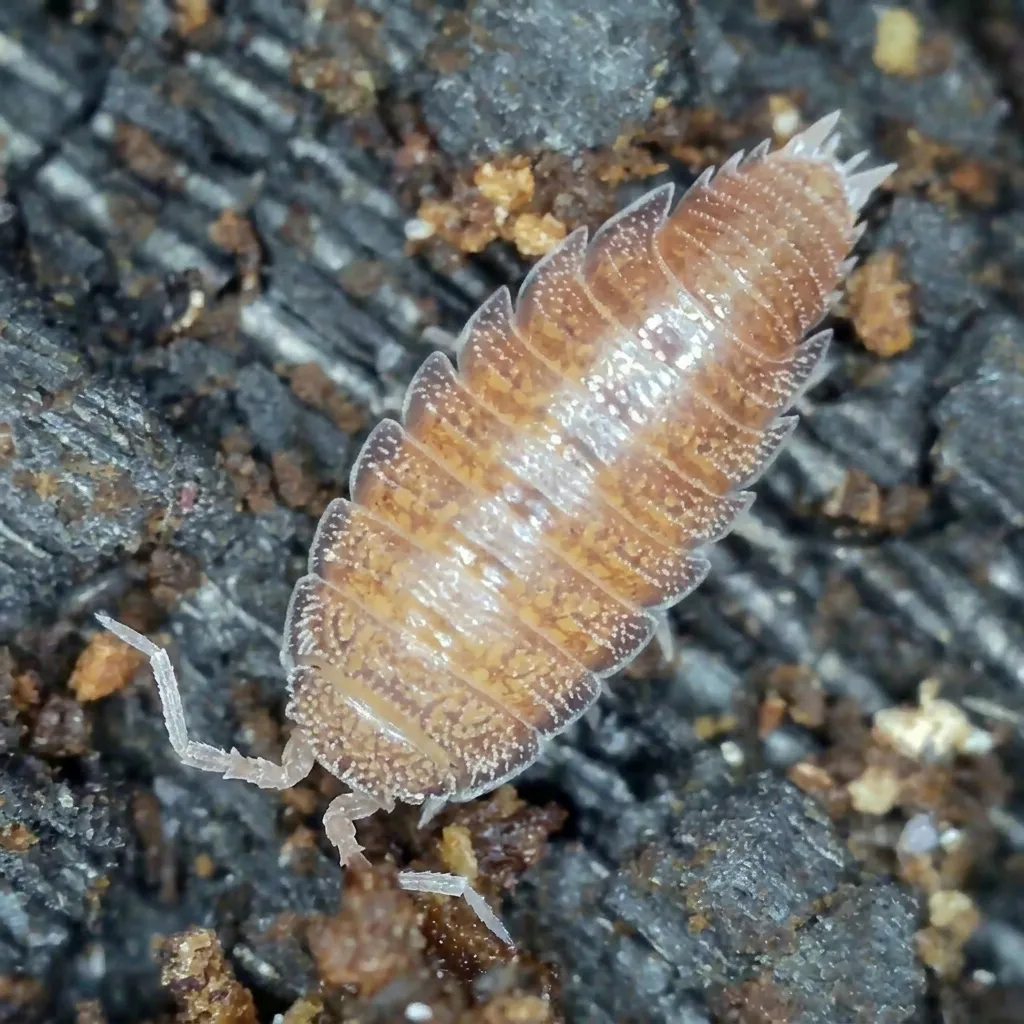
Dwarf Purple Isopods for Sale
Overview
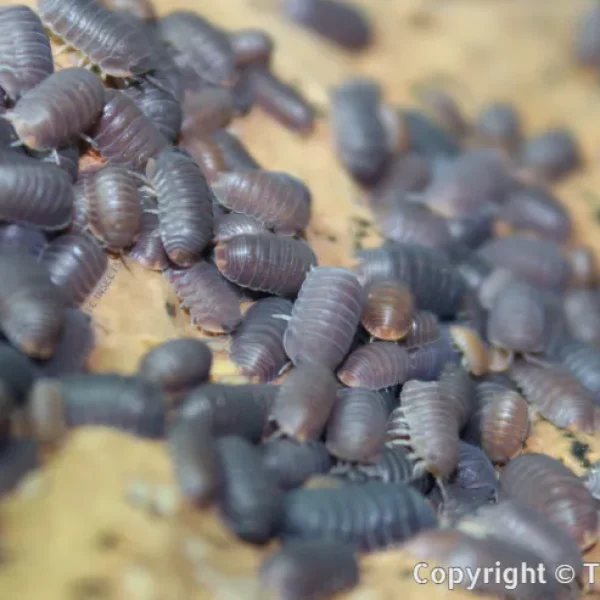
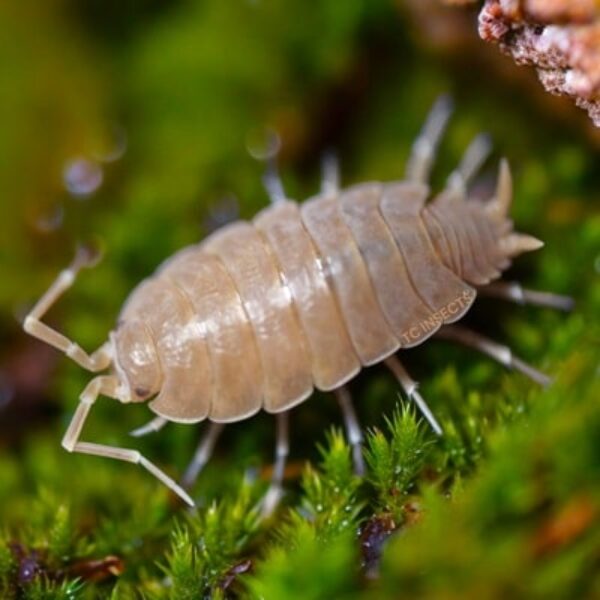
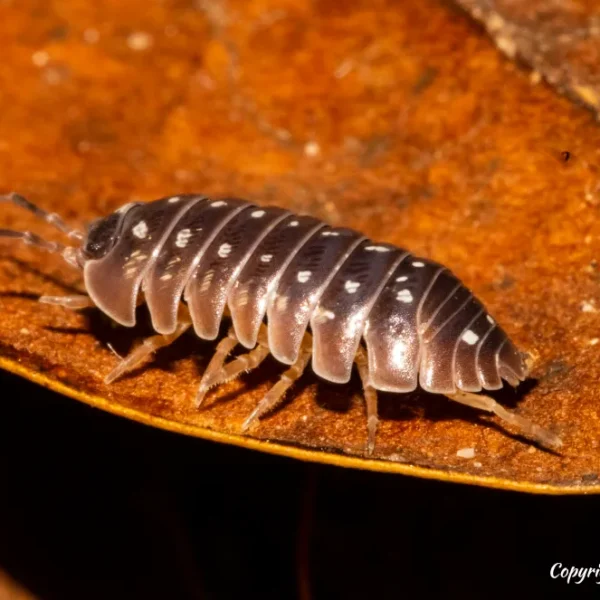
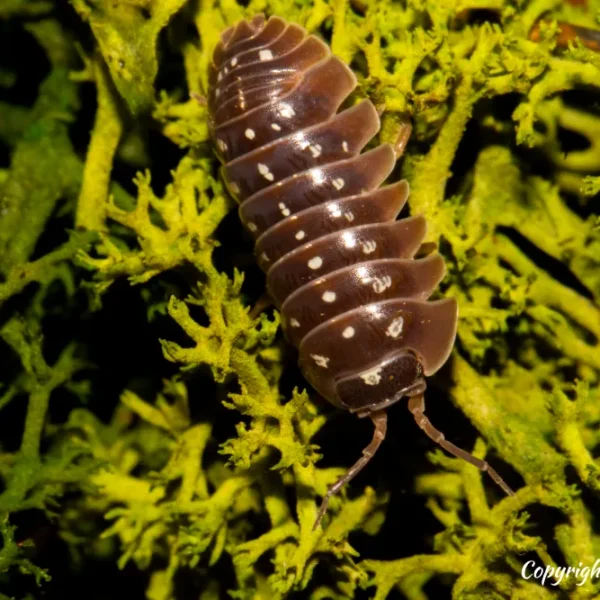
Dwarf Purple Isopods are a tiny live cleanup crew species sold in the hobby as Trichoniscus sp. “Dwarf Purple.” Adults reach only 2 to 4 mm, which makes them one of the smallest isopods commonly kept in bioactive setups. As a result, they live almost entirely inside leaf litter, substrate, and moisture-retaining material rather than out on the surface.
This species is a working microfauna layer, not a display animal. The subtle purple, lavender, or plum coloration is visible on close inspection or under macro photography, but at normal viewing distance from a few feet away, the colony reads as small movement in the leaf litter rather than as a visible group of colored isopods.
Honest Note: This Is Not a Display Isopod
The most common Dwarf Purple buyer mistake is expecting them to be visible like Powder Orange, Powder Blue, or other surface-active species. They are not. You will rarely see them moving in the open. Instead, you will see occasional flashes of tiny purple-gray bodies when you lift bark or stir leaf litter, and you will see the colony’s effects (cleaner leaf litter, less mold, better-broken-down organic matter) rather than the animals themselves. If you want a visible cleanup crew, choose a Powder morph instead. If you want microfauna that does its job quietly in the substrate, Dwarf Purple is the right pick.
Why Keep Dwarf Purple Isopods?
Customers usually pick this species for one or more of these reasons:
- Microfauna scale cleanup. First, the 2 to 4 mm adult size lets Dwarf Purple work in spaces larger isopods cannot reach. As a result, they process leaf litter, decaying wood, and organic matter in moss pockets, substrate layers, and tight microhabitats.
- Humid-setup specialist. Next, Dwarf Purple thrives in consistently humid enclosures where many drier-tolerant species struggle. Therefore, they suit dart frog vivariums, amphibian setups, and tropical planted terrariums.
- Pairs well with springtails. Additionally, the small size means Dwarf Purple does not compete with springtails for the same micro-niche. Both can work the substrate simultaneously without crowding each other out.
- Established colony resilience. Finally, once a Dwarf Purple culture is well established in a humid setup, the population becomes self-sustaining and quietly supports the enclosure for years.
Care and Setup
Dwarf Purple care is straightforward but moisture-strict. The species does not tolerate drying out. Therefore, the most important care decision is maintaining a stable moist zone at all times.
Temperature
Aim for 68 to 78°F, with the sweet spot around 70 to 75°F. They tolerate brief variation, but they should never be exposed to extreme heat or cold. Avoid placing the culture near windows, heaters, direct sun, or reptile heat lamps. Additionally, never place a small isopod culture directly on a heat mat without careful temperature control, since the small body size means they overheat faster than larger isopods.
Humidity
This species needs consistent medium-high to high humidity, roughly 70 to 90%. Keep one section of the enclosure reliably damp with sphagnum moss, leaf litter, and moisture-retaining substrate. However, balance the moisture with gentle ventilation so the container does not become stagnant. A moisture gradient is more important than chasing one specific humidity number.
Substrate
Use a moisture-retaining substrate blend. Coconut fiber, organic soil, decayed hardwood, and leaf litter all work well as a base. Then top it with a generous layer of leaf litter and a pocket of damp sphagnum moss. In addition, add calcium sources such as crushed cuttlebone, eggshell, or limestone. Calcium supports molting even in a small species.
Food
Dwarf Purple feed primarily on decaying plant matter. Leaf litter and decaying hardwood (avoid pine and cedar) should be the base diet. Add small pieces of vegetables like carrot, squash, or sweet potato in tiny portions. For protein, use shrimp meal, fish flakes, or insect frass in very small amounts, since this species is small and a little goes a long way. Alternatively, a prepared balanced diet like TC INSECTS Isopod Food simplifies feeding and adds calcium support.
Ventilation
Gentle ventilation works better than heavy airflow for this species. They need humidity that other isopods would find excessive, so a vented lid with small slots or fine mesh prevents stagnation without drying the colony out. Avoid both sealed bins (which crash cultures with mites) and heavily vented containers (which dry Dwarf Purple out faster than larger species).
Bioactive Use
Dwarf Purple is a strong pick for humid bioactive vivariums where springtails and isopods both have a role. They do well alongside dart frogs, mourning geckos, day geckos, and small humid-loving amphibians. In drier reptile enclosures, they will not persist. Therefore, do not put Dwarf Purple in leopard gecko or bearded dragon setups.
Breeding Notes
Dwarf Purple breed at a moderate-to-high rate once a culture settles in. Females carry developing young in a brood pouch under the body, but the small size of this species means pregnant females and mancae are difficult to see without magnification. Generally, a starter group of 15 to 25 will spend a few months establishing before the population becomes clearly visible at the substrate level. After that, the colony quietly self-sustains under stable humidity, leaf litter, and a varied diet.
Best For
- Humid bioactive vivariums with dart frogs, mourning geckos, day geckos, and small humid-loving amphibians
- Tropical planted terrariums where mold control and microfauna scale matter
- Keepers who want a working substrate cleanup crew rather than a visible display animal
- Setups already running springtails, since the two species complement each other in the substrate
- Long-term self-sustaining microfauna layers in established bioactive builds
Not Best For
- Keepers expecting to see their isopods regularly, since Dwarf Purple stays inside leaf litter and substrate
- Dry reptile enclosures (leopard gecko, bearded dragon, hognose, ball python) where humidity does not stay high
- Use as feeders, since 2 to 4 mm is too small for most reptiles to find or eat in meaningful quantity
- Heavily ventilated or sealed-no-ventilation tubs, since both extremes crash cultures of this species faster than larger isopods
- First-time bioactive builders who want to watch their cleanup crew, since the invisible-but-working approach can feel disappointing
Origin and Locality Notes
Dwarf Purple Isopods are sold in the hobby trade as Trichoniscus sp. “Dwarf Purple,” and the species-level identification is not always confirmed. The hobby commonly traces this morph to Costa Rica, though the genus Trichoniscus is well documented across Europe and North America as well, so the exact wild origin should be treated with careful wording. Accordingly, this page focuses on practical captive care rather than claiming a precise wild locality.
Receiving and Acclimation
Open the package indoors as soon as possible after delivery. Then inspect the culture carefully, since Dwarf Purple are tiny and hide quickly when exposed to light. Look closely through the substrate, moss, and packing material. If the culture looks dry on arrival, lightly mist one side of the receiving container before adding them. Do not soak the whole setup.
Transfer the shipping material into a prepared enclosure with moist sphagnum, leaf litter, bark, and decaying wood. Place the packing near the moist side so the colony moves in naturally. After that, leave the enclosure mostly undisturbed for the first week. Dwarf Purple may hide for several days after shipping. This is normal and not a sign of culture failure.
Recommended Add-Ons
- TC INSECTS Isopod Habitat Kit for a ready-to-use setup with substrate, sphagnum, leaf litter, and starter feed
- TC INSECTS Assorted Hardwood Leaf Litter for the deep leaf-litter layer this species requires
- TC INSECTS Isopod Food for a calcium-supported diet to feed in very small portions
- TC Calcium Ultra Fine for molting support, particularly useful for small-bodied species
- Springtails to round out the microfauna layer; the two work well together in humid setups
Learn More About Isopod Biology
The references below cover background information that helps keepers get more out of a small isopod culture over the long term. Each source comes from an academic, museum, or government site rather than a competing retailer.
- University of Florida IFAS: Pillbugs and Sowbugs. Practical overview of terrestrial isopod biology, moisture needs, and behavior around organic matter. Useful for understanding why humidity and leaf litter matter so much for small isopod species.
- NC State Extension: Pillbugs and Sowbugs. Beginner-friendly background on terrestrial isopods, including where they live and what conditions they prefer. Helpful context for first-time keepers building a humid bioactive setup.
- World Register of Marine Species: Isopoda. Scientific taxonomy reference for the order Isopoda, including the Trichoniscidae family that contains Trichoniscus. Useful for understanding how Dwarf Purple fits into the broader isopod family tree.
Dwarf Purple Isopod FAQs
Will I actually see my Dwarf Purple isopods?
Rarely. They are 2 to 4 mm and spend almost all their time inside leaf litter and substrate. You will see them when you lift bark or stir the leaf layer, and you will see the colony’s effects (cleaner litter, less mold) more than the animals themselves. If visibility matters to you, a Powder morph is a better pick.
How are Dwarf Purple different from Powder isopods?
Three main differences. First, size: Dwarf Purple is 2 to 4 mm versus Powder morphs at 10 to 12 mm. Second, behavior: Dwarf Purple is substrate-bound, while Powder morphs are surface-active. Third, humidity: Dwarf Purple needs 70 to 90% with a moist retreat, while Powder morphs tolerate drier average enclosures. The two species suit different setups.
Are Dwarf Purple isopods beginner-friendly?
Yes, with one caveat. The care is straightforward, but the moisture tolerance is narrower than larger isopods. Therefore, a beginner who can keep a stable moist retreat will do fine, while a beginner whose enclosure swings dry will crash the culture faster than they would crash a Powder Blue setup.
Can I keep Dwarf Purple isopods with my dart frogs?
Yes. Dart frog vivariums are an excellent match because the high humidity and deep leaf litter Dwarf Purple need are already standard in those builds. The frogs may eat occasional individuals they find, but the colony works at a scale where this is sustainable.
How long until a Dwarf Purple culture is self-sustaining?
A few months under good conditions. Starter cultures of 15 to 25 will spend several weeks settling and breeding quietly before the population becomes clearly visible at the substrate level. After that, stable humidity, leaf litter, calcium, and gentle ventilation support a long-term self-sustaining colony.
Can Dwarf Purple live with Dwarf White Isopods in the same setup?
Yes. The two species are commonly paired in humid bioactive builds because they share the same care requirements and do not compete strongly. Many keepers buy them together as a complete microfauna layer.