Porcellio Sevilla Isopods for Sale
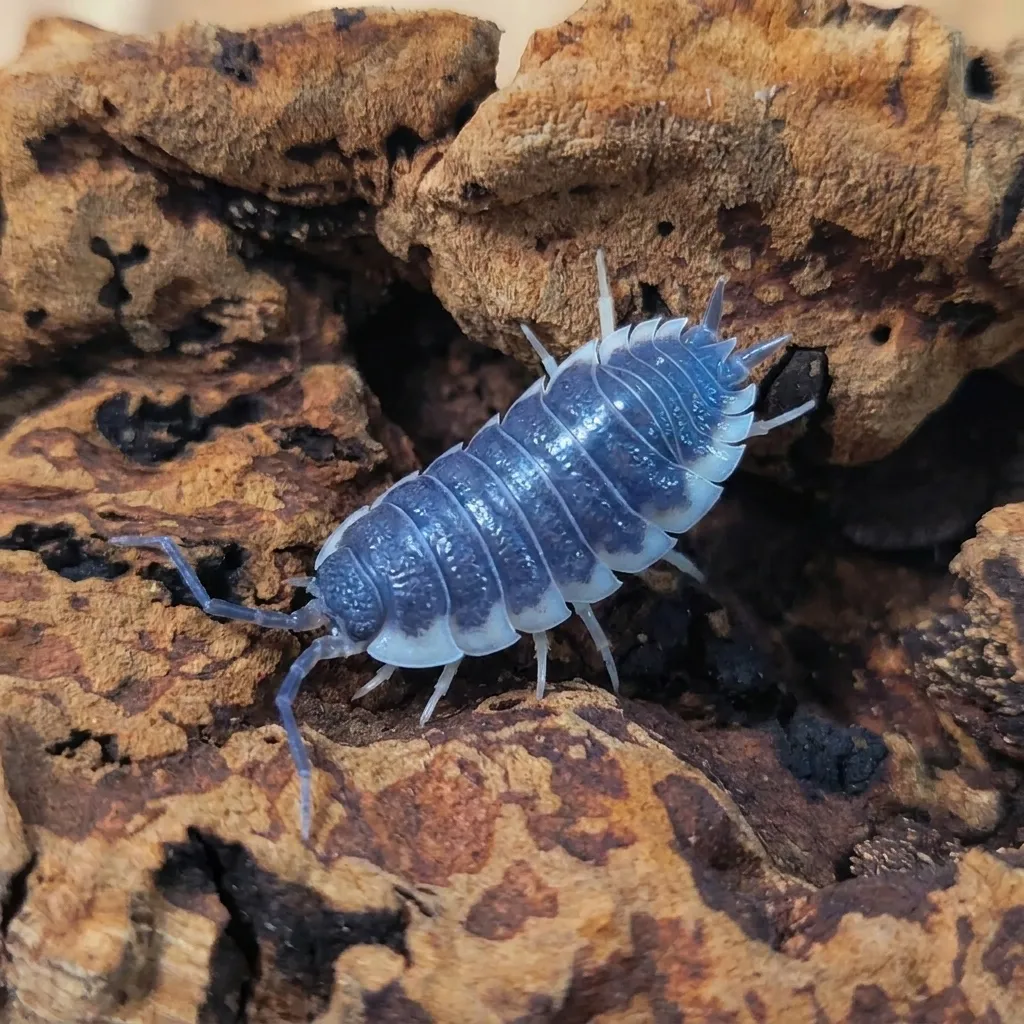
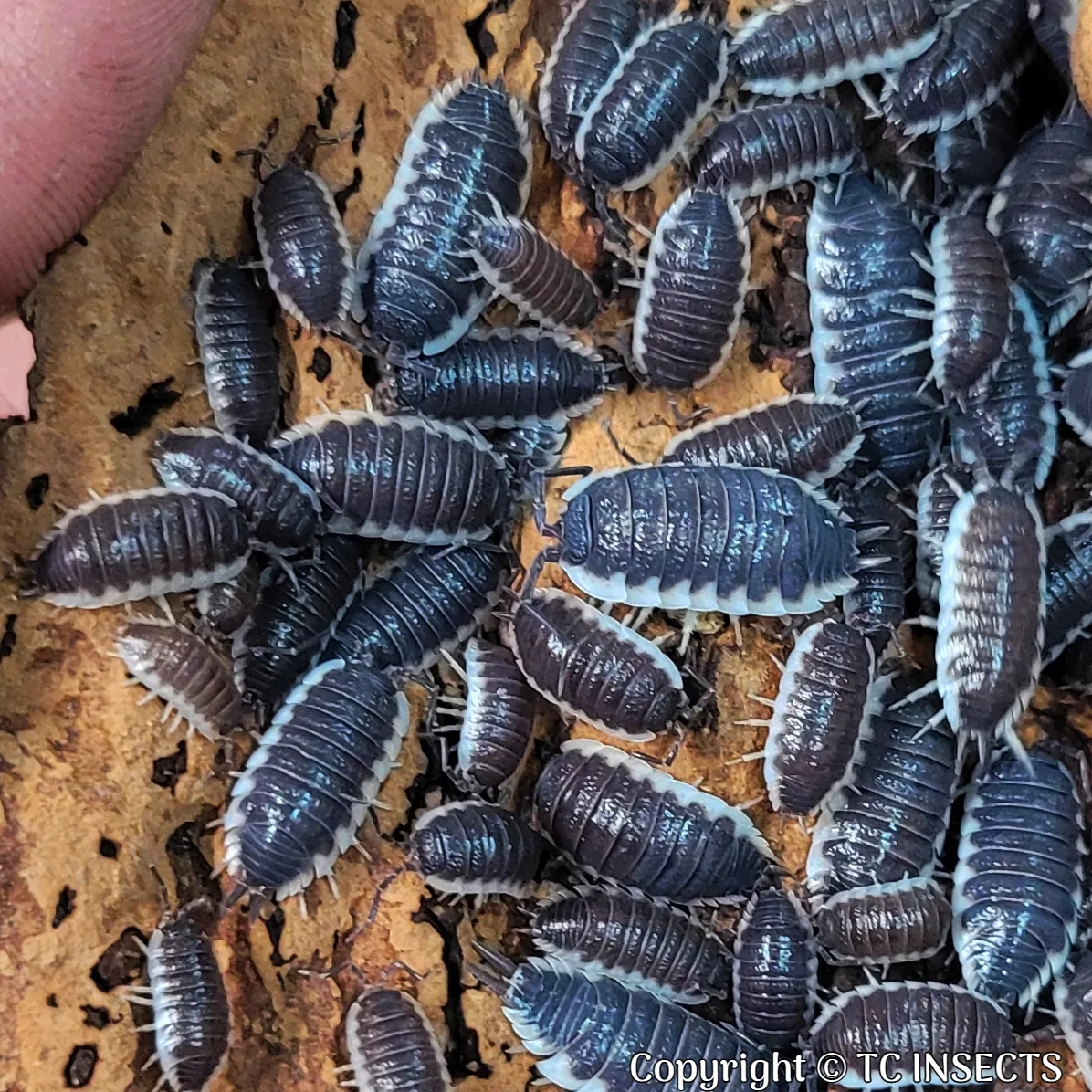
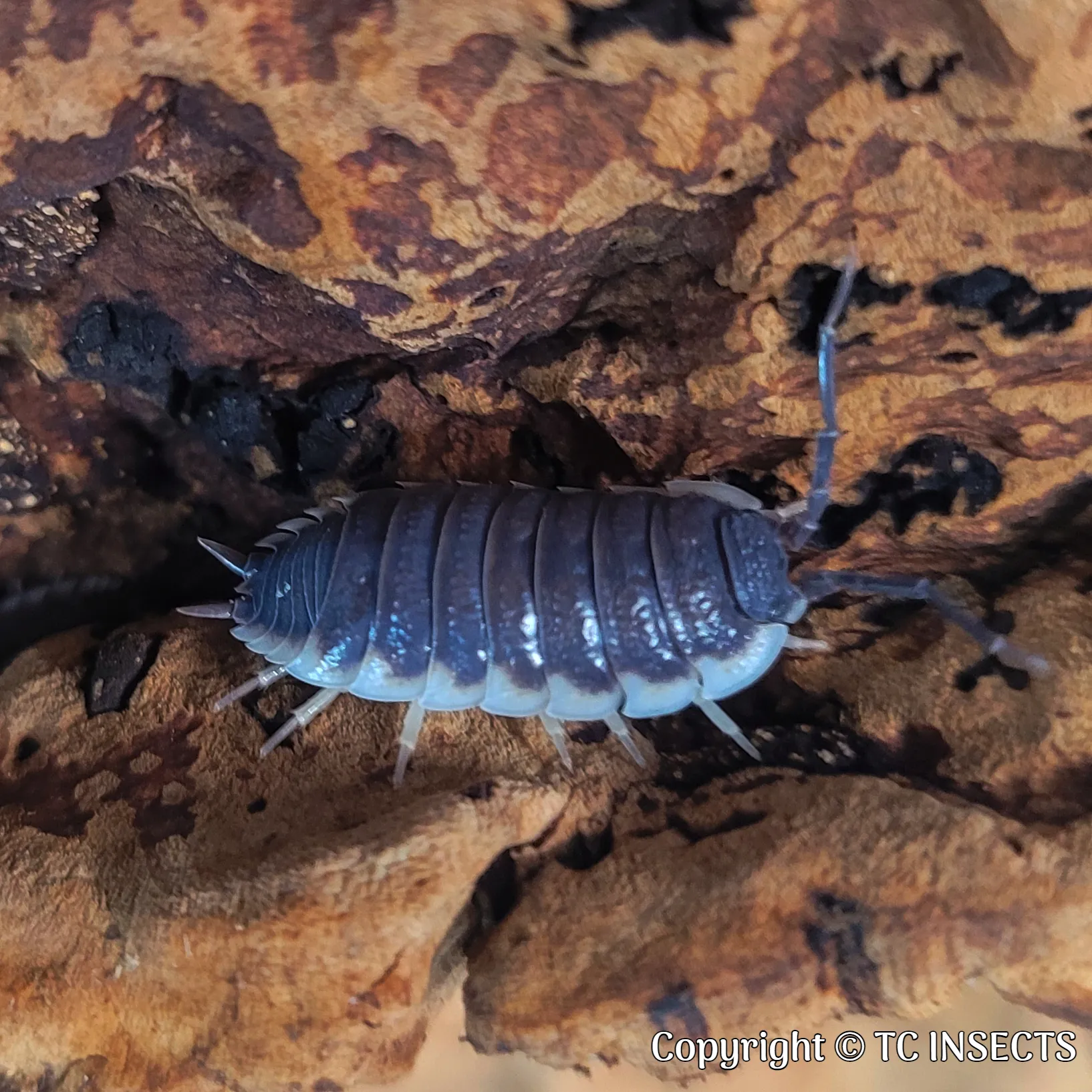
TC INSECTS ships live Porcellio sp. “Sevilla” as a captive-bred, mixed-size starter group. This is a large, visibly active Iberian Porcellio with a gray body and clean pale white skirt. Overall, it works well for display cultures, dry bioactive setups, and keepers who want something bigger and more visible than a typical tropical cleanup crew.
Overview
Porcellio sp. “Sevilla” is a medium-to-large Porcellio sold under a hobby locality name linked to the Sevilla region of southern Spain. The scientific literature has not formally described it as a species. Therefore, we use the “sp.” designation throughout this page, because it accurately labels a Porcellio whose species identity remains unconfirmed.
Adults reach roughly 2.5 to 2.7 cm. Their gray body and pale white skirt edge make them one of the cleaner-looking large Porcellio in the hobby. More importantly, they stay visibly active. They graze along the surface, move across cork bark, and stay out in the open more than most large Porcellio species.
Care is drier-leaning, similar to the Iberian Mediterranean gradient that suits Porcellio hoffmannseggii Titans. However, Sevilla isopods are more accessible than Titans. We list them as beginner to intermediate because they tolerate minor care inconsistencies better, breed at a moderate to good rate once established, and do not need as large a bin to get started.
Why Keep Porcellio Sevilla Isopods?
- Constant visible activity. Sevilla isopods move, graze, and explore in a way most large Porcellio do not. The colony stays engaging to watch daily.
- Clean display appearance. Additionally, the gray body with a pale white skirt shows well against dark substrate, cork bark, and hardwood leaves.
- Drier care fits more setups. However, they still need a moist retreat. Their tolerance for a drier gradient suits ventilated reptile enclosures better than most tropical species.
- Accessible for most keepers. Specifically, a beginner who understands moisture gradients can manage this colony without tropical heat or constant high humidity.
- Pairs naturally with Springtails. As a result, adding Springtails alongside this colony creates a more complete cleanup crew for the right dry bioactive setup.
Honest Note on Species Identification
“Sevilla” is a hobby locality name, not a formally described species. No published scientific paper confirms the exact species identity of this line. The “sp.” in the name reflects that honestly. This does not affect the care requirements or display value of the colony.
However, buyers who want a product with a confirmed binomial name should know this is a locality-label culture. Therefore, TC INSECTS lists it as Porcellio sp. “Sevilla” because that label accurately represents what the taxonomy currently supports.
No scientific source we know of verifies the cave-discovery origin story sometimes linked to this isopod in the hobby. As a result, we have removed that claim from this page to avoid presenting unconfirmed information as fact. Instead, the Sevilla name reflects a plausible but undocumented association with the Sevilla region of southern Spain.
Care and Setup
Setup Framework
Care for Porcellio sp. “Sevilla” follows a Mediterranean-style framework: drier overall, with a reliable moist retreat, strong ventilation, organic substrate, and a steady food supply. Below, each section covers what that part of the setup actually does for the colony.
Temperature
Hold the culture between 68 and 78°F. Room temperature works well for most homes. Avoid direct sun, heat vents blowing on the container, and sudden temperature swings. Generally, stable warmth matters more than chasing a precise number.
Humidity
Keep roughly one-third of the enclosure moist. Use sphagnum moss or a damp substrate corner on one side. Allow the rest to stay drier with cork bark, leaf litter, and good airflow.
Do not soak the whole substrate, and do not use a sealed container. Stagnant moisture stresses a drier-leaning Porcellio colony quickly. Instead, the goal is to give the isopods choices: a damp retreat always available, and a drier zone where the colony can move freely.
Substrate
Use a substrate with organic matter built in. A coco fiber and decaying hardwood blend with leaf litter mixed through works well. Two to four inches of depth suits most starter cultures. The damp side should hold moisture without keeping the whole container wet.
Food
Keep dried hardwood leaves and decaying wood available at all times. These form the base of the diet. On top of that, offer small amounts of vegetables once or twice per week. Carrot, squash, sweet potato, and zucchini all work well.
Additionally, add a light protein source such as TC INSECTS Isopod Food, fish flakes, or dried shrimp in small portions. Remove uneaten fresh food before it molds heavily. Also keep calcium available at all times via TC Calcium Ultra Fine, cuttlebone, or crushed eggshell.
Ventilation
Use a ventilated lid and side vents if possible. Airflow is essential for this species. A sealed container promotes mold and mites faster than with most tropical isopods. Therefore, a larger bin with cross-ventilation outperforms a small deli cup for long-term colony health.
Bioactive Use
Sevilla isopods can work in dry to moderately humid bioactive setups. They do not suit wet rainforest vivariums or constantly damp amphibian tanks. For bioactive use, add TC INSECTS Assorted Hardwood Leaf Litter before introducing the colony. Furthermore, pair with Springtails to cover the mold and fine debris layer these isopods are too large to graze efficiently.
Breeding Notes
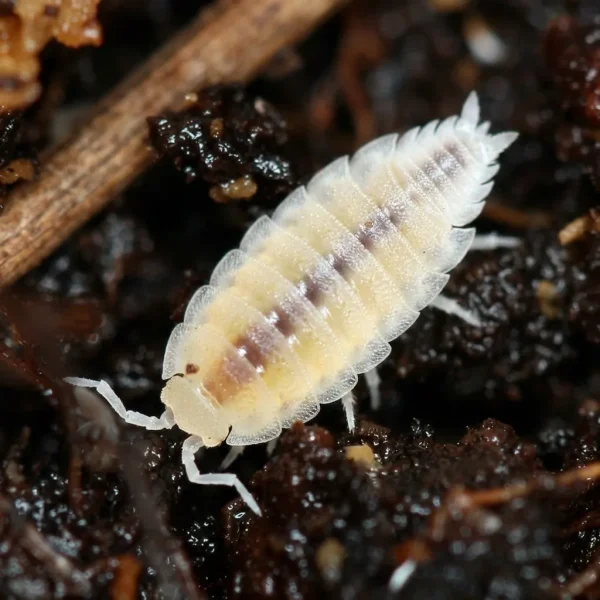
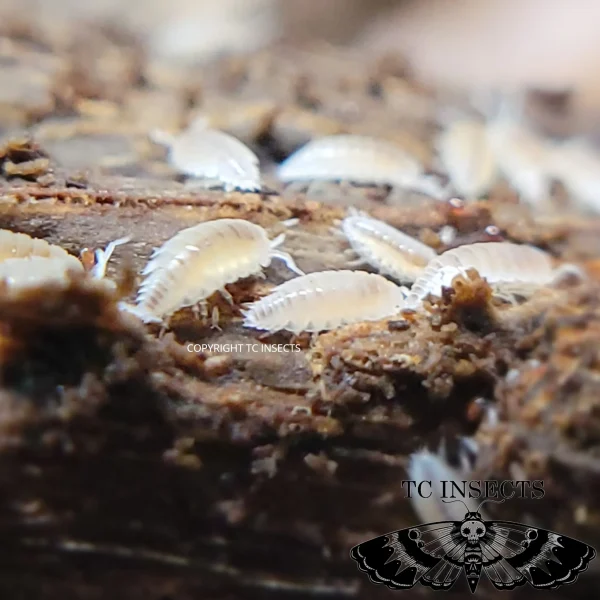
Females carry developing young in a brood pouch called a marsupium, then release tiny pale juveniles when ready. The colony breeds at a moderate to good pace once established. However, new cultures may take several weeks to settle before visible juvenile production begins.
To support breeding, keep calcium available, maintain a consistent moist retreat, provide leaf litter at all times, and minimize substrate disturbance. Also avoid overfeeding fresh vegetables, which can foul a culture quickly with limited ventilation.
As the colony grows, avoid overcrowding. Provide multiple hides so individuals can spread out. If the culture becomes too dense, split it into a second container. This step protects the main colony and gives a backup culture for seeding other enclosures over time.
Best For
- Display cultures where active, visible movement matters as much as color
- Dry to moderately humid bioactive terrariums with strong ventilation
- Ventilated reptile enclosures with a moist hide and a suitable humidity gradient
- Keepers stepping up from tropical cleanup crew species to a drier-leaning Iberian line
- Larger Porcellio collections alongside species like Titan isopods or Giant Canyon isopods
- Starter colonies for keepers who want a more forgiving drier-leaning species than Titans
Not Best For
- Wet amphibian vivariums or constantly damp tropical setups. High-humidity enclosures without a dry zone do not suit this species.
- Sealed containers with poor airflow. Stagnant air stresses this colony quickly.
- Keepers expecting fast-breeding cleanup crew numbers. For rapid population growth, Dwarf Whites or Powder species fit better.
- Very small enclosures. This active, larger species benefits from more floor space than dwarf isopods.
- Feeder use. Size and breeding pace make them a poor choice as reptile food.
Origin and Locality Notes
Hobby sellers associate Porcellio sp. “Sevilla” with the Sevilla region of southern Spain. However, this is a locality label, not a confirmed scientific collection record. No peer-reviewed source we know of documents the exact wild origin of hobby lines sold under this name.
Still, the Sevilla region points toward a plausible Iberian Mediterranean species. That connection informs the care profile: drier overall conditions, strong ventilation, stable warmth, and a reliable moist retreat. That framework holds regardless of whether the exact locality ever receives confirmation.
Receiving and Acclimation
Open your package soon after delivery in a calm indoor area. Inspect the culture carefully. Sevilla isopods are active, so some may be moving when you open the container. Others may hide under moss or packing material. Move the packing material directly into the prepared enclosure rather than picking out individuals one by one, since juveniles are easy to miss.
Have the enclosure ready before opening the culture. The moist side should be lightly damp, not soaked. Place leaf litter, bark hides, and a calcium source before adding the isopods. Set them near the moist retreat under cover, then leave them mostly undisturbed for several days.
Hiding in the first few days is normal. Activity typically picks up after the colony settles, especially during low light and when you add fresh food.
Recommended Add-Ons
- TC INSECTS Isopod Food for supplemental protein and balanced nutrition beyond leaf litter.
- TC INSECTS Assorted Hardwood Leaf Litter as the foundation grazing and cover layer.
- TC INSECTS Ultra Isopod Habitat Kit for a richer starter setup suited to a larger, active species.
- TC Calcium Ultra Fine to support molting and exoskeleton development.
- Springtails to handle the mold and fine debris layer alongside the Sevilla colony.
Frequently Asked Questions
What does “sp.” mean in Porcellio sp. “Sevilla”?
“Sp.” is short for “species.” Taxonomists use it when an animal belongs to a known genus but lacks a formal species-level description. In this case, the colony is clearly a Porcellio, but published scientific literature has not confirmed its exact species. “Sevilla” is a hobby locality label, not a species name.
This naming convention is common in the isopod hobby and does not affect how you care for the colony.
How does Porcellio sp. “Sevilla” compare to Titan isopods?
Both are drier-leaning Iberian Porcellio with a similar care framework. However, Titans grow significantly larger, breed slower, and suit intermediate-to-advanced keepers better. Sevilla isopods are more active day-to-day, breed at a more accessible pace, and tolerate minor care gaps better.
Therefore, if you want sheer size, choose Titans. If you want a large, active, visible colony that is more forgiving, Sevilla fits better.
How does Porcellio sp. “Sevilla” compare to Giant Canyon isopods?
Giant Canyon isopods (Porcellio dilatatus) reach about 15 mm and work well as a moderate-humidity cleanup crew. Sevilla isopods are larger, more active on the surface, and need a drier gradient overall.
For a standard bioactive setup with moderate moisture, Giant Canyons are more versatile. For a drier reptile enclosure or display culture, Sevilla is the stronger pick.
Can Porcellio sp. “Sevilla” live in a reptile enclosure?
They can work in dry to semi-dry ventilated reptile enclosures with a moist hide always available. Fully arid enclosures with no moisture access do not suit this species. Similarly, constantly wet setups do not work either. A bearded dragon vivarium with a humid hide and leaf litter layer, for example, can work well if the enclosure is not too hot and the isopods have cover.
How fast do Porcellio sp. “Sevilla” breed?
Breeding is moderate to good once the colony settles. Most new cultures need several weeks before visible juvenile production begins. Once established with calcium, leaf litter, stable temperatures, and a consistent moist retreat, the colony grows steadily. Notably, they are not as fast as Powder species or Dwarf Whites, but they are more productive than Titans.
Why are my Porcellio sp. “Sevilla” hiding even though they are supposed to be active?
Hiding after shipping or a new enclosure introduction is normal even for active species. They need time to feel secure in the new setup. Activity typically picks up after several days, especially during evening hours and when you add food.
If hiding persists beyond two to three weeks, check ventilation, moisture gradient, and whether the drier side has become too wet.
Learn More About Iberian Porcellio
- GBIF: Genus Porcellio Latreille, 1804. The Global Biodiversity Information Facility overview of the Porcellio genus, including distribution records across Europe and the Iberian Peninsula. Useful for keepers who want to understand how many described species exist in this genus and why locality-label names are common in the hobby.
- British Myriapod and Isopod Group: Finding and Collecting Woodlice. A practical guide to woodlouse habitats and microhabitat preferences. The section on Mediterranean-associated species explains why drier, well-ventilated setups outperform wet enclosures for Iberian Porcellio lines.
- PMC / NCBI: Conglobation and water conservation in terrestrial isopods. Peer-reviewed research on how isopod pleopodal structures interact with humidity and water loss. This paper explains in biological terms why a moisture gradient, rather than constant wetness, is the right approach for drier-leaning species like Porcellio sp. “Sevilla.”