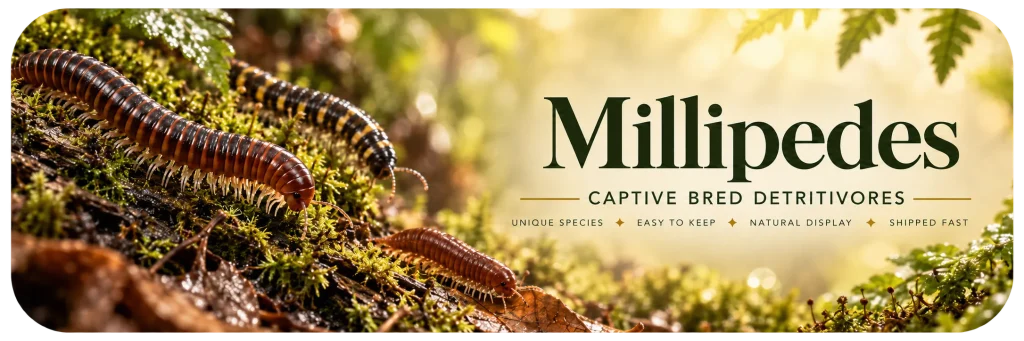
THE CALM CLEANUP CREW YOU CAN HOLD

Millipedes For Sale

◈ Gentle Giants

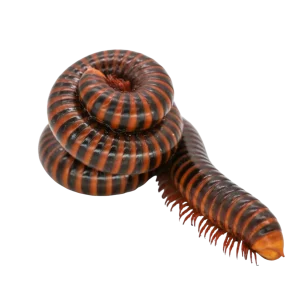
The American Giant Millipede (Narceus americanus) is a slow, gentle, beginner-friendly pet invertebrate native to the eastern United States. It grows to roughly 4 inches, is safe to handle, and lives on a diet of decaying leaves and rotting wood - meaning its substrate is also its food. We sell captive-bred and ranched specimens singly at $9.99 or as a 3-pack at $24.99, backed by our Live Arrival Guarantee.

If you want a pet invertebrate that is genuinely calm to handle, the American Giant Millipede (Narceus americanus) is hard to beat. These glossy, slow-moving detritivores reach about 4 inches, spend their days grazing through leaf litter, and are so low-key that they are a favorite first invert for kids and classrooms. The trick that makes them so easy: their substrate is their food. Set up a deep bed of decaying hardwood leaves and rotten wood and you have built both their home and their pantry in one step. We ship healthy specimens from Porter, Texas, singly or in 3-packs, under our Live Arrival Guarantee.

A millipede enclosure is really just a compost bed you keep tidy. Fill it with several inches of decaying hardwood leaf litter (oak and magnolia are favorites) mixed with a little rotting wood and coco fiber, keep it moist but not soaked, and your millipede eats its way through it. Top up the leaf litter as it disappears, add occasional slices of vegetable or fruit as a treat, and a pinch of calcium (cuttlebone or a light dusting) helps the exoskeleton. That is essentially the whole feeding routine.

Millipedes are detritivores, so they pair naturally with a bioactive setup. Add isopods and springtails to the same enclosure and the three of them handle waste together: springtails graze mold, isopods break down larger debris, and the millipede tills and processes leaf litter. It is a calm, self-maintaining little ecosystem behind glass - just keep the enclosure humid and ventilated so nothing sours.

Quick Order
Order Your Millipede

★ 4.7 on Google · 57,000+ orders shipped

1 · Pick your millipede
2 · Single or 3 pack
Add to Order

Live Arrival Guarantee · Ships Mon-Wed

In stock and shipping live

Shop Millipedes

American Giant Millipede at a glance
TraitDetail
SpeciesNarceus americanus, American Giant Millipede
Adult sizeAround 4 inches
TemperamentSlow, gentle, safe to handle, non-biting, non-venomous
DietDecaying hardwood leaf litter and rotting wood - the substrate is the food
SetupDeep moist substrate, room temperature, ventilated lid
Pairs withIsopods and springtails for a bioactive cleanup crew

Sold as single specimens or a 3-pack. Room temperature only - no supplemental heat needed.

Millipedes

  • Sold OutMillipedes for sale

    American Giant Millipede

    $9.99 - $24.99
    Select optionsLoading Done This product has multiple variants. The options may be chosen on the product page

Live Arrival Guarantee ↻ details

Every animal arrives alive in any weather - or we make it right with a replacement or credit. Report within 1 hour of delivery.
Weather-Checked Shipping ↻ details

We scan the 7-day forecast at your ZIP before we ship, and recommend the right protection at checkout.
Live-Safe Ship Days ↻ details

Live orders ship Monday to Wednesday via FedEx, USPS daily except Thu and Sun. No weekend depot layovers, ever.
57,000+ Orders Shipped ↻ details

Rated 4.7 stars across 345 Google reviews. Family-owned insect farm in Porter, Texas.

From the field notes

What Keepers Say

[trustindex data-widget-id="bf2ceea75d26876235268f97d9c"]

Millipedes FAQ

Yes - they are slow, they do not bite, and they are not venomous, which is why they are such a popular first invertebrate for kids and classrooms. The only caution is that a stressed millipede can release a harmless defensive fluid that may stain skin or irritate eyes, so handle gently, keep them away from your face, and wash your hands afterward. Handled calmly, they simply walk across your palm.

Mostly, you feed it by building its substrate. American Giant Millipedes eat decaying hardwood leaf litter and rotting wood, so a deep bed of moist oak or magnolia leaves plus a little rotten wood is both their home and their main food. Supplement with occasional slices of vegetable or soft fruit, and offer a calcium source like cuttlebone for healthy molting. Just keep the leaf litter topped up as it disappears.

Absolutely, and it is a great combination. All three are detritivores that thrive in the same humid, leaf-litter setup, and together they form a self-cleaning bioactive crew: springtails handle mold, isopods break down debris, and the millipede processes leaf litter. Just keep the enclosure moist and ventilated so it stays balanced.

Snap a clear photo of the animal in its opened container and email it to customer.service@tcinsects.com within 1 hour of the tracked delivery time. Email is the only channel for DOA claims - phone calls and social media messages cannot be processed. Once we see the photo, we make it right with a replacement or store credit. Every order ships under our Live Arrival Guarantee, and we do not ship live animals to Hawaii or Alaska.

Colony Notes

Keep Your Colony Thriving

Occasional keeper notes: care tips, restock alerts, and colony-raising pointers. No spam, ever.

Your name
Email address
Join the Colony Notes email list

[mwai_chatbot id="default"]