
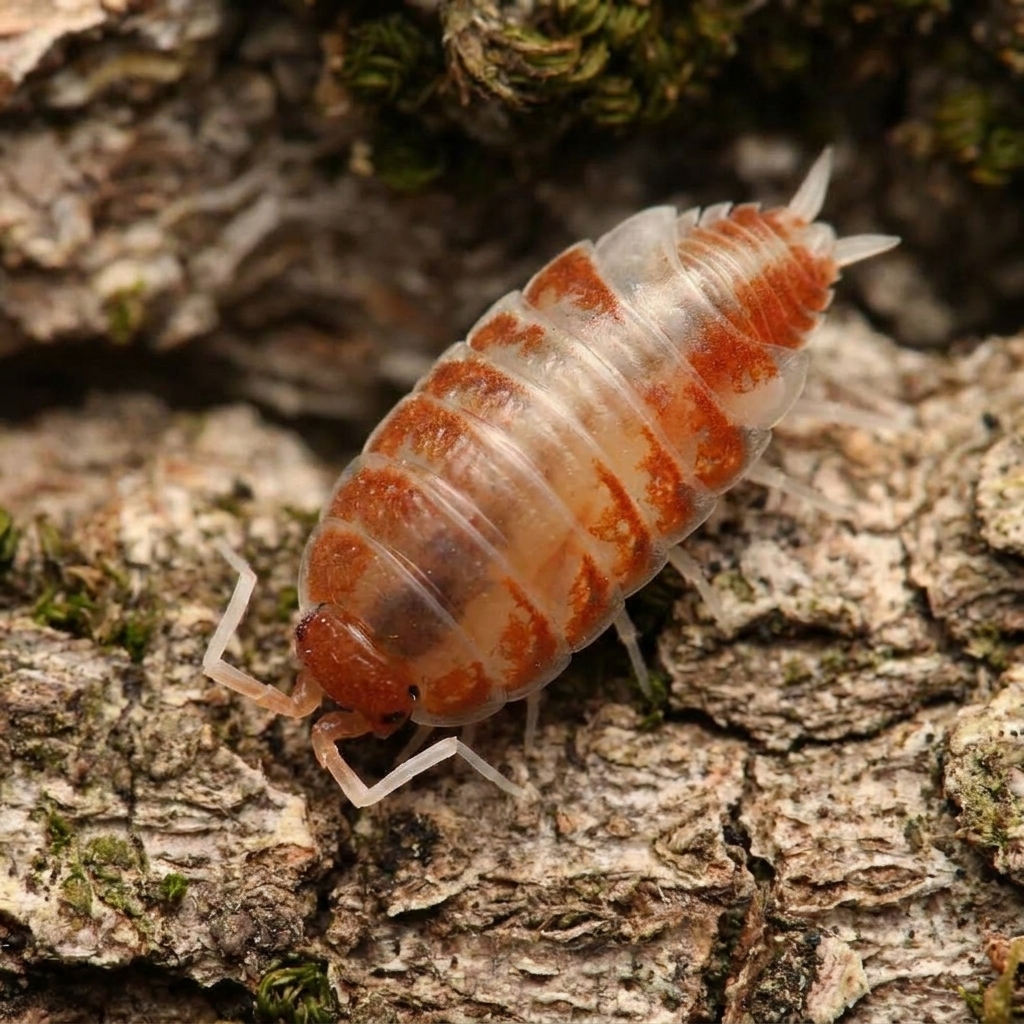

Red Koi Isopods for Sale
Overview
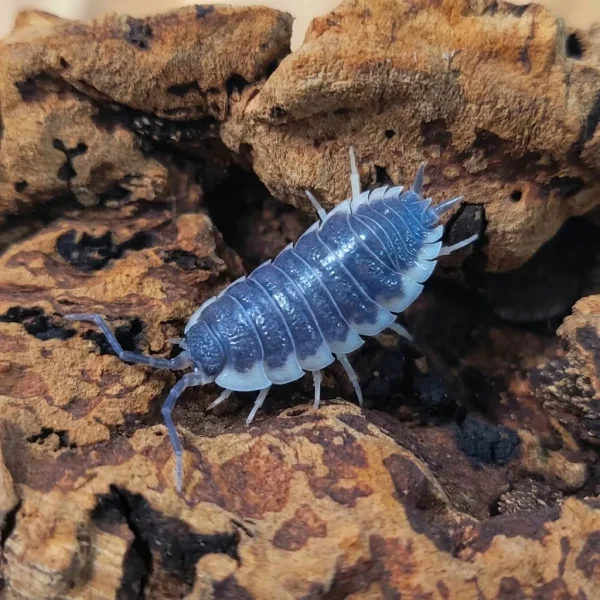
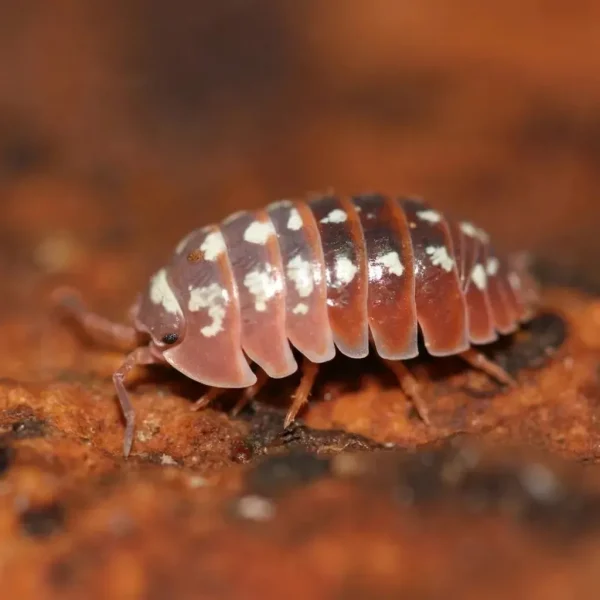
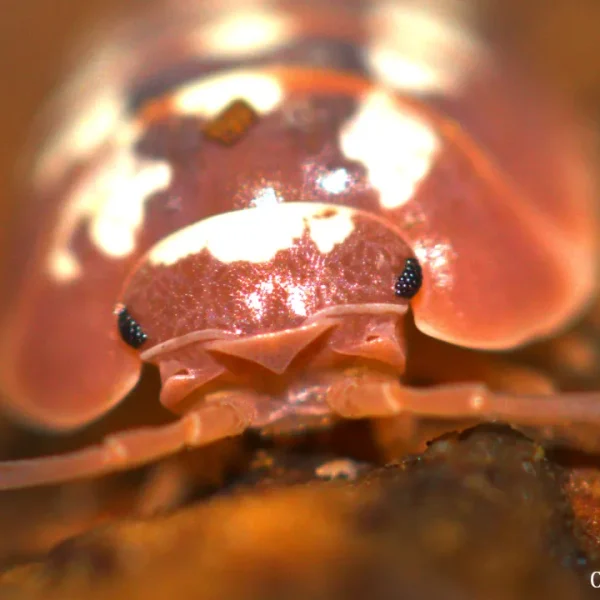
Red Koi is a designer captive-bred morph of Porcellionides pruinosus with red, orange, and pale markings that resemble koi fish patterning. The pattern is variable across the colony. Some individuals carry strong, well-defined red tones, while others lean lighter or more orange. This variation is part of why most customers pick this morph for display rather than for uniform cleanup work.
Like all Powder morphs, Red Koi keeps a soft powdery finish over the body and stays surface-active during the day. However, this morph sits in a higher tier than standard Powder Blue or Powder Orange cultures. Accordingly, most starter orders go to display vivariums or dedicated breeding bins rather than into large bioactive enclosures as a primary cleanup crew.
Why Keep Red Koi Isopods?
Customers usually pick Red Koi for one or more of the following reasons:
- Variable koi-like pattern. First, the red, orange, and pale markings differ from one individual to the next. As a result, a starter group reads visually mixed in a way that no solid-color Powder morph can match.
- Active display value. Next, Red Koi stays surface-active and diurnal like other Powder morphs. Therefore, the color and pattern actually show during the day rather than only when you lift bark.
- Collector and breeder interest. Additionally, this is a newer designer morph priced above the standard Powder color forms. Many buyers pick it specifically to add to a varied Porcellionides pruinosus lineup or to grow out a breeding colony.
- Beginner-friendly biology. Finally, despite the higher price tier, the underlying care matches every other Powder morph. The same beginner-level husbandry that works for Powder Blue also works here.
Care and Setup
Red Koi care matches the other Porcellionides pruinosus morphs. The colony does best in a balanced enclosure with stable moisture zones, cross-ventilation, and a varied diet. Moreover, pattern strength tends to hold better with calcium support and a clean substrate.
Temperature
The practical working range runs from 68 to 80°F, with the sweet spot around 72 to 78°F. Reproduction picks up at the warmer end. However, sustained heat above the mid-80s without strong ventilation usually stresses the colony.
Humidity
Aim for moderate humidity with a clear moisture gradient. One side stays moist with sphagnum moss or damp substrate, while the other side runs slightly drier with bark and leaf litter. The isopods will move between zones based on their needs. Avoid keeping the whole enclosure soggy, since stagnant moisture often causes mold and culture crashes.
Substrate
Use a substrate that holds moisture without becoming waterlogged. A working blend includes coconut fiber, flake soil or decayed hardwood, leaf litter, and a layer of sphagnum moss in the humid corner. In addition, add calcium sources such as crushed cuttlebone, eggshell, or limestone. Calcium supports molting and helps pattern definition hold across successive molts.
Food
Red Koi are detritivores, so the base diet should center on decaying plant matter. For example, leaf litter, decaying hardwood (avoid pine and cedar), magnolia pods, and cork bark surfaces work as both food and shelter. Add vegetables like squash, carrot, sweet potato, and mushrooms in small portions. Protein sources such as shrimp meal, fish flakes, or insect frass help support reproduction. Alternatively, a prepared balanced diet like TC INSECTS Isopod Food simplifies feeding and adds calcium support.
Ventilation
Cross-ventilation matters more for the Powder species than for many other isopods. Sealed bins with no airflow tend to develop mite blooms and crash cultures. Therefore, a vented lid with one moist corner outperforms a closed lid at uniform high humidity.
Bioactive Use
Red Koi works in standard tropical and temperate bioactive vivariums alongside springtails. However, given the price tier and current pack sizes, many keepers run them in dedicated culture bins first. Once the colony establishes, surplus animals can move into a display enclosure where the pattern is more visible.
Breeding Notes
Red Koi breeds at the same fast pace as the other Powder morphs once a starter group settles in. Females develop a visible white marsupium between the legs when carrying young, and they usually run slightly larger than males. However, pattern expression in offspring varies. Some young will show strong red markings, while others will lean toward orange or lighter base colors. Generally, a starter group of 10 to 25 takes a few months to grow into a clearly visible population. Selectively pulling stronger-patterned individuals across generations helps reinforce the koi look over time.
Best For
- Display vivariums where the variable koi pattern is the main draw
- Breeders growing out a colony for personal use or resale
- Collectors building a varied Porcellionides pruinosus morph lineup
- Bioactive setups with dart frogs, mourning geckos, day geckos, crested geckos, and similar small species once the colony is established
- Keepers who want a visible, surface-active culture rather than a hidden burrower
Not Best For
- Keepers who only want a working cleanup crew, since dwarf whites or solid Powder morphs cost less per individual for that single use case
- Use as a primary staple feeder, because the price per individual runs higher than standard feeder isopods
- Mixing with other Porcellionides pruinosus morphs in the same enclosure, since interbreeding dilutes the koi pattern over generations
- Sealed, no-ventilation tubs, which often develop mite issues and culture crashes
- Fully dry enclosures with no humid retreat
Receiving and Acclimation
Open the package indoors as soon as possible after delivery. Then inspect the culture gently without exposing the isopods to direct sun, heat, cold, or dry air. Some animals may hide in moss, paper, or substrate during shipping, so check the shipping media carefully before discarding anything. Small mancae often ride along inside the packing material.
Transfer the shipping material into a prepared enclosure with moist sphagnum, leaf litter, bark, and decaying wood. Place the packing material near the moist side so hidden juveniles can move out safely. After that, hold off on heavy feeding for the first few days. Stable humidity and plenty of cover help the colony settle faster than extra food does.
Origin and Morph Notes
Porcellionides pruinosus as a species occurs widely across the Mediterranean, parts of Europe, and southwest Asia. Trade has spread it further. However, the Red Koi morph specifically is a designer captive-bred color form, and its exact original source is not clearly documented in the hobby trade. Accordingly, this page focuses on practical captive care of the morph rather than claiming a precise wild origin for the koi pattern.
Recommended Add-Ons
- TC INSECTS Ultra Isopod Habitat Kit for a richer setup that supports premium morphs and breeding cultures
- TC INSECTS Isopod Food for a calcium-supported diet that helps maintain pattern definition and reproduction
- TC INSECTS Assorted Hardwood Leaf Litter for natural food, cover, and humidity support
- TC Calcium Ultra Fine for molting and exoskeleton support, especially useful for breeding colonies
- Springtails to handle mold and biofilm at a smaller scale than isopods can reach
Learn More About Isopod Biology
The references below cover background information that helps keepers get more out of an isopod culture over the long term. Each source comes from an academic, museum, or government site rather than a competing retailer.
- University of Nebraska-Lincoln Department of Entomology: Sowbugs and Pillbugs. A clear breakdown of basic isopod biology, the difference between sowbugs and pillbugs, and where they fit in the decomposer food web. Useful for understanding why leaf litter and decaying hardwood matter so much in a captive setup.
- Natural History Museum (UK): Woodlice Overview. Covers the wider terrestrial isopod family, anatomy, molting, and the conditions woodlice need to thrive. Helpful context for keepers who want to understand why humid retreats and calcium sources are not optional in a healthy culture.
- British Myriapod and Isopod Group: Porcellionides pruinosus. Species reference for Porcellionides pruinosus notes on size, distinctive appearance, and movement. Useful for seeing the wild form of the species and comparing it to designer morphs like Red Koi.
Red Koi Isopod FAQs
How is Red Koi different from Powder Orange or Orange Cream?
All three are color forms of Porcellionides pruinosus. Powder Orange is a solid warm-orange color. Orange Cream shows a two-tone dorsal wash with paler edges. Red Koi shows variable red, orange, and pale markings that resemble koi fish patterning across individuals. Care is the same across all three. The choice depends on which look you want.
Will every Red Koi isopod look the same?
No. Pattern expression varies across the colony. Some animals carry strong red markings, while others run lighter or more orange. This variation is part of what makes the morph appealing, but it also means a starter group will not look uniform.
Are Red Koi isopods good for beginners?
Yes, in terms of care. The underlying biology matches the standard Powder morphs, so the same beginner-friendly husbandry applies. However, the higher price point means a sealed-bin or no-ventilation mistake costs more than it would with a Powder White or dwarf white culture.
How fast does a Red Koi culture grow?
Slow at first, then quickly. Generally, a starter group of 10 to 25 takes a few months before the population becomes clearly visible on the surface. After that, reproduction stays high under stable temperatures, calcium-supported diet, and consistent moisture zones.
Can Red Koi be kept with other Powder morphs?
They can coexist, but mixing color morphs of the same species eventually hybridizes the colony and dilutes the distinct patterns over generations. Therefore, keepers who want to maintain a clean Red Koi line should run them in a dedicated enclosure rather than mixing them with Powder Blue, Powder Orange, or other Porcellionides pruinosus morphs.
Are Red Koi isopods good as feeders?
Not really. Some reptiles may eat small individuals if they encounter them in a bioactive setup, but the price per isopod is too high for primary feeder use. Standard dwarf whites or feeder-grade isopods are a better fit for that role.


Reviews
There are no reviews yet.