


Black Panda Isopods for Sale
TC INSECTS ships live captive-bred Cubaris sp. “Black Panda” for display cultures, breeding projects, and tropical bioactive setups. This is the Panda King with its defining white bands suppressed — same species, same Thailand origin, same body structure, but without the white banding that names the standard form. For full Cubaris genus background, see the Rubber Ducky product page. For the standard Panda King pattern, see the Panda King page.
Overview
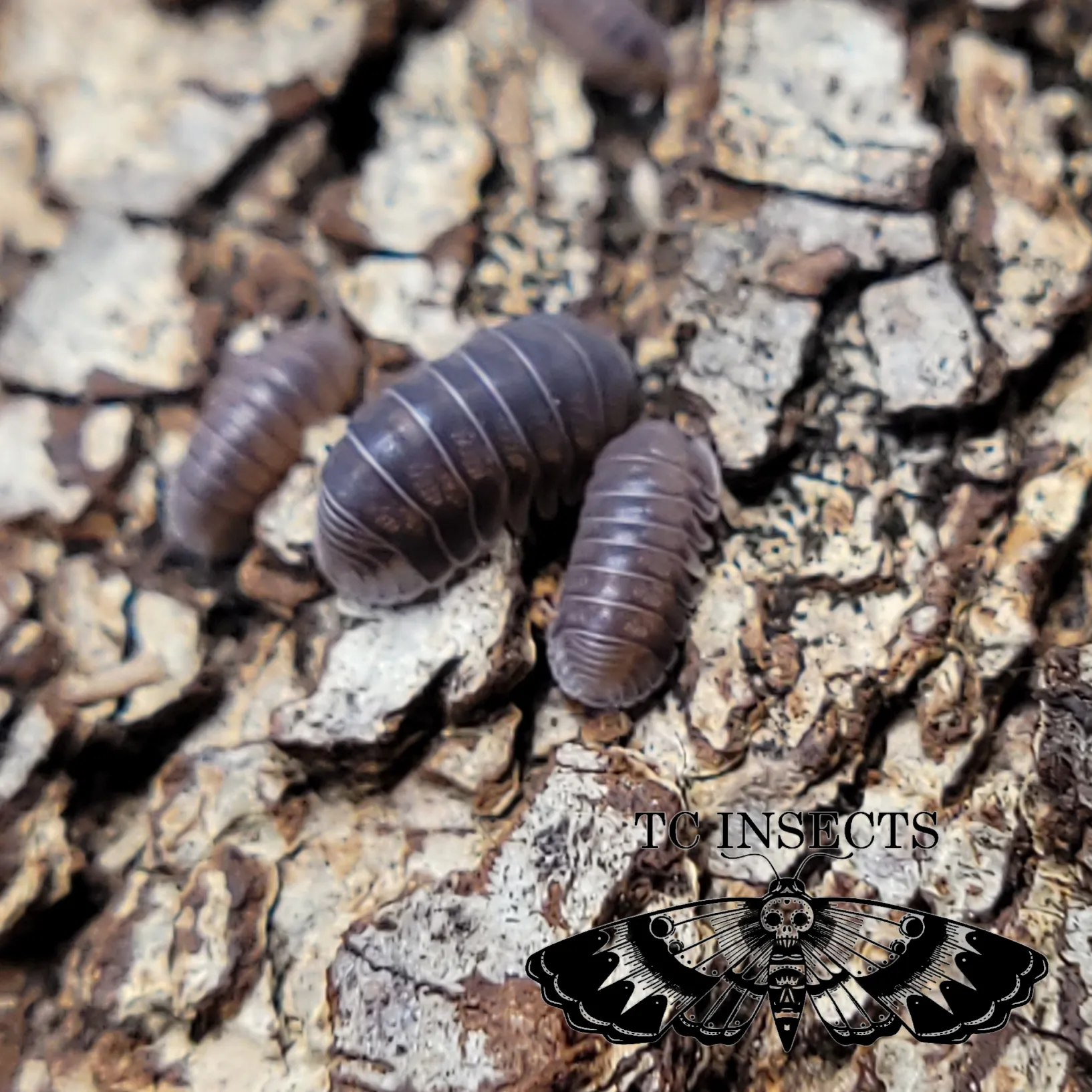
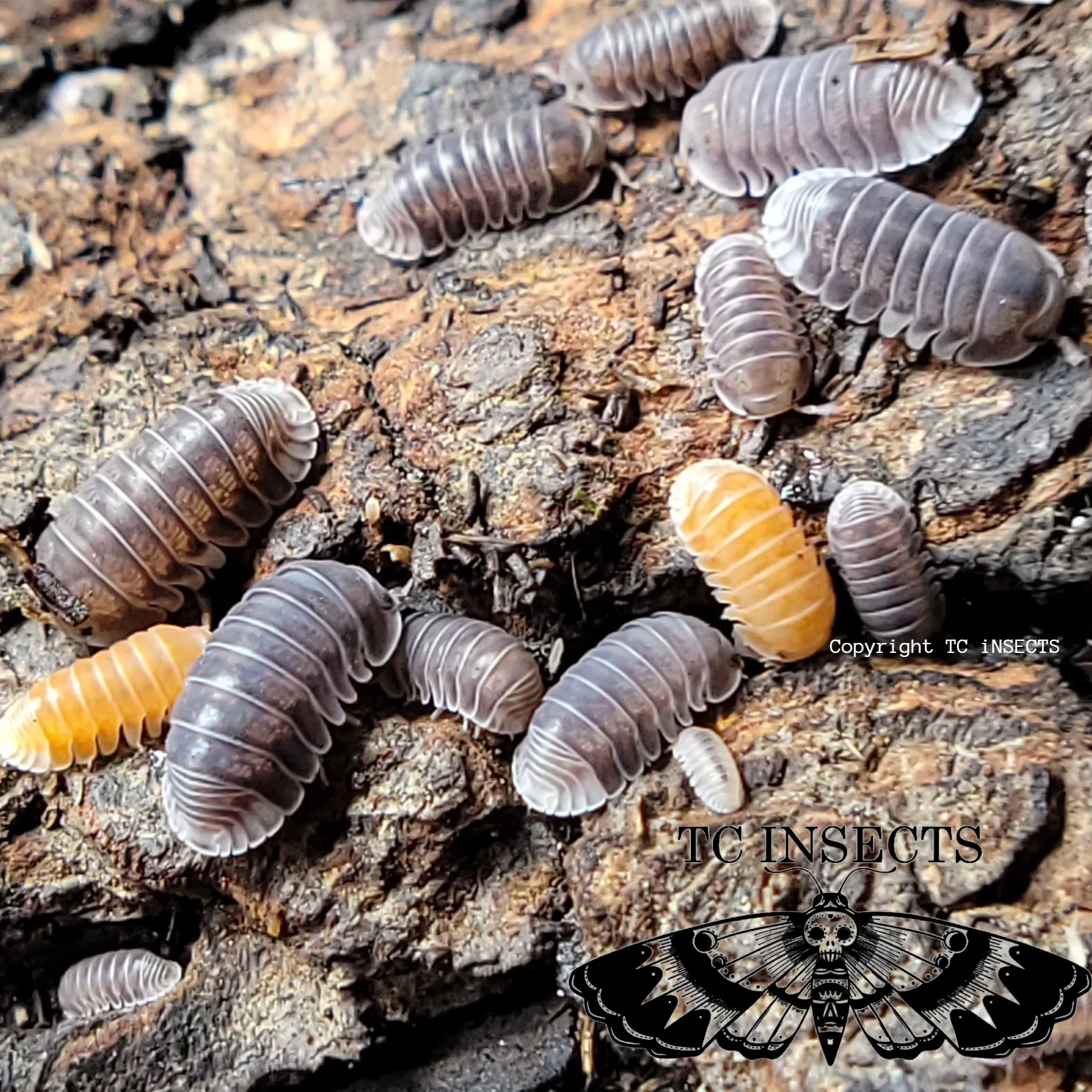
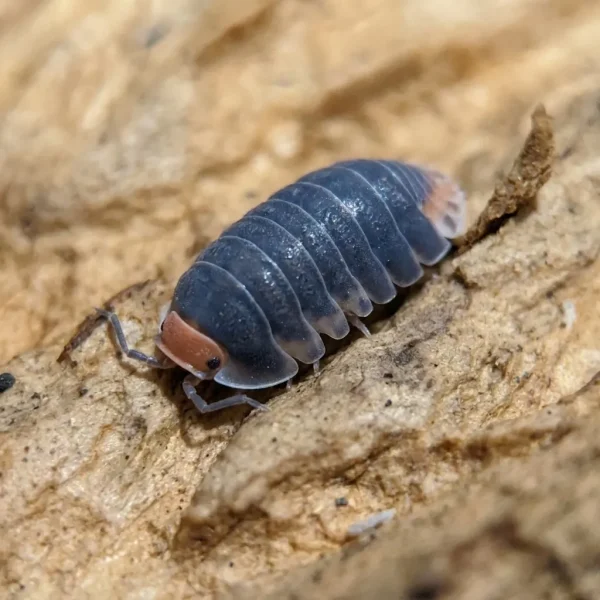
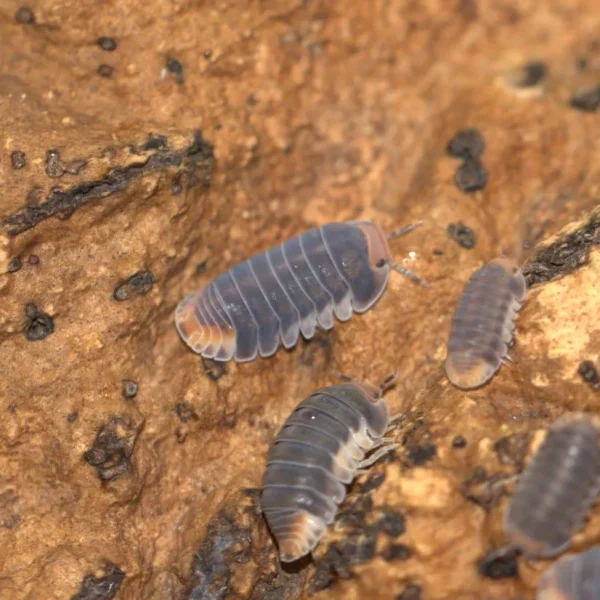
Cubaris sp. “Black Panda” is a pattern mutation of Cubaris sp. “Panda King” in which the white mid-section bands are suppressed, leaving the body predominantly dark. The standard Panda King shows two bright white bands near the head against dark gray segments — the visual that names the species. In the Black Panda, those white bands are absent. The result is an animal with the same compact Armadillidae body shape and Thailand cave-origin care needs as the Panda King, in a dark, low-pattern coloring.
How the Pattern Suppression Works
The white bands in the standard Panda King appear between body segments 2 and 4 — the “shoulders” of the animal. In the Black Panda, this pigment-reduced zone is absent or heavily reduced. The body appears uniformly dark to black across all segments. White legs and antennae may or may not be retained depending on the individual and the specific line.
The Black Panda is the inversion of the standard panda pattern logic. Where Panda King and Red Panda both emphasize the white bands as the visual focal point, the Black Panda removes them entirely, leaving a low-pattern, predominantly dark animal that reads as a solid shape in the enclosure.
Honest Note: The TC INSECTS Line Carries the Red Panda Gene
The TC INSECTS Black Panda line specifically carries the Red Panda color gene. You will receive all Black Panda animals in your order. However, approximately 3% of future clutches from this line may produce Red Panda-colored offspring alongside the Black Panda majority.
This is a characteristic of this specific TC INSECTS colony, not a defect. It means the Black Panda line occasionally expresses the orange-red coloring of the Red Panda form in a small percentage of offspring. Keepers who specifically want to maintain a pure Black Panda visual line should watch for and separate Red Panda-colored individuals from the breeding group.
Honest Note: A Recurring Spontaneous Mutation
The Black Panda pattern suppression was not isolated once from a single individual. Multiple specialist breeders have reported independently finding and isolating this same pattern mutation from their own Panda King colonies. This suggests the gene responsible for white-band suppression appears with some regularity in Panda King populations rather than being a single rare event.
For collectors, this means the Black Panda is a documented recurring mutation in the Panda King species — not a unique one-time find. Lines exist from several independent isolation events. The TC INSECTS line is one such independently established culture.
Prolific and Ventilation-Tolerant — The Practical Advantages
The Black Panda offers two practical advantages over the standard panda-line *Cubaris* in this catalog. First, it is one of the most productive breeders in the range. Multiple hobby sources describe it as “very prolific” and reproducing “quickly compared to other Cubaris.” Brood sizes of 2 to 10 mancae are documented. An established Black Panda colony grows at a pace that compares favorably even to the Panda King standard form.
Second, Black Panda tolerates a wider range of ventilation conditions than most Thai Armadillidae. Keepers who cannot achieve perfect cross-ventilation in their setup can still maintain a healthy Black Panda culture. However, humidity cannot be compromised regardless of ventilation tolerance. Dry conditions are fatal to this species. The tolerance is for airflow variation — not for moisture reduction.
Care
Setup Framework
Use a ventilated enclosure with 3 to 4 inches of organic substrate. Keep the substrate consistently damp — not waterlogged — throughout. Add a moist sphagnum moss zone, cork bark and hardwood bark hides, and leaf litter across the surface. Provide calcium at all times. Keep 70 to 78°F. Maintain 65 to 80% humidity. Ventilation can be moderate rather than strong — this species tolerates a wider airflow range than the ducky types.
This species spends more time burrowed than other Thai Armadillidae. Visible surface activity is low until the colony population grows. Check by lifting bark hides rather than excavating substrate.
Calcium
Provide limestone as the primary calcium source, consistent with all Thailand cave-origin panda-line *Cubaris*. Supplement with TC Calcium Ultra Fine or cuttlebone as secondary. Keep both available simultaneously for best results.
Food
Keep TC INSECTS Assorted Hardwood Leaf Litter and decaying hardwood available at all times. Offer protein twice per week through TC INSECTS Isopod Food, dried shrimp, or fish flakes. Mango, carrot, and sweet potato work well as occasional fruit and vegetable supplements. Feed small portions and remove uneaten fresh food within 24 to 48 hours.
Springtails
Pair with Springtails for mold control. In the damp conditions this species needs, mold builds in the areas the isopods cannot manage alone. A springtail culture prevents accumulation without requiring excessive ventilation.
Breeding Notes
Females carry developing young in a marsupium. Once established, this species produces mancae at a notably faster rate than the ducky-type *Cubaris* and comparable to or faster than the standard Panda King. Mancae burrow immediately after release and stay hidden until they grow. Brood sizes of 2 to 10 are documented.
Stability drives breeding. Check moisture regularly, keep calcium available, and minimize substrate disturbance. As the colony grows, surface activity becomes more visible. A mature colony can function as a genuine bioactive cleanup crew in a tropical enclosure — one of the few panda-type *Cubaris* with enough productivity to handle regular waste processing.
The Panda Line in the TC INSECTS Catalog
The TC INSECTS range includes three panda-line *Cubaris*: Panda King (dark gray + white bands, Vietnam wild-type), Red Panda (orange-red + white bands, US captive color mutation), and Black Panda (no white bands, Thailand pattern mutation, Red Panda gene carrier in TC INSECTS’ line). All three share the same body type and care framework. They differ in pattern expression and productivity. Black Panda is the most prolific of the three.
Best For
- Collectors completing the panda-line Cubaris range with the pattern-reduced third variant
- Keepers who want the productivity and ventilation tolerance of the panda *Cubaris* group in a dark, low-pattern display species
- Tropical bioactive terrariums where the colony needs to grow to useful size quickly — the Black Panda’s prolific breeding makes it the fastest to reach cleanup crew numbers among panda-line species
- Keepers who cannot achieve perfect cross-ventilation but can maintain consistent high humidity
- Anyone interested in the Red Panda gene — approximately 3% of future clutches from TC INSECTS’ line will express Red Panda coloring
Not Best For
- Dry or variable-humidity setups. Dry conditions are fatal regardless of ventilation tolerance.
- Keepers wanting a high-contrast display species. The absence of white bands makes this a low-pattern animal. See Panda King for the classic white-band contrast.
- Keepers wanting to maintain a pure Black Panda line without any Red Panda offspring. The TC INSECTS line carries the Red Panda gene. Separate Red Panda-colored offspring from the breeding group to maintain pure Black Panda visual.
Receiving and Acclimation
Open the package in a calm indoor area soon after delivery. Place all packing material directly into the prepared enclosure — mancae are easy to miss when picking individuals out. Position animals near the moist zone under bark or leaf litter and leave the culture undisturbed for at least one week.
First Week Priorities
The enclosure should already be at temperature and humidity before the animals arrive. Feed very lightly for the first week — leaf litter, a small protein offering, and calcium. This species burrows more than other Thai Armadillidae. Hiding for days after arrival is normal and expected. Check under bark hides rather than disturbing the substrate to assess activity.
Recommended Add-Ons
- TC Calcium Ultra Fine alongside limestone for continuous calcium access.
- TC INSECTS Assorted Hardwood Leaf Litter as the primary diet foundation and surface cover.
- TC INSECTS Isopod Food for the twice-weekly protein rotation.
- TC INSECTS Isopod Habitat Kit for a complete beginner-friendly starter setup.
- Springtails for mold control in the moist substrate conditions this species needs.
Frequently Asked Questions
What makes Black Panda different from Panda King?
Both are the same species from Thailand. The standard Panda King shows two bright white bands between segments 2 and 4, white legs, and white antennae — the classic Giant Panda visual. The Black Panda suppresses those white bands, leaving a predominantly dark or black body. Additionally, Black Panda is more prolific and more ventilation-tolerant than the standard form.
Why does my Black Panda look almost identical to a regular Panda King?
This can happen with first-generation isolations or with individuals that show partial white-band suppression rather than complete absence. True Black Panda shows significantly reduced or absent white mid-section bands compared to a standard Panda King. If the white bands are still clearly present, the individual may be a heterozygous carrier rather than expressing the full Black Panda pattern. In a breeding colony over multiple generations, the pattern becomes more consistent through selective separation of dark individuals.
What does it mean that the TC INSECTS line carries the Red Panda gene?
The TC INSECTS Black Panda colony includes animals that carry the Red Panda color gene. You will receive Black Panda animals. However, approximately 3% of future offspring from this line may show the orange-red Red Panda coloring rather than the dark Black Panda pattern. This is disclosed by TC INSECTS as a characteristic of this specific colony. If you want to maintain a pure Black Panda visual line, separate and remove Red Panda-colored offspring from the main breeding group.
How is this different from the Red Panda?
Red Panda is a color mutation that replaces the dark gray segments with orange-red while keeping the white bands in place. Black Panda is a pattern mutation that removes the white bands while keeping the dark body segments. Red Panda was isolated in captivity in the US from a Panda King colony. Black Panda was isolated independently by multiple breeders from Panda King colonies worldwide. Both are color or pattern mutations of the same base species.
Is Black Panda really more prolific than other panda-type Cubaris?
Yes, according to multiple independent hobby sources. Tropical Isopods, Planet Isopod, and Buddha Bugs all describe the Black Panda as reproducing quickly — faster than typical *Cubaris* — with brood sizes of approximately 2 to 10. This makes it among the most productive of the panda-line *Cubaris* and one of the few panda-type species that can realistically serve as a bioactive cleanup crew once the colony reaches working size.
Learn More About Black Panda and Cubaris
These sources give useful context on the genus, family biology, and habitat behind this species.
-
Wikipedia: Armadillidae. The family overview covering the ~80 genera and 700+ species in the family that includes Cubaris. The article notes the strongly convex body shape characteristic of Armadillidae — the same body form that makes Black Panda a deep burrower. The convex shell and compact form suit substrate burrowing more than surface activity. This explains the Black Panda’s tendency to spend more time underground than other Thai Armadillidae with similar care requirements.
-
iNaturalist: Cubaris. Observation records for the genus across Southeast Asia. The Thailand-concentrated records show the region’s diversity of undescribed cave-dwelling Armadillidae forms, providing context for why pattern mutations like the Black Panda appear and recur within established Panda King populations in Thailand. The same cave-origin biology that produces the white-banding pattern in the standard form also produces variation within it.
-
PMC / NCBI: Water conservation in terrestrial isopods. Research on gill-structure water management in terrestrial isopods. Directly relevant to the Black Panda’s most critical care parameter: humidity cannot drop regardless of ventilation tolerance. Multiple sources note dry conditions are fatal to this species. The gill biology research explains why — cave-origin isopods evolved in continuously humid environments, and gill function drops sharply below the minimum humidity threshold regardless of how well the enclosure is ventilated.



Reviews
There are no reviews yet.