Complimentary FedEx 2-Day on orders over $250 Complimentary Overnight shipping on orders over $400 Live Arrival Guarantee on every order Family-owned insect farm - Houston, Texas

Shop

Showing 161–176 of 499 resultsSorted by latest

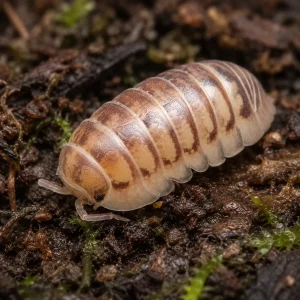
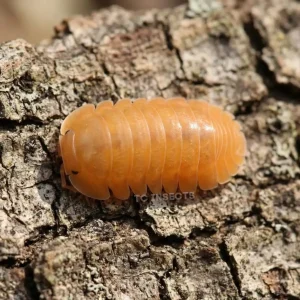
  • Sale! Orange Freezy isopods on cork bark with moss and leaf litter

    Cubaris sp. 'Orange Freezy'

    $24.99 - $174.99

    Pronounced: KOO-bah-riss sp. OR-inj FREE-zee

    Care Level: Intermediate

    Adult Size: Approximately 18 to 20 mm

    Reproductive Rate: Moderate once established

    Temperature: 75 to 82 F (warmer than most Cubaris)

    Humidity: High overall with a stable moist zone and breathable airflow

    Scientific Name: Cubaris sp. “Orange Freezy” (hobby trade name, also sold as Orange Freeze)

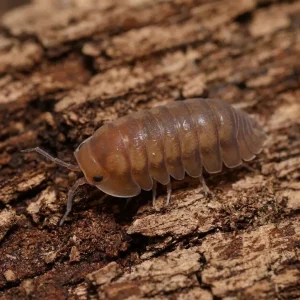
    Appearance: Vibrant orange body with a semi-transparent frosted skirt around the body edge, broad wide-bodied Cubaris shape.

    Orange Freezy Isopods for Sale: A large-bodied warmth-loving Cubaris with vibrant orange color and a semi-transparent edge, suited to intermediate keepers stepping into their first true Cubaris display culture.

    Best For: Display vivariums where bright orange contrast reads cleanly, Cubaris collectors who want a larger-bodied species, and intermediate keepers comfortable with humid warm husbandry.

    Orange Freezy Isopods are a large-bodied Thai Cubaris that entered the hobby trade around 2022. The body shows a vibrant orange color with a semi-transparent skirt around the edge, which gives the animal a frosted or frozen-in-place look that drives the trade name. Adults reach roughly 18 to 20 mm, which makes this one of the larger true Cubaris in the collector range. Compared to many other Cubaris, Orange Freezy is reported as faster-moving and a steadier breeder.

    Select optionsLoading Done This product has multiple variants. The options may be chosen on the product page
  • Sale! Lavender Panda King isopods on cork bark with moss and leaf litter

    Cubaris sp. 'Lavender Panda King'

    $69.99 - $219.99

    Pronounced: KOO-bah-riss Lavender Panda King

    Care Level: Beginner to intermediate

    Adult Size: About 10 to 15 mm

    Reproductive Rate: Moderate once established

    Temperature: 70 to 78°F

    Humidity: Medium-high to high, with a strong moist zone and a smaller drier zone

    Scientific Name: Cubaris sp. “Lavender Panda King”

    Morph Status: Captive color morph of Cubaris sp. “Panda King”

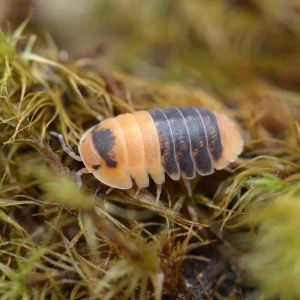
    Appearance: Soft lavender, gray, and cream banded markings on a rounded Cubaris body that curls tightly when disturbed

    Lavender Panda King Isopods for Sale: Live captive-morph Cubaris sold as a starter colony for Panda King collectors, color-themed display setups, and intermediate keepers who want a softer-toned version of an established hobby line.

    Best For: Cubaris collectors expanding a Panda King lineup, color-themed display cultures, planted vivariums, and intermediate keepers who already manage humid bioactive setups.

    Cubaris sp. “Lavender Panda King” is a captive color morph of the Cubaris sp. “Panda King” hobby line. It carries the same paneled Cubaris body shape, but the standard Panda King contrast is replaced with softer lavender, gray, and cream banding. Care matches Panda King-type Cubaris, reproduction is moderate, and the colony rewards stable humidity over fast-paced bioactive cleanup work.

    Select optionsLoading Done This product has multiple variants. The options may be chosen on the product page
  • Sold Out Sale! Cubaris sp. Emperor Bee isopods on moss and bark in a humid terrarium setup

    Cubaris sp. 'Emperor Bee'

    $79.99 - $349.99

    Pronounced: KOO-bah-riss sp. EM-per-er BEE

    Care Level: Advanced

    Adult Size: Approximately 13 to 18 mm

    Reproductive Rate: Slow to moderate

    Temperature: 72 to 80 F

    Humidity: High overall with a stable moist zone and a small drier feeding area

    Scientific Name: Cubaris sp. “Emperor Bee” (hobby trade name)

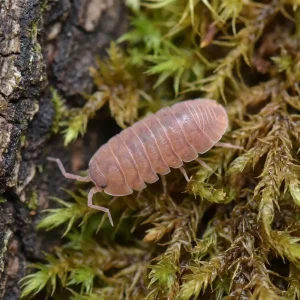
    Appearance: Golden yellow front, jet black middle, white rump, rounded Cubaris body. Snow Bee is the hypomelanistic variant of this same animal.

    Emperor Bee Isopods for Sale: A large limestone karst Thai Cubaris with bold bee-themed coloration, suited to advanced collectors comfortable with patient slow-paced Cubaris husbandry.

    Best For: Advanced Cubaris collectors filling out the bee-family shelf, display-focused breeders running dedicated bee-morph projects, and keepers who want a larger statement Cubaris with high-contrast coloration.

    Emperor Bee Isopods are a large Thai Cubaris with a bold three-segment color pattern: golden yellow at the front, jet black across the middle, and a touch of white on the rump. The line originates from limestone karst formations in Thailand, where calcium-rich rock walls and stable cave-influenced microclimates shape the husbandry expectations. Adults reach roughly 13 to 18 mm depending on the line and maturity, which puts Emperor Bee at about twice the size of the related Bumblebee Cubaris.

    Select optionsLoading Done This product has multiple variants. The options may be chosen on the product page
  • Sold Out Sale! Cubaris sp. Cute Honey Tigers isopods on moss and bark in a humid terrarium setup

    Cubaris sp. “Cute Honey Tigers"

    $44.99 - $169.99

    Pronounced: KOO-buh-ris kyoot HUN-ee TYE-gers

    Care Level: Intermediate

    Adult Size: About 8 to 10 mm (dwarf-tier for Cubaris)

    Reproductive Rate: Moderate once established

    Temperature: 72 to 80°F

    Humidity: Moderate to humid, with a reliable moist retreat and steady ventilation

    Scientific Name: Cubaris sp. “Cute Honey Tigers”

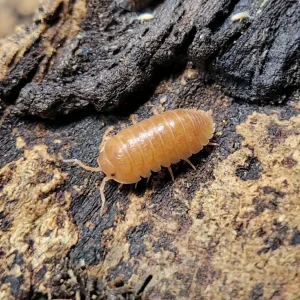
    Appearance: Warm honey, amber, and tan body tones with subtle tiger-like striping that varies in intensity between individuals

    Cute Honey Tigers Isopods for Sale: Live dwarf-size Cubaris sold as a starter colony for small display jars, micro-vivariums, and Cubaris collectors who want a tiny warm-toned culture alongside their larger species.

    Best For: Cubaris collectors building a size-varied lineup, micro-vivariums and small display jars, planted naturalistic setups, and intermediate keepers who already manage humid bioactive cultures.

    Cubaris sp. “Cute Honey Tigers” is the dwarf-size Cubaris in our catalog at about 8 to 10 mm adult size. The body carries warm honey, amber, and tan tones with subtle tiger-like striping that varies between individuals. Because they are smaller than most catalog Cubaris, they fit small display jars, micro-vivariums, and tightly-framed naturalistic setups better than larger species do.

    Select optionsLoading Done This product has multiple variants. The options may be chosen on the product page
  • Sold Out Sale! Cubaris sp. Bumblebee isopods on moss and bark in a humid terrarium setup

    Cubaris sp. “Bumble bee”

    $99.99 - $424.99

    Pronounced: KOO-bah-riss sp. BUM-bul-BEE

    Care Level: Intermediate

    Adult Size: Approximately 8 to 14 mm (some lines 15 to 18 mm at full maturity)

    Reproductive Rate: Moderate once established

    Temperature: 72 to 80 F

    Humidity: High overall with a stable moist zone and a small drier feeding area

    Scientific Name: Cubaris sp. “Bumblebee” (hobby trade name, provisional genus assignment)

    Appearance: Honey-yellow and dark banded body resembling a bumblebee, rounded Cubaris shape capable of rolling into a ball.

    Bumblebee Isopods for Sale: A Thai bee-pattern Cubaris with high day activity and honey-yellow contrast, suited to intermediate keepers wanting their first bee-family Cubaris or collectors building out the broader bee shelf.

    Best For: Intermediate Cubaris keepers, display vivariums where day activity is valued, and collectors filling out the bee-pattern family alongside Emperor Bee and Snow Bee.

    Bumblebee Isopods are a Thai Cubaris with honey-yellow and dark banded coloration that resembles an actual bumblebee. The line is the smaller, more day-active member of the bee-pattern Cubaris family, distinct from the larger Emperor Bee and the hypomelanistic Snow Bee. Adults typically reach 8 to 14 mm, with some lines pushing into the 15 to 18 mm range at full maturity. Compared to most Cubaris, Bumblebee is reported as more active and more visible at the substrate surface, which makes it a useful display species.

    Select optionsLoading Done This product has multiple variants. The options may be chosen on the product page
  • Sold Out Sale! Amber Firefly isopods for sale on bark and leaf litter

    Cubaris sp. 'Amber Firefly'

    $74.99 - $324.99

    Pronounced: KOO-buh-ris AM-ber FY-er-fly

    Care Level: Intermediate

    Adult Size: About 1 to 1.2 cm

    Reproductive Rate: Moderate once established

    Temperature: 72 to 80°F

    Humidity: Moderate to humid, with a moist retreat and steady ventilation

    Scientific Name: Cubaris sp. “Amber Firefly”

    Appearance: Deeper, more saturated amber, orange, and golden body tones on a rounded Cubaris body that curls when disturbed

    Amber Firefly Isopods for Sale: Live premium-tier amber Cubaris sold as a starter colony for collectors upgrading from standard Cubaris Amber and for display-jar keepers who want the more saturated warm-tone option.

    Best For: Cubaris collectors building a tiered warm-tone lineup, premium display jars, planted vivariums, and intermediate keepers who already manage humid bioactive setups.

    Cubaris sp. “Amber Firefly” is the premium-tier warm-toned Cubaris in our catalog. The body carries deeper amber, orange, and golden tones with a more saturated warm look than standard Cubaris Amber, which is the main reason hobbyists choose Amber Firefly at the higher price tier. Despite the marketing name, this is not a bioluminescent isopod, and the “firefly” framing refers to the warm color, not light.

    Select optionsLoading Done This product has multiple variants. The options may be chosen on the product page
  • Sale! Cubaris murina Florida Orange isopods on moss and bark in a humid bioactive terrarium setup

    Cubaris Murina “Mamey”

    $19.99 - $119.99

    Pronounced: KOO-bah-riss myoo-REE-nuh mah-MAY

    Care Level: Beginner

    Adult Size: Approximately 8 to 11 mm

    Reproductive Rate: Moderate to good once established

    Temperature: 70 to 80 F

    Humidity: Moderate to high with a stable moist retreat and breathable airflow

    Scientific Name: Cubaris murina “Mamey” (formally described species, captive designer morph)

    Appearance: Warm orange to peach body with apricot tones, small rounded pillbug shape capable of rolling into a ball.

    Mamey Isopods for Sale: A US-created designer orange color morph of Cubaris murina, suited to beginner Cubaris keepers and bioactive vivarium builders wanting a small productive colorful pod.

    Best For: First-time Cubaris keepers, bioactive vivariums where small productive pods work better than large slow ones, and collectors comparing orange C. murina color forms.

    Mamey Isopods are a US-created designer color morph of Cubaris murina, developed through a multi-generation cross of C. murina “Tangie” with C. murina “Papaya.” The animal shows warm orange, peach, and apricot tones inspired by the mamey fruit color. Adults reach roughly 8 to 11 mm and roll into a ball when disturbed in classic pillbug fashion. Cubaris murina is a formally described species (Brandt, 1833) naturalized across pantropical and subtropical regions worldwide, which makes the Mamey line one of the most beginner-friendly Cubaris available.

    Select optionsLoading Done This product has multiple variants. The options may be chosen on the product page
  • Sale! Cubaris murina Florida Orange isopods on moss and bark in a humid bioactive terrarium setup

    Cubaris murina "Florida Orange"

    $29.99 - $424.99

    Pronounced: KOO-buh-ris myoo-REE-nuh

    Care Level: Beginner

    Adult Size: About 8 to 11 mm

    Reproductive Rate: Moderate to good once established

    Temperature: 70 to 80°F

    Humidity: Moderate to humid, with a moist retreat and steady ventilation

    Scientific Name: Cubaris murina “Florida Orange”

    Appearance: Uniform bright orange body with some natural variation toward peach, amber, or muted orange between individuals

    Florida Orange Isopods for Sale: Live captive-bred orange Cubaris murina sold as a starter colony for first-time Cubaris buyers, bioactive setups, and keepers who want a colorful US-line cleanup species.

    Best For: First-time Cubaris buyers, beginner bioactive terrariums, planted vivariums, and keepers who want the cheapest, easiest entry into orange Cubaris.

    Cubaris murina “Florida Orange” is the most beginner-friendly orange Cubaris in our catalog. It sits on the confirmed pantropical species Cubaris murina, the same species as our Anemone line, but the body is uniformly orange instead of mottled. The morph is associated with US Florida-origin hobby stock, which makes it the only US-line warm-tone Cubaris we carry.

    Select optionsLoading Done This product has multiple variants. The options may be chosen on the product page
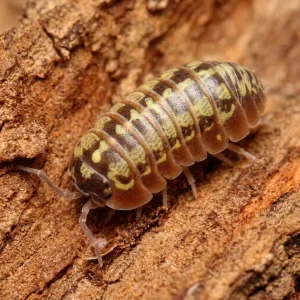
  • Sold Out Sale! Armadillidium versicolor Ceska isopods on bark and moss in a bioactive terrarium setup

    Armadillidium versicolor 'Ceska'

    $9.99 - $44.99

    Pronounced: Ar-ma-dill-IDD-ee-um VER-sih-kuh-lor

    Care Level: Beginner to intermediate

    Adult Size: Around 10 mm, smaller than most other Armadillidium

    Reproductive Rate: Moderate once established

    Temperature: 68 to 78°F

    Humidity: Moderate with a moist retreat and a drier main area

    Scientific Name: Armadillidium versicolor Stein, 1859 “Ceska”

    Appearance: Compact rolling body with variegated dark brown to olive-brown tones and lighter mottling

    Ceska Isopods for Sale: A live Armadillidium versicolor culture sold for collectors and keepers who want a smaller, naturally variegated rolling pill woodlouse with full conglobation and a documented European origin.

    Best For: Display cultures, collector shelves focused on smaller Armadillidium species, planted vivariums with moderate humidity, and bioactive setups where larger species would crowd the visual layout.

    Ceska isopods are a compact European rolling pill woodlouse, Armadillidium versicolor “Ceska,” sold for display cultures and stable bioactive setups. Adults stay around 10 mm, which is noticeably smaller than the better-known A. vulgare and A. depressum species. The “versicolor” name comes from the Latin word for “varied color,” since the natural wild patterning shows a mix of darker base tones, lighter mottling, and segment highlights. Individual coloration varies, which is normal for this species rather than a sign of culture drift.

    Select optionsLoading Done This product has multiple variants. The options may be chosen on the product page
  • Sale! Armadillidium tunisiense Eastern Clown isopods on bark and moss in a bioactive terrarium setup

    Armadillidium tunisiense “Eastern Clown

    $29.99 - $199.99

    Pronounced: ar-ma-dill-IH-dee-um too-niz-ee-EN-see

    Care Level: Beginner to intermediate

    Adult Size: About 10 to 15 mm

    Reproductive Rate: Moderate, with seasonal reproduction patterns

    Temperature: 68 to 78°F

    Humidity: Low to medium overall with a moist retreat and steady ventilation

    Scientific Name: Armadillidium tunisiense Hamaïed & Charfi-Cheikhrouha, 2007

    Appearance: Sand-colored conglobating pill bug body with black patterning, often with a faint yellow stripe running front to back that is more vibrant in juveniles

    Eastern Clown Isopods for Sale: Live starter cultures of a Tunisian Armadillidium with sand-and-black clown-style patterning, suitable for display setups and drier-leaning bioactive enclosures managed by intermediate keepers.

    Best For: Display cultures, collector shelves featuring Mediterranean and North African Armadillidium species, planted vivariums with stable humidity, and keepers building an Armadillidium-focused collection.

    Eastern Clown is the hobby trade name for Armadillidium tunisiense, a Tunisian pill bug described in 2007 by Hamaïed and Charfi-Cheikhrouha. The species name literally means “from Tunisia” in Latin, which is the formally documented origin. Adults show a sand-colored body with black patterning and a faint yellow stripe running front to back, often more vibrant in juveniles. The “Eastern” in the trade name distinguishes this species from the better-known Armadillidium klugii Clown lineage from the Balkans.

    Select optionsLoading Done This product has multiple variants. The options may be chosen on the product page
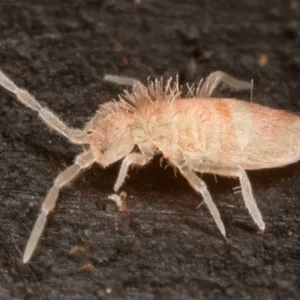
  • Sale! Tropical Pink springtails in a live culture cup

    Coecobrya cf. tenebricosa |Tropical Pink Springtails

    $8.99 - $39.99

    Pronounced: Koh-ee-koh-BRY-uh ten-eh-brih-KOH-suh

    Care Level: Easy to Intermediate

    Adult Size: Very small, commonly around 1 to 4 mm

    Reproductive Rate: Moderate, usually slower than Temperate White springtails

    Temperature: 72 to 82°F preferred

    Humidity: High, with consistent moisture

    Color Note: Tropical Pink springtails are lightly pink-tinted rather than bright pink.

    Available Sizes: 8 oz, 16 oz, 32 oz, 64 oz

    Available Culture Types: CoCo, Charcoal, Euro-Clay, Bio-Plaster, and Ultra Bioactive Substrate

    Best for tropical bioactive terrariums, dart frog vivariums, humid reptile and amphibian habitats, planted enclosures, isopod bins, mold control support, and small supplemental feeder use for suitable micro insectivores.

    Select optionsLoading Done This product has multiple variants. The options may be chosen on the product page
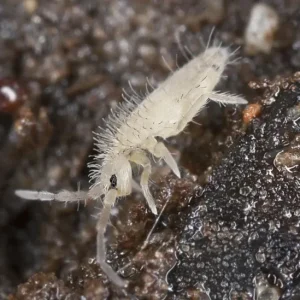
  • Sale! Tropical White Springtails on TC INSECTS Ultra Bioactive Substrate for bioactive terrariums

    Collembola sp. | Tropical White Springtails

    $7.99 - $39.99

    Pronounced: Koh-LEM-boh-luh

    Care Level: Easy to Intermediate

    Adult Size: Very small, commonly around 1 to 4 mm

    Reproductive Rate: Moderate, usually slower than Temperate White springtails

    Temperature: 72 to 82°F preferred

    Humidity: High, with consistent moisture

    Culture Type Options: Coco, Charcoal, Euro-Clay, Bio-Plaster, and Ultra Bioactive Culture

    Culture Size Options: 8 oz, 16 oz, 32 oz, and 64 oz

    Tropical White Springtails for Sale

    • Tropical White springtails, Collembola sp., are tiny live microfauna used as a cleanup crew for warm bioactive terrariums, vivariums, reptile enclosures, amphibian setups, planted habitats, and isopod cultures.
    • Best for tropical bioactive terrariums, dart frog vivariums, humid reptile and amphibian habitats, planted enclosures, isopod bins, mold control support, and small supplemental feeder use for suitable micro insectivores.
    Select optionsLoading Done This product has multiple variants. The options may be chosen on the product page
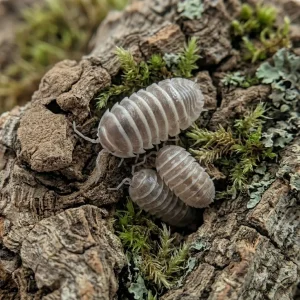
  • Sold Out Sale! Armadillidium scaberrimum Sandstone isopods on bark and moss in a bioactive terrarium setup

    Armadillidium Scaberrimum "Sandstone"

    $29.99 - $199.99

    Pronounced: ar-ma-dill-IH-dee-um skab-er-REE-mum

    Care Level: Beginner to intermediate

    Adult Size: About 15 to 20 mm

    Reproductive Rate: Moderate to prolific once established

    Temperature: 68 to 78°F

    Humidity: Low to medium with a moist retreat and steady ventilation

    Scientific Name: Armadillidium scaberrimum Stein, 1859

    Appearance: Conglobating pill bug body with a noticeably bumpy, tuberculated, sandstone-textured surface in pale beige to gray tones

    Sandstone Isopods for Sale: Live starter cultures of a hardy Dalmatian pill bug with stone-textured body and pale earthy coloration, suited to beginner-friendly display setups, collector Armadillidium shelves, and naturalistic bioactive enclosures.

    Best For: Display cultures, beginner Armadillidium projects, bioactive vivariums with moderate humidity, and keepers building a Mediterranean and Dalmatian pill bug shelf.

    Sandstone is the hobby trade name for Armadillidium scaberrimum, a hardy pill bug from the Dalmatian coast described by Stein in 1859. The species name

    scaberrimum is the Latin superlative of scaber, meaning “very rough” or “roughest,” which fits the noticeably tuberculated body texture that defines the species.

    Pale beige, tan, gray, and stone-toned coloration gives the trade name, and the unusually wide climate tolerance for the genus makes this one of the easier

    Armadillidium species in the hobby.

    Select optionsLoading Done This product has multiple variants. The options may be chosen on the product page
  • Sale! Champagne Zebra isopods for sale on bark and leaf litter

    Armadillidium maculatum 'Champagne Zebra'

    $79.99 - $449.99

    Pronounced: Ar-ma-dill-IDD-ee-um mak-yoo-LAH-tum

    Care Level: Beginner

    Adult Size: Up to 18 mm

    Reproductive Rate: Moderate to good once established

    Temperature: 70 to 80°F

    Humidity: Moderate with a moist retreat zone and a drier main area

    Scientific Name: Armadillidium maculatum Risso, 1816 “Champagne”

    Appearance: Light beige base with white zebra stripes; classic A. maculatum body shape with full conglobation

    Champagne Zebra Isopods for Sale: A live Armadillidium maculatum “Champagne” culture sold for collectors and keepers who want a lighter-based version of the Zebra Isopod with the same beginner-friendly care profile as the wild-type species.

    Best For: Display cultures, beginner-friendly rolling isopod setups, planted vivariums with moderate humidity, and collectors building a multi-morph Zebra colony alongside wild-type and other A. maculatum color forms.

    Champagne Zebra isopods are a cultivated color morph of Armadillidium maculatum, the classic Zebra Isopod native to southern France. The morph keeps the species’ signature white zebra stripes but replaces the wild-type black base with a light beige base, giving the colony its champagne-toned look. Wild-type stripes are documented as Batesian mimicry of the noxious pill millipede Glomeris marginata, which shares the same natural range. Adults reach up to 18 mm and breed readily for beginner keepers.

    Select optionsLoading Done This product has multiple variants. The options may be chosen on the product page
  • Sold Out Sale! Armadillidium klugii Twisted Clown isopods on bark and moss in a bioactive terrarium setup

    Armadillidium klugii 'Twisted Clown'

    $39.99 - $69.99

    Pronounced: Ar-ma-dill-IDD-ee-um KLOO-jee-eye

    Care Level: Beginner to intermediate

    Adult Size: About 15 to 20 mm (intermediate between parent species)

    Reproductive Rate: Slow to moderate; variable for hybrid lines

    Temperature: 68 to 78°F

    Humidity: Low to medium overall with one moist retreat and good airflow

    Scientific Name: Armadillidium klugii × Armadillidium versicolor hybrid “Twisted Clown”

    Appearance: Clown-style spotting with variable base coloration; pattern expression varies between individuals

    Twisted Clown Isopods for Sale: A live Armadillidium klugii × versicolor hybrid culture sold for collectors who specifically want this documented designer hybrid line rather than a pure-species A. klugii morph.

    Best For: Collector hybrid display cultures, planted vivariums with moderate humidity, keepers who already manage Armadillidium husbandry confidently, and hobbyists building a diverse rolling isopod collection.

    Twisted Clown isopods are a documented hybrid line crossing Armadillidium klugii with Armadillidium versicolor, originally developed by isopod breeder Orin A. The cross combines the Balkan Clown Isopod (famous for its Batesian mimicry of the Mediterranean black widow) with the smaller, more variegated versicolor. As a result, individuals show a mix of clown-style spotting, base color variation, and intermediate body size somewhere between the two parent species. This is a collector hybrid line, not a pure species.

    Select optionsLoading Done This product has multiple variants. The options may be chosen on the product page
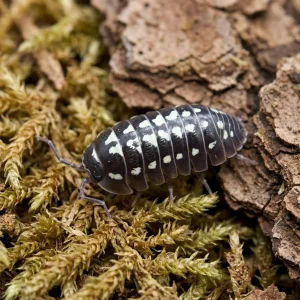
  • Sold Out Sale! Armadillidium gestroi Zinger isopods on bark and moss in a bioactive terrarium setup

    Armadillidium gestroi "Zinger"

    $29.99 - $169.99

    Pronounced: ar-ma-dill-IH-dee-um JES-troy

    Care Level: Beginner to intermediate

    Adult Size: About 18 to 22 mm (a relatively large Armadillidium)

    Reproductive Rate: Moderate once established

    Temperature: 68 to 78°F

    Humidity: Moderate with a moist retreat, drier areas, and steady ventilation

    Scientific Name: Armadillidium gestroi Tua, 1900 (junior synonym: Armadillidium quadriseriatum Verhoeff, 1908)

    Appearance: Dark gray to black body with bold yellow spots in rows along the back, sometimes with pale skirting at the body edges

    Zinger Isopods for Sale: Live cultures of a large Italian pill bug with high-contrast aposematic spotting, suited to display setups and intermediate keepers building a Mediterranean Armadillidium shelf.

    Best For: Display vivariums, naturalistic Mediterranean setups, collector Armadillidium shelves, and keepers who want size and bold color in a manageable pill bug culture.

    Zinger is the hobby trade name for Armadillidium gestroi, a large yellow-spotted Italian pill bug described by Paolo Tua in 1900 and named in honor of Italian naturalist Raffaello Gestro. The species is native to coastal Liguria in northwestern Italy, where it lives under stones in Mediterranean shrubland on Triassic limestone. The bright yellow spots are not just a display feature: scientific literature documents them as aposematic warning coloration backed by a defensive odor secretion from lateral plate glands.

    Select optionsLoading Done This product has multiple variants. The options may be chosen on the product page