
Ceska Isopods for Sale
Overview
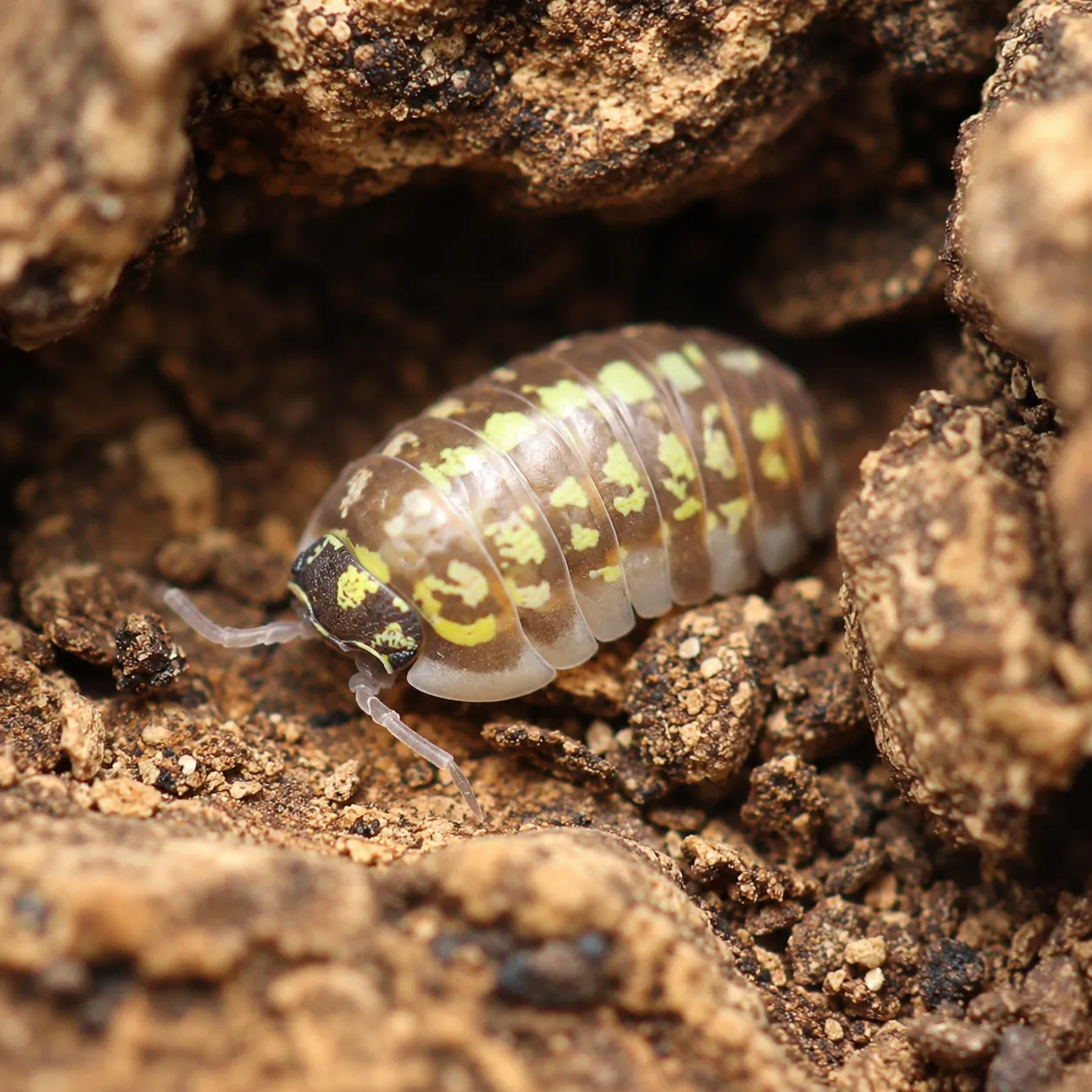
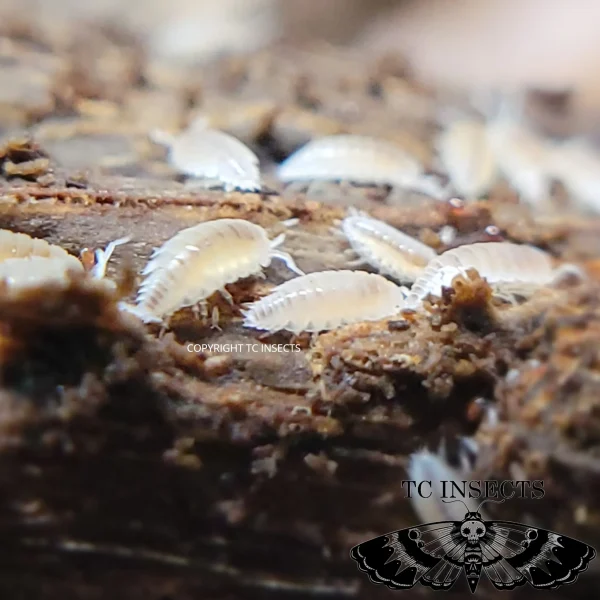
Ceska isopods are a compact European rolling pill woodlouse, sold in the hobby as Armadillidium versicolor “Ceska.” The species was formally described by Stein in 1859 and is widespread across southeastern Europe, with documented populations along rivers and lake shores in Hungary, plus records across central Europe including the Czech Republic.
Adults stay smaller than most other Armadillidium sold in the hobby, with documented sizes around 10 mm compared with roughly 18 mm for A. vulgare and up to 20 mm for A. depressum. As a result, this culture works well for keepers who want pillbug behavior in a more space-efficient package than the larger species.
Why Keep Ceska Isopods?
- Compact Armadillidium body: First, the smaller adult size fits naturally into mid-size and smaller display tanks where larger species would crowd the visual layout.
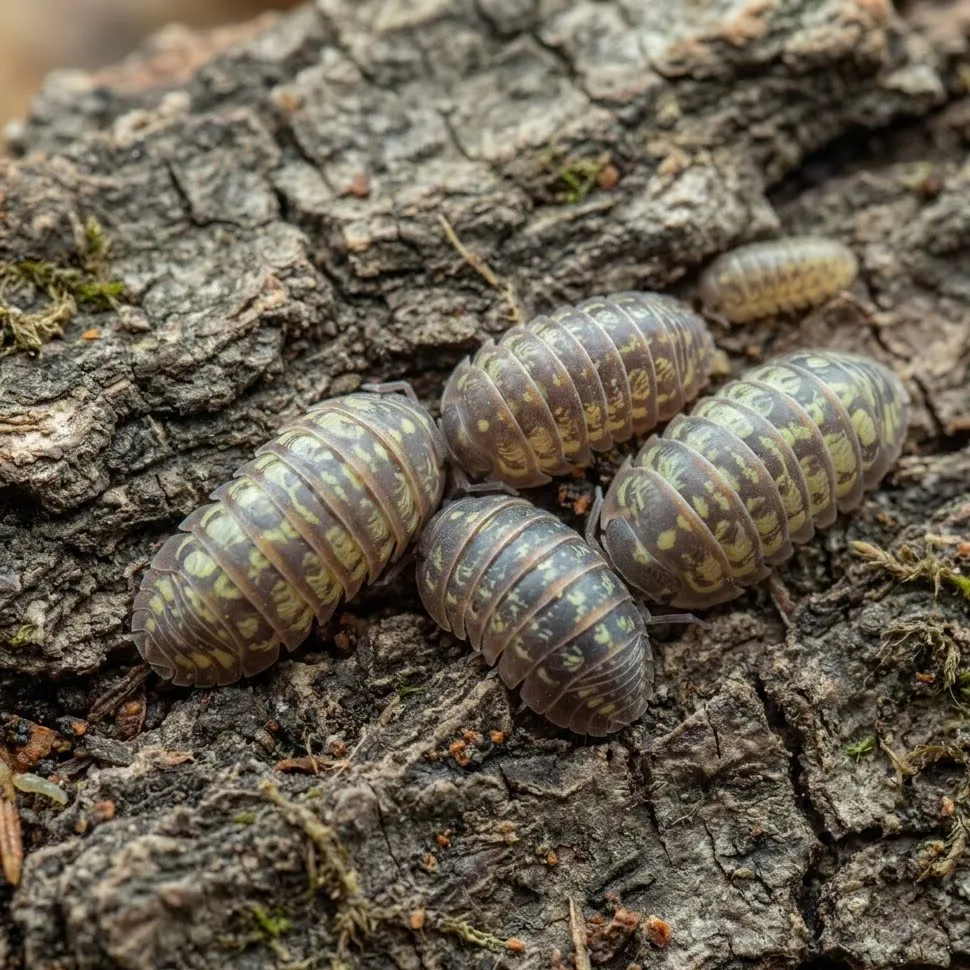
- Natural variegated coloration: Additionally, the species name “versicolor” reflects real wild pattern variation between individuals, with dark brown to olive-brown tones and lighter mottling.
- Full conglobation: Unlike Armadillidium depressum “Magic Potion”, this species seals completely when rolled into a ball, with no visible gap.
- Documented European species: Furthermore, the species background is established in scientific literature from Stein 1859 onward, with multiple recognized varieties described by Verhoeff in 1901.
- Collector locality interest: Finally, the “Ceska” Czech-associated locality designation gives this line distinct provenance for keepers building a multi-locality Armadillidium collection.
Honest Note on the “Ceska” Name
The “Ceska” designation is a hobby-trade locality-style name associated with Czech origin. As a result, it is not a color morph in the way that “Magic Potion” or “Mardi Gras” are morphs. Buyers familiar with selectively bred designer lines may expect a specific pattern; instead, Ceska refers to the line’s geographic provenance, not a fixed visual trait.
Additionally, the exact wild collection site for this hobby line is not formally documented in scientific literature. We use the Ceska name because that is the current hobby consensus, but we treat it as a locality designation rather than a confirmed collection record. The species itself is fully scientifically described.
Honest Note on Natural Color Variation
Individual Ceska isopods vary in coloration. Some animals show stronger mottling, while others appear more uniformly dark brown or olive-brown. This is normal for A. versicolor, and the Latin name itself reflects the species-level pattern variation. Verhoeff described several varieties of A. versicolor in 1901, including forms with different segment markings and color expression, which supports the natural variation seen in modern hobby cultures.
Therefore, do not expect a uniform colony where every animal looks identical. The variation is part of what makes this species visually interesting in a display culture. Selecting breeders is optional but can shift the colony toward a preferred look over generations.
Care and Setup
Ceska isopods do well at room temperature with a clear moisture gradient and good airflow. The following sections cover the practical husbandry framework we recommend.
Temperature
Target 68 to 78°F across most of the year. Normal indoor temperatures work for most home setups. However, prolonged heat above 80°F stresses the colony, while cold rooms slow breeding noticeably.
Humidity
Aim for moderate humidity overall with one consistently moist retreat zone. Keep that side hydrated with sphagnum moss and damp substrate, then let the rest of the enclosure run slightly drier. Specifically, this is not a tropical species, so avoid waterlogged conditions throughout.
Substrate
Use a moisture-holding mix of soil, rotted hardwood, and organic matter at a depth of 2 to 3 inches. Add a generous layer of TC INSECTS Assorted Hardwood Leaf Litter on top. Leaf litter functions as both food and cover for this smaller species, so deeper layers help reduce stress.
Food
Lead with leaf litter and decaying hardwood as the base diet. Then supplement with TC INSECTS Isopod Food for added protein and minerals, plus a calcium source like TC Calcium Ultra Fine. Feed lightly, since smaller colonies process soft foods slowly and uneaten material can mold before consumption.
Ventilation
Use cross-ventilation or controlled lid ventilation. Specifically, you want enough airflow to prevent stagnant pockets, but not so much that the moist retreat zone dries within a day. As a result, the colony can self-select between the two humidity zones.
Bioactive Use
Ceska isopods can work in temperate bioactive enclosures once the colony is established. However, run a backup culture in a dedicated bin first. The smaller adult size can make this species harder to track in a planted display, so a separate culture confirms the colony is still active over time.
Breeding Notes
Ceska isopods breed at a moderate pace once settled. Females carry developing mancae in a brood pouch, and stable conditions with consistent moisture access support successful broods. Generally, the colony grows steadily without producing the rapid population spikes seen in workhorse cleanup species.
For best results, leave the colony undisturbed during the first six to eight weeks. Then add fresh leaf litter before the existing layer is fully consumed, and avoid frequent digging through the substrate. Juveniles often hide deep in moss and leaf litter, so a quiet colony is not necessarily a struggling colony.
Best For
- Display cultures focused on smaller Armadillidium species with natural variegation
- Collector shelves building a multi-locality Armadillidium set
- Planted vivariums with moderate humidity and room-temperature conditions
- Mid-size to smaller display tanks where larger species would crowd the layout
- Bioactive setups paired with springtails for cleanup support
Not Best For
- Hot tropical setups running consistently above 80°F
- Dry desert enclosures without a permanent humid retreat zone
- Feeder use, since per-animal value is too high and the rolled defensive posture limits feeder availability
- Mixed-species cultures with other Armadillidium, since species identity drifts when lines blur
- Keepers expecting a uniform morph pattern across all individuals
- High-waste reptile enclosures needing fast cleanup turnover
Origin and Locality Notes
Armadillidium versicolor was described in 1859 by J. P. E. F. Stein. The species is widespread in southeastern Europe, with peer-reviewed ecological literature documenting strong populations along rivers and lake shores in Hungary. Additional records exist across central Europe, including brick wall microhabitats in the Czech Republic and historical records from the former Yugoslavia.
Verhoeff described several recognized varieties of A. versicolor in 1901, which supports the natural pattern variation seen in modern hobby cultures. The “Ceska” hobby line traces back to Czech-associated stock, although the exact wild collection site is not formally documented. As a result, we treat the Ceska name as a locality-style hobby designation.
Receiving and Acclimation
Open your package promptly when it arrives and inspect the cup calmly before moving anything. Smaller rolling isopods often arrive curled up or hidden in moss and shipping paper, so check slowly rather than dumping the culture.
Prepare the enclosure before opening the cup. The habitat should already have moderate-humidity substrate with one moist retreat zone, deep leaf litter, bark, and a calcium source. Then place the shipping material into the enclosure and let the isopods move out on their own. Finally, keep the setup quiet for the first week while the colony settles.
It is normal for new arrivals to stay curled or hidden for the first several days. Specifically, rolling isopods often respond to shipping stress by enrolling defensively or burrowing into leaf litter until they feel secure.
Recommended Add-Ons
- TC INSECTS Isopod Habitat Kit — a complete starter setup that gives this culture proper substrate, leaf litter, moss, and feed from day one.
- TC INSECTS Assorted Hardwood Leaf Litter — the core food and cover layer that should never run out in a Ceska culture, since deep cover reduces stress for this smaller species.
- TC INSECTS Isopod Food — supplemental protein and minerals beyond leaf litter, fed in small portions to avoid mold buildup.
- TC Calcium Ultra Fine — supports healthy molts and exoskeleton development for this rolling species.
- Springtails — pair well with Ceska in planted vivariums to help manage mold on the moist retreat zone.
Frequently Asked Questions
Is “Ceska” a color morph or a locality designation?
It is a locality designation, not a color morph. Specifically, “Ceska” refers to Czech-associated hobby provenance. The visual variation between individuals comes from natural wild patterning in A. versicolor, not from selective morph breeding. As a result, expect individual variation rather than a uniform designer look.
How does Ceska compare to other Armadillidium species?
Ceska is one of the smaller Armadillidium species sold in the hobby. Adults reach around 10 mm, compared with about 18 mm for A. vulgare and up to 20 mm for Armadillidium depressum. As a result, Ceska fits smaller display tanks better, while the larger species suit bigger setups.
Do Ceska isopods roll completely?
Yes. As a member of family Armadillidiidae, A. versicolor conglobates fully when disturbed, sealing the body into a complete ball. This is different from A. depressum, which leaves a visible gap when rolled, and from Porcellio species, which only partly tuck.
Are Ceska isopods beginner-friendly?
Generally yes. They tolerate room temperatures well, and the moderate-humidity profile is forgiving. However, first-time keepers should still set up a clear moisture gradient and keep calcium and leaf litter available consistently, since smaller Armadillidium species need both for good molts.
Why do individuals look so different from each other?
Natural color variation is built into the species. The Latin name “versicolor” literally means “varied color.” Additionally, Verhoeff documented several wild varieties of this species in 1901 with different segment markings. As a result, individual variation is normal for A. versicolor and not a sign of culture drift or hybridization.
Can I keep Ceska with other Armadillidium species?
Generally, no. Mixed-genus cultures are fine, but mixing closely related Armadillidium species risks gradual line blurring over generations. Keep this culture separate from other Armadillidium lines like A. depressum “Magic Potion” or A. klugii morphs to maintain identification clarity.
Learn More About Armadillidium versicolor
Because A. versicolor is a fully described European species with documented ecological research, the following non-competitor references give keepers solid background on the species and its habitat.
-
World Register of Marine Species: Armadillidium versicolor Stein, 1859. The authoritative taxonomic record, with the accepted name, Stein’s original 1859 description, and the recognized varieties described by Verhoeff in 1901. Useful for buyers who want to verify the species and understand the natural pattern variation built into the line.
-
PubMed Central: Terrestrial isopods, soil, and litter interactions. An open-access review of how land isopods interact with leaf litter, moisture, and substrate. Useful for keepers who want the science behind why deep hardwood leaf cover and stable moderate humidity matter for a smaller-bodied rolling species like this one.

Reviews
There are no reviews yet.