
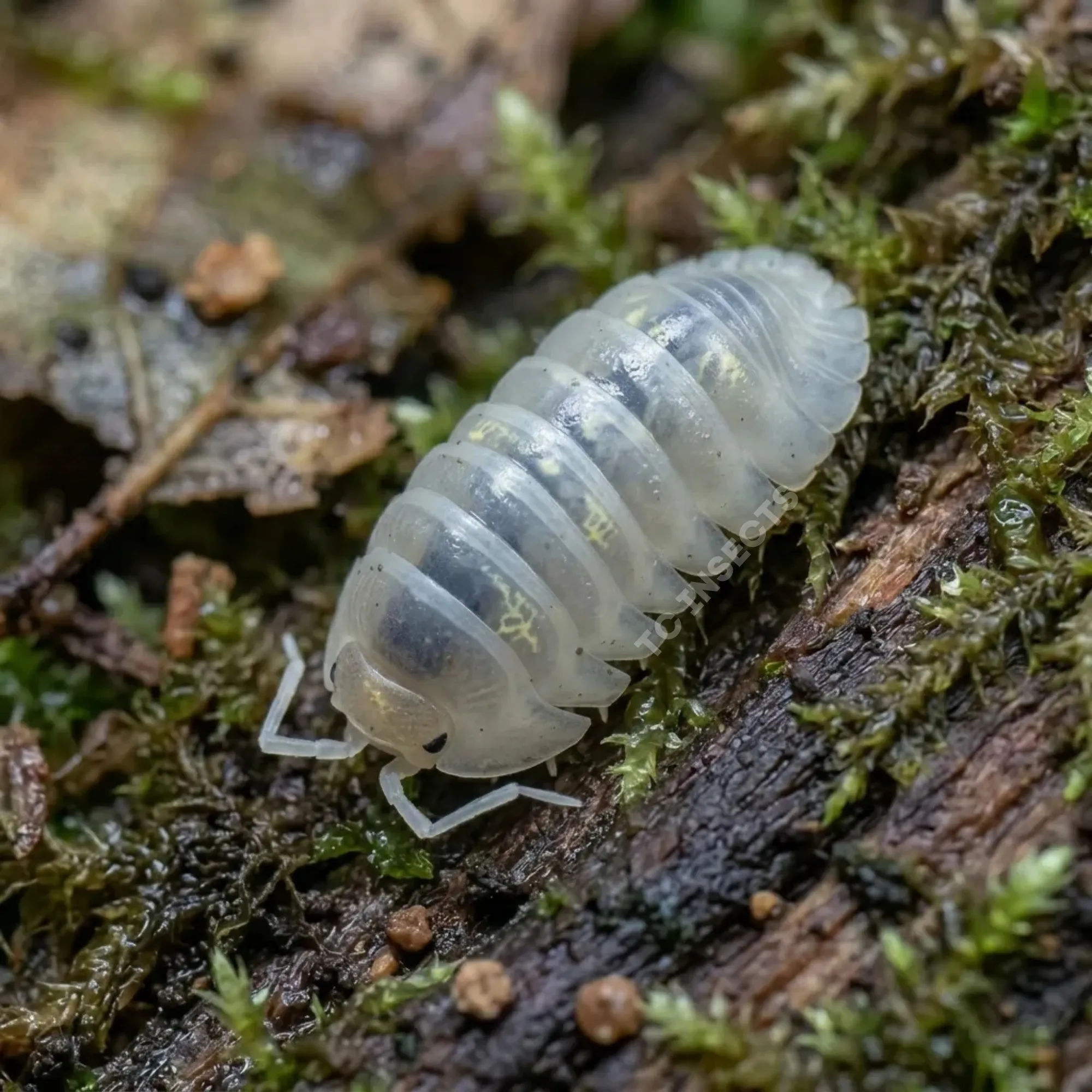
Armadillidium depressum Magic Potion Isopods for Sale
Overview
Armadillidium depressum is the southern pill woodlouse, a real and fully described British species. Brandt described it in 1833, and it remains one of the larger native Armadillidium species, with adults reaching up to 20 mm compared with about 18 mm for the more familiar A. vulgare.
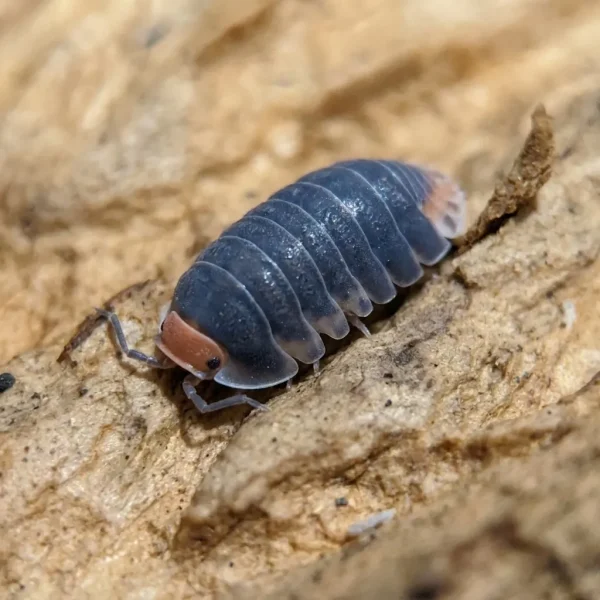
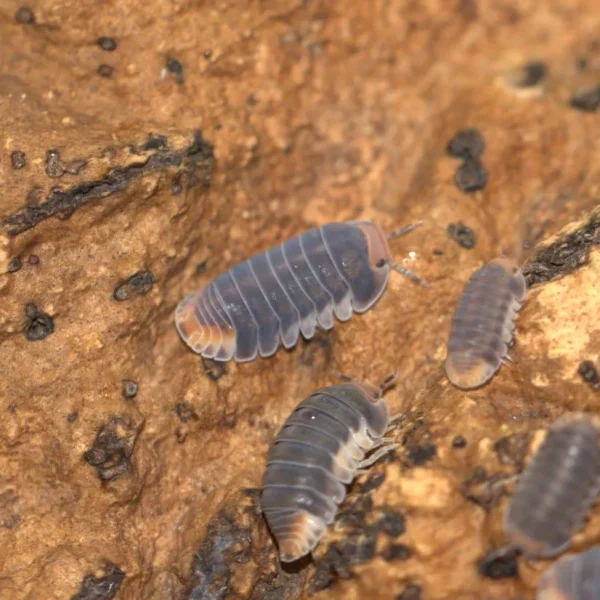
The “Magic Potion” morph is a captive-bred line selected for a pale white-to-grey body with yellow flecking. The pattern occurs rarely in the wild and has been isolated through selective breeding. As a result, this is a documented morph with real provenance, not a hobby-trade label without history.
Why Keep A. depressum Magic Potion?
- Largest Magic Potion species: First, adults reach up to 20 mm, which is larger than both A. vulgare and A. granulatum Magic Potion lines.
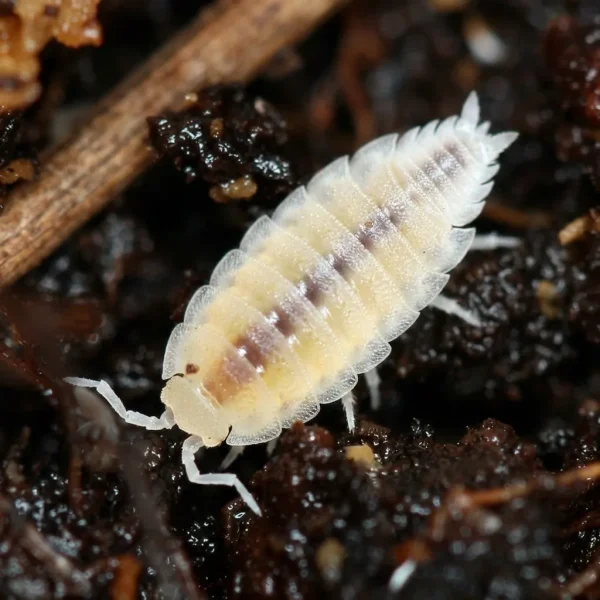
- Distinctive splayed shape: Additionally, the pleonites curve outward to form a “skirt” outline that gives this species its species-specific look.
- Real wild morph provenance: The white-and-yellow pattern occurs rarely in wild populations, so this is a documented natural variant rather than a hybrid line.
- 3-year lifespan supports long projects: Furthermore, the documented lifespan supports multiple breeding cohorts in a stable culture.
- Temperate husbandry: Finally, this species fits room-temperature setups well, since the native British range matches typical indoor conditions.
Honest Note on the “Magic Potion” Name Across Three Species
The “Magic Potion” name is used for three different Armadillidium species in the hobby: A. vulgare, A. depressum, and A. granulatum. All three carry similar white-and-yellow patterning, but they are genetically distinct species. As a result, “Magic Potion” alone is not enough information to know which species you are buying.
This listing is specifically A. depressum Magic Potion. The depressum line is the largest of the three, with adults reaching up to 20 mm. Additionally, it shows the splayed pleonite “skirt” outline that separates A. depressum from the rounder A. vulgare body shape. Therefore, if you already own A. vulgare Magic Potion, keep this culture in a separate bin to maintain species clarity over generations.
Honest Note on Incomplete Conglobation
A. depressum rolls into a ball when disturbed, but it does not seal completely. Specifically, the pleon and head leave a visible gap when the animal enrolls. This is the standard British woodlouse identification key for separating A. depressum from A. vulgare, which encloses fully without a gap.
Additionally, some individuals adopt a “clamped” defensive posture, where they flatten against the substrate with their splayed pleonites covering the legs rather than rolling. This is normal behavior for the species, not a sign of stress. Both responses are documented in standard woodlouse identification literature.
Care and Setup
A. depressum Magic Potion does well at room temperature with a clear moisture gradient and steady leaf litter cover. The following sections cover the practical husbandry framework we recommend.
Temperature
Target 65 to 75°F across most of the year. Brief swings inside that range are fine. However, prolonged heat above 80°F stresses the colony, while cold rooms slow breeding. As a result, normal indoor temperatures work well for most home setups.
Humidity
Aim for moderate humidity overall with one always-moist retreat zone. Keep that side hydrated with sphagnum moss and damp substrate, then let the rest of the enclosure run slightly drier. Specifically, this is not a tropical species, so avoid waterlogged conditions.
Substrate
Use a moisture-holding mix of soil, rotted hardwood, and organic matter at a depth of 2 to 3 inches. Add a generous layer of TC INSECTS Assorted Hardwood Leaf Litter on top. Leaf litter doubles as cover and food, so keep it deep enough that the colony can hide and graze under it.
Food
Lead with leaf litter and decaying hardwood as the base diet. Then supplement with TC INSECTS Isopod Food for added protein and minerals, plus a calcium source like TC Calcium Ultra Fine. The larger body of this species turns over more calcium at each molt than dwarf species, so keep calcium consistently available.
Ventilation
Use cross-ventilation or controlled lid ventilation. Specifically, you want enough airflow to prevent stagnant pockets, but not so much that the moist retreat zone dries within a day. As a result, the colony can self-select between the two humidity zones.
Bioactive Use
Magic Potion isopods can work in temperate bioactive enclosures once the colony is established. However, since this is a display morph with collector value, run a backup culture in a dedicated bin first. That way, the morph line stays protected even if the display tank has a setback.
Breeding Notes
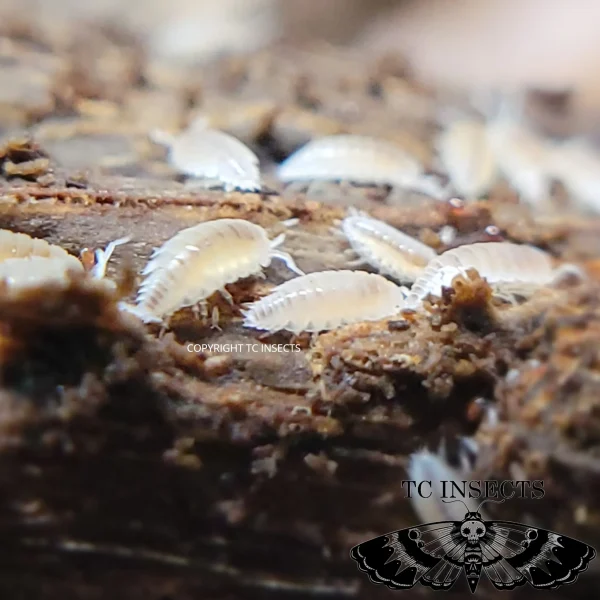
Magic Potion A. depressum breeds at a moderate pace once settled. Females carry developing mancae in a brood pouch, and stable conditions support successful broods. Generally, the colony grows steadily over months rather than producing fast population spikes.
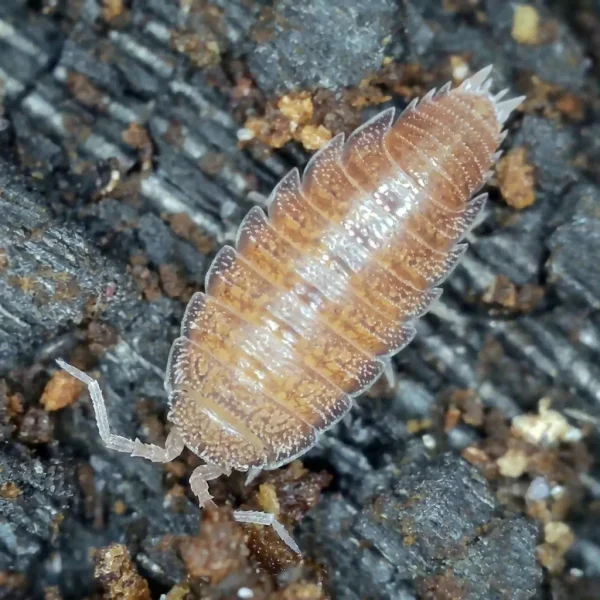
Females tend to grow larger and show stronger Magic Potion markings than males, which is documented sexual dimorphism for this species. As a result, selecting the most clearly patterned breeders helps maintain morph intensity over generations. Additionally, juveniles often look brownish-grey with simpler yellow flecking until they mature into the cleaner adult pattern.
Best For
- Collector shelves focused on Armadillidium morphs and the Magic Potion line
- Display cultures where the splayed pleonite outline and white-yellow pattern matter
- Temperate planted vivariums at room temperature
- Keepers who already manage Armadillidium care confidently
- Long-term breeding projects with patience for moderate colony growth
Not Best For
- Hot tropical setups running consistently above 80°F
- Dry desert enclosures without a permanent humid retreat zone
- Feeder use, since the larger body and per-animal value make this a poor feeder pick
- Mixed-species cultures with other Magic Potion Armadillidium, since species identity drifts when lines blur
- High-waste reptile enclosures needing fast cleanup turnover
- Keepers expecting a fully sealing pillbug, since A. depressum leaves a gap when enrolled
Origin and Locality Notes
Armadillidium depressum is native to the British Isles, with strongest populations in southwest Britain, south Wales, and along the south coast. The British Myriapod and Isopod Group documents recent range expansion into Scotland and Ireland, with new records reported through 2024. Additionally, the species occurs in parts of France, Belgium, and south into Italy.
The wild habitat is heavily synanthropic. Specifically, the species lives on dry limestone walls, loosely mortared walls in towns and farmyards, weathered rock faces in quarries, and railway cuttings. As a result, captive husbandry follows a moderate-humidity wall-dwelling profile, not a high-moisture forest-floor profile.
The Magic Potion morph is captive-bred. The pattern occurs rarely in wild populations and has been isolated through selective breeding for hobby culture.
Receiving and Acclimation
Open your package promptly when it arrives and inspect the cup calmly before moving anything. Larger Armadillidium species often cling to moss, bark, or shipping paper, so check slowly rather than dumping the culture.
Prepare the enclosure before opening the cup. The habitat should already have moderate-humidity substrate with one moist retreat zone, deep leaf litter, bark, and a calcium source. Then place the shipping material into the enclosure and let the isopods move out on their own. Finally, keep the setup quiet for the first week while the colony settles.
It is normal for new arrivals to clamp down or hide for the first several days. Specifically, the “clamped” defensive posture mentioned earlier may be more visible right after shipping, since the animals are still adjusting.
Recommended Add-Ons
- TC INSECTS Ultra Isopod Habitat Kit — a richer starting setup suited to display-quality morphs like this one.
- TC INSECTS Assorted Hardwood Leaf Litter — the core food and cover layer that should never run out in this culture.
- TC INSECTS Isopod Food — supplemental protein and minerals beyond leaf litter, fed in small portions.
- TC Calcium Ultra Fine — supports healthy molts for this larger-bodied Armadillidium.
- Springtails — pair well with Magic Potion in planted vivariums to help manage mold on damp substrate.
Frequently Asked Questions
Is this the same as Armadillidium vulgare Magic Potion?
No. This is A. depressum Magic Potion. Three different Armadillidium species share the Magic Potion name (A. vulgare, A. depressum, and A. granulatum). The depressum line is the largest of the three, reaching up to 20 mm, and it shows the splayed pleonite “skirt” outline that A. vulgare does not.
How do I tell A. depressum apart from A. vulgare?
Two main features. First, A. depressum leaves a visible gap when it rolls into a ball, while A. vulgare seals completely. Second, the pleonites of A. depressum curve outward in a splayed “skirt” outline, especially noticeable from above. Additionally, adult A. depressum reach up to 20 mm versus about 18 mm for A. vulgare.
Are Magic Potion A. depressum beginner-friendly?
Generally yes. They tolerate room temperatures well, and the moderate-humidity profile is forgiving. However, first-time keepers should still set up a moisture gradient and keep calcium and leaf litter available consistently, since larger Armadillidium species need both for good molts.
Will the morph stay clean over generations?
Only if you select for it. Specifically, Magic Potion is a documented but variable pattern, and offspring can drift toward duller forms if the colony random-mates without selection. Therefore, keepers who want to maintain the morph long-term should pick their cleanest-patterned individuals as breeders.
How fast do they breed?
Moderate once established. They do not produce the population booms seen with workhorse cleanup species like Porcellio laevis “Dairy Cow”. Generally, plan this as a steady, slow-building display colony with multiple breeding cohorts across the 3-year lifespan range.
Why do mine sometimes flatten instead of rolling?
This is the documented “clamped” defensive posture for A. depressum. Some individuals flatten against the substrate with their splayed pleonites covering their legs instead of rolling into a ball. Both responses are normal and well documented in British woodlouse identification literature.
Learn More About Armadillidium depressum
Because A. depressum is a well-documented British species, the following non-competitor references give keepers solid background on the species and the Magic Potion morph.
-
British Myriapod and Isopod Group: Armadillidium depressum. The recognized authority on British woodlice, with field notes on identification, the splayed pleonite outline, the synanthropic wall and quarry habitat, and recent range expansion records. Useful for keepers who want to verify species ID and understand the wild ecology.
-
PubMed Central: Terrestrial isopods, soil, and litter interactions. An open-access review of how land isopods interact with leaf litter, moisture, and substrate. Useful for keepers who want the science behind why deep hardwood leaf cover and stable moderate humidity matter for a larger-bodied Armadillidium like this one.
Reviews
There are no reviews yet.