

Cute Honey Tigers Isopods for Sale
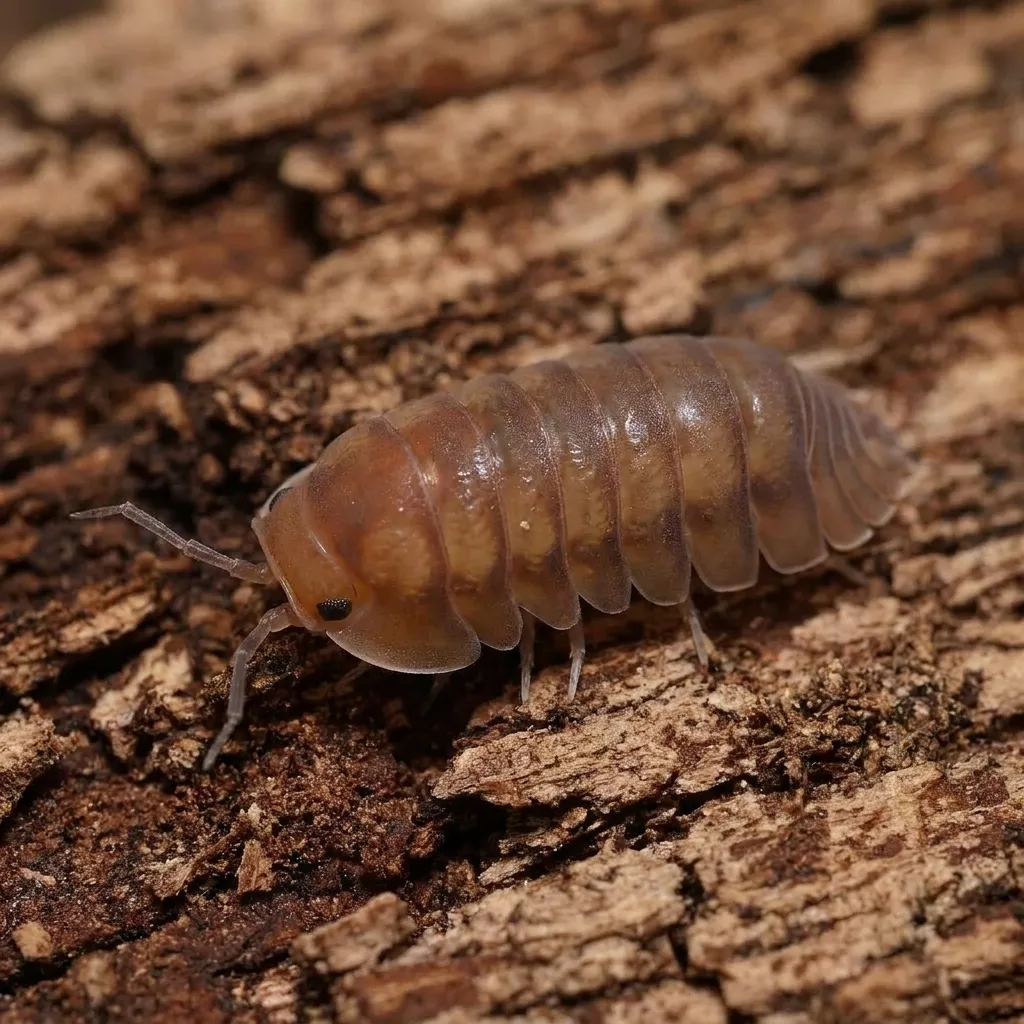
Cubaris sp. “Cute Honey Tigers” is the dwarf-tier Cubaris in the catalog. Adults reach about 8 to 10 mm, which is noticeably smaller than Amber, White Panda, Anemone, or Penguin. As a result, the species suits small display jars, micro-vivariums, and tightly-framed naturalistic setups rather than large reptile enclosures.
Each starter culture ships as a mixed-age group with naturally variable striping. The page below covers the dwarf-size framing, the marketing-style trade name, and the practical care this culture needs.
Overview
Cute Honey Tigers carry warm honey, amber, and tan body tones with subtle tiger-like striping. The striping intensity varies between individuals, with some animals showing clearer banding and others looking more softly mottled. Therefore, the colony reads as warm-toned overall rather than as a uniform tiger pattern.
This is a display and breeding culture first, with bioactive utility as a secondary benefit once the colony establishes. Because the animals are small, they suit setups where larger Cubaris would look out of scale.
Why Keep Cute Honey Tigers Isopods?
- Dwarf-tier Cubaris size: About 8 to 10 mm adults, smaller than most catalog Cubaris.
- Warm color palette: Honey, amber, and tan tones with subtle striping that photographs well on dark substrate.
- Micro-vivarium scale: Fits small display jars and tightly-framed naturalistic enclosures.
- Collector appeal: Adds a dwarf-size option to a multi-Cubaris collection.
- Moderate breeding pace: Colony builds at a useful pace once stable.
Honest Note on the Trade Name
“Cute Honey Tigers” stacks three marketing-style words into one hobby trade name. Therefore, buyers should treat it as a hobby trade designation rather than a clean species or locality label. The honey and tiger references describe the warm color and subtle striping, but the “cute” framing reflects marketing rather than biology. None of this changes what the animal actually is, which is a small warm-toned Cubaris sp. with hobby trade origins.
Honest Note on the Tiger Striping
The “tigers” in the name refers to subtle banded striping, not bold high-contrast tiger markings. Striping varies between individuals and shifts slightly between molts. As a result, a starter culture often reads as warm honey-mottled overall rather than visibly striped at first glance. Photos taken under bright lighting tend to exaggerate the banding more than the colony looks in person.
For more obvious tricolor contrast, Red Pak Chong Isopods deliver bolder visible markings. For a larger warm-toned Cubaris without the dwarf-size limitation, Cubaris Amber Isopods are a better fit.
Honest Note on the Dwarf Size
At 8 to 10 mm adult size, Cute Honey Tigers are noticeably smaller than most other Cubaris in the catalog. Therefore, they look great in small display jars and micro-vivariums but can disappear visually in large reptile enclosures with deep substrate and tall bark structures. Buyers planning to seed a 40-gallon bioactive setup will get more visible color from a larger Cubaris instead.
Honest Note on Species Identification
This isopod is sold as Cubaris sp. “Cute Honey Tigers” because the exact species is not formally described. The name should be treated as a hobby trade designation. Because of this, the page focuses on practical captive care rather than wild-locality claims.
Care and Setup
Cute Honey Tigers do well in a stable tropical setup with a clear moisture gradient. The dwarf size means smaller starter bins work fine, but substrate depth still matters for juvenile hiding space. The subsections below cover the core requirements.
Temperature
Hold the enclosure between 72 and 80°F. Cold drafts and heat spikes both slow the colony. Avoid heat lamps placed directly on the bin, sunlit windows, and unheated garage corners.
Humidity
Aim for moderate to humid conditions with a reliable moist retreat. However, do not soak the entire enclosure. Stagnant wet conditions cause sour substrate and mold faster than dry conditions cause stress in this species.
Substrate
Use a deep organic substrate, about 2.5 to 4 inches. Mix in decaying hardwood, leaf litter, and a small amount of sphagnum. Substrate depth matters more for dwarf isopods than for larger species because small juveniles hide deeper to avoid surface predators and air exposure.
Enclosure Size
A small ventilated container suits a starter culture better than a large bin. Small jars and micro-vivariums hold moisture more consistently and keep the dwarf isopods visible. As a result, this is one of the few Cubaris where a small starter setup is actually preferable to a large one.
Food
Offer leaf litter and decaying wood as the base diet. Add small portions of TC INSECTS Isopod Food, occasional vegetables like squash or carrot, and light protein. Because the colony is small in scale, food portions should also be small.
Ventilation
Use moderate ventilation. A few small air holes or a partial mesh lid keeps airflow steady without drying the culture too fast. Stagnant air encourages mold and sour substrate in humid Cubaris bins.
Calcium
Keep calcium available at all times. A small dish of TC Calcium Ultra Fine or crushed cuttlebone supports healthy molts. Dwarf isopods molt frequently as they grow, so consistent calcium access matters even more than in larger species.
Bioactive Use
Cute Honey Tigers can support a humid bioactive enclosure once the colony establishes. However, they work best in smaller naturalistic setups where their size matches the scale. In large reptile enclosures, larger isopods generally show more cleanup activity.
Breeding Notes
Cute Honey Tigers breed at a moderate pace once stable. Females carry developing young in a marsupium, and mancae are very small at release because the parent animals themselves are dwarf-tier. Therefore, juveniles spend their first weeks deep in substrate and leaf litter where they are nearly invisible.
For steady output, hold humidity stable, keep TC INSECTS Assorted Hardwood Leaf Litter available year-round, and avoid splitting the starter culture too early. Small starter groups establish slower than larger ones because fewer breeding adults are present.
Best For
- Cubaris collectors adding a dwarf-tier option to a multi-size lineup
- Small display jars and micro-vivariums
- Planted naturalistic setups with tight visual framing
- Intermediate keepers already running humid bioactive cultures
- Long-term breeding projects on a smaller scale
Not Best For
- Large reptile enclosures where dwarf isopods get lost visually
- New keepers buying their first isopod culture
- Buyers expecting bold high-contrast tiger markings
- Heavy cleanup crew duty in high-waste enclosures
- Use as a feeder insect
Origin and Locality Notes
The wild origin of Cubaris sp. “Cute Honey Tigers” is not formally documented. Some hobby sources associate the line with Thailand or Southeast Asia, but the precise locality should not be treated as confirmed. Because of this, captive care should focus on stable tropical conditions rather than mimicking a specific wild habitat.
In practice, that means warm temperatures, steady humidity, deep organic substrate, decaying hardwood, leaf litter, and calcium access. This setup style works for most tropical Cubaris-type isopods sold under unconfirmed trade names.
Receiving and Acclimation
Open the package promptly when it arrives. Because these isopods are very small, check the moss, paper, and substrate carefully before assuming any are missing. Dwarf-size individuals tuck into folds and crevices more easily than larger Cubaris do, so a slow careful inspection matters more here.
Prepare a small ventilated enclosure ahead of delivery with moist moss, leaf litter, cork bark, and calcium already in place. Place the shipping cup or packing material directly into the prepared bin near the moist side and let the isopods walk out on their own. Feed lightly for the first few days and avoid digging through the culture while it settles.
Recommended Add-Ons
- TC INSECTS Isopod Habitat Kit for a small-scale setup that matches the dwarf size and price tier.
- TC INSECTS Assorted Hardwood Leaf Litter for cover, food, and humidity support.
- TC INSECTS Isopod Food for varied nutrition beyond leaf litter alone.
- TC Calcium Ultra Fine for the frequent molts dwarf isopods go through as they grow.
- Springtails for mold control and bioactive support in the small humid setup.
Frequently Asked Questions
How big do Cute Honey Tigers isopods get?
Adults reach about 8 to 10 mm, which puts them in the dwarf-tier for Cubaris. This is noticeably smaller than Amber, White Panda, Anemone, or Penguin. The dwarf size is the main reason to choose this species, so buyers expecting a larger Cubaris should look at one of those alternatives instead.
Are they actually striped like tigers?
The striping is subtle, not bold. Some individuals show clearer banding, while others read as warm honey-mottled with faint stripes. Photos under bright lighting can exaggerate the pattern. For more visible contrast markings, Red Pak Chong Isopods deliver bolder visual impact.
Are Cute Honey Tigers beginner-friendly?
They sit at intermediate care. The species is not extremely difficult, but the small size means dehydration and shipping stress hit them harder than larger Cubaris. New keepers usually do better starting with Cubaris murina “Anemone” or Dwarf White Isopods.
Do they work in a large reptile enclosure?
Not ideally. Dwarf-size isopods get lost visually in large enclosures with deep substrate and tall structures. They also can be more vulnerable to large reptile activity. For larger bioactive cleanup crew use, a bigger Cubaris like Cubaris Amber or a faster cleanup species is a better match.
How fast do Cute Honey Tigers breed?
Reproduction is moderate once stable. Because the starter culture is small and the animals themselves are tiny, the colony may look quiet for the first few weeks. Avoid splitting the group early because fewer breeding adults slow establishment.
Why is a smaller bin better for this species?
Dwarf isopods hold up better in compact setups. Small jars and micro-vivariums maintain humidity more consistently, keep the animals visually accessible, and concentrate food where the colony can find it. Large bins dilute the visible population and dry out faster in spots.
Learn More About Tropical Dwarf Isopods
The following non-commercial references give helpful background on terrestrial isopod biology and the Cubaris genus for keepers buying their first dwarf-tier Cubaris.
- Encyclopedia of Life: Cubaris. Aggregated taxonomic and biological information for the genus, helpful for keepers who want a single overview of what Cubaris covers in formal records versus hobby trade designations.




Reviews
There are no reviews yet.