Dwarf White and Dwarf Purple Isopods Pack for Sale
Overview
This is a two-species isopod combo with 20 live Dwarf White Isopods (Trichorhina tomentosa) and 20 live Dwarf Purple Isopods (Trichoniscus sp.) shipped together in one order. Specifically, this is the springtail-free version of the dwarf combo lineup. As a result, it targets keepers who already have springtails running.
The 40-total count gives noticeably more starter material than the 20-count single-species combos. Furthermore, the discounted bundle price (currently $29.99, down from $44 list) makes this the most cost-effective way to add two cleanup-crew species at once.
Therefore, this combo suits bioactive keepers expanding established setups, building backup cultures, or seeding larger humid enclosures with built-in species redundancy.
What This 40 Pack Includes
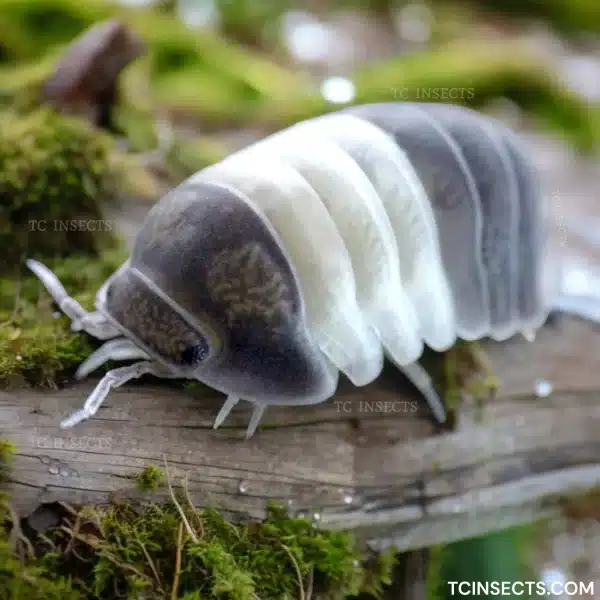
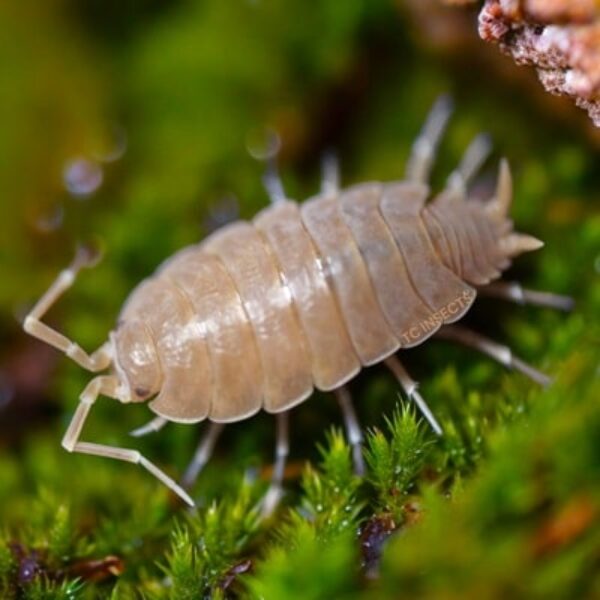
- 20 Dwarf White Isopods. Live Trichorhina tomentosa, the parthenogenetic cleanup-crew species described in 1893 from the Galápagos Islands. Tiny (1 to 5 mm), substrate-bound, and fast-breeding.
- 20 Dwarf Purple Isopods. Live Trichoniscus sp. “Dwarf Purple,” a small substrate-bound cleanup-crew species with subtle purple, lavender, or plum tones. Sexually reproducing with a moderate buildout pace.
- 40 total isopods shipped together as one combined culture.
- No springtails included. This is the isopod-only version of the dwarf combo lineup.
Why a Two-Species Pack Instead of Single Species?
Two reasons most keepers pick this combo:
- Species redundancy. First, if one species struggles in your specific enclosure conditions, the other species has a fair chance of thriving. As a result, the colony is more likely to establish successfully even if one species hits a setback during shipping or acclimation.
- Complementary niches. Next, the two species prefer slightly different temperature ranges and reproduce differently. Therefore, they fill complementary roles in the same humid substrate rather than directly competing for the same niche.
How Dwarf White and Dwarf Purple Work Together
The two species occupy similar substrate layers but with meaningful differences:
- Reproduction. First, Dwarf White is parthenogenetic, meaning every adult female reproduces without males. However, Dwarf Purple reproduces sexually. As a result, Dwarf White typically builds population faster from any starter group.
- Temperature. Next, Dwarf White prefers warmer conditions (70 to 85°F). Dwarf Purple prefers slightly cooler (68 to 78°F). Therefore, the species balance shifts based on your enclosure temperature.
- Color. Finally, Dwarf White is plain pale white. Dwarf Purple shows subtle purple tones on close inspection. Accordingly, you may notice the proportion shift if one color starts to dominate the population.
Furthermore, the two species coexist well without strong competition. Both work the same humid substrate layer, but Dwarf White typically outpaces Dwarf Purple in establishment speed. Therefore, expect the Dwarf White portion to become visibly more abundant first, with Dwarf Purple establishing more slowly over the following months.
Honest Note on Visibility
Both species in this combo are substrate-bound. Specifically, you will see them when you lift bark or stir leaf litter, but most of the colony stays buried during normal observation. As a result, this combo is invisible-but-effective cleanup, not a display crew.
Therefore, customers expecting to watch their cleanup crew working should consider a Powder Orange combo or Powder Blue combo instead. Those Powder species are surface-active and visible during the day.
Why No Springtails in This Combo?
This combo specifically targets keepers who already have springtails established in their enclosure or culture system. As a result, the price stays lower than the springtail-included versions of the dwarf combos, and keepers do not pay for components they do not need.
Furthermore, if you need springtails too, consider the springtail-inclusive versions: the Dwarf White Isopods + 8oz Springtail Culture combo or the Dwarf Purple Isopods + 8oz Springtail Culture combo. Alternatively, you can add a separate springtail culture to this order if you want both species plus springtails.
Setting Up the Combo
Both species share similar care requirements, so a single enclosure setup works for both. Specifically, the setup should provide stable high humidity, deep leaf litter, calcium, and gentle ventilation.
Substrate and Layout
Use a moisture-retaining substrate like coconut fiber blended with flake soil or decayed hardwood. Then top with a generous layer of leaf litter and several pieces of cork bark. In addition, add a moist sphagnum moss pocket in one corner. Both species will use the moss pocket heavily.
Moisture
Aim for 70 to 90% humidity with one reliably wet zone. Specifically, the moist side should always be damp with sphagnum moss or leaf litter. However, never let the enclosure fully dry out. Both species handle drying poorly compared to drier-tolerant Powder species.
Temperature
Aim for 70 to 80°F as a safe overlap range. Specifically, Dwarf Whites prefer the warmer end and Dwarf Purple prefers the cooler end. Therefore, a middle-range setup supports both species without favoring one strongly.
Ventilation
Light ventilation works best. Specifically, sealed bins crash with mite blooms in the high-humidity conditions both species need. However, heavy ventilation dries small-bodied isopods out faster than larger species. Therefore, a vented lid with small slots or fine mesh strikes the right balance.
Food
Leaf litter and decaying hardwood (avoid pine and cedar) feed both species as a base diet. Additionally, add small vegetable scraps. For protein, use shrimp meal, fish flakes, insect frass, or nutritional yeast in small amounts. Alternatively, a prepared diet like TC INSECTS Isopod Food simplifies feeding and adds calcium support.
Releasing the Combo
Open the container indoors as soon as possible after delivery. Then transfer the shipping material directly into the prepared enclosure. Specifically, small mancae often hide in the packing, so check carefully before discarding anything. Furthermore, place the material near the moist side. After that, leave the enclosure mostly undisturbed for the first one to two weeks.
Best For
- Bioactive keepers expanding or refreshing established setups that already have springtails
- Larger humid bioactive enclosures needing more isopod biomass than a 20-count combo provides
- Backup culture builders who want two species established in parallel
- Dart frog, mantella, and amphibian vivariums where both species can establish in moist substrate
- Keepers wanting species redundancy in case one population struggles
Not Best For
- First-time bioactive builders who need springtails too (consider the springtail-inclusive combos instead)
- Dry reptile enclosures (leopard gecko, bearded dragon, hognose), where neither species will persist long-term
- Display-focused setups where the keeper wants a visible cleanup crew
- Sealed, no-ventilation tubs, which crash humid mixed cultures with mites faster than ventilated setups
- Keepers who want to maintain pure single-species cultures, since mixing two species in one bin makes future separation difficult
Should I Run Them Together or Keep Them Separate?
This depends on what you want from the colony long-term:
- Mixed bin (most common). First, simply add both species to the same humid enclosure or culture container. As a result, they will coexist and work the substrate together. This is the simplest approach.
- Separate cultures. Next, if you want to preserve pure single-species lines for future breeding, sales, or specific bioactive projects, transfer each species into its own dedicated culture container immediately on arrival. However, this requires two prepared containers and twice the maintenance.
Therefore, most keepers run them together unless they have a specific reason to keep the lines separate. Furthermore, once the two species share a bin, separating them later is difficult because of the small size and similar substrate behavior.
Recommended Add-Ons
- TC INSECTS Isopod Food for a calcium-supported diet that helps both species build faster
- TC INSECTS Assorted Hardwood Leaf Litter for natural food, hiding cover, and humidity support for both species
- TC INSECTS Ultra Habitat Kit for keepers who do not already have a prepared humid enclosure ready
- TC Calcium Ultra Fine for molting support across both fast-reproducing populations
- Springtails if you do not already have them running, since this combo does not include any
Frequently Asked Questions
Why does this combo not include springtails?
This is the isopod-only version of the dwarf combo lineup. Specifically, it targets keepers who already have springtails running. As a result, the price stays lower than the springtail-inclusive combos. Furthermore, if you need springtails too, the Dwarf White + Springtail combo and Dwarf Purple + Springtail combo are the springtail-inclusive alternatives.
How is this different from buying two single-species combos?
Three differences. First, this combo bundles both species into one shipment, reducing shipping costs. Next, the discounted bundle price ($29.99) is lower than two separate purchases. Finally, this combo does not include springtails, while the single-species combos do. Therefore, choose this combo if you already have springtails and want both isopod species at a discount.
Can I culture the two species separately after they arrive?
Yes, but you need to act fast. Specifically, on arrival, transfer each species into its own dedicated container with appropriate substrate. However, distinguishing the two species reliably requires close inspection (Dwarf Whites are plain white, Dwarf Purple shows subtle purple tones), so accidental mixing is easy. Therefore, most keepers run them together in a single bin.
Will I see them often in the enclosure?
Mostly no. Specifically, both species are substrate-bound and stay buried during normal observation. However, you will see them when you lift bark or stir leaf litter. Therefore, this is invisible-but-effective cleanup, not a display crew.
Which species will dominate the colony over time?
Likely Dwarf White, given enough time. Specifically, Dwarf Whites reproduce parthenogenetically (every female reproduces without males) and at slightly warmer temperatures. As a result, they typically outpace sexually-reproducing Dwarf Purple in most setups. However, cooler enclosures may favor Dwarf Purple. Therefore, your enclosure conditions will shape which species becomes more abundant.
Can this combo go in a dry reptile enclosure?
Not well. Specifically, both species need 70 to 90% humidity with a stable moist retreat. Dry desert reptile setups cannot sustain that even with a humid hide. Therefore, drier reptile setups should use a Powder combo or a Niambia capensis (African Cape) culture instead.
Learn More About Bioactive Cleanup Crews
The references below cover background information for bioactive keepers. Each source comes from an academic, museum, or government site rather than a competing retailer.
- World Register of Marine Species: Trichorhina tomentosa. Scientific taxonomy reference for the Dwarf White species. Useful for confirming the species identification and seeing how it fits within the Platyarthridae family.
- British Myriapod and Isopod Group: Woodlice. Species reference site covering a wide range of terrestrial isopods, including the Trichoniscus genus that contains Dwarf Purple. Useful for understanding why small humid-loving woodlice prefer leaf-littered microhabitats.
- USDA NRCS: Soil Biology and the Role of Decomposers. Covers how detritivores like isopods break down organic matter in soil ecosystems. Useful for understanding why having two species working similar substrate layers can improve cleanup efficiency.