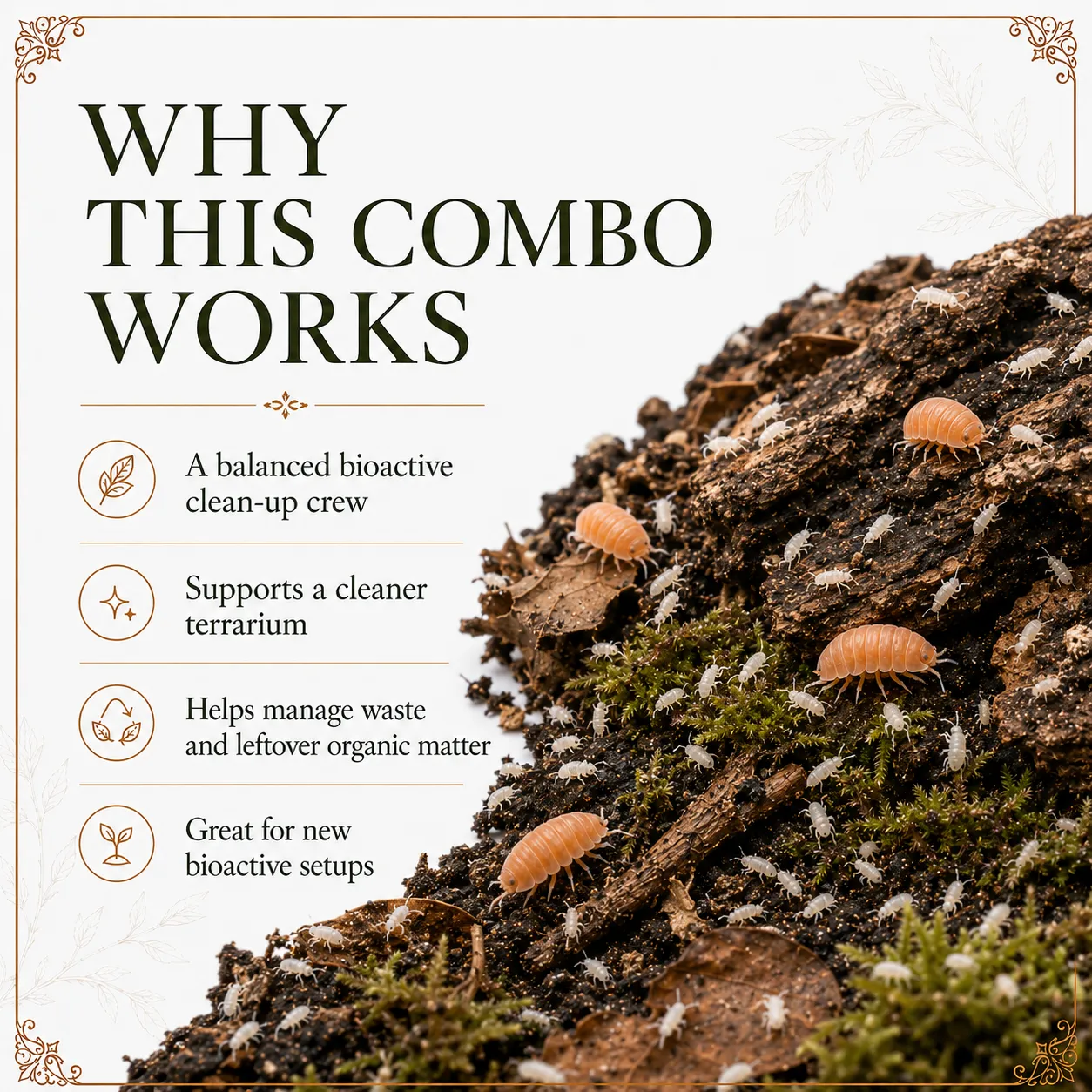
Powder Orange Isopods and Springtail Culture Combo for Sale
Overview
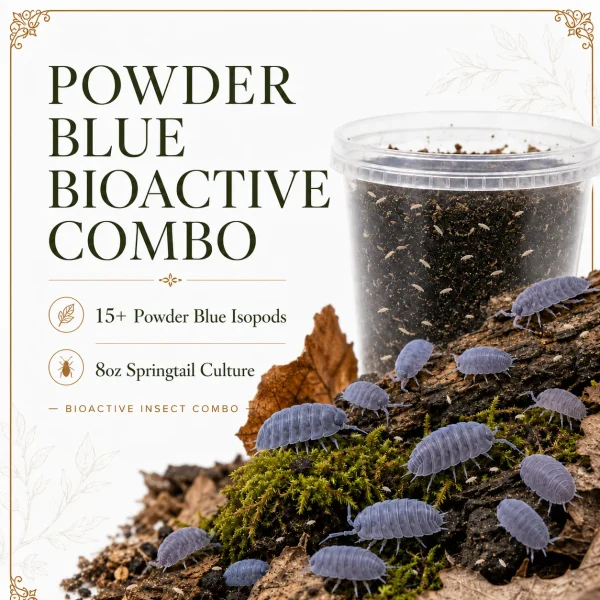
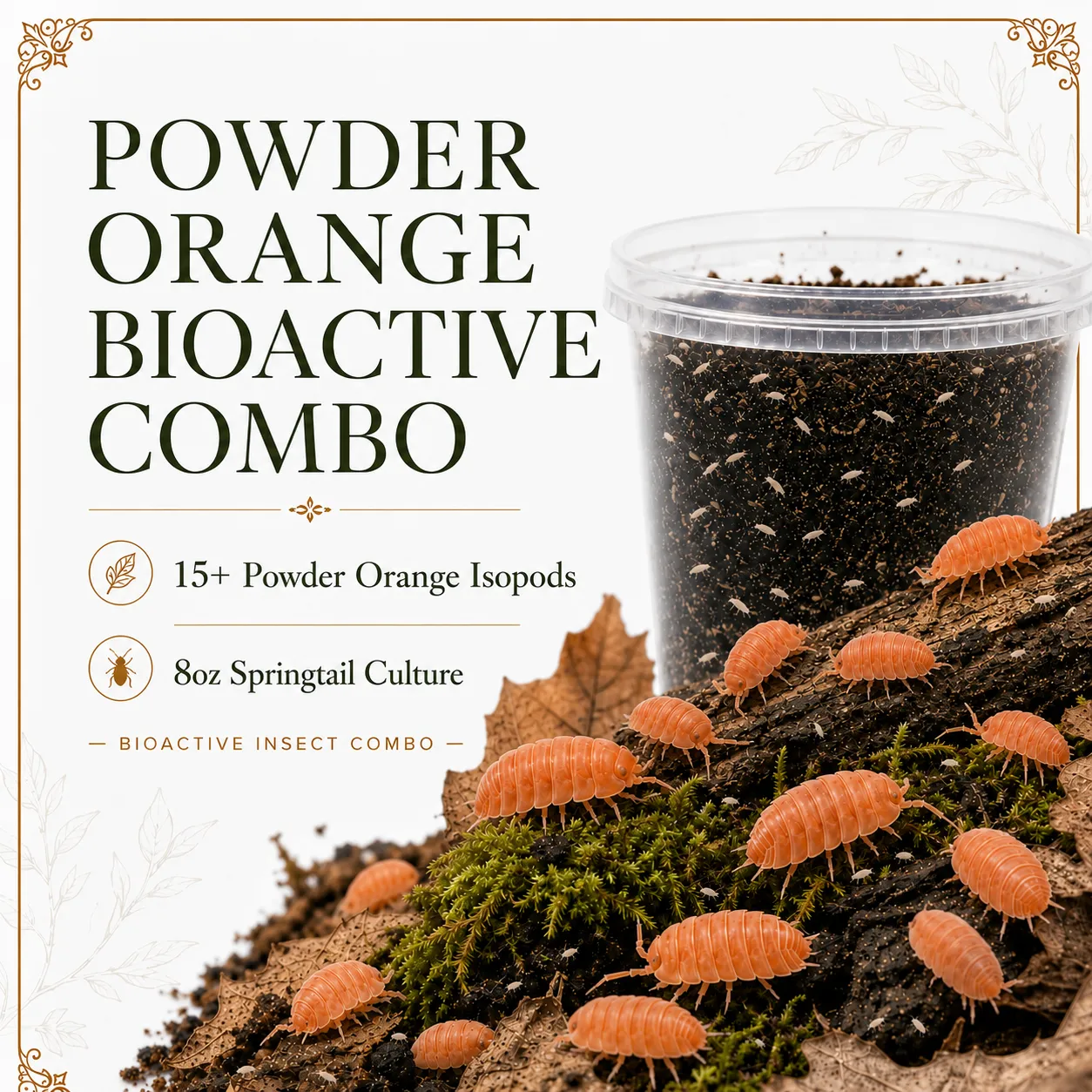
This is a bundled bioactive starter combo: 15 live Powder Orange Isopods (Porcellionides pruinosus) plus one 8oz live Springtail Culture, shipped together in a single order. Buyers choose between Temperate or Tropical springtails at checkout based on what their enclosure needs.
The combo targets first-time bioactive builders. Specifically, it provides both layers of the standard cleanup crew (larger surface-active isopods plus tiny mold-control springtails) without requiring two separate product orders or guessing at quantities. Additionally, the bundle price is slightly lower than buying each component on its own.
What This Combo Includes
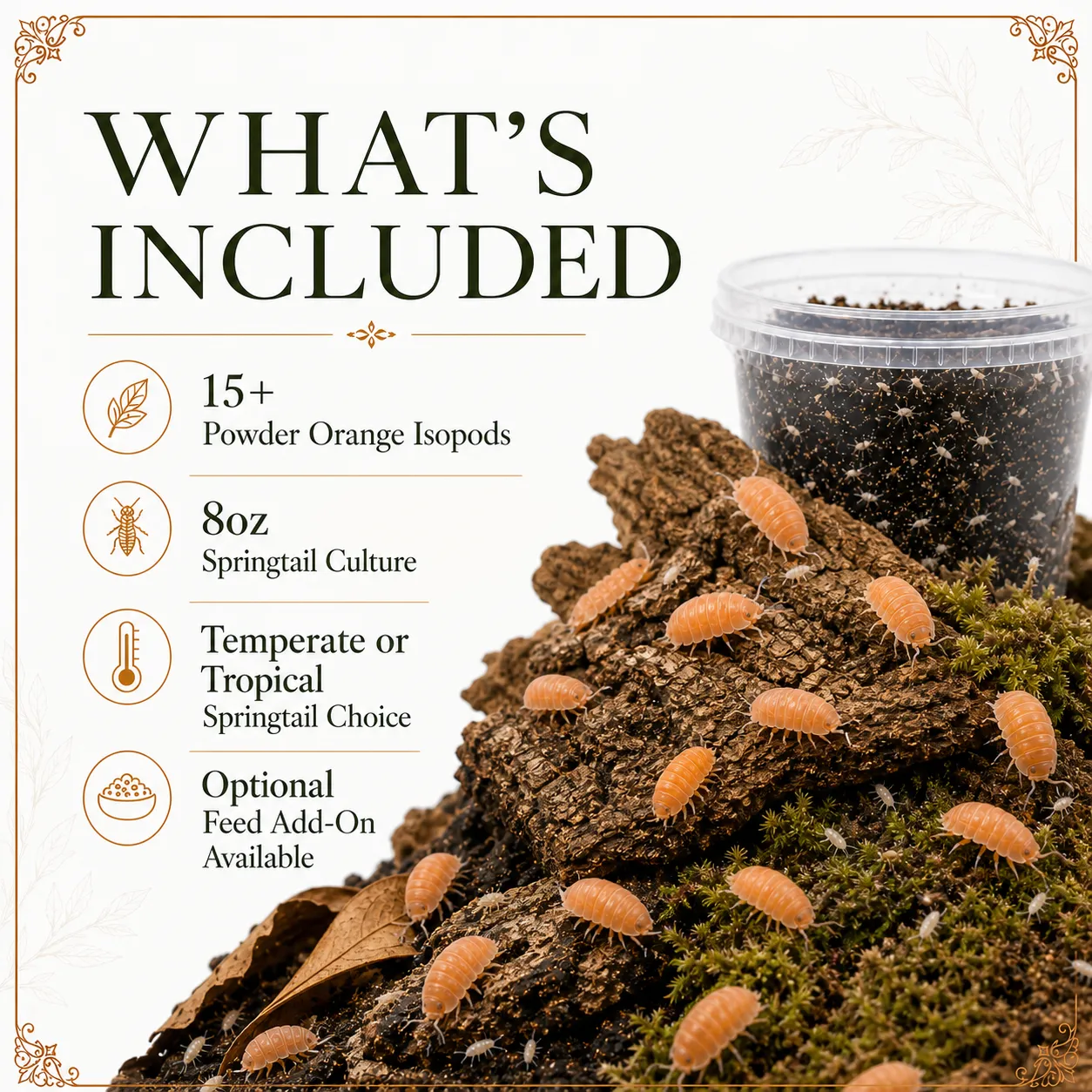
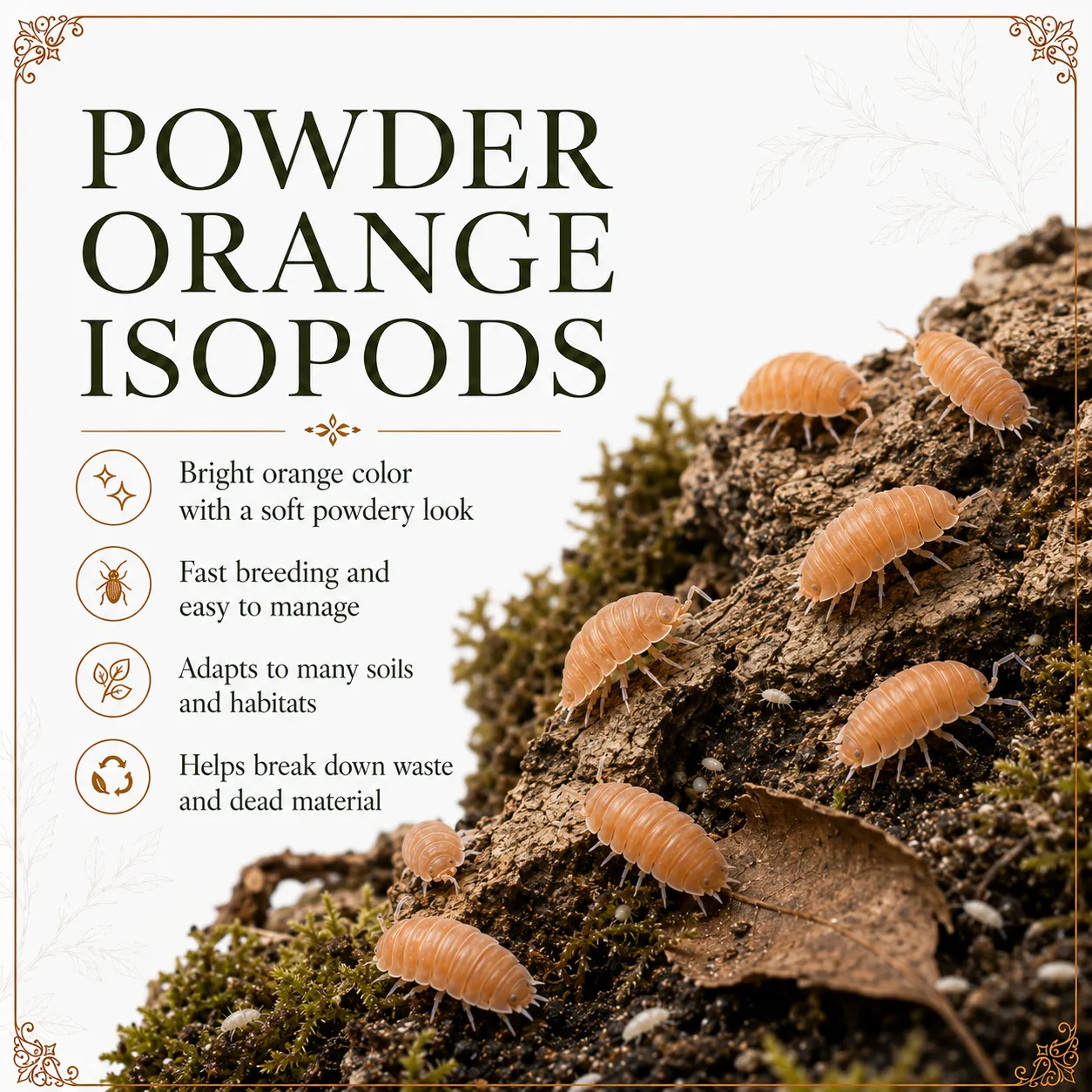
- 15 Powder Orange Isopods. Live Porcellionides pruinosus “Powder Orange” from a TC INSECTS in-house bred line. Surface-active, diurnal, and quick on the substrate, so they show against dark substrate and leaf litter.
- 1 × 8oz Springtail Culture. Choose Temperate or Tropical at checkout. The 8oz cup contains an active culture with substrate, ready to seed an enclosure or transfer into a dedicated culture container.
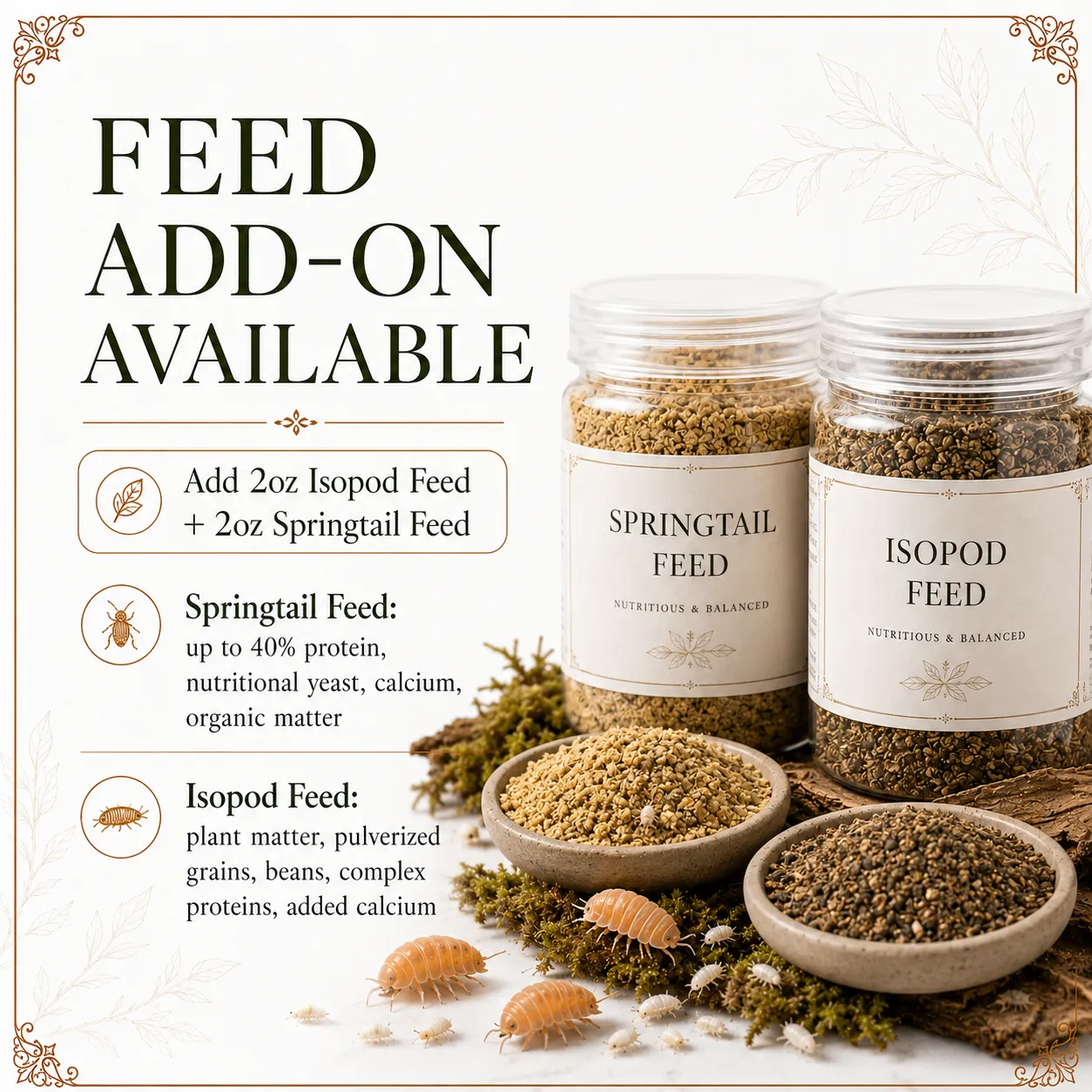
- Optional Feed Add-On. A separate checkout option to add 2oz Isopod Feed and 2oz Springtail Feed for supporting the cleanup crew after arrival.
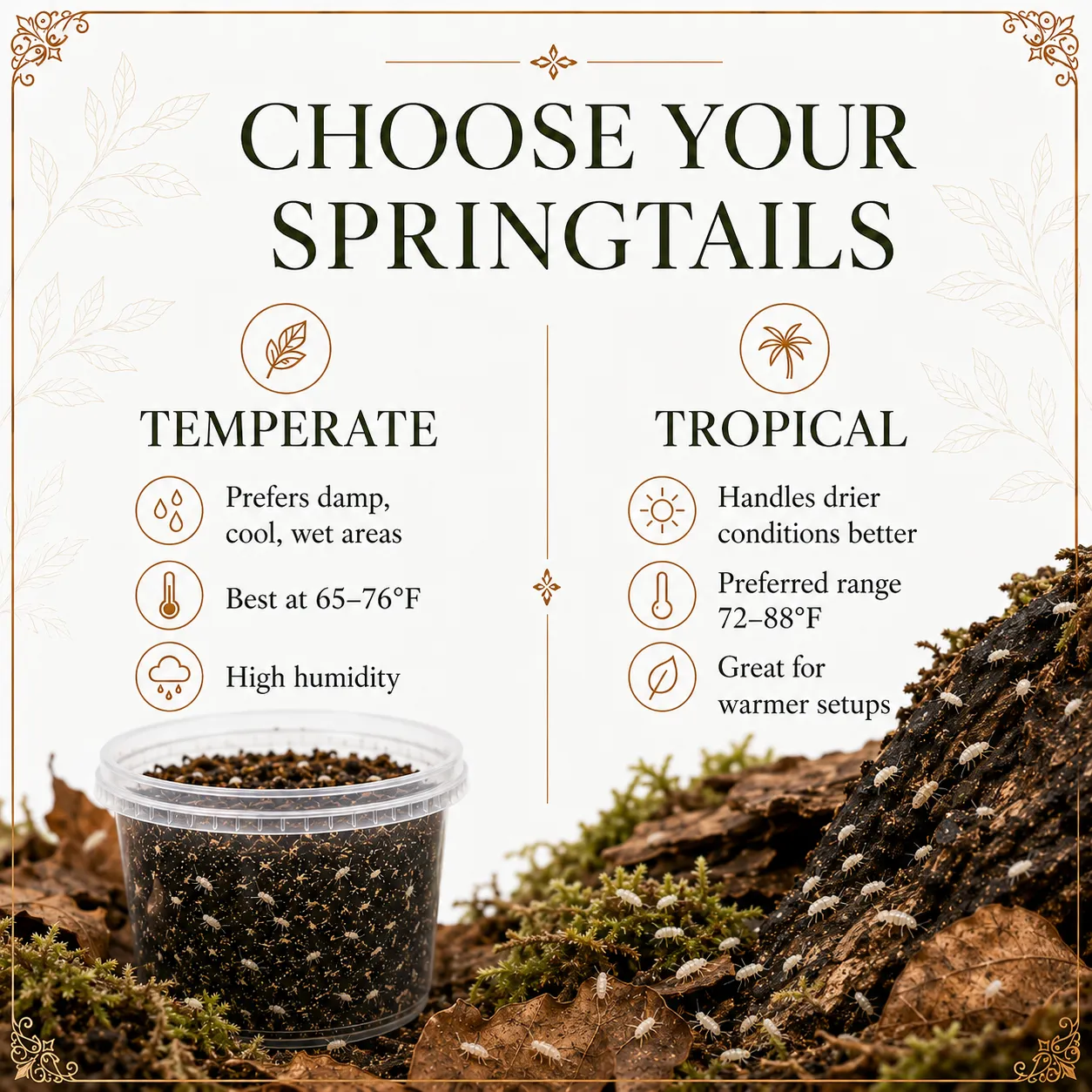
Temperate vs Tropical Springtails: How to Choose
This choice matters because it should match the enclosure type, not the keeper’s preference. Match the springtail to what you are building:
- Tropical springtails work best in dart frog vivariums, mourning gecko tanks, day gecko enclosures, and any consistently humid tropical setup. They tolerate higher temperatures and prefer constant moisture.
- Temperate springtails work best in cooler or moderately humid enclosures, including crested gecko tanks, many planted terrariums, and indoor setups that stay around standard room temperature. They handle a wider moisture range.
However, both types overlap well in most bioactive setups. When in doubt, Tropical is the default choice for most reptile and amphibian bioactive builds because it tolerates the heat and humidity those enclosures usually run at.
Why a Combo Instead of Buying Separately?
- One order, one shipment. First, both live components ship together, which reduces stress on the animals and keeps the shipping cost down compared to two separate orders.
- Beginner-friendly quantities. Next, 15 isopods and an 8oz springtail culture is a sensible seeder amount for a small to medium bioactive enclosure. As a result, the buyer does not need to guess at the right count.
- Slight bundle discount. Additionally, the combo price comes in slightly lower than buying each component separately.
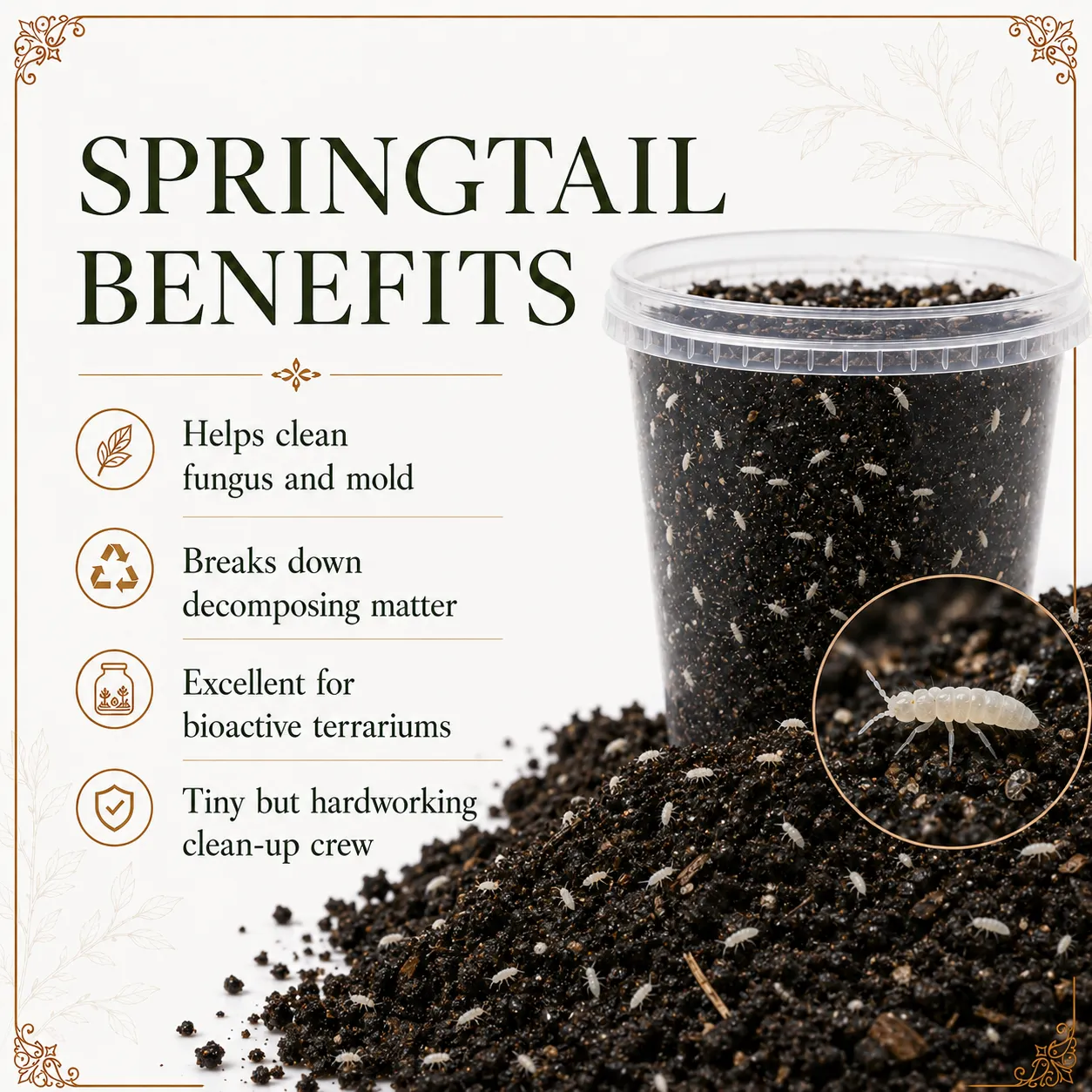
- Full cleanup crew coverage. Finally, isopods and springtails work at different scales. Isopods handle leaf litter, decaying wood, and larger waste, while springtails handle mold, biofilm, and smaller particles. Therefore, running both gives more complete coverage than either one alone.
Honest Note on the 15-Count Quantity
This combo is a seeder pack, not a working breeding colony from day one. 15 Powder Orange Isopods will take a few months to grow into a clearly visible population, and the early weeks will look quiet. This is normal for any new isopod culture. Keepers who want a productive culture faster, or who are seeding a larger enclosure, should consider a 25 or 50 count Powder Orange Isopods single-product order instead of (or in addition to) this combo.
Setting Up the Combo
Both components do best in the same general enclosure conditions, which is part of why they pair well. The setup should give both species what they need without forcing one to compromise.
Substrate and Layout
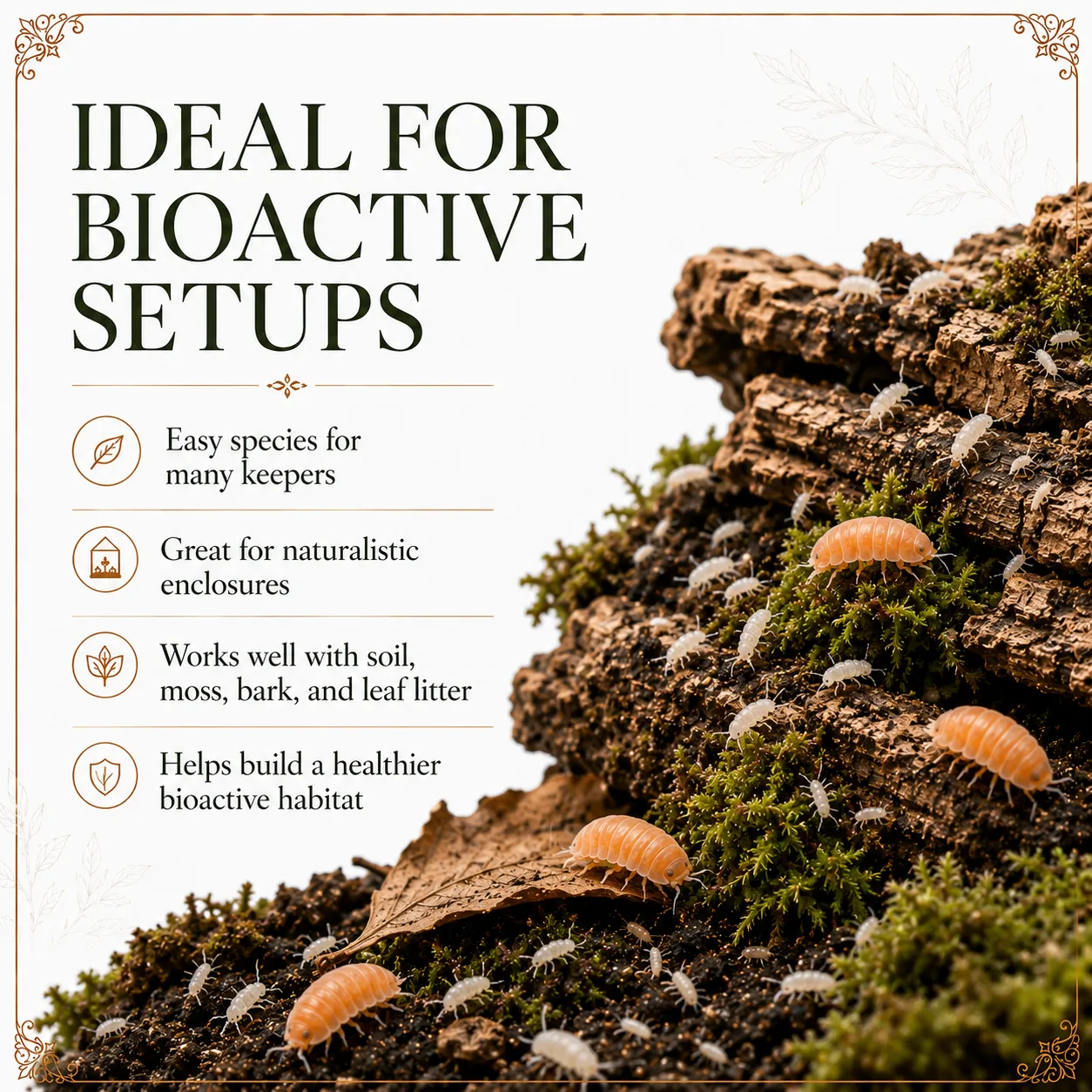
Use a moisture-retaining substrate like coconut fiber blended with flake soil or decayed hardwood. Then top it with a generous layer of leaf litter and a few pieces of cork bark. In addition, add a moist sphagnum moss pocket in one corner as the humid zone. Both isopods and springtails will use the moss pocket heavily during the first weeks.
Moisture
Aim for a moisture gradient: one side moist with sphagnum moss or damp substrate, the other side slightly drier with bark and leaf litter. Powder Orange Isopods handle a drier average enclosure than many isopods, but they still need a humid retreat. Springtails prefer the moist side. Therefore, the gradient layout suits both at once.
Ventilation
Cross-ventilation matters for the isopod side of this combo. Sealed bins with no airflow tend to develop mite blooms and crash cultures. Therefore, a vented lid with one moist corner works better than a closed lid at uniform high humidity.
Food
Leaf litter and decaying hardwood (avoid pine and cedar) feed both populations as a base diet. Add small vegetable scraps for the isopods. Springtails will graze on biofilm, mold, and decaying organic matter without much supplemental feeding required. However, a balanced prepared diet like TC INSECTS Isopod Food simplifies feeding and adds calcium support for the isopods.
Releasing the Combo
Open both containers indoors as soon as possible after delivery. Transfer the shipping material directly into the prepared enclosure, since small mancae and springtails often hide in the packing. Place the isopod material near the moist side. Then leave the enclosure mostly undisturbed for the first week so both populations can settle.
Best For
- First bioactive enclosure builds where the keeper wants both cleanup layers covered in one order
- Small to medium bioactive vivariums with dart frogs, mourning geckos, day geckos, or crested geckos
- Planted terrariums where mold control matters as much as larger waste cleanup
- Keepers seeding a new bioactive enclosure who don’t want to research isopod and springtail counts separately
- Refresh orders for older bioactive setups where the original cleanup crew has thinned out
Not Best For
- Large bioactive enclosures (40+ gallons), since 15 isopods is too small a seeder count to populate that volume in a reasonable timeframe
- Keepers wanting a productive feeder culture immediately, since the small starter count is a slow-build colony
- Fully dry reptile enclosures with no humid retreat, since springtails will not survive and Powder Orange will struggle
- Sealed, no-ventilation tubs, which tend to crash mixed cultures faster than single-species ones
- Keepers who specifically want a collector morph, since Powder Orange is the value-tier solid Powder color
Recommended Add-Ons
- TC INSECTS Isopod Food for a calcium-supported diet that helps the isopod population build faster
- TC INSECTS Springtail Feed for boosting the springtail culture, with up to 40% protein and laboratory-grade nutritional yeast
- TC INSECTS Assorted Hardwood Leaf Litter for natural food, hiding cover, and humidity support for both species
- TC INSECTS Ultra Habitat Kit if you do not already have a prepared enclosure ready for the combo
Learn More About Bioactive Cleanup Crews
The references below cover background information for first-time bioactive builders. Each source comes from an academic, museum, or government site rather than a competing retailer.
- University of Nebraska-Lincoln Department of Entomology: Sowbugs and Pillbugs. A clear breakdown of basic isopod biology and the decomposer role isopods play in natural ecosystems. Useful for understanding why leaf litter and decaying hardwood matter so much in a captive bioactive setup.
- USDA NRCS: Soil Biology and the Role of Decomposers. Covers how detritivores like isopods and springtails break down organic matter in soil. Useful for understanding why both layers of a cleanup crew (large and small) matter rather than just one.
- MSD Veterinary Manual: Management and Husbandry of Reptiles. Covers reptile enclosure husbandry by species, including humidity, substrate, and temperature requirements. Useful for matching enclosure conditions to both the reptile and the cleanup crew species in the same setup.
Bioactive Combo FAQs
Exactly what comes in this combo?
15 live Powder Orange Isopods (Porcellionides pruinosus) and one 8oz live Springtail Culture. You choose Temperate or Tropical springtails at checkout. An optional 2oz Isopod Feed + 2oz Springtail Feed add-on is available during checkout.
Should I pick Temperate or Tropical springtails?
Tropical springtails are the default choice for most reptile and amphibian bioactive builds because they tolerate the heat and constant humidity those enclosures usually run at. Temperate springtails work better for cooler or moderately humid setups like crested gecko tanks or indoor planted terrariums. When in doubt, choose Tropical.
Is 15 isopods enough to populate a bioactive enclosure?
It is enough to seed a small to medium enclosure, but the early weeks will look quiet while the colony establishes. Generally, expect a few months before the population becomes clearly visible. Keepers seeding a larger enclosure (40+ gallons) should consider adding a 25 or 50 count Powder Orange order alongside this combo.
Will the isopods and springtails compete with each other?
No. They work at different scales. Isopods handle leaf litter, decaying wood, and larger organic waste, while springtails handle mold, biofilm, and small particles. Therefore, they complement each other rather than competing.
How long until the cleanup crew is self-sustaining?
Springtails typically reproduce visibly within a few weeks under good conditions. Isopods take longer, usually a few months before the population reaches a clearly visible working size. Stable humidity, leaf litter, calcium, and a varied diet support the timeline.
Can I add this combo to an enclosure that already has cleanup crew?
Yes. This combo works well as a refresh order for older bioactive setups where the original cleanup crew has thinned out. The new arrivals will integrate into the existing colony without issue.