
Dwarf White Isopods and Springtail Culture Combo for Sale
Overview
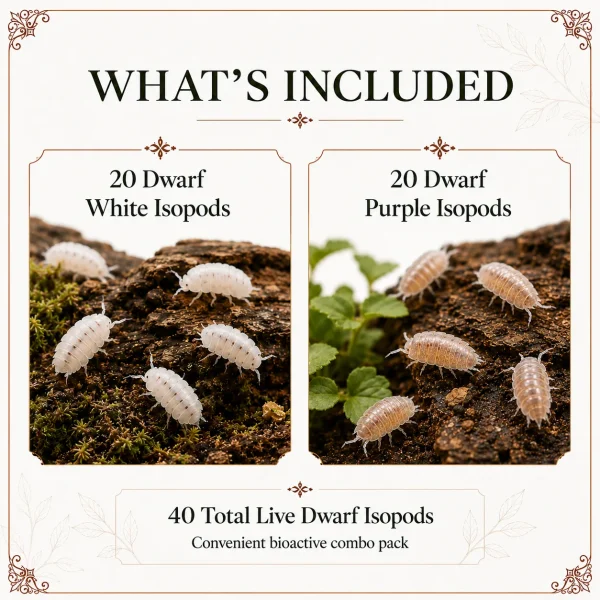
This is a bundled bioactive starter combo: 20 live Dwarf White Isopods (Trichorhina tomentosa) plus one 8oz live Springtail Culture, shipped together in a single order. Buyers choose between Temperate or Tropical springtails at checkout based on enclosure conditions.
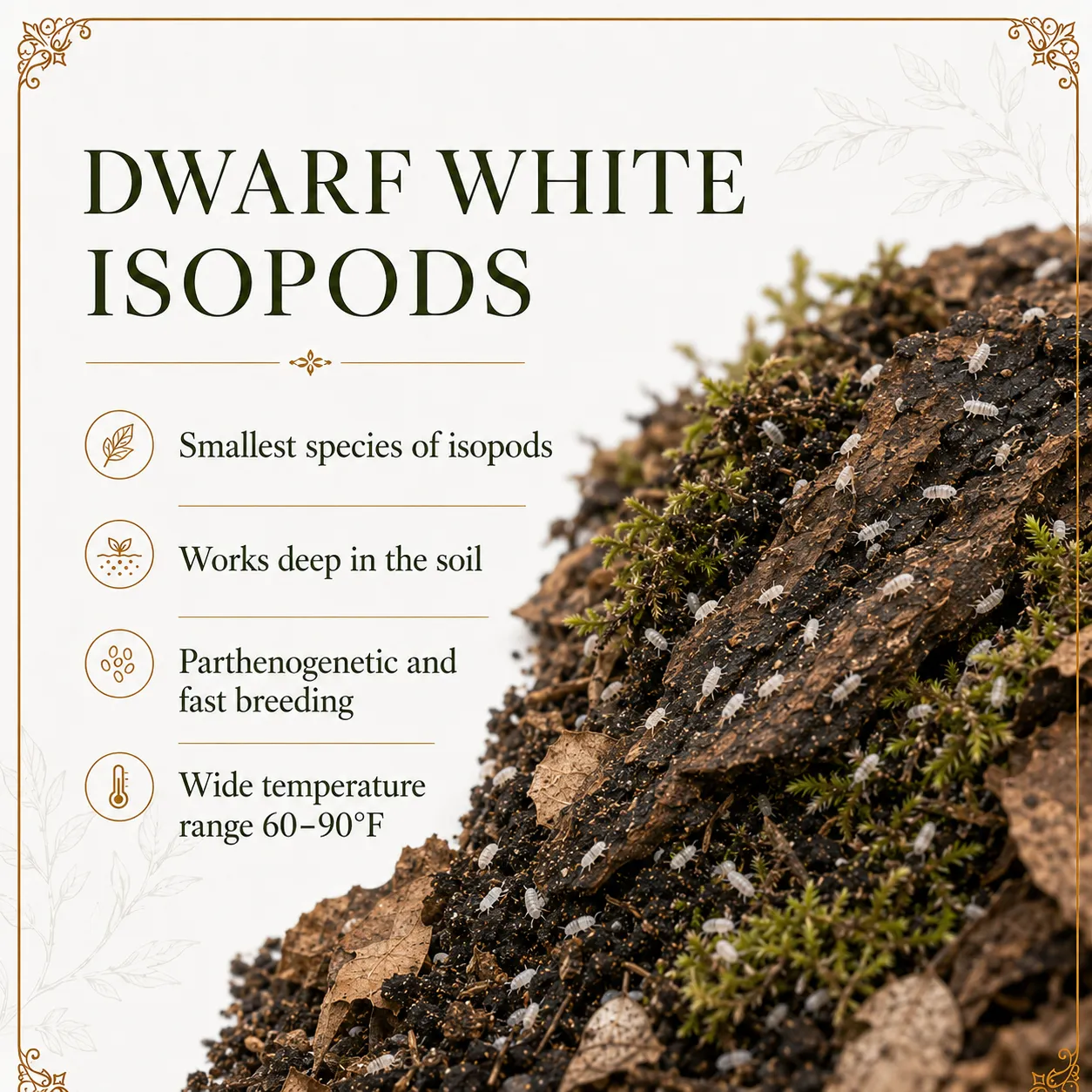
The Dwarf White portion of this combo is the most widely sold cleanup-crew isopod in the bioactive hobby. Specifically, the species reproduces parthenogenetically. As a result, every adult female in the bin can produce young without a male, so the colony establishes faster than equivalent sexually-reproducing species.
Furthermore, this combo targets humid bioactive setups specifically. Dwarf Whites need consistently high humidity (80 to 90%) with a stable moist retreat. Therefore, this combo suits dart frog vivariums, mourning gecko tanks, and tropical planted terrariums rather than drier reptile setups.
What This Combo Includes
- 20 Dwarf White Isopods. Live Trichorhina tomentosa, the parthenogenetic cleanup-crew species first described in 1893 from the Galápagos Islands. Tiny (1 to 5 mm), substrate-bound, and fast-breeding.
- 1 × 8oz Springtail Culture. Choose Temperate or Tropical at checkout. The 8oz cup contains an active culture with substrate, ready to seed an enclosure or transfer into a dedicated culture container.
- Optional Feed Add-On. A separate checkout option adds 2oz Isopod Feed and 2oz Springtail Feed for supporting the cleanup crew after arrival.
Why 20 Isopods Instead of 15?
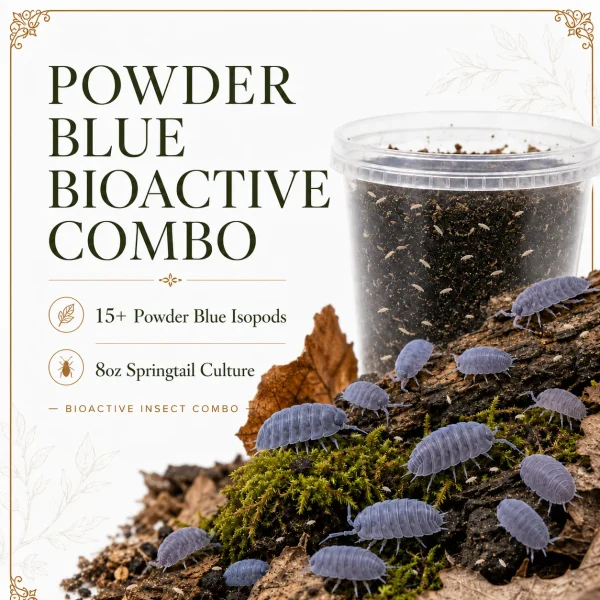
Most TC INSECTS combo packs include 15 isopods for sexually-reproducing species like Powder Orange or Powder Blue. However, Dwarf Whites are parthenogenetic. As a result, every adult in the starter group can reproduce immediately without waiting for males to be present in the colony.
Therefore, the 20-count starter group establishes a working colony faster than 15 Powder species would. Furthermore, the higher count helps offset the smaller body size (1 to 5 mm), since the colony needs more individuals to perform the same cleanup work as larger Powder isopods.
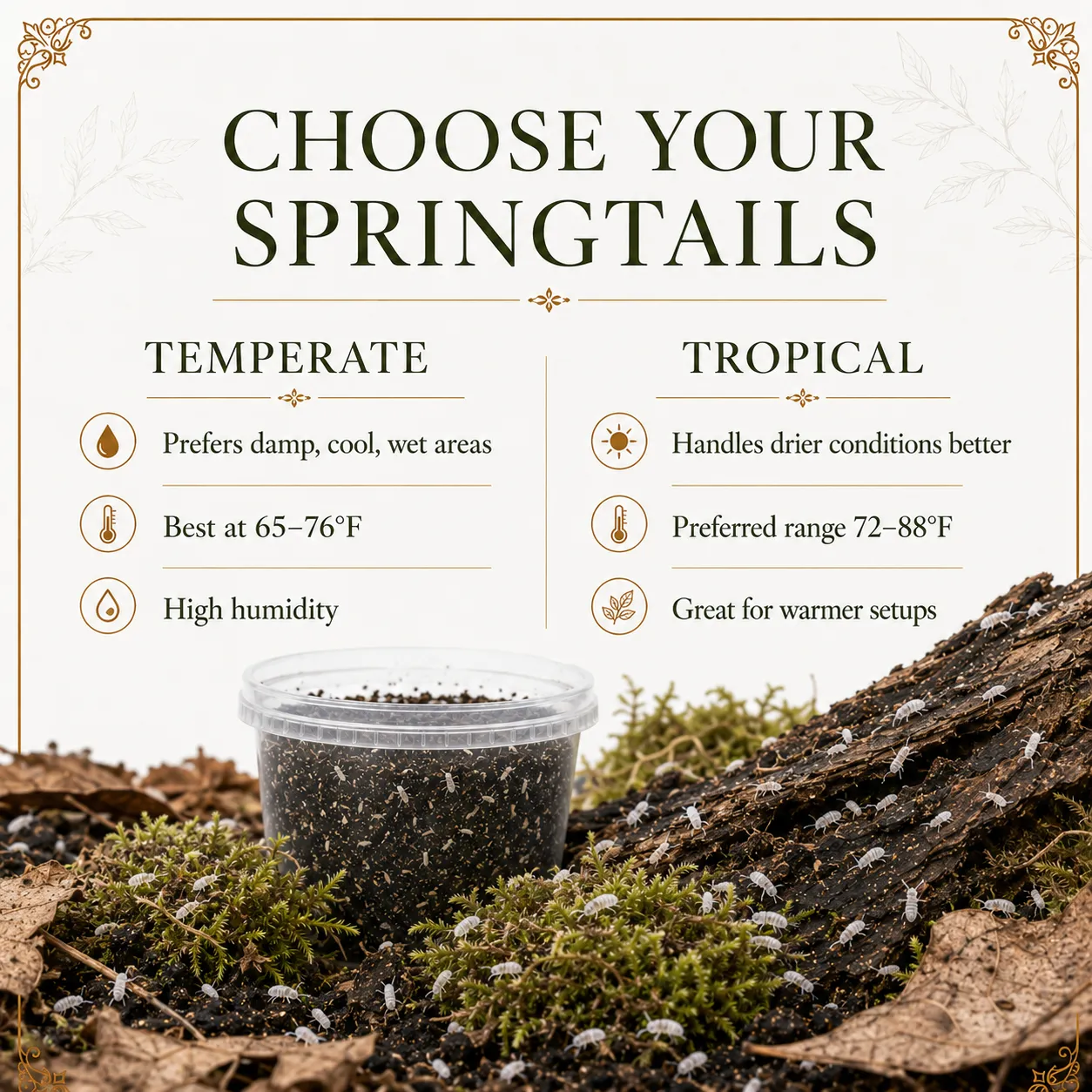
Temperate vs Tropical Springtails: How to Choose
This choice should match the enclosure type, not the keeper’s preference. Specifically, match the springtail to what you are building:
- Tropical springtails work best in dart frog vivariums, mourning gecko tanks, day gecko enclosures, and any consistently humid tropical setup. They tolerate higher temperatures and prefer constant moisture.
- Temperate springtails work best in cooler or moderately humid enclosures, including crested gecko tanks, many planted terrariums, and indoor setups at standard room temperature.
However, both types overlap well in most bioactive setups. Furthermore, given that Dwarf Whites prefer the same warm humid conditions as Tropical springtails, Tropical is the most common pairing for this specific combo. Therefore, when in doubt, choose Tropical.
Why a Combo Instead of Buying Separately?
- One order, one shipment. First, both live components ship together. As a result, the shipping cost stays lower than splitting into two separate live-animal orders.
- Beginner-friendly quantities. Next, 20 isopods and an 8oz springtail culture is a sensible seeder amount for a small to medium humid bioactive enclosure. Therefore, the buyer does not need to guess at the right counts.
- Slight bundle discount. Additionally, the combo price comes in slightly lower than buying each component separately.
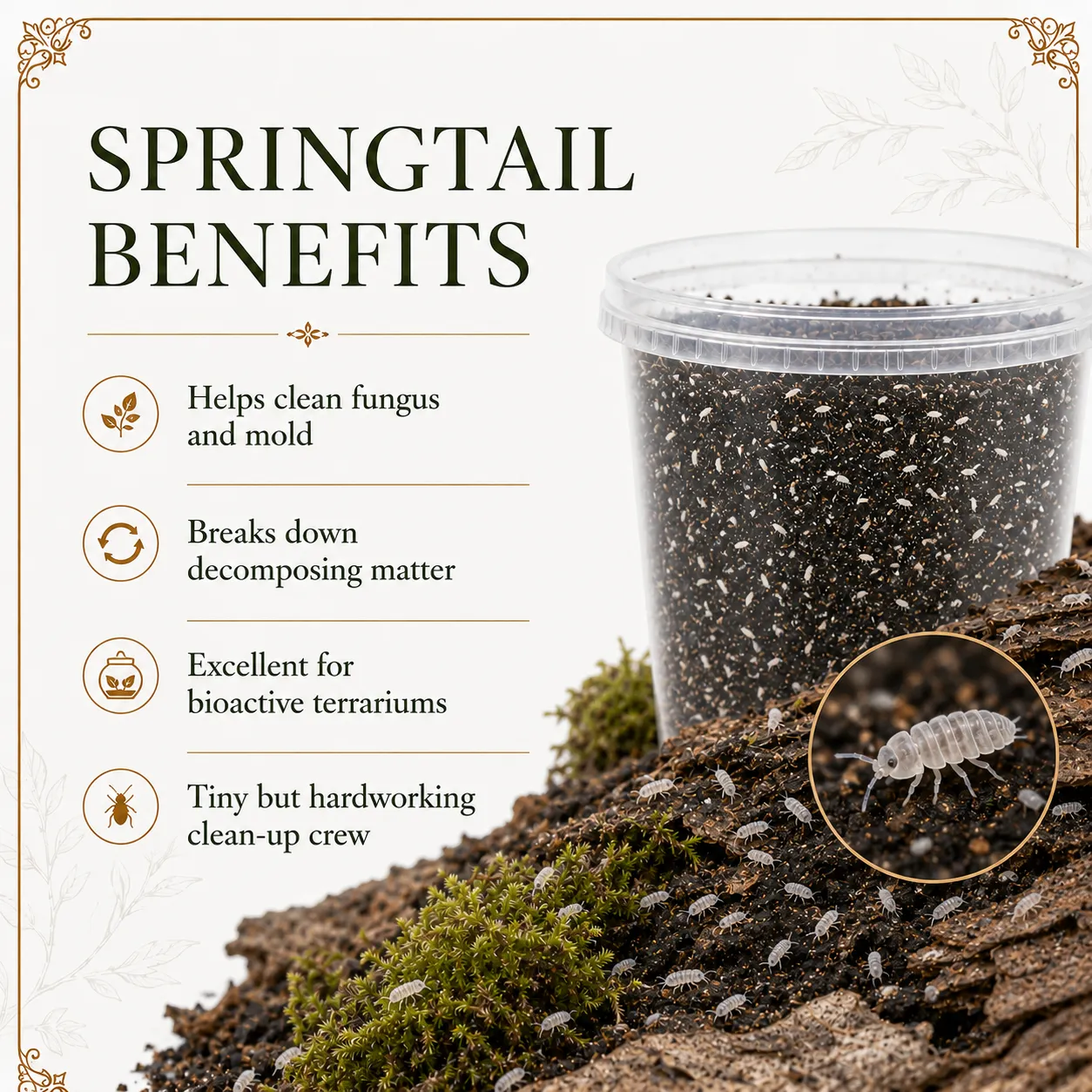
- Complete microfauna coverage. Finally, Dwarf Whites and springtails work at the same humid substrate level but at different scales. Specifically, isopods process larger organic debris and waste, while springtails handle mold, biofilm, and smaller particles. Therefore, running both gives more complete coverage.
Honest Note on Visibility
This combo will not give you a visible cleanup crew. Specifically, Dwarf Whites are substrate-bound and stay buried in soil, leaf litter, and moss. As a result, you will rarely see them moving on the surface. Furthermore, the springtails are also tiny and mostly inhabit substrate pockets and damp areas.
Therefore, customers expecting to watch their cleanup crew work should consider a Powder Orange combo or Powder Blue combo instead. Those Powder species are surface-active and visible. However, if you want fast invisible cleanup that does its job quietly in the substrate, this Dwarf White combo is the right pick.
Setting Up the Combo
Both components do best in the same general high-humidity conditions, which is part of why they pair well. Specifically, the setup should give both species what they need without forcing one to compromise.
Substrate and Layout
Use a moisture-retaining substrate like coconut fiber blended with flake soil or decayed hardwood. Then top with a generous layer of leaf litter and several pieces of cork bark. In addition, add a moist sphagnum moss pocket in one corner as the humid zone. Both isopods and springtails will use the moss pocket heavily during the first weeks.
Moisture
Aim for 80 to 90% humidity with one reliably wet zone. Specifically, Dwarf Whites need higher humidity than drier-tolerant Powder species. Therefore, the moist side should always be damp with sphagnum moss or leaf litter, while the other side can run slightly less wet. However, never let the enclosure dry out fully.
Ventilation
Light ventilation works best. Specifically, sealed bins crash with mite blooms in the high-humidity conditions Dwarf Whites need. However, heavy ventilation dries small-bodied isopods out faster than larger species. Therefore, a vented lid with small slots or fine mesh strikes the right balance.
Food
Leaf litter and decaying hardwood (avoid pine and cedar) feed both populations as a base diet. Additionally, add small vegetable scraps for the isopods. Springtails will graze on biofilm, mold, and decaying organic matter without much supplemental feeding. However, a balanced prepared diet like TC INSECTS Isopod Food simplifies feeding and adds calcium support.
Releasing the Combo
Open both containers indoors as soon as possible after delivery. Then transfer the shipping material directly into the prepared enclosure. Specifically, small mancae and springtails often hide in the packing, so check carefully before discarding anything. Furthermore, place the isopod material near the moist side. After that, leave the enclosure mostly undisturbed for the first week so both populations can settle.
Best For
- Humid bioactive enclosures with dart frogs, mourning geckos, day geckos, and small humid-loving amphibians
- First-time bioactive builders who want both cleanup layers covered in one order
- Tropical planted terrariums where high humidity and deep leaf litter are standard
- Keepers who want fast invisible cleanup that establishes quickly
- Feeder backup cultures for thumbnail dart frogs, mantellas, and juvenile small geckos
Not Best For
- Dry reptile enclosures (leopard gecko, bearded dragon, hognose, ball python with low humidity), where Dwarf Whites will not persist long-term
- Display-focused setups where the keeper wants a visible cleanup crew
- Large bioactive enclosures (40+ gallons), where 20 isopods is too small a seeder count to populate that volume quickly
- Sealed, no-ventilation tubs, which crash humid mixed cultures with mites faster than properly ventilated setups
- Keepers wanting a surface-active culture, since Powder Orange or Powder Blue combos are better visible alternatives
Recommended Add-Ons
- TC INSECTS Isopod Food for a calcium-supported diet that helps the parthenogenetic colony build faster
- TC INSECTS Springtail Feed for boosting the springtail culture with up to 40% protein and laboratory-grade nutritional yeast
- TC INSECTS Assorted Hardwood Leaf Litter for natural food, hiding cover, and humidity support for both species
- TC INSECTS Ultra Habitat Kit for keepers who do not already have a prepared humid enclosure ready for the combo
- TC Calcium Ultra Fine for molting support across the fast-reproducing colony
Frequently Asked Questions
Exactly what comes in this combo?
20 live Dwarf White Isopods (Trichorhina tomentosa) and one 8oz live Springtail Culture. Specifically, you choose Temperate or Tropical springtails at checkout. Additionally, an optional 2oz Isopod Feed + 2oz Springtail Feed add-on is available during checkout.
Why 20 isopods in this combo when Powder combos have 15?
Dwarf Whites are parthenogenetic. Specifically, every adult female reproduces without males. As a result, more starter individuals means more immediate breeders, and the colony establishes faster than 15 sexually-reproducing Powder isopods would.
Should I pick Temperate or Tropical springtails for this combo?
Tropical is the most common pairing because Dwarf Whites prefer the same warm humid conditions Tropical springtails do. Specifically, Tropical springtails work best in dart frog vivariums and humid tropical setups. However, Temperate springtails work fine in cooler bioactive builds. Therefore, when in doubt, choose Tropical.
Will I actually see the cleanup crew working?
No, not often. Specifically, Dwarf Whites are substrate-bound and stay in soil, leaf litter, and moss. Furthermore, springtails are also small and mostly inhabit damp substrate pockets. Therefore, this combo gives invisible-but-effective cleanup. If you want a visible cleanup crew, consider a Powder Orange combo instead.
Can this combo go in my leopard gecko or bearded dragon tank?
Not well. Specifically, Dwarf Whites need 80 to 90% humidity with a stable moist retreat. Most dry desert reptile enclosures cannot sustain that even with a humid hide. Therefore, drier reptile setups should use a Powder combo or a Niambia capensis (African Cape) culture, which tolerates drier conditions.
How long until the cleanup crew is self-sustaining?
Faster than most isopod combos. Generally, springtails reproduce visibly within a few weeks under good conditions. Furthermore, the parthenogenetic Dwarf Whites build noticeably within the first month, since every adult breeds without waiting for pairing. As a result, this combo often shows working population growth within a month or two.
Learn More About Bioactive Cleanup Crews
The references below cover background information for first-time bioactive builders. Each source comes from an academic, museum, or government site rather than a competing retailer.
- World Register of Marine Species: Trichorhina tomentosa. Scientific taxonomy reference for the accepted species name. Useful for confirming the species identification and seeing the formal classification of Dwarf White Isopods within the Platyarthridae family.
- USDA NRCS: Soil Biology and the Role of Decomposers. Covers how detritivores like isopods and springtails break down organic matter in soil ecosystems. Useful for understanding why both layers of a cleanup crew (large and small) matter rather than just one.
- MSD Veterinary Manual: Management and Husbandry of Reptiles. Covers reptile enclosure husbandry by species, including humidity, substrate, and temperature requirements. Useful for matching enclosure conditions to both the reptile and the cleanup crew species in the same setup.