Dairy Cow Isopods and Springtails Bioactive Combo
This combo ships 15+ live Porcellio laevis Dairy Cow isopods and one 8 oz springtail culture from TC INSECTS in a single order. It is the fastest way to seed a new bioactive enclosure with a working two-species cleanup crew. Therefore, buyers looking to start a bioactive setup from scratch, or keepers seeding an existing enclosure, get both components without two separate purchases.
What’s Included
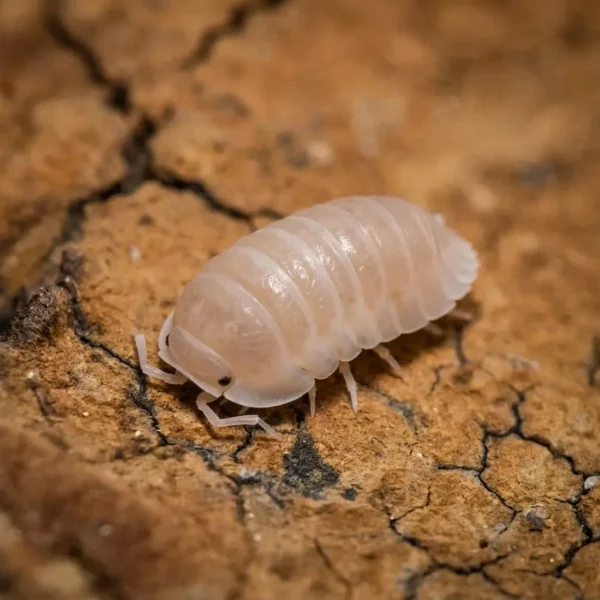
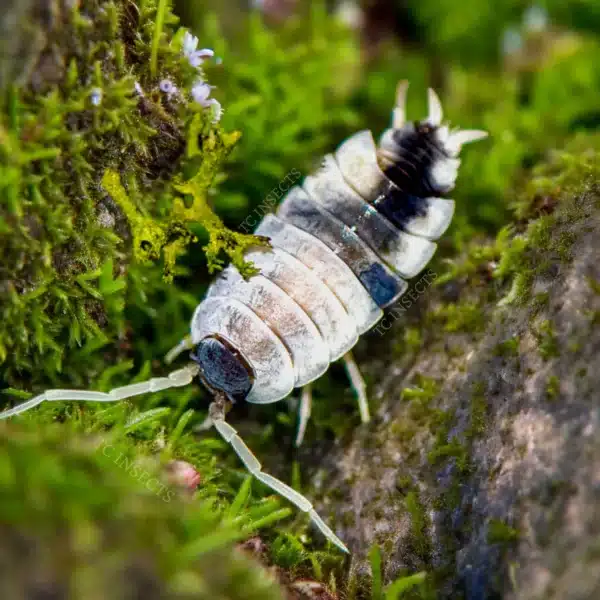
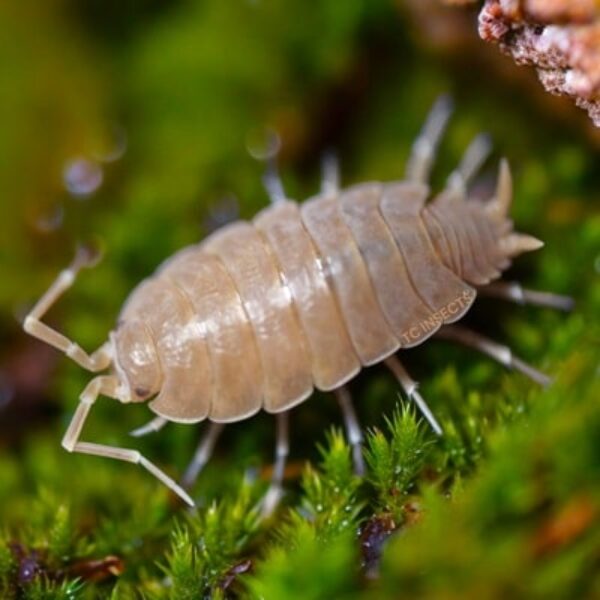
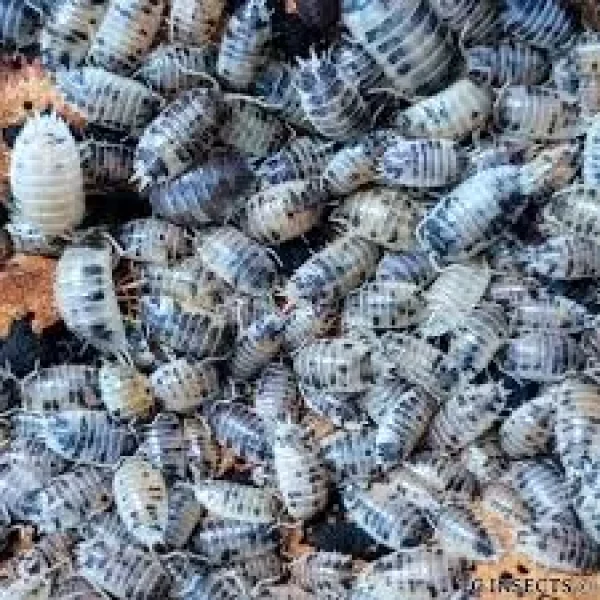
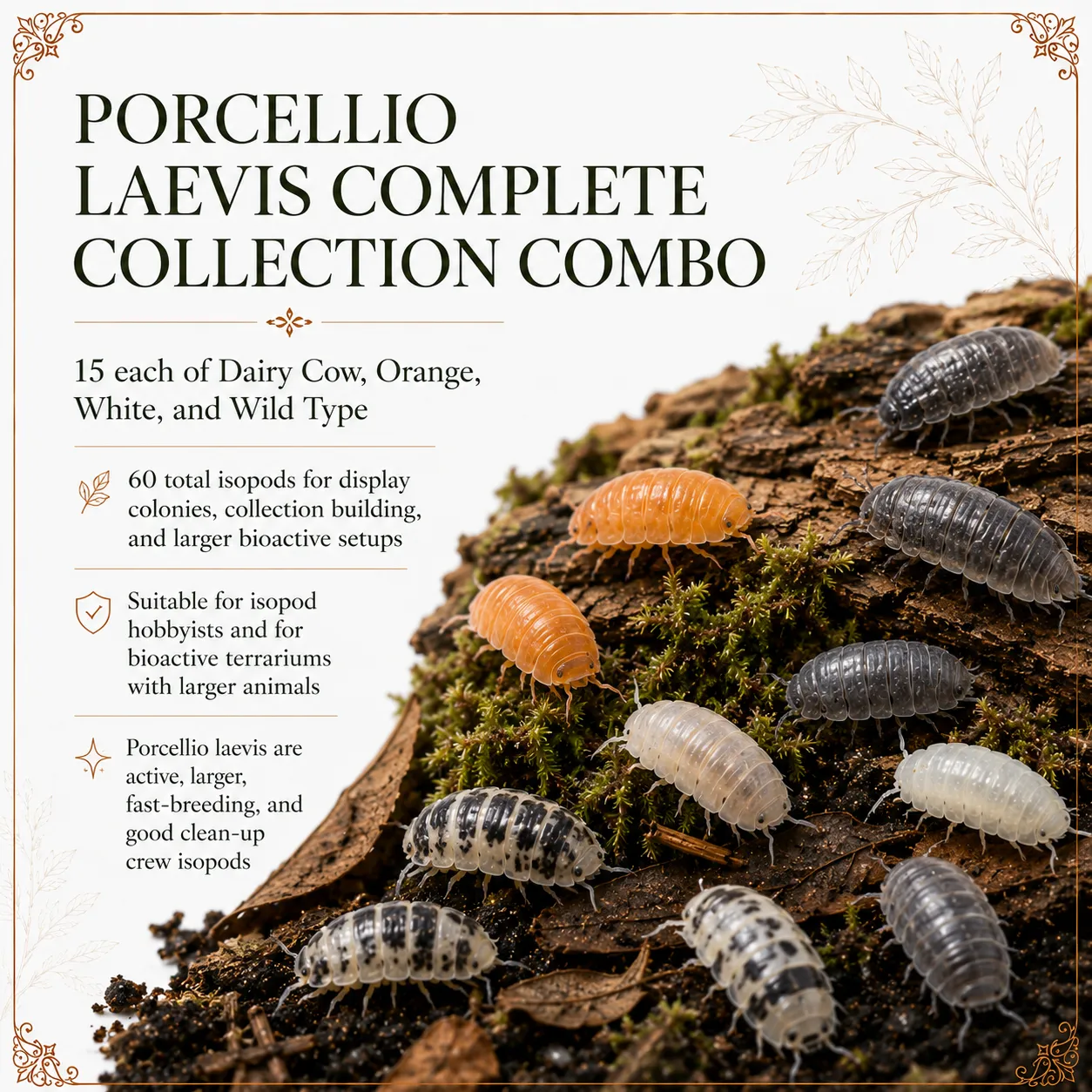
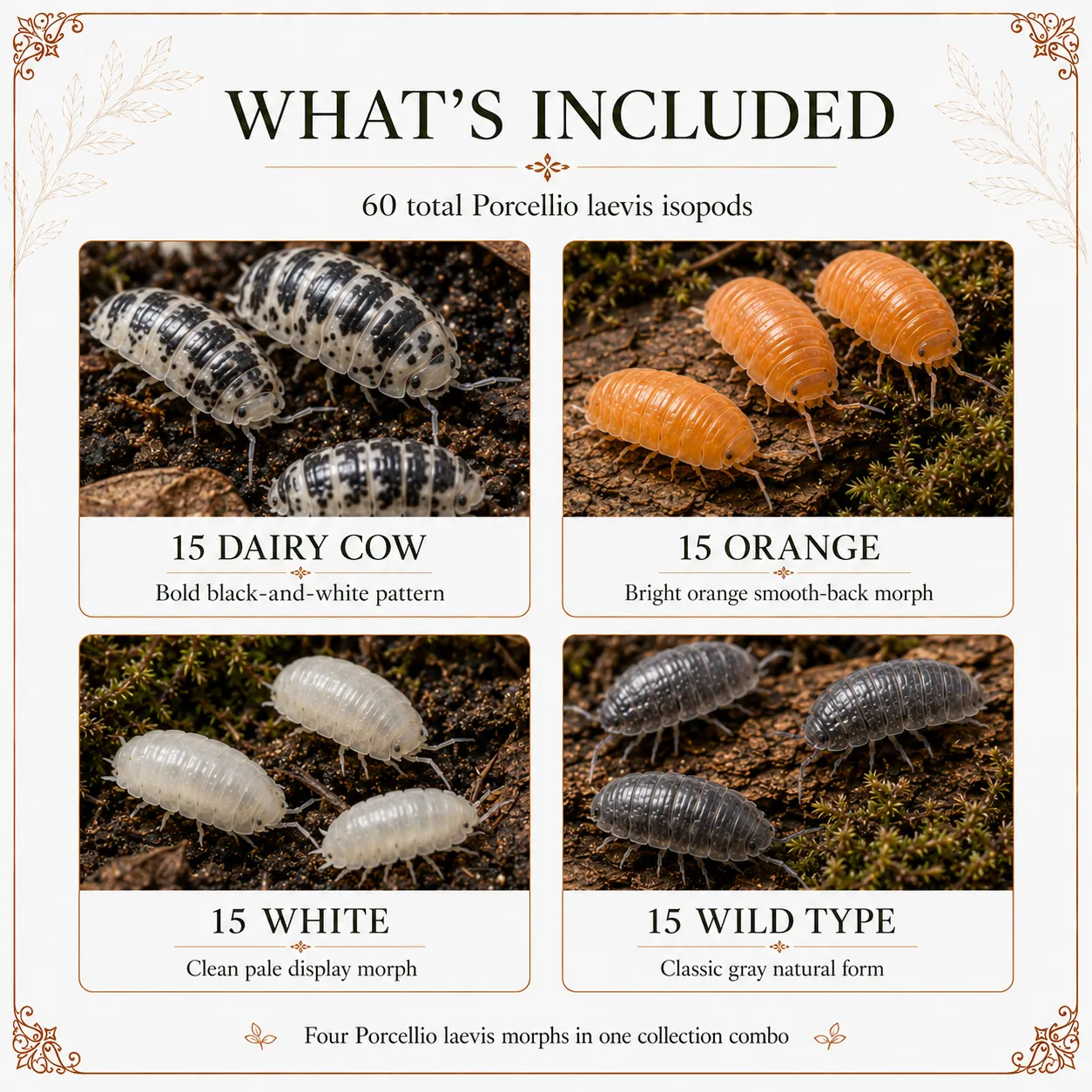
- 15+ Live Dairy Cow Isopods. Live Porcellio laevis “Dairy Cow,” the bold black-and-white piebald *laevis* morph known for strong feeding activity, high population density tolerance, and reliable bioactive performance. For full species details, see the Dairy Cow product page.
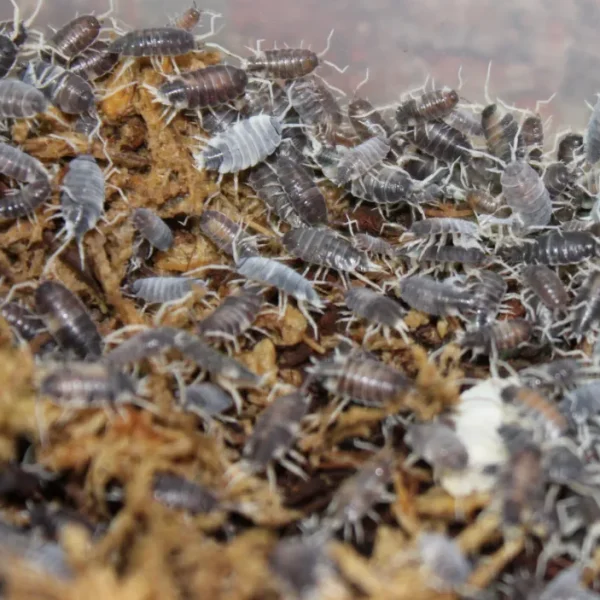
- 8 oz Springtail Culture. One 8 oz culture of white springtails — your choice of temperate or tropical. See the springtail choice guide below.
- Optional Feed Add-On. Add 2 oz isopod feed and 2 oz springtail feed together to support both species after arrival. This is worth adding for a new colony that is building toward its first stable brood.
Why Isopods and Springtails Together
Isopods and springtails do not compete for the same resources in a bioactive system. Instead, they divide the cleanup work between two different layers of the enclosure.
Dairy Cow isopods work the macro layer. They break down shed skin, leftover food, decaying leaves, and larger chunks of organic debris. Additionally, they process soft wood and substrate material actively. However, they are too large to access the fine fungal and microbial layer that builds up in damp corners, under substrate surface, and in tight crevices.
Springtails work that fine layer. They target fungal spores, mold patches, bacteria, and microscopic organic residue in the areas isopods miss. Furthermore, springtails specifically colonize the moist zones of the enclosure — exactly where mold is most likely to develop. As a result, they prevent the mold buildup that a large active isopod colony alone cannot fully control.
Together, the two species create a full-spectrum bioactive cleanup system. Consequently, a well-established isopod and springtail culture reduces enclosure maintenance needs substantially compared with isopods alone.
Choosing Your Springtails: Temperate vs. Tropical
Temperate Springtails
Temperate springtails prefer temperatures between 65 and 75°F. They are hardy, forgiving, and suited to most standard reptile rooms and home setups. Additionally, they are the stronger choice for beginners because they establish reliably across a wide range of conditions. Choose temperate if your enclosure or room runs at typical household temperatures.
Tropical Springtails
Tropical springtails prefer temperatures between 72 and 82°F and breed faster at the higher end of that range. They suit hot, humid setups such as tropical frog vivariums, dart frog tanks, and high-humidity reptile builds. However, they are less forgiving in cooler conditions. Choose tropical if your enclosure stays consistently warm and humid.
If you are unsure, temperate is the safer starting choice. They establish well in both cool-to-moderate and moderately warm setups. Tropical springtails give better performance specifically in genuinely warm, high-humidity enclosures where they can breed at their optimal rate.
Setting Up the Combo
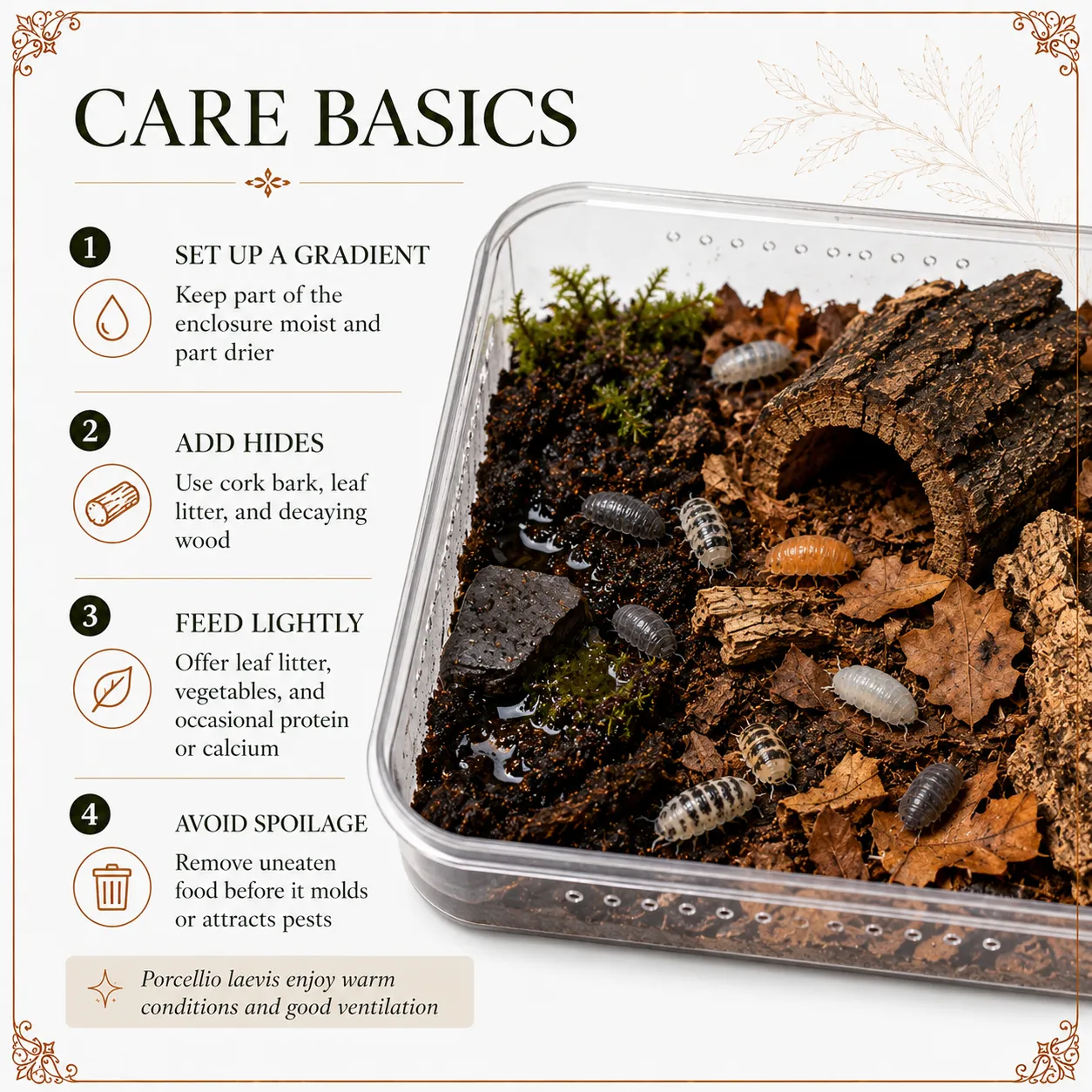
Prepare the enclosure before the shipment arrives. Add a moist side with sphagnum moss, a slightly drier side with leaf litter and bark, and a calcium source. Both the isopods and the springtails need the moist zone to establish, so that side should be ready on day one.
Open the isopod culture and place the animals near the moist side under bark cover. Then open the springtail culture and distribute the contents across the moist areas of the enclosure. Springtails will spread through the substrate naturally over the first week. Therefore, no precise placement is needed beyond seeding near existing moisture pockets.
Keep the enclosure stable and mostly undisturbed for the first week. Feed the isopods lightly at first — a small amount of TC INSECTS Isopod Food and a piece of vegetable two to three times per week is enough to start. Springtails feed on fungal spores and fine organic matter already in the substrate, so they typically need no additional food in an established enclosure.
Protein Note for Dairy Cow Isopods
Porcellio laevis has high protein requirements. Feed protein consistently two to three times per week. When protein is insufficient, the colony may nip at small soft-bodied co-inhabitants in the enclosure. For the full explanation and context, see the Dairy Cow product page.
Frequently Asked Questions
What is the difference between temperate and tropical springtails?
Temperate springtails prefer 65 to 75°F and establish reliably in a wide range of conditions. They are the more forgiving choice for most setups. Tropical springtails prefer 72 to 82°F and breed faster at higher temperatures, making them the better option for consistently warm, humid enclosures. When in doubt, choose temperate — they work across more setup types.
Do I need both isopods and springtails, or can I use just one?
You can use either alone, but the combination outperforms either species individually. Isopods handle the macro debris that builds up in a bioactive enclosure. Springtails handle the fine fungal and mold layer that isopods miss. Together they cover the full cleanup spectrum. Additionally, the springtail population in the moist zone specifically prevents the mold spikes that a large isopod colony alone tends to allow in wet corners.
How do I add these to an existing bioactive setup?
Open the isopod culture and place the animals near the moist side of the enclosure under leaf litter or bark cover. Then open the springtail culture and distribute the contents across the moist areas. Both will spread and establish naturally over one to two weeks. Furthermore, the isopods will integrate with any existing cleanup crew population. Springtails rarely cause conflict with resident invertebrates and simply add to the mold-control layer.
Can Dairy Cow isopods bite my reptile or amphibian?
When protein is consistently provided, Dairy Cow isopods are safe alongside most bioactive co-inhabitants. When protein is insufficient, the colony may occasionally nip at small soft-bodied animals. Feed protein two to three times per week to prevent this. For the full explanation, see the Dairy Cow product page.
How long does it take for the cleanup crew to establish?
A new Dairy Cow colony typically becomes visibly active within one to two weeks of arrival. Springtails spread through the substrate faster and are usually established within the first week. However, the full cleanup crew effect — where organic waste is processed before it accumulates — generally develops over four to eight weeks as the populations grow and the enclosure’s microbial layer matures. Be patient with the first month. The system improves as both populations build.
Learn More About Bioactive Cleanup Crews
These sources give useful context on how isopods, springtails, and other decomposers work together in soil and enclosure systems.
- USDA NRCS: Soil Biology Primer — Soil Invertebrates. Covers how soil invertebrates including springtails (Collembola) and isopods function as decomposers in soil systems. Directly relevant to understanding why both species work together more effectively than either alone — their roles in breaking down different layers of organic material mirror the cleanup crew division in a bioactive enclosure.
- iNaturalist: Collembola (Springtails). Overview and observation records for springtails worldwide. Useful for understanding the ecological role springtails play in moist soil environments — the same mold-targeting and fine organic matter processing that makes them an effective complement to isopods in a bioactive terrarium.
- University of Missouri Extension: Sowbugs and Pillbugs. Extension resource on the biology and cleanup role of terrestrial isopods. Explains how isopods feed on decaying organic matter and why pairing them with smaller decomposers like springtails improves overall organic waste processing in enclosed systems.