
Cubaris Murina Papaya Isopods for Sale
TC INSECTS ships live captive-bred Cubaris murina “Papaya” for display cultures, breeding projects, and collectors building a complete C. murina morph range. This is the true albino line of Cubaris murina — the only
pink isopod in captive breeding.
For full species background on Cubaris murina, distribution, the “Little Sea” name, and the species’ role as the type species of the genus, see the Little Sea product page.
Overview — The Only Pink Isopod in Captive Breeding
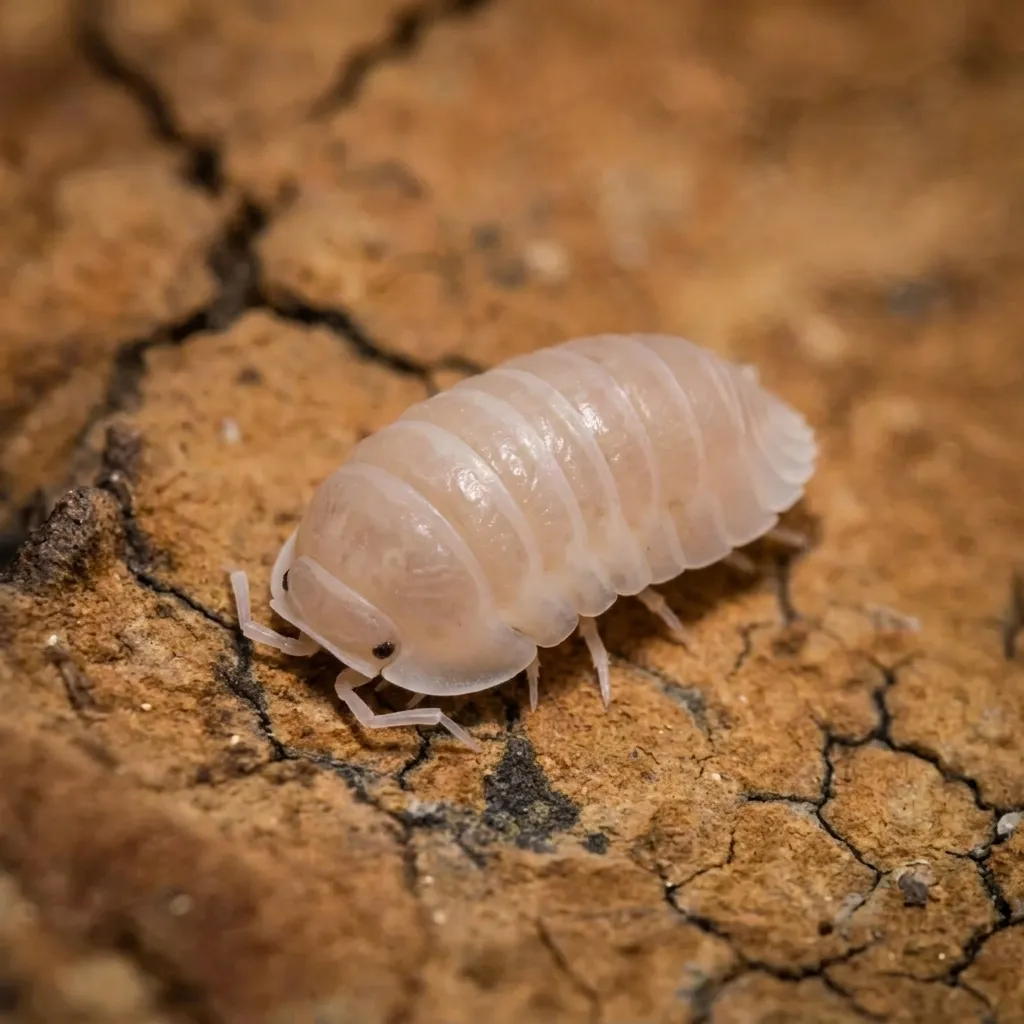
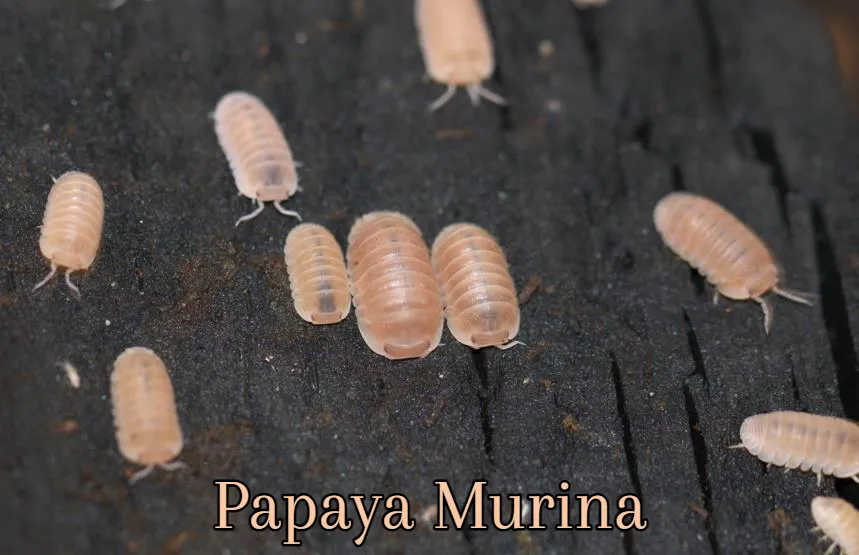
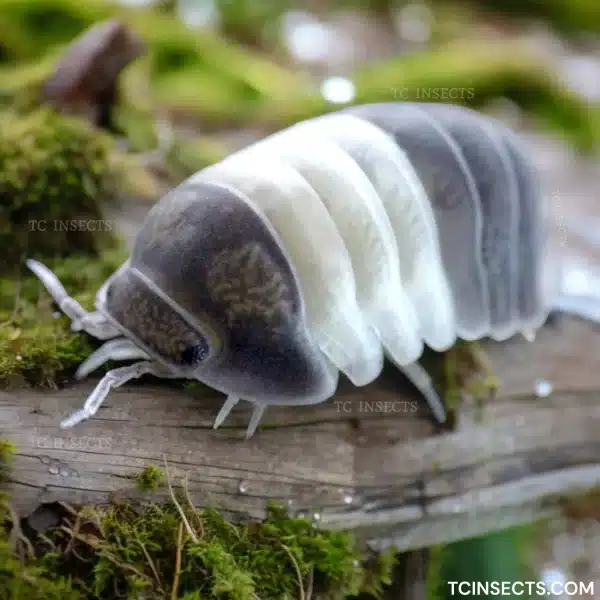
The Papaya morph of Cubaris murina is a true albino mutation. Multiple specialty sources — including Pangea, Reptanicals, Tropical Isopods, and Exuvium — confirm this independently. The standard “Little Sea” shows a
dark gray body with orange tail marks. The Papaya shows a pink-to-peach body, pink eyes, white lateral edging, and a semi-transparent back. Every element that differs traces back to a single genetic change: the absence of
dark pigment throughout the animal.
No other isopod species in the hobby produces consistent pink coloring.
Papaya is the only captive-bred pink isopod on the market. That uniqueness drives both its collector appeal and its price premium over the standard Little Sea.
Origin — North Dakota, USA
The Papaya morph was isolated in the United States — specifically in North Dakota. The breeder known as “Smug Bugs” found and isolated albino individuals from a standard C. murina “Little Sea” colony and bred them
selectively to establish the color line. The morph entered the hobby from this US captive origin. It is not a wild collection form, and it is not related to any particular geographic population of *C. murina* beyond the
standard North American lineage.
The North Dakota origin is the most specific and traceable morph provenance in the TC INSECTS Cubaris catalog — a named breeder, a named US state, and a single isolation event that launched a morph now kept by
hobbyists worldwide.
The Albino Phenotype — Three Signatures
Albinism in animals means the body produces no dark pigment. For the Papaya, this removes all the gray and black coloring of the standard Little Sea. Three visual effects result. First, the body turns pink to peach — the
underlying tissue color and blood show through without dark pigment to mask them. Second, the eyes turn pink — blood vessels behind the unpigmented iris become visible, giving the characteristic albino eye color. Third,
the back becomes semi-transparent — the dorsal surface of the shell thins visually without the melanin that normally gives it an opaque dark gray.
All three markers are present in healthy, well-established Papaya individuals. The semi-transparent back is the most distinctive and unusual of the three. In good lighting, you can see faintly through the upper shell surface.
This is not a defect — it is a physical expression of the albino trait specific to this morph.
Color Deepens With Selective Breeding
The original Arachnoboards post from the Smug Bugs breeder notes that Papaya “tends to get lighter with each new generation.” This describes the early direction — early generations often showed more muted pink. Over
time, breeders select for the most vivid pink individuals. Well-established lines now show a more consistent warm pink-to-peach tone. Expect some natural color variation across individuals within a colony.
How Papaya Compares to the Standard Little Sea
Papaya and the standard Little Sea are the same species. They share the same care, the same behavior, the same worldwide distribution, and the same type-species status in the genus.
The difference is entirely in one gene.
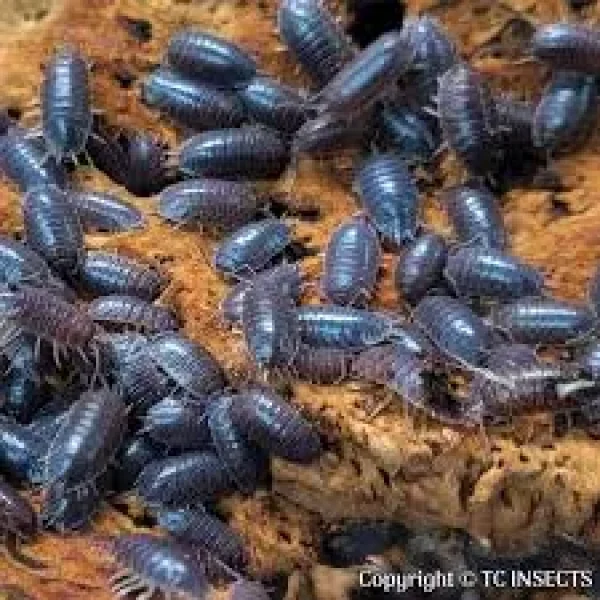
The standard Little Sea is dark gray with two orange tail marks. The Papaya is pink with pink eyes, white edging, and a semi-transparent back. The standard Little
Sea is the least expensive Cubaris in this catalog. The Papaya is priced significantly higher — the premium reflects the selective breeding investment and the
morph’s status as the only pink isopod in the hobby. Both are beginner-accessible. Both are prolific once established. For the keeper who already has Little Sea
cultures and wants the visual counterpart, Papaya is the natural pairing.
Care
Care is identical to the standard Little Sea. All details on setup, substrate, humidity gradient, temperature, calcium, and feeding are on the Little Sea product page. The summary below covers the key points only.
Setup Framework
Use a ventilated enclosure with 2 to 4 inches of organic substrate. Keep one side moist with sphagnum moss and the other side slightly drier with cork bark hides and leaf litter. Maintain 70 to 80°F and 60 to 80% humidity. The Papaya’s care window is wide — room temperature in most homes works without extra heating, and the humidity range is more forgiving than ducky-type or premium Cubaris sp. species.
Food and Protein
Keep TC INSECTS Assorted Hardwood Leaf Litter available at all times. This morph is protein-driven — offer TC INSECTS Isopod Food, dried shrimp, or fish flakes two to three times per week. Place protein on the drier side and remove it within 24 hours to prevent mold in the humid setup.
Calcium
Keep TC Calcium Ultra Fine, cuttlebone, or limestone available at all times. Calcium supports molts and keeps the shell healthy. Remove soiled calcium and replace it regularly.
Springtails
Pair with Springtails for mold control. With the protein-heavy feeding this morph needs, a springtail culture handles the fine mold layer that the isopods cannot manage alone.
Breeding Notes
Papaya breeds true for the albino coloring — offspring from two Papaya parents show the same pink morph. Females carry developing young in a marsupium. Broods run medium to large. Tropical Isopods calls this morph “highly prolific” — it is one of the more productive lines in the C. murina range.
All offspring show the pink albino coloring. There is no gray “throwback” offspring when both parents are Papaya. This makes the morph easier to maintain as a pure line than the mixed-parent color morphs in the panda *Cubaris* range.
Best For
- Collectors who want the only pink isopod in the captive hobby — nothing else in the market produces this color
- Display vivariums where pink against dark substrate, green moss, or brown leaf litter creates the visual goal
- Keepers who want beginner-level care with premium-level visual impact — the most striking C. murina morph at the same care difficulty as the standard Little Sea
- Anyone building a complete Cubaris murina morph collection alongside the Little Sea standard form
- Frog and amphibian vivariums where a small, brightly colored, daytime-active isopod adds visual interest
Not Best For
- Dry or low-humidity setups. The care needs are easy, but the 60 to 80% humidity floor still applies.
- Primary feeder use. The price premium and selective breeding investment make heavy feeder use impractical.
- Densely planted vivariums with delicate ferns — the plant-eating tendency noted in C. murina applies to Papaya too.
Receiving and Acclimation
Open the package in a calm indoor area soon after delivery. Place all packing material directly into the prepared enclosure. Position animals near the moist zone under leaf litter or bark. The pink coloring can make small mancae hard to spot in packing material — check carefully before discarding anything.
First Week Priorities
Keep the enclosure at 70 to 80°F and 60 to 80% humidity before the animals arrive. Feed lightly for the first week — leaf litter, a small protein offering, and calcium. Check whether food disappears before adding more. Hiding for days after arrival is normal. Leave the culture mostly undisturbed for one week.
Recommended Add-Ons
- TC Calcium Ultra Fine alongside cuttlebone for steady calcium access.
- TC INSECTS Assorted Hardwood Leaf Litter as the primary diet base.
- TC INSECTS Isopod Food for the two-to-three times weekly protein rotation — important for this protein-driven morph.
- TC INSECTS Isopod Habitat Kit for a complete beginner-ready starter setup at the easy care level this morph needs.
- Springtails for mold control — especially useful given the protein-heavy feeding schedule this morph does best on.
Frequently Asked Questions
Is Papaya really the only pink isopod?
Yes, according to multiple independent specialty sources. Pangea, Reptanicals, Tropical Isopods, and Exuvium all confirm it independently: no other isopod species in the hobby produces consistent pink coloring. The pink comes from the true albino mutation — the absence of all dark pigment. Without melanin, the underlying tissue and blood give the animal its pink-to-peach tone. No parallel pink mutation exists in any other isopod species currently in captive breeding.
What makes it a “true” albino rather than just a light color morph?
True albinism means the body produces no melanin — the dark pigment that gives most animals their coloring. This produces three specific signs that the Papaya
shows: pink eyes (blood vessels visible through the unpigmented iris), pink body (tissue color without dark pigment covering it), and semi-transparent dorsal
surface (the shell thins visually without the melanin that normally makes it opaque). A simple “light color morph” like a pale gray or cream isopod does not show
pink eyes or a see-through back. Papaya shows all three.
How is the care different from the standard Little Sea?
It is not. The Papaya and the standard Little Sea share identical care — same temperature, same humidity, same diet, same setup. The only practical difference is the protein emphasis: this morph is protein-driven and benefits from more frequent protein offerings than the standard form. The appearance is different. The care is the same.
Will Papaya offspring always be pink?
Yes, when both parents are Papaya. Albinism in isopods works as a recessive trait. Two albino parents produce albino offspring — there are no gray throwbacks when the breeding group is all Papaya. This makes the line easier to maintain as a pure color culture than morphs where the gene is recessive in a mixed colony.
Can I keep Papaya and standard Little Sea together?
Yes, without harm — they are the same species. However, mixed pairings produce offspring with varied coloring over time. Some offspring from a mixed pair will be dark gray (carrying one copy of the albino gene), some may be lighter, and some may show the full Papaya coloring depending on their gene copies. To keep a pure pink Papaya line, maintain the two forms in separate enclosures.
Learn More About Cubaris murina Papaya
These sources give useful context on the morph, the albino biology, and the species background.
-
Wikipedia: Cubaris murina. The species article lists Papaya as a known morph — “a dull pink variety that is believed by some to be the expression of some form of albinism.” The Wikipedia entry is the most accessible confirmation of Papaya’s formal recognition as an albino-type morph of the species. The same article documents the standard “Little Sea” distribution and biology. Comparing both entries on the same page shows exactly what the albino mutation changes visually relative to the wild type.
-
iNaturalist: Cubaris murina. The iNaturalist species record for Cubaris murina, with observation data including US occurrences — the wild North American population base from which the Papaya morph was eventually isolated. The US observation records show the species’ natural presence in the southeastern states and coastal areas. The Papaya morph emerged from a captive colony of this wild-type North American population, making the US observations the geographic anchor point for the morph’s origin story.
-
Wikipedia: Albinism. The general article on albinism covers the biological basis — the absence of melanin — and why it produces pink eyes and pale tissue in affected animals. The pink eye effect specifically comes from unpigmented irises allowing the red of blood vessels behind the eye to show through. This is the same mechanism that makes Papaya’s eyes pink. The semi-transparent back results from the same melanin absence that normally gives the shell its opaque dark color. Understanding the biology makes the three visual signatures of the Papaya predictable and explainable rather than seemingly random.



Reviews
There are no reviews yet.