
Mamey Isopods for Sale
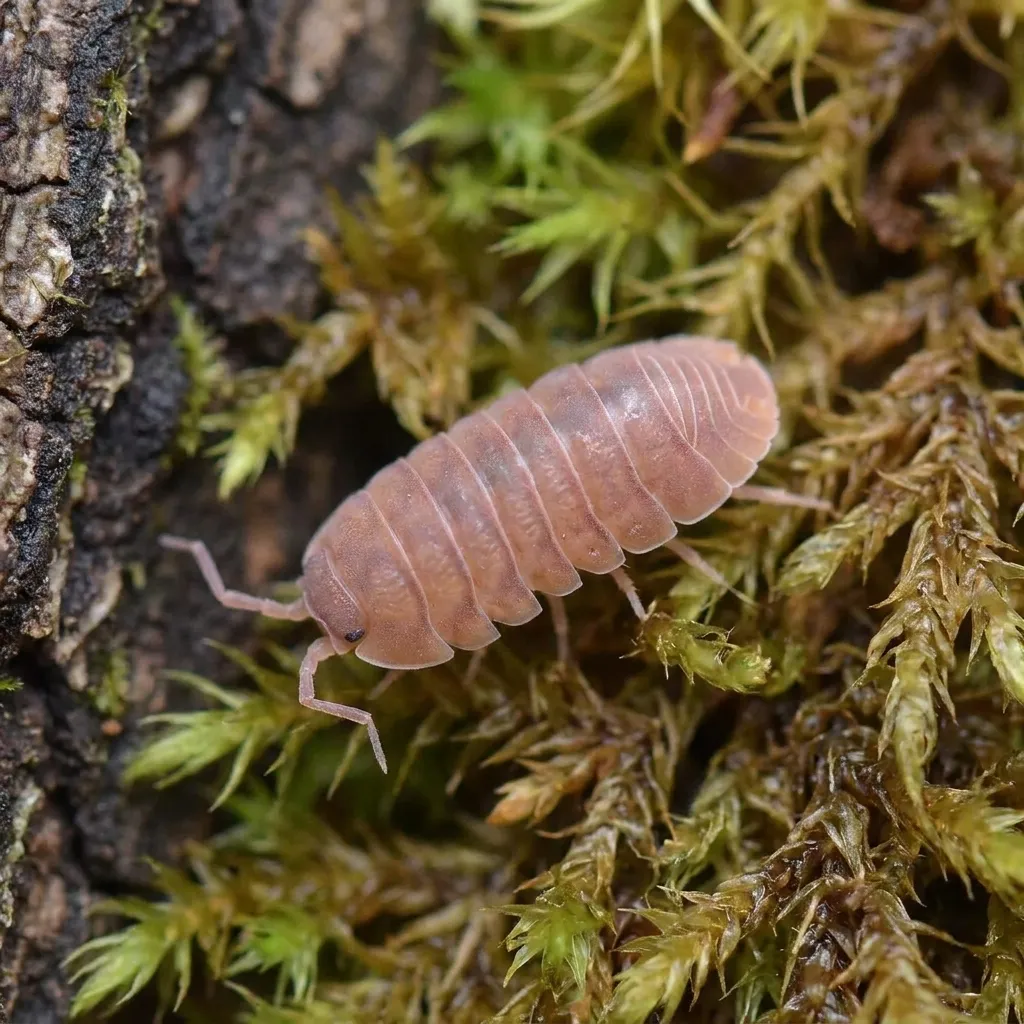
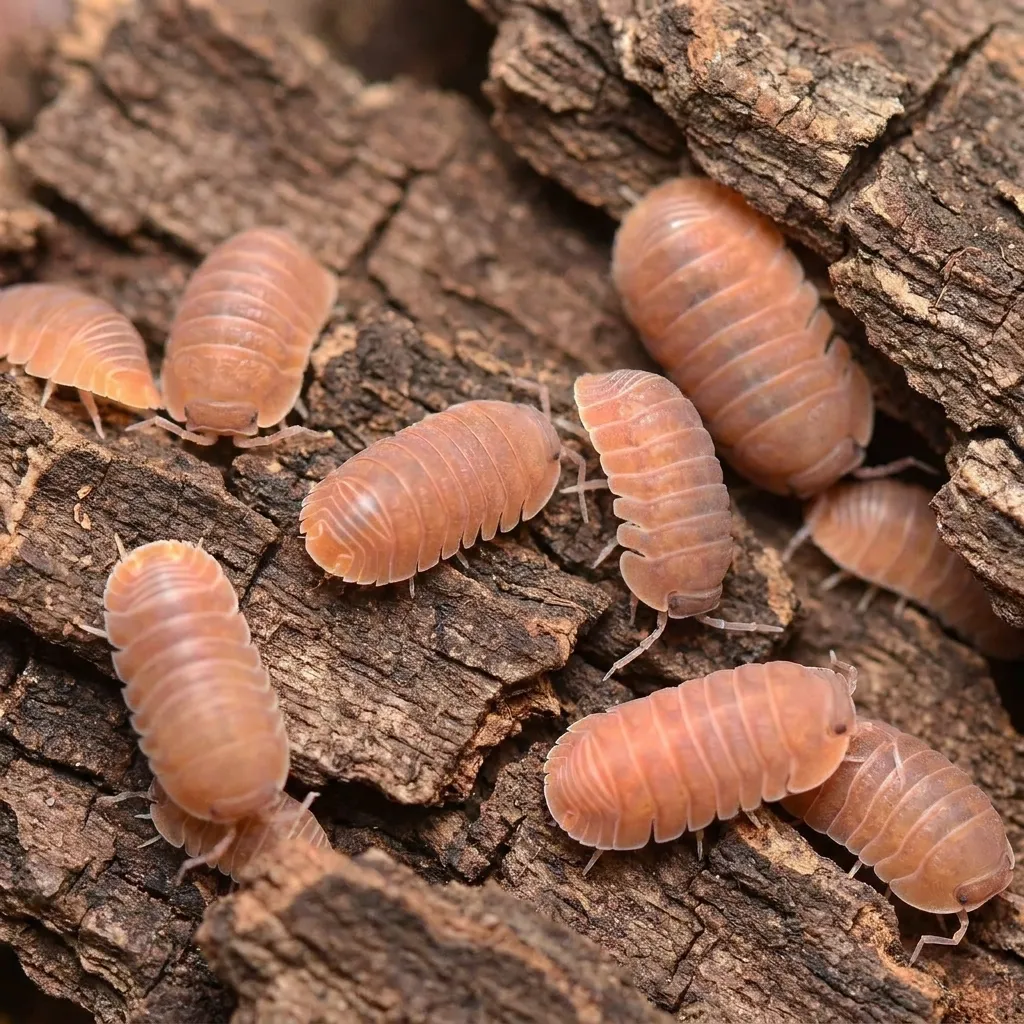
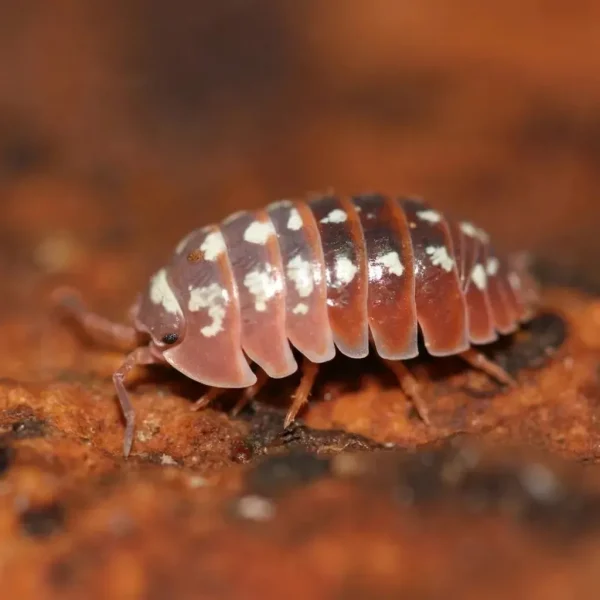
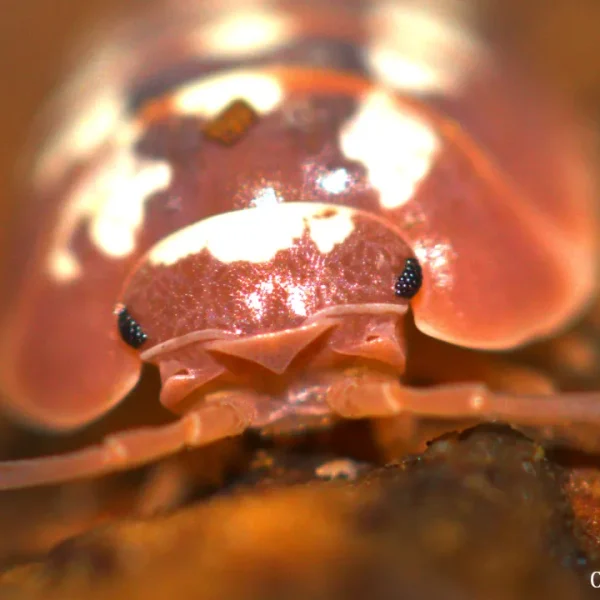
Cubaris murina “Mamey” is a US-created designer color morph developed through a multi-generation cross of C. murina “Tangie” with C. murina “Papaya.” The animal shows warm orange, peach, and apricot tones
inspired by the mamey fruit color. Adults reach roughly 8 to 11 mm and roll into a ball when disturbed in classic pillbug fashion. Cubaris murina is a formally described species (Brandt, 1833) naturalized across pantropical
and subtropical regions worldwide, which makes the Mamey line one of the most beginner-friendly Cubaris available in the hobby trade.
Overview
Mamey sits at the entry-tier of the Cubaris hobby. The combination of a formally described parent species, beginner-friendly care framework, and warm fruit-colored aesthetic gives the line real value for keepers stepping
up from Porcellionides pruinosus morphs into their first true Cubaris. Compared to the Thai-locality Cubaris collector morphs that dominate the higher end of the hobby, Mamey is more forgiving, more productive, and
considerably less expensive.
This is one of the rare Cubaris that genuinely works as a cleanup crew. The moderate-to-good breeding pace and small body size mean a Mamey colony can contribute to bioactive maintenance in a humid enclosure rather
than sitting as a slow display species like many premium Cubaris.
Why Keep Mamey Isopods?
- Designer orange color morph. The Tangie × Papaya cross gives Mamey a warm orange-peach tone that no wild C. murina line quite matches.
- Beginner-friendly Cubaris. Unlike Thai limestone karst Cubaris, Mamey tolerates parameter swings and forgives the inconsistency of a new keeper’s first humid bin.
- Moderate to good breeding pace. Productive enough to grow a working colony in a few months, which is unusual for the Cubaris genus.
- Compact rolling body. The 8 to 11 mm pillbug shape and classic conglobation behavior make Mamey a satisfying pet pod for keepers new to the hobby.
- Pairs cleanly with Springtails. A shared springtail population handles mold and small debris while Mamey processes leaf litter at a different scale.
Honest Note on Mamey, Florida Orange, and Other Cubaris murina Color Lines
Buyers shopping for orange Cubaris murina often encounter several different lines under similar-sounding names, and these are worth distinguishing before purchase. Three points worth flagging.
First, Mamey is a US-created designer cross developed by Tropical Isopods specifically through multi-generation breeding of C. murina “Tangie” with C. murina “Papaya.” It is not the same as Florida Orange, which is a
separate wild-isolated C. murina color form from Florida. Mamey is also not Papaya itself, which appears as a duller pink color and is believed by some hobby breeders to express a form of albinism. If you are specifically
looking for one of these lines, ask the seller to confirm which parent stock the culture came from.
Second, even within the Mamey line, individual color expression varies. Some animals will show brighter orange tones while others appear softer, more peach, or slightly muted. This variation is normal for a hybrid designer
line and does not indicate a quality issue. Mature adults usually show stronger color than juveniles.
Third, do not mix Mamey with other C. murina color morphs (Florida Orange, Papaya, Tangie, Anemone, Glacier) in the same bin if you want to preserve any of the lines. C. murina readily interbreeds across color forms,
and a mixed bin will eventually produce a blended-color colony where the parent lines are no longer distinguishable. Run each line in its own dedicated tub.
Care and Setup
Mamey responds well to a stable humid setup that supports the moderate-to-good breeding pace. The goal is steady moisture, soft cover, reliable calcium access, and enough leaf litter to support a productive colony.
Temperature
Aim for 70 to 80 F. Room temperature in most homes is fine. Cubaris murina handles a wider temperature range than collector-tier Thai Cubaris, but avoid sustained heat above the mid-80s, sudden cold drops below the mid-60s, and any heat source in direct contact with the bin.
Humidity
Keep humidity moderate to high with a clear moisture gradient. One side of the bin should stay consistently moist with sphagnum moss or hydrated substrate. The opposite side should run slightly drier with leaf litter cover. Mamey tolerates moisture-level variation better than collector Cubaris, so the gradient is a working buffer rather than a precise target.
Substrate
Use a deep organic mix with coconut fiber, flake soil, sphagnum moss pockets, and broken-down hardwood. Substrate depth around 2 inches works well for a small-bodied Cubaris like Mamey. Additionally, scattered limestone, crushed eggshell, or cuttlebone pieces give the colony a calcium-grazing surface that supports the moderate-to-good breeding rate.
Food
Leaf litter and decaying hardwood form the dietary base. Supplement with TC INSECTS Isopod Food a couple of times per week, plus small portions of vegetables and a light protein item such as fish flake or freeze-dried shrimp. C. murina is reported to be particularly fond of fruit, so small soft fruit pieces (apple, banana, pumpkin) are well-received. Remove uneaten food before it molds.
Ventilation
Moderate ventilation works best. Stagnant air encourages mites and sour substrate. Too much airflow dries the bin and stresses the colony.
Bioactive Use
Mamey performs genuinely well as a bioactive cleanup crew, which is unusual for Cubaris. The small body size lets the colony work substrate effectively without dominating the visual space, and the moderate breeding pace supports a self-sustaining population. For larger bioactive enclosures, pair Mamey with Porcellionides pruinosus “Powder Orange” for heavy-duty cleanup or with Dwarf Whites for substrate-level processing.
Breeding Notes
Production is moderate to good once a culture settles. Mamey reproduces more readily than collector-tier Cubaris and can build a working colony in a few months under stable conditions. Founder groups commonly go
through a quieter first month while the colony establishes, then begin producing visible juveniles in the leaf litter and substrate. Brood size for C. murina is reported as around 25 young per litter under laboratory
conditions, with an incubation period of roughly 17 days.
Calcium access matters even for smaller-bodied Cubaris like Mamey. A pinch of TC Calcium Ultra Fine dusted lightly over a feeding area every couple of weeks supports molting and brood development. For long-term line
preservation, consider running a backup culture as soon as the founder group is producing well.
Best For
- First-time Cubaris keepers stepping up from Porcellionides and Dwarf White species.
- Bioactive vivariums where small productive pods work better than large slow ones.
- Collectors building out the C. murina color shelf alongside Florida Orange, Papaya, Tangie, Anemone, or Glacier lines.
- Keepers who want classic rolling pillbug behavior at an entry-tier price.
- Reptile and amphibian enclosures where small Cubaris can survive light predation pressure.
Not Best For
- Co-housing with other C. murina color morphs. Mamey will interbreed and the line will blend.
- Buyers specifically wanting Florida Orange. Mamey is a different (designer cross) line.
- Heavy-duty cleanup duty in very large bioactive enclosures. Pair with a workhorse species like Powder Orange for that role.
- Feeder use at scale. Mamey breeds well but the per-pod cost is still higher than dedicated feeder species.
Origin and Locality Notes
Cubaris murina is a formally described species with a stable binomial dating to Brandt, 1833. The type locality is pantropical, and the species is now naturalized across Cuba, Puerto Rico, Jamaica, the U.S. Virgin Islands,
Hawaii, Brazil, French Guiana, the Seychelles, and Sumatra, among other regions. Researchers have suggested the species may have been originally introduced to the Americas from Asia, although the exact pre-
naturalization native range is no longer cleanly traceable.
Mamey itself is a captive designer color line developed in the United States by Tropical Isopods through a multi-generation cross of C. murina “Tangie” with C. murina “Papaya.” The line is therefore a hobby-developed
designer morph rather than a wild-collected locality form. Unlike many other captive Cubaris morphs that hide behind “Cubaris sp.” trade names with unverified taxonomy, Mamey sits on top of a real species with
documented biology and distribution.
Receiving and Acclimation
Open the package indoors in a calm, temperature-stable area away from direct sun, heat sources, and cold drafts. Mamey isopods often arrive curled into the conglobation defensive posture and may stay rolled for several
minutes after handling. This is normal stress response and does not indicate the animals are dead. Transfer the animals and any included moss or shipping debris directly into a pre-prepared bin with moist substrate, leaf
litter, cork bark hides, calcium, and a damp moss retreat already in place.
Plan for a quiet first week. Even though Mamey settles faster than collector Cubaris, new cultures still hide under cover during the establishment period. Once the colony begins surface-grazing on leaf litter and feeding on
fruit pieces, you can shift to a normal feeding routine.
Recommended Add-Ons
- TC INSECTS Isopod Habitat Kit for a balanced starter setup well-suited to a beginner-tier Cubaris culture.
- TC INSECTS Isopod Food for a balanced supplemental diet that supports the productive breeding pace.
- TC INSECTS Assorted Hardwood Leaf Litter for grazing surface, juvenile cover, and a slow-release organic food source.
- TC Calcium Ultra Fine for steady calcium access during molts and brood development.
- Springtails for shared bin use to help control surface mold and process small debris.
Frequently Asked Questions
What is the difference between Mamey and Florida Orange isopods?
Both are orange Cubaris murina color forms, but they come from different sources. Florida Orange is a wild-isolated line from individuals collected in Florida. Mamey is a US-created designer cross developed by Tropical
Isopods through multi-generation breeding of C. murina “Tangie” with C. murina “Papaya.” The animals look broadly similar to a casual eye but represent different breeding histories. Ask the seller to confirm the line if the
distinction matters for your collection.
Are Mamey Isopods beginner-friendly?
Yes. Mamey is one of the most forgiving Cubaris available in the hobby. The parent species Cubaris murina is naturalized across warm regions worldwide and tolerates a wider range of conditions than the rare Thai-locality Cubaris collector morphs. If you have kept Porcellionides pruinosus or Dwarf White isopods successfully, Mamey is a reasonable next step.
Can I keep Mamey with other Cubaris murina morphs?
Not in the same bin. C. murina readily interbreeds across color forms, so a mixed bin with Mamey, Florida Orange, Papaya, Tangie, Anemone, or Glacier lines will eventually produce a blended-color colony where the parent lines are no longer distinguishable. Run each line in a dedicated tub.
How fast do Mamey Isopods breed?
Moderate to good once established. Mamey breeds faster than collector Cubaris but slower than workhorse species like Porcellionides pruinosus. Brood size for the parent species is reported as around 25 young per litter under laboratory conditions, with an incubation period of roughly 17 days. Home culture results vary by temperature, humidity, density, and colony maturity.
Can Mamey Isopods be used as cleanup crew in bioactive enclosures?
Yes. Mamey is one of the more capable Cubaris for genuine cleanup duty, especially in smaller enclosures where the compact body size is an advantage. For larger bioactive setups, pair Mamey with Powder Orange or Dwarf Whites for stronger workhorse cleanup support.
Why does Cubaris murina appear in so many regions of the world?
The species is naturalized across pantropical and subtropical zones. Researchers suggest the species may have been introduced to the Americas from Asia, though the exact native range is no longer cleanly traceable. The pantropical distribution explains why C. murina handles a wider range of captive conditions than locality-specific Cubaris.
Learn More About Cubaris murina and Terrestrial Isopods
The following references give keepers useful background on the Cubaris murina species, its naturalized distribution, and the ecological role of terrestrial isopods more broadly.
-
GBIF: Cubaris murina Brandt, 1833 Species Record. The formal taxonomic record for the species, including type locality (pantropical), synonyms, and global occurrence records. Useful background for keepers who want to confirm that Mamey sits on a real described species rather than a provisional trade-name designation.
-
Penn State Extension: Introduction to Invasive Terrestrial Isopods. A university extension overview of naturalized and invasive terrestrial isopod species in North America. Useful context for understanding why pantropical species like C. murina handle a wider range of captive conditions than locality-specific isopods.
-
Iowa State University Yard and Garden: Sowbugs and Pillbugs. A practical extension reference on terrestrial isopod biology, moisture dependence, and decomposer role. Useful background for keepers running Mamey in bioactive enclosures, where the same ecological function applies at smaller scale.

Reviews
There are no reviews yet.