
Amber Firefly Isopods for Sale
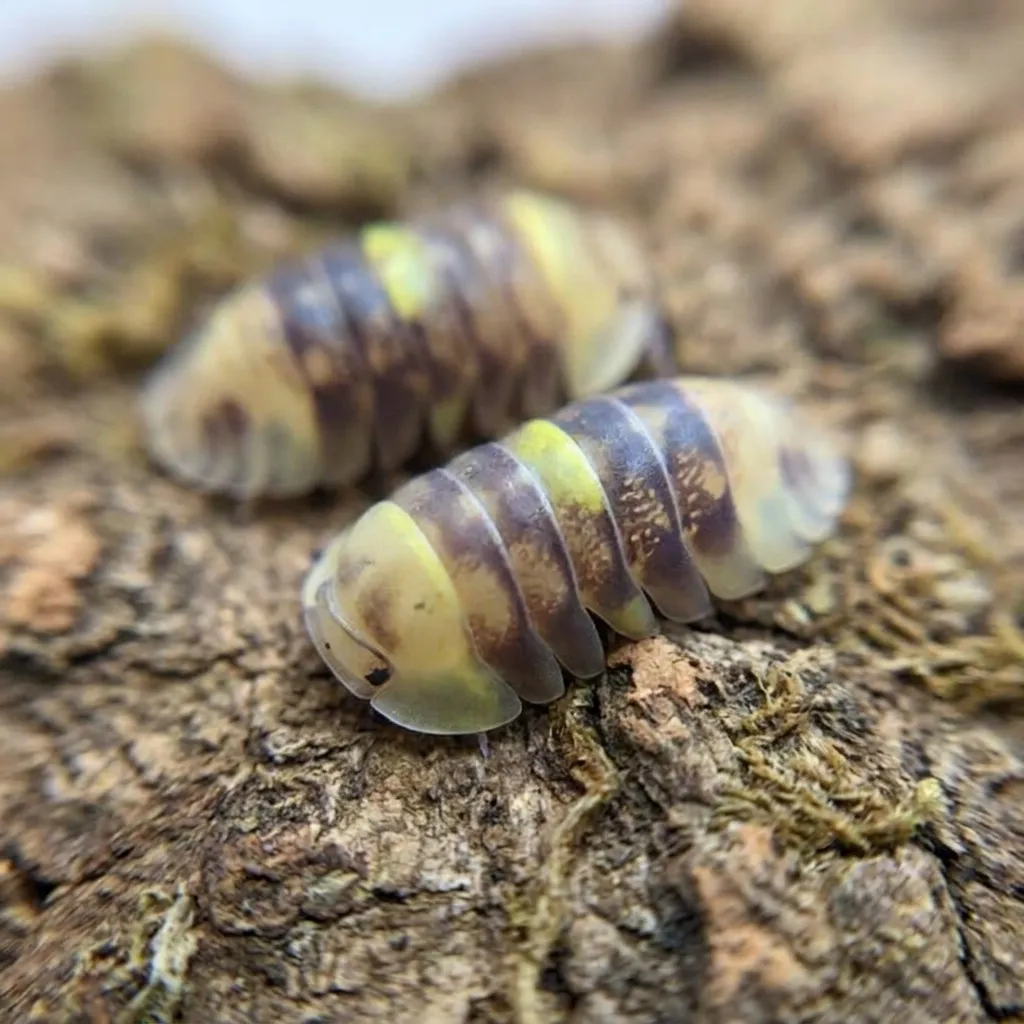
Cubaris sp. “Amber Firefly” sits at the premium tier of warm-toned Cubaris in our catalog. The body carries deeper amber, orange, and golden tones than entry-level Cubaris Amber, which is the main reason collectors pay the higher price. Therefore, the buyer audience is keepers who already understand what entry-level amber Cubaris look like and want a more saturated, collector-grade option.
Each starter culture ships as a mixed-age group with naturally variable color intensity. The page below covers the premium-tier framing, the firefly marketing name, and the practical care this culture needs.
Overview
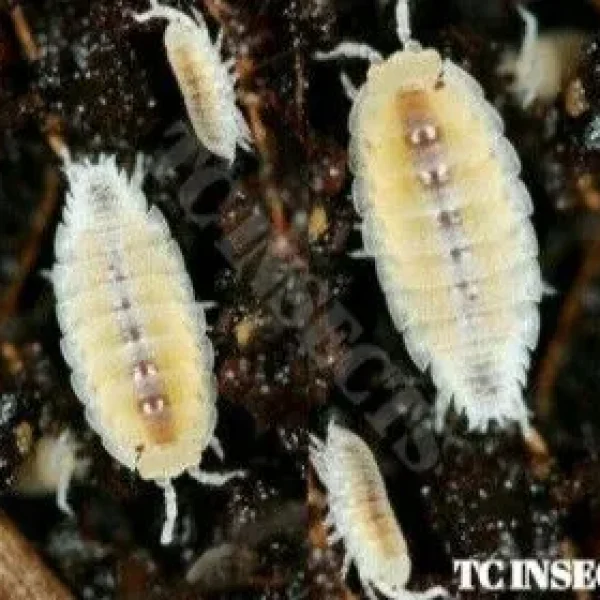
Amber Firefly carries warm amber, orange, golden, and honey tones with a deeper color expression than standard Cubaris Amber. The rounded Cubaris body curls into a tight ball when disturbed, and the colony reads as glowing warm-toned against dark substrate, cork bark, and moss. As a result, photographs under direct lighting show the saturated amber tone the trade name promises.
This is a display and breeding culture first. Bioactive utility is secondary because the colony is too valuable and too slow-breeding to use as a workhorse cleanup crew.
Why Keep Amber Firefly Isopods?
- Premium-tier amber color: Deeper, more saturated warm tones than entry-level Cubaris Amber.
- Collector appeal: The upgrade option for keepers already keeping standard Cubaris Amber.
- Display value: Warm amber and golden tones photograph well against dark substrate and bark.
- Curl response: Tight conglobation makes them easy to photograph in their classic rolled pose.
- Moderate breeding pace: Colony builds at a useful pace once stable.
Honest Note on Amber Firefly vs Cubaris Amber
This is the most important thing to understand before buying. Amber Firefly and Cubaris Amber are both warm-toned Cubaris, but they sit at different tiers and carry different color saturation. Amber Firefly leans more deeply amber and orange with a more saturated overall expression, which is why it sits at the higher price tier. Standard Cubaris Amber is the entry-level warm-tone option with softer honey-tan tones.
Both species have similar care needs and similar breeding pace. The decision between them comes down to budget, color preference, and whether the buyer wants the more saturated collector-grade version. Buyers new to warm-tone Cubaris should usually start with standard Cubaris Amber before upgrading to Amber Firefly.
Honest Note on the “Firefly” Name
The “Firefly” in the trade name refers to the warm glowing amber color, not bioluminescence. These isopods do not produce light, glow in the dark, or behave like fireflies in any biological way. The name is hobby-trade marketing that compares the saturated amber tone to a firefly’s warm glow. Buyers searching for a bioluminescent invertebrate should look elsewhere, because no captive isopod in the hobby trade produces actual light.
Honest Note on Color Variation
Even within the premium Amber Firefly line, individual color expression varies. Some animals show deeper saturated amber, while others lean toward lighter honey or orange. As a result, a starter culture will not look uniformly identical, and online photos often feature the most strongly colored individuals. The colony reads as a warm-toned set, not a matched palette.
Honest Note on Species Identification
This isopod is sold as Cubaris sp. “Amber Firefly” because the exact species is not formally described. The name should be treated as a hobby trade designation. Because of this, the page focuses on practical captive care rather than wild-locality claims.
Care and Setup
Amber Firefly does well in a stable tropical setup with a clear moisture gradient. Care matches standard tropical Cubaris husbandry. The subsections below cover the core requirements.
Temperature
Hold the enclosure between 72 and 80°F. Cold drafts and heat spikes both slow the colony. Avoid heat lamps placed directly on the bin, sunlit windows, and unheated garage corners.
Humidity
Aim for moderate to humid conditions with a reliable moist retreat. However, do not soak the entire enclosure. Stagnant wet conditions cause sour substrate and mold faster than dry conditions cause stress in this species.
Substrate
Use a deep organic substrate, about 2.5 to 4 inches. Mix in decaying hardwood, leaf litter, and a small amount of sphagnum. In addition, dark substrate makes the saturated amber color pop, which matters because the color is the entire reason to keep this premium line.
Food
Offer leaf litter and decaying wood as the base diet. Add small portions of TC INSECTS Isopod Food, occasional vegetables like squash or carrot, and light protein. Remove uneaten wet food before it molds.
Ventilation
Use moderate ventilation. A few small air holes or a partial mesh lid keeps airflow steady without drying the culture too fast. Stagnant air encourages mold and sour substrate in humid Cubaris bins.
Calcium
Keep calcium available at all times. A small dish of TC Calcium Ultra Fine or crushed cuttlebone supports healthy molts. Cleaner molts help preserve the saturated amber color expression that buyers pay for at this tier.
Bioactive Use
Amber Firefly can support a humid bioactive enclosure once established. However, this is a premium-priced collector line, so most keepers maintain it as a dedicated display culture rather than risking it as a working cleanup crew.
Breeding Notes
Amber Firefly breeds at a moderate pace once stable. Females carry developing young in a marsupium, and mancae stay tucked under bark and leaf litter for weeks after release. Therefore, deep substrate digs are the fastest way to stall a culture.
For steady output, hold humidity stable, keep TC INSECTS Assorted Hardwood Leaf Litter available year-round, and avoid splitting the starter culture too early. Because this is a premium-priced line, most keepers run a backup culture once the main colony begins producing juveniles.
Best For
- Cubaris collectors building a tiered warm-tone lineup
- Keepers upgrading from standard Cubaris Amber
- Premium display jars where color saturation matters
- Planted vivariums with stable tropical humidity
- Intermediate keepers who already manage humid bioactive setups
Not Best For
- New keepers buying their first isopod culture
- Buyers expecting a bioluminescent or glowing animal
- Budget-conscious buyers who would be happier with standard Cubaris Amber
- Heavy cleanup crew duty in large reptile enclosures
- Use as a feeder insect
Origin and Locality Notes
The wild origin of Cubaris sp. “Amber Firefly” is not formally documented. Some hobby listings associate the line with Southeast Asia or Thailand, but the exact locality should not be treated as confirmed. Because of this, captive care should focus on stable tropical conditions rather than mimicking a specific wild habitat.
In practice, that means warm temperatures, steady humidity, deep organic substrate, decaying hardwood, leaf litter, and calcium access. This setup style works for most tropical Cubaris-type isopods sold under unconfirmed trade names.
Receiving and Acclimation
Open the package promptly when it arrives. Some isopods will tuck into moss, paper, or substrate during shipping, so check the packing material carefully before assuming any are missing. Because this is a premium-priced line, take extra care during inspection so no animals get discarded with the packing material.
Prepare the enclosure ahead of delivery with moist moss, leaf litter, cork bark, and calcium already in place. Place the shipping cup or packing material directly into the prepared bin near the moist side and let the isopods walk out on their own. Feed lightly for the first few days and avoid digging through the culture while it settles.
Recommended Add-Ons
- TC INSECTS Ultra Isopod Habitat Kit for a premium-tier setup that matches the Amber Firefly price point.
- TC INSECTS Assorted Hardwood Leaf Litter for cover, food, and humidity support.
- TC INSECTS Isopod Food for varied nutrition beyond leaf litter alone.
- TC Calcium Ultra Fine for cleaner molts that preserve the saturated amber color.
- Springtails for mold control in the humid premium-tier setup.
Frequently Asked Questions
What is the difference between Amber Firefly and Cubaris Amber?
Both are warm-toned Cubaris, but Amber Firefly sits at a premium tier with deeper, more saturated amber and orange tones. Cubaris Amber is the entry-level warm-tone option with softer honey-tan expression at a lower price. Care needs are similar, so the decision usually comes down to budget and color preference.
Do Amber Firefly isopods glow in the dark?
No. The “firefly” in the name refers to the warm glowing amber color, not bioluminescence. These isopods do not produce light. No captive isopod in the hobby trade actually glows. Buyers expecting a bioluminescent invertebrate should look elsewhere.
Are Amber Firefly isopods beginner-friendly?
They sit at intermediate care. The species is not extremely difficult, but the premium price point makes this a poor first isopod purchase. New keepers usually do better starting with Cubaris murina “Anemone” or standard Cubaris Amber before stepping up to Amber Firefly.
How saturated is the amber color in person?
Deeper than standard Cubaris Amber, but still naturally variable. Some animals show strongly saturated amber, while others lean toward lighter honey or orange. Photos under direct lighting show the boldest individuals, so the colony in person reads as a warm-toned set rather than a uniform palette.
How fast do Amber Firefly isopods breed?
Reproduction is moderate once stable. Expect a quiet first month while the colony settles, then steadier growth. Because this is a premium-priced line, most keepers start a backup culture as soon as juveniles appear so the investment is protected.
Can Amber Firefly live with reptiles or amphibians?
Technically yes, but most keepers do not use Amber Firefly as a working cleanup crew because of the price. Premium-tier collector lines are usually kept as dedicated display cultures. For bioactive cleanup work, a faster lower-priced species fits the role better.
Learn More About Tropical Cubaris
The following non-commercial references give helpful background on the Cubaris genus and on terrestrial isopod biology for keepers buying their first premium-tier amber Cubaris.
- ITIS: Cubaris Brandt, 1833. Integrated Taxonomic Information System record for the Cubaris genus, useful for keepers who want to confirm the genus designation behind hobby trade names like “Amber Firefly.”.


Reviews
There are no reviews yet.