
Red Head Isopods for Sale
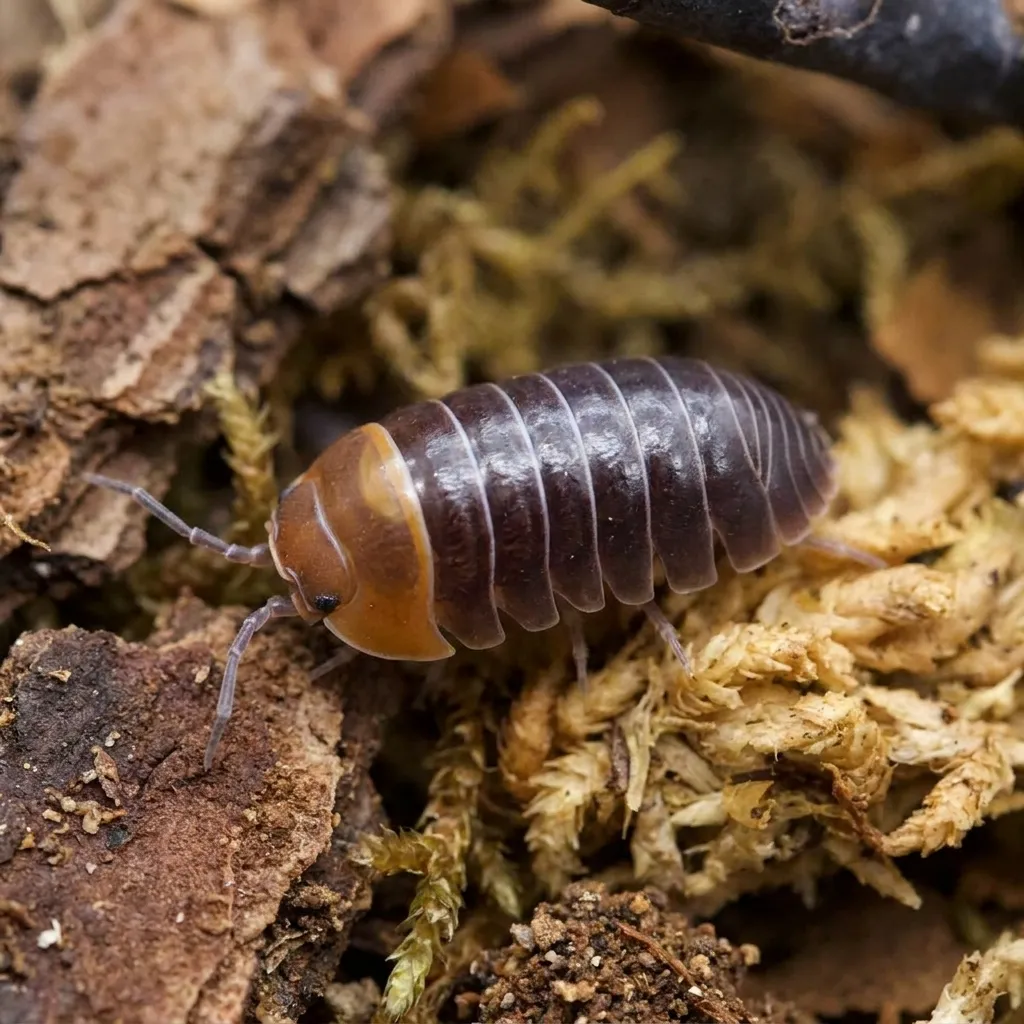
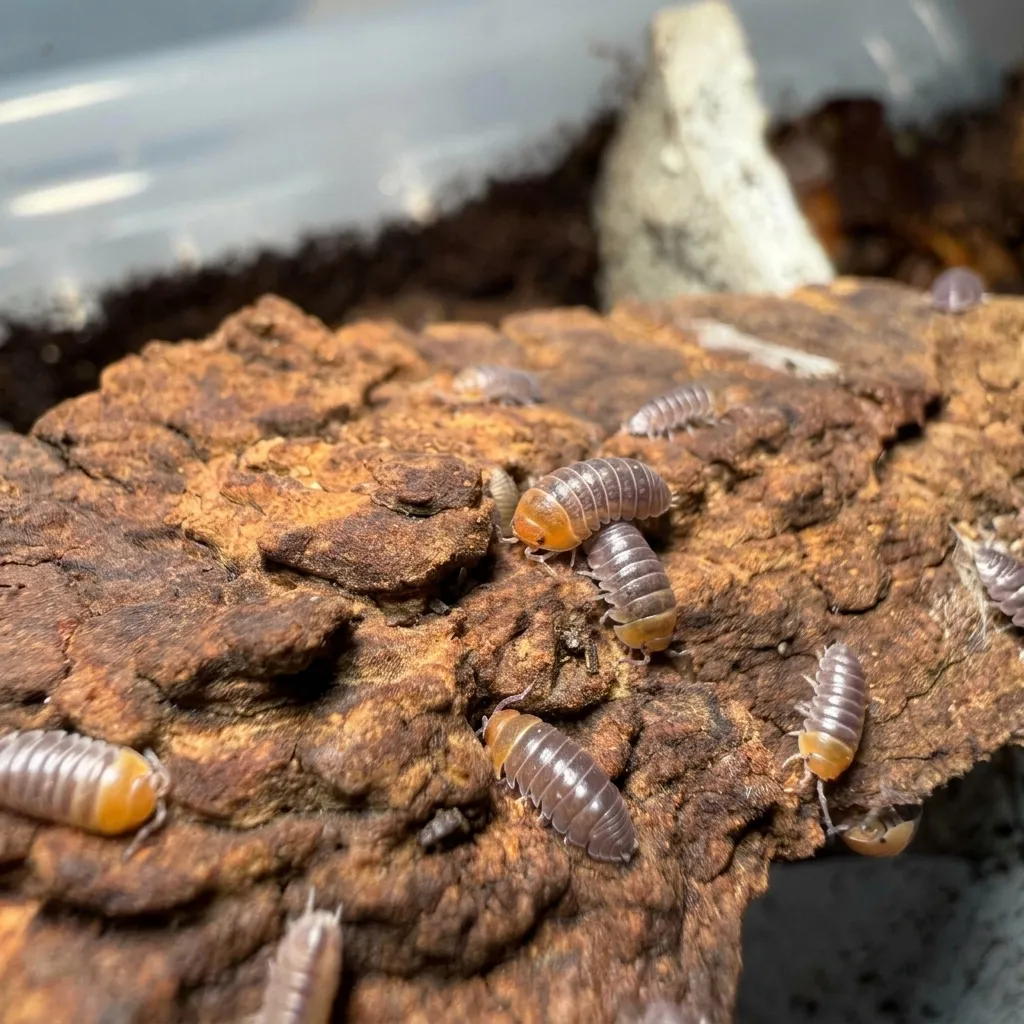
Red Head is the hobby trade name for Armadillidium flavoscutatum, a colorful Balkan pill bug formally described by Austrian zoologist Hans Strouhal in 1927. This listing is a live culture from TC INSECTS, packed for intermediate keepers building an Armadillidium shelf, a Mediterranean display setup, or a collector culture with bold color. The species name flavoscutatum is Latin for “yellow-shielded,” combining flavus (yellow) and scutatus (bearing a shield) to describe the yellow markings on the body. The “Red Head” hobby name describes a different feature: the bright red-orange head capsule that gives the morph its visual signature.
Overview
Armadillidium flavoscutatum is one of several closely related species from the eastern Adriatic and Ionian Sea coast, including parts of Albania, Greece (especially Corfu), Croatia, Montenegro, and Herzegovina. Helmut
Schmalfuss’s 2013 revision of the Armadillidium klugii-group keeps A. flavoscutatum as a valid species alongside A. klugii, A. werneri, and a handful of synonymized names. The “Red Head” hobby line is associated mainly
with Albanian and Corfu populations.
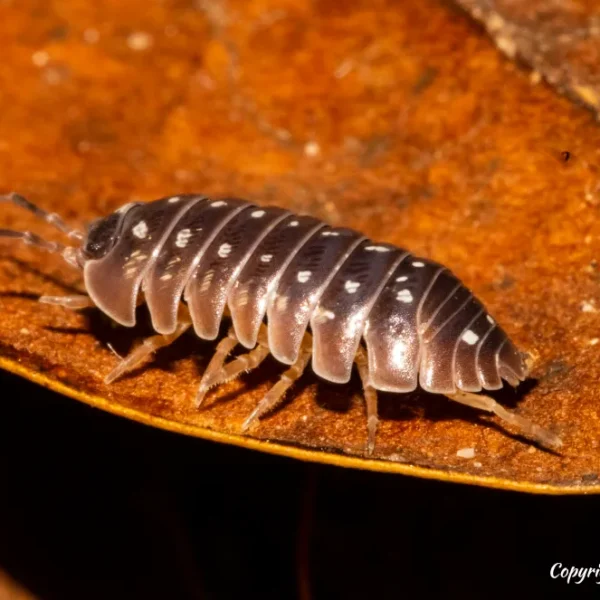
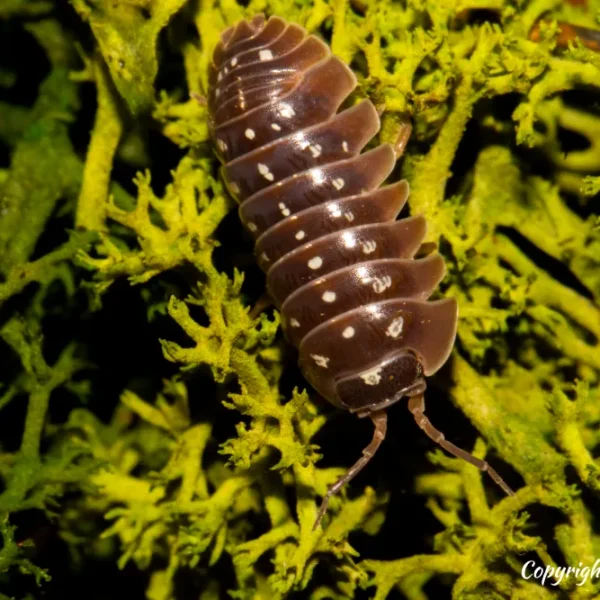
The visual signature is the bright red-orange head against a darker brown to blackish body, with yellow markings on the tergites that earned the species its scientific name. Conglobating behavior gives the species classic
pill-bug presentation, and the high color contrast makes Red Head one of the easier Armadillidium species to appreciate at a glance.
Why Keep Red Head?
- High color contrast: Red-orange head against a darker body is a distinctive look in the genus and easy to spot in a display enclosure.
- Conglobating behavior: Rolls into a tight ball when disturbed, classic display behavior of the genus.
- Less common than klugii: A less widely available Balkan species for keepers who already have the more familiar A. klugii “Clown” lines.
- Drier-tolerant care: Handles a moisture-gradient setup well, suited to keepers who do not want a tropical-humid enclosure.
- Klugii-group shelf fit: Pairs naturally with A. klugii “Pudding”, A. klugii “Dubrovnik”, and the broader Armadillidium collector shelf.
Honest Note on the Klugii-Group Relationship
If Red Head looks like a relative of the “Clown” isopod (A. klugii), that is because it is. The two species sit together in the Armadillidium klugii-group, formally documented by Schmalfuss in 2013, which is a small set of
closely related pill bugs from the eastern Adriatic and Ionian Sea coast. They share the conglobating body plan, the contrasting yellow or reddish color signals, and similar care needs. The differences are real (head color,
body markings, and microscopic anatomical features used by taxonomists), but a buyer cross-shopping A. flavoscutatum “Red Head” against A. klugii “Pudding” is choosing between close cousins, not unrelated species. Both belong on the same Balkan collector shelf.
Honest Note on the Species Name vs Trade Name
The Latin species name flavoscutatum describes the yellow markings on the body tergites, not the head. The “Red Head” hobby trade name describes the bright red-orange head capsule. These are two different features on
the same animal, both visible in good light. Some keepers expecting a yellow isopod based on the scientific name are surprised when their culture arrives with a red head and dark body, so check photos before buying if
specific colors matter to you. The natural variation between Albanian and Corfu lines also produces slight differences in head intensity and body darkness.
Care and Setup
Red Head care is built around four things: stable warmth, a moisture gradient, steady airflow, and consistent calcium availability. The species is not difficult, but it does best in a clearly defined dry-to-moist setup rather than a uniformly wet enclosure.
Temperature
Aim for 68 to 78°F as the everyday range. Room temperature works for most keepers. The species is adapted to Balkan Mediterranean conditions, which means stable, moderate temperatures rather than tropical highs. Avoid sustained heat above the mid-80s and avoid cold drafts.
Humidity
Keep one side of the enclosure damp with moss and substrate, and let the other side stay noticeably drier. The substrate should not be uniformly wet. If condensation never clears from the lid or the substrate smells sour, ventilation needs to come up.
Substrate
Use an isopod substrate blend that holds light moisture without compacting. A coco fiber base mixed with decomposed hardwood, sphagnum, and a small amount of clay or worm castings is reliable. Adding crushed limestone or oyster shell supports the heavy exoskeleton, which is helpful for any conglobating species.
Food
Leaf litter and decaying hardwood should always be available. Supplement with TC INSECTS Isopod Food, calcium, and small portions of vegetables. Feed lightly because slower breeders eat less and uneaten food molds quickly in the moist zone.
Ventilation
Cross-ventilation works best. Two side vents or a vented lid beats a single small airhole. Good airflow is the safeguard against the sour-substrate problem that crashes Mediterranean isopod cultures most often.
Bioactive Use
Red Head can work in bioactive enclosures with moderate humidity and a clear moisture gradient. It is well suited to Mediterranean-themed naturalistic vivariums. For tropical dart frog setups, a more humidity-tolerant species like Dwarf Whites is a better fit.
Breeding Notes
Mature females are slightly larger than males and carry developing young in a brood pouch called a marsupium. Reproduction is moderate, with stable cultures producing visible juveniles within the first month or two and
consistent colony growth once established. Stable temperature, calcium availability, and a reliable moisture gradient are the most important inputs. Larger starter counts establish more reliably because they include more breeding-age adults from the start.
Best For
- Display vivariums featuring high-contrast Balkan pill bug species
- Naturalistic Mediterranean and southern European themed setups
- Collector shelves featuring Armadillidium klugii-group species
- Intermediate keepers comfortable with moisture-gradient management
- Keepers who already own A. klugii and want a related but distinct cousin
Not Best For
- Fully wet tropical setups (use a tropical species instead)
- High-volume feeder cultures (the slower pace does not fit feeder economics)
- First-time isopod keepers wanting the easiest possible starter (try Powder White or Dwarf Whites first)
- Keepers expecting a uniformly yellow isopod based on the scientific name (the Red Head trade name is more accurate to the look)
- Sterile or completely freshly built enclosures with no leaf litter or decaying wood
Origin and Locality Notes
The species was described by Strouhal in 1927 and is documented across the eastern shores of the Adriatic and Ionian Sea, including parts of Albania, Greece (with Corfu commonly cited), Croatia, Montenegro, and
Herzegovina. The “Red Head” hobby line in current US circulation is most commonly traced to Albanian or Corfu populations. Captive hobby culture lines may not trace to a specific wild collection point, so manage this as a
captive Balkan line with known husbandry needs rather than a strict locality animal.
Receiving and Acclimation
Bring the package indoors as soon as it arrives and open it in a calm area away from direct sun, heat, or cold drafts. Prepare the enclosure before opening the cup so the isopods move directly into a stable environment with substrate, leaf litter, bark hides, a moist moss retreat, calcium, and a drier feeding zone already in place.
Gently tip the cup contents, including shipping material, into the prepared enclosure near the moist side. Some animals will stay curled or hidden during the first few days because conglobating species often roll up when stressed. Feed lightly during the first week, then increase feeding once the colony becomes more active. Avoid digging through the culture during this settling period.
Recommended Add-Ons
- TC INSECTS Premium Isopod Habitat Kit for a straightforward starter setup matched to the moisture-gradient approach
- TC INSECTS Assorted Hardwood Leaf Litter for food, cover, and the natural grazing layer
- TC INSECTS Isopod Food to supplement leaf litter
- TC Calcium Ultra Fine for healthy molts on a conglobating pill bug
- Springtails to handle mold in the moist retreat alongside the Red Head culture
Frequently Asked Questions
Are Red Head isopods beginner-friendly?
Generally yes for intermediate beginners. They tolerate a reasonable care window once the moisture gradient is set up correctly. First-time keepers usually do better starting with Powder White or Dwarf Whites before moving up to Armadillidium.
How is Red Head related to the “Clown” isopod?
Both A. flavoscutatum and A. klugii (the “Clown” isopod) belong to the Armadillidium klugii-group, a small set of closely related Balkan pill bugs documented in Schmalfuss’s 2013 revision. They are different species but close cousins, which is why the body plans and color signals look similar. TC INSECTS sells A. klugii as “Pudding” and “Dubrovnik”.
Why are they called “Red Head” when the scientific name means “yellow-shielded”?
Two different features. The Latin species name flavoscutatum means “yellow-shielded” and describes the yellow markings on the body tergites. The “Red Head” hobby trade name describes the bright red-orange head capsule. Both features are visible on the same animal in good light.
Where do Red Head isopods come from?
Most current US hobby lines trace to Albanian or Corfu (Greek) populations. The species’ broader documented range covers the eastern Adriatic and Ionian Sea coast, including Albania, Greece, Croatia, Montenegro, and Herzegovina.
Can Red Head tolerate drier setups?
Yes, more than most tropical species, as long as a moist retreat is always available. A fully dry enclosure still kills the colony. The right setup has one damp moss area and a noticeably drier feeding zone on the other side.
How fast will the colony grow?
Moderately. Stable cultures show visible juveniles within the first month or two and consistent colony growth over the following months. Larger starter counts establish faster because they include more breeding-age adults from the start.
Learn More About Armadillidium and the Klugii-Group
The following references offer useful background on the species and the wider pill bug family it sits in.
-
World Register of Marine Species: Armadillidium flavoscutatum Strouhal, 1927. The authoritative species record, useful for confirming the scientific name, the original 1927 description by Strouhal, and the family placement in Armadillidiidae.
-
British Myriapod and Isopod Group: Woodlouse and Waterlouse Recording Scheme. Background on the wider terrestrial isopod group from a long-running scientific recording body, helpful for understanding how pill bugs and other woodlice live, feed, and reproduce.
-
Natural History Museum: Giant isopods, curious crustaceans on the ocean floor. A short, plain-language overview from the NHM that puts the woodlouse family in context with their marine relatives.


Reviews
There are no reviews yet.