
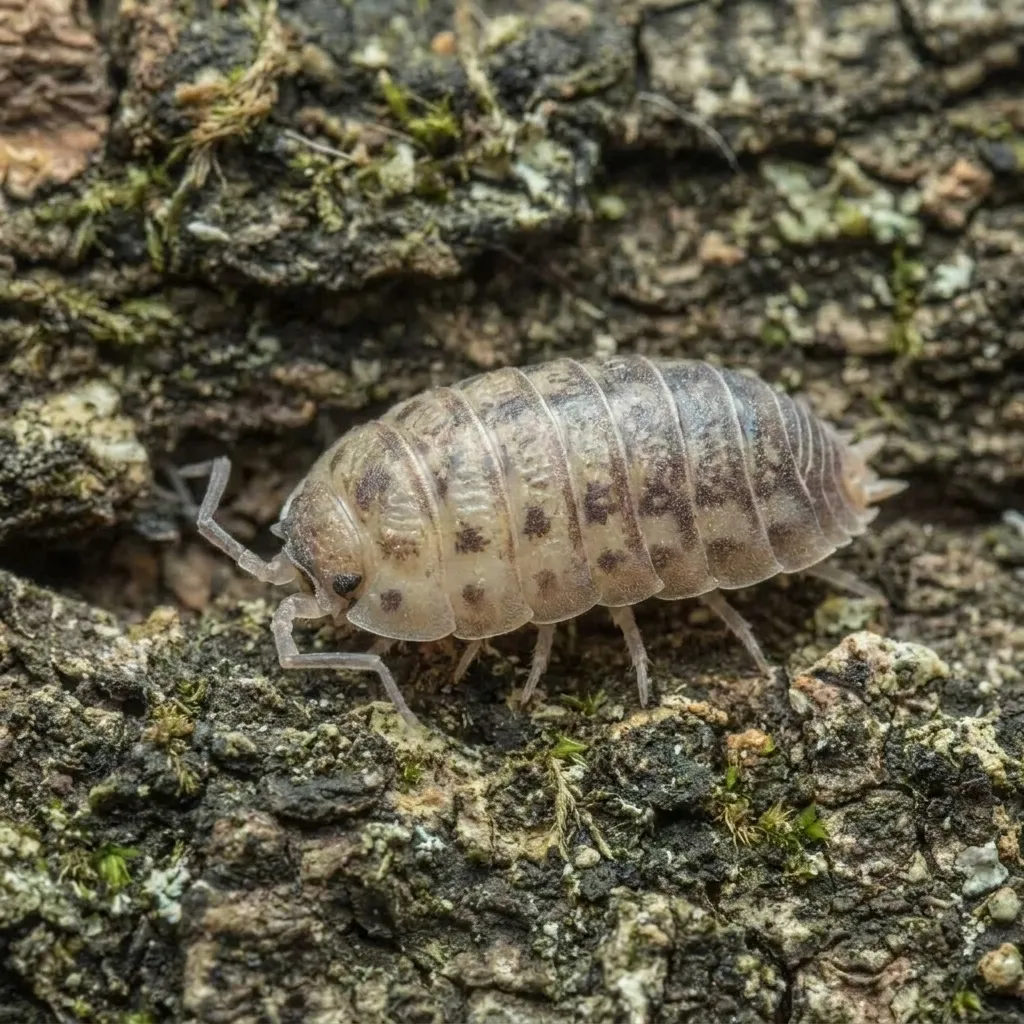

Agabiformius lentus Isopods for Sale
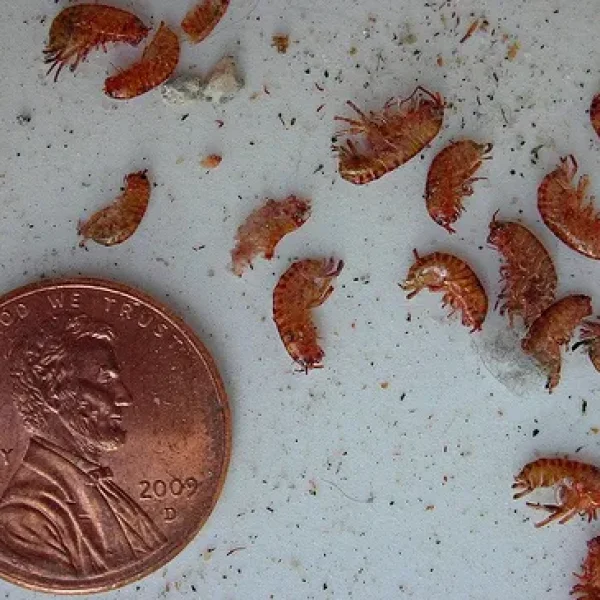
Agabiformius lentus is a small Mediterranean-origin cleanup crew isopod in the family Porcellionidae, now widely introduced across many regions. This listing is a live working culture from TC INSECTS, packed for keepers who need a discreet, functional cleanup species for bioactive enclosures rather than a large display animal. The species runs about 6 mm at adult size, hides effectively in leaf litter, and produces steadily once a culture is established.
Overview
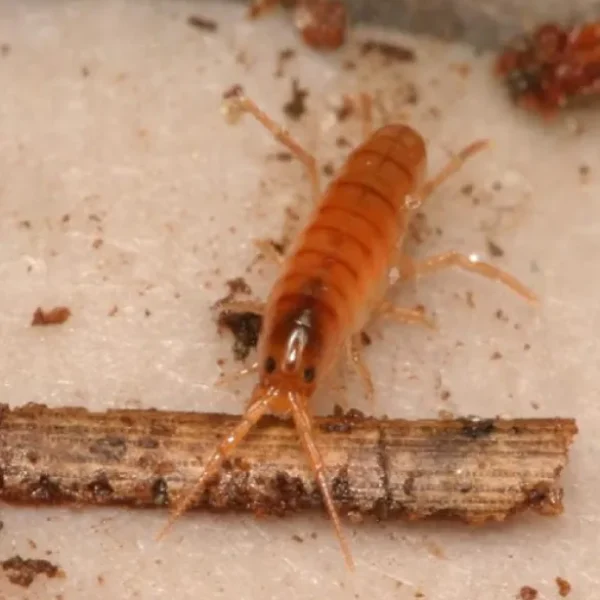
Tuberculatus, Powder Blue, and Cubaris show off. Lentus does the work. This species sits in the utility tier of the isopod hobby because it is small, hidden, and steady, not because it is rare or eye-catching. The pale brown body with three faint darker stripes reads close to a juvenile Porcellio scaber, so do not expect bold pattern or vivid color.
Where Lentus shines is in mixed cleanup crews. The small size means it slips between substrate grains and under leaf cover, working areas that larger species cannot reach. It also pairs well with springtails because the two species cover different microhabitats inside the same enclosure.
Why Keep Agabiformius lentus?
- Functional cleanup: Processes leaf litter, decaying wood, and small organic debris quietly across the enclosure floor.
- Discreet behavior: Stays mostly under cover, which keeps the colony intact even in enclosures with predators like geckos or small frogs.
- Beginner-friendly: Tolerates a wider care window than collector-tier display species.
- Pairs with springtails: Different size class and microhabitat preference from Springtails, so the two coexist without competing heavily.
- Steady reproduction: Moderate to good once established, so a starter culture builds into a working colony reliably.
Honest Note on Display Value
This is not a display isopod. If you bought it expecting to see animals moving across the substrate surface during the day, the culture will look almost empty. Lentus spends most of its time under leaf litter, bark, and the upper substrate layer, coming out mostly at night or when disturbed. That hidden behavior is the point — it is what makes the species useful in vivariums with reptiles or amphibians — but it is also why this species sells at a lower price point than collector display lines like Cubaris sp. “Pak Chong”. Buy Lentus for what it does, not how it looks.
Honest Note on ID Overlap with Porcellio scaber
Adult Lentus looks similar to a juvenile Porcellio scaber at first glance, both being small brownish woodlice with faint pattern. Keepers who already have a P. scaber colony nearby should label and isolate Lentus cultures clearly to avoid confusing the two species. Reliable separation usually needs a hand lens to confirm the tuberculation and stripe pattern. If your end use is a mixed bioactive vivarium, this overlap rarely matters, but for breeding projects and species records, label your cultures from day one.
Care and Setup
Lentus care is straightforward, which is part of the appeal. The species needs stable moisture, a moisture gradient, leaf litter, and ventilation. There is no specialty temperature requirement or rare microhabitat to recreate.
Temperature
Aim for 70 to 78°F as the everyday range. Normal indoor room temperature works for most keepers. Avoid heat spikes above the low 80s and avoid cold drafts.
Humidity
Keep one side of the enclosure damp with moss and substrate and let the other side stay slightly drier. The small body size means juveniles dehydrate faster than larger species, so the moist retreat needs to stay reliably damp at all times.
Substrate
Use a coco-fiber-based isopod substrate blended with decomposed hardwood, sphagnum, and a small amount of clay or worm castings. Aim for 1 to 2 inches deep, which is enough for this small species to hide and molt. Deeper substrate is fine but not required.
Food
Leaf litter should always be available because it is both food and shelter. Supplement lightly with TC INSECTS Isopod Food, calcium, and small portions of vegetables. Feed in small amounts because a culture of small isopods cannot work through a large food pile before it molds.
Ventilation
Cross-ventilation works best. Two side vents or a vented lid keeps the lower substrate humid while the upper air stays fresh. Stagnant humid air leads to mold, which is the most common reason small isopod cultures stall.
Bioactive Use
Lentus is one of the more useful species for bioactive enclosures because of its small size and hidden behavior. It works well in dart frog vivariums, planted reptile enclosures, and tropical setups. Keep a backup culture in a separate bin so a single vivarium issue does not wipe out the colony.
Breeding Notes
Mature females carry developing young in a brood pouch and release tiny mancae that hide in moss and substrate. Reproduction is moderate to good once established, but the colony may look small for weeks because juveniles stay hidden. Resist the urge to dig through the culture to check on progress. Larger starter counts (50 or 100) establish more quickly because they include more breeding adults from the start.
Best For
- Bioactive terrariums and planted vivariums needing a hidden cleanup species
- Reptile enclosures with small geckos, anoles, or skinks (the small isopod size means the colony persists even with light predation)
- Amphibian enclosures with stable airflow and moisture
- Mixed cleanup crew setups paired with Springtails
- Keepers who want a beginner-friendly, function-first isopod culture
Not Best For
- Buyers wanting a visible display species (try Armadillidium klugii “Pudding” or a Cubaris line instead)
- Use as a primary feeder isopod, the small size and price point do not fit feeder economics
- Dry desert-style enclosures with no moist retreat
- Setups with constant flooding or stagnant water
- Keepers building genus-themed display shelves who want bold pattern
Origin and Locality Notes
The species was described by Budde-Lund in 1885 and is native to the Mediterranean. It is now widely recorded as an introduced (alien) species across Europe, the Americas, North Africa, and other regions, often associated with greenhouses, garden centers, and disturbed habitats. Captive hobby cultures rarely trace to a specific wild locality, so manage this as a globally established culture line with stable husbandry needs rather than a strict locality animal.
Receiving and Acclimation
Bring the package indoors as soon as it arrives and open it in a calm area away from direct sun, heat, or cold drafts. Because Lentus is small, inspect the moss, paper, substrate, and any packing material carefully before discarding anything. Juveniles especially are easy to miss inside shipping debris.
Transfer the cup contents, including all shipping material, into a prepared enclosure with substrate, leaf litter, bark, a moist moss retreat, and calcium. Place the shipping material near the moist side so hidden animals can move out naturally. Feed only a small portion during the first few days, then increase feeding once the colony becomes more active. Avoid digging through the culture during this settling period because the small species hides effectively under cover.
Recommended Add-Ons
- TC INSECTS Premium Isopod Habitat Kit for a simple starter setup well-matched to this small functional species
- TC INSECTS Assorted Hardwood Leaf Litter for food, cover, and the hidden microhabitat this species depends on
- TC INSECTS Isopod Food to supplement leaf litter, especially for high-density cleanup crew cultures
- TC Calcium Ultra Fine for healthy molts in a fast-cycling small species
- Springtails to pair as a complementary cleanup crew in bioactive vivariums
Frequently Asked Questions
Are Agabiformius lentus isopods beginner-friendly?
Yes, generally. They tolerate a wider care window than collector-tier display species, which makes them a reasonable first cleanup crew alongside Dwarf Whites or a Powder species. The small size means juveniles dehydrate faster than larger isopods, so the moist retreat needs to stay reliably damp.
How does Lentus differ from Dwarf Whites?
Both are small functional cleanup species, but they look different and prefer slightly different conditions. Dwarf Whites are pure white, blind, and prefer moister setups. Lentus is brownish with three faint stripes, has functional eyes, and tolerates a wider moisture range. The two can coexist in mixed cleanup crews if the enclosure provides both moist and slightly drier zones.
Will my reptile or amphibian eat all the Lentus?
Generally no, because Lentus hides effectively under leaf litter and substrate. Light predation is normal, but a healthy culture usually outpaces it. Start with a larger count (50 or 100) in any vivarium with active feeders so the colony establishes before predation pressure peaks.
How fast will the colony grow?
Moderate to good once established, though juveniles stay hidden so the colony may look small for the first few weeks. Cultures kept in a stable bin without predators usually fill in faster than ones seeded directly into a vivarium.
Does this species need a deep substrate layer?
No. One to two inches is enough for a 6 mm species. The more important factor is the leaf litter layer on top, because that is where Lentus actually lives and feeds.
Can Lentus replace a heavy-duty cleanup crew like Powder Orange?
Not really. The small body size means Lentus processes organic matter at a slower per-animal rate than larger Powder or Porcellio species. For heavy debris loads, run Lentus alongside a larger workhorse species rather than instead of one.
Learn More About Agabiformius lentus
The following references offer useful background for keepers who want to confirm the identification and understand the broader terrestrial isopod group this species sits in.
-
British Myriapod and Isopod Group: Agabiformius lentus species account. Specific identification notes and habitat information for this species from a long-running scientific recording body, useful for confirming you have the right animal.
-
World Register of Marine Species: Agabiformius lentus (Budde-Lund, 1885). The authoritative taxonomy record for the species, including the full list of synonyms and introduced-range notes.
-
Natural History Museum: Giant isopods, curious crustaceans on the ocean floor. A short, plain-language overview from the NHM that puts the woodlouse family in context with their marine relatives.


Reviews
There are no reviews yet.