

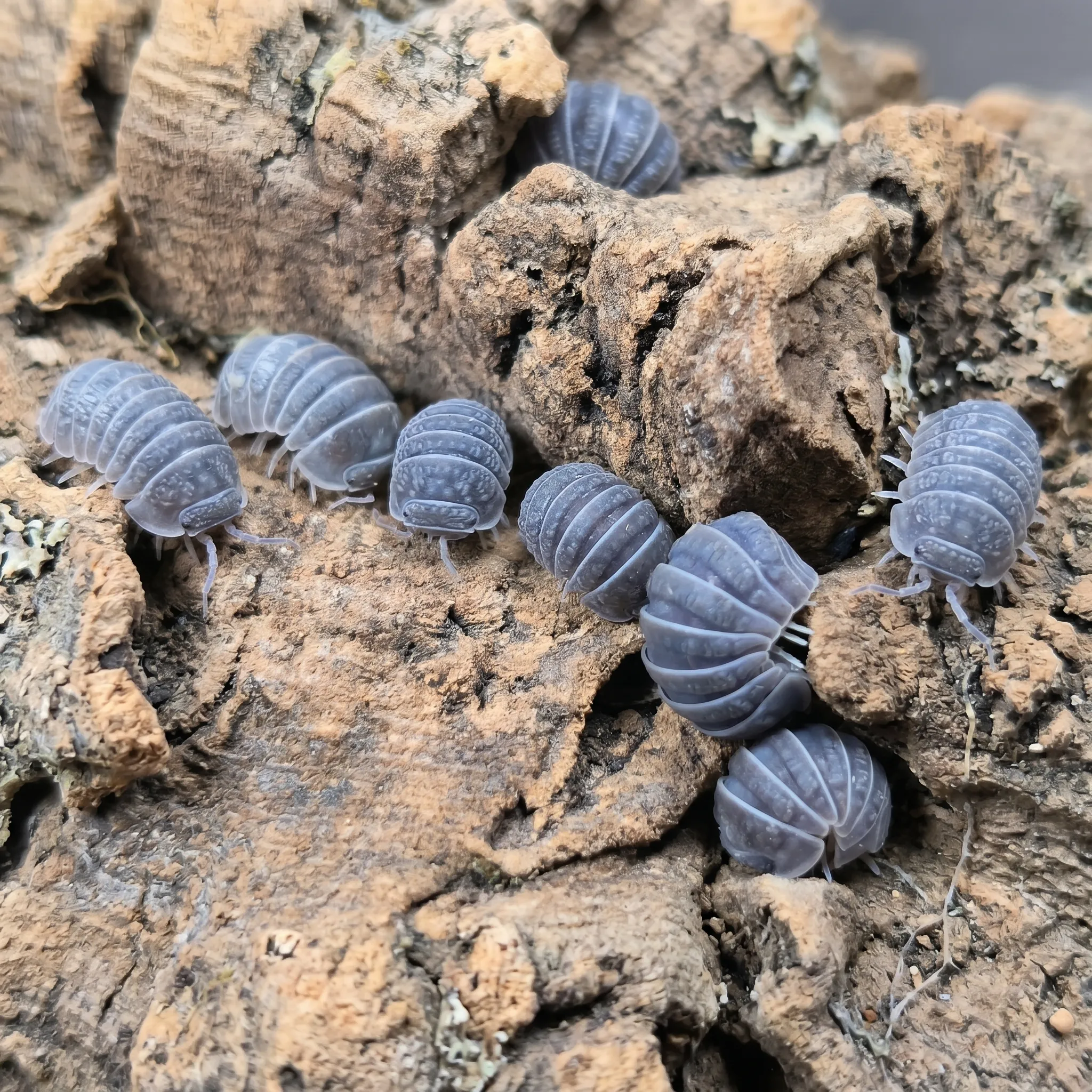
Armadillo tuberculatus Isopods for Sale
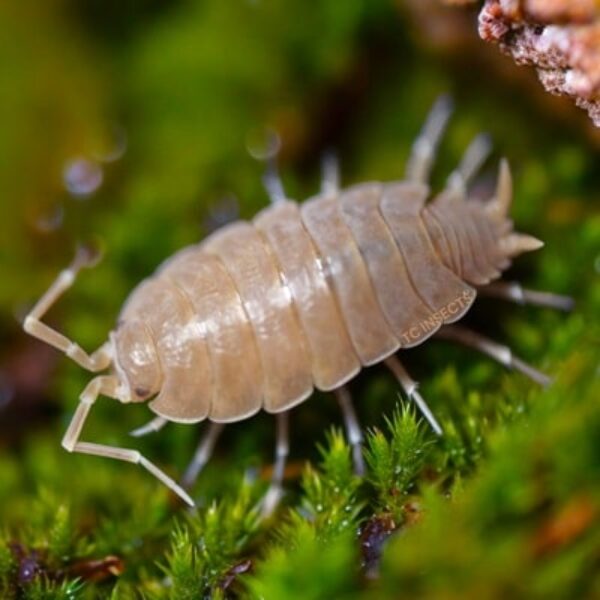
Armadillo tuberculatus is a Mediterranean rolling isopod best known for its heavily tuberculated back, conglobating body, and rugged gray-to-bluish appearance. This listing is a live starter culture from TC INSECTS, packed for intermediate keepers who want a textured European species rather than a fast cleanup crew or a vivid tropical display isopod. The species sits in the genus Armadillo Latreille, 1802, which often gets confused with Armadillidium, so the genus note further down matters before you set up the culture.
Overview
Tuberculatus sits in the collector tier, but for a different reason than tropical display isopods. The draw is the body texture: raised bumps and tubercles across the dorsal surface give adults a rugged, armored look that few other isopods match. Color stays in a muted range of gray, slate, brown, and occasionally bluish tones, often with lighter patches.
This is not a fast cleanup species and it is not a tropical-humidity isopod. It handles a drier setup better than most Cubaris or Ardentiella lines, provided a moist retreat is always available. That makes it a useful pick for keepers who want to expand beyond the tropical end of the hobby.
Why Keep Armadillo tuberculatus?
- Body texture: The tuberculated back is the species’ real selling point and reads well in display setups.
- Conglobating behavior: Rolls into a tight ball when disturbed, a classic display behavior of the Armadillo genus.
- Drier tolerance: Works in setups that would stress humid-dependent tropical species.
- Mediterranean origin: Adds geographic variety for keepers building a regionally diverse collector shelf.
- Stable display species: Slower colony pace means cultures stay manageable without rapid overcrowding.
Honest Note on Armadillo vs Armadillidium
Armadillo and Armadillidium are different genera that often get confused because both contain rolling pill-style isopods. This product is in the genus Armadillo (Latreille, 1802), not Armadillidium. The common European pill bug, Armadillidium vulgare, is a separate species in a different genus. If you are building a collection by genus or planning a breeding project, label your culture as Armadillo tuberculatus Vogl, 1876 to keep records clean.
Honest Note on the Moisture Gradient
Tuberculatus is the species that gets killed most often by keepers applying tropical isopod care to a Mediterranean animal. A fully wet enclosure, sealed lid, and constant misting will crash the culture quickly. The species needs a moisture gradient: a damp moss retreat on one side and a drier, leaf-litter-covered feeding zone on the other. If you have only kept Cubaris, Powder species, or Dwarf Whites before, expect to dial the moisture back noticeably for this one.
Care and Setup
Tuberculatus care is built around four things: stable warmth, a clear moisture gradient, strong ventilation, and access to leaf litter, calcium, and decaying wood. Get those right and the species is not difficult, just slow.
Temperature
Aim for 68 to 78°F as the everyday range. The species handles cooler temperatures better than most tropical isopods, so a room-temperature setup usually works without supplemental heat. Avoid heat spikes above the low 80s.
Humidity
Keep a moist retreat on one side of the enclosure and a noticeably drier feeding area on the other. The substrate should not be uniformly damp. If the lid stays foggy or the substrate smells sour, ventilation needs to come up and water needs to come down.
Substrate
Use an isopod substrate blend that holds light moisture without compacting. A coco fiber base mixed with decomposed hardwood, sphagnum, and a small amount of clay or worm castings is reliable. Aim for at least 2 inches deep so the colony has room to hide.
Food
Leaf litter and decaying hardwood should always be available. Supplement with TC INSECTS Isopod Food, calcium, and small portions of vegetables. Feed lightly because slower breeders eat less and uneaten food molds in the moist zone.
Ventilation
Cross-ventilation works best. Two side vents or a vented lid beats a single small airhole. Strong airflow is the safeguard against the sour-substrate problem that crashes Mediterranean isopod cultures most often.
Bioactive Use
Tuberculatus can work in bioactive enclosures with appropriate moisture and ventilation. It tends to suit drier vivariums better than the heavy humid setups used for dart frogs. Keep a backup culture in a separate bin once the colony is established.
Breeding Notes
Mature females carry developing young in a brood pouch and release small mancae that hide in moss and leaf litter. Reproduction is slow to moderate, slower than common cleanup crew species. The most important breeding inputs are stable temperature, a reliable moisture gradient, calcium availability, and minimal disturbance. Larger starter groups usually establish more reliably because they include more mature animals from the start.
Best For
- Display cultures focused on body texture rather than vivid color
- Collector shelves building genus diversity beyond Armadillidium
- Mediterranean and temperate isopod projects
- Drier-leaning bioactive setups with a reliable moist retreat
- Keepers who prefer slower, manageable colony pace over rapid overcrowding
Not Best For
- First-time isopod keepers (start with Powder White or a similar hardy powder species)
- Use as a feeder isopod, the pace and pricing do not fit feeder economics
- Constantly wet, sealed tropical setups, the species needs a drier zone
- Heavy-duty cleanup crew roles in dirty vivariums (use Dwarf Whites or a Powder species instead)
- Buyers expecting fast colony growth or bright color
Origin and Locality Notes
The species was described from Greece by Vogl in 1876, and Greece remains the documented type locality in the World Register of Marine Species. The genus Armadillo itself has a near-cosmopolitan distribution, but A. tuberculatus is most associated with Mediterranean Europe. Hobby culture lines may not trace to a specific Greek locality, so manage this as a captive line with known husbandry needs rather than a strict locality animal unless your specific line carries verified collection data.
Receiving and Acclimation
Bring the package indoors as soon as it arrives and open it in a calm area away from direct sun, heat, or cold drafts. Prepare the enclosure before opening the cup so the isopods move directly into a stable environment with substrate, leaf litter, bark hides, a moist moss retreat, calcium, and a drier feeding zone already in place.
Gently tip the cup contents, including shipping material, into the prepared enclosure near the moist side. Expect some animals to stay curled or hidden during the first few days because conglobating species often roll up when stressed. Feed lightly during the first week, then increase feeding once the colony becomes more active. Avoid digging through the culture during this settling period.
Recommended Add-Ons
- TC INSECTS Premium Isopod Habitat Kit for a straightforward starter setup that supports the moisture-gradient approach
- TC INSECTS Assorted Hardwood Leaf Litter for food, cover, and natural grazing layer
- TC INSECTS Isopod Food to supplement leaf litter, especially for slower colonies
- TC Calcium Ultra Fine for healthy molts on this heavily armored species
- Springtails to handle mold in the moist retreat alongside the Tuberculatus culture
Frequently Asked Questions
Are Armadillo tuberculatus isopods beginner-friendly?
Generally no. They suit intermediate keepers who can hold a proper moisture gradient. First-time keepers usually do better starting with a hardier powder species like Powder White before moving to Armadillo.
What is the difference between Armadillo and Armadillidium?
They are two different genera in the same family. Armadillo tuberculatus sits in the genus Armadillo (Latreille, 1802) and is Mediterranean. Armadillidium vulgare, the common European pill bug, sits in a separate genus. Both conglobate, but they are not the same animal.
Can Armadillo tuberculatus tolerate drier setups?
Yes, more than most tropical species, as long as a moist retreat is always available. A fully dry enclosure still kills the colony. The right setup has one damp area with moss and substrate and a noticeably drier feeding zone on the other side.
How fast will the colony grow?
Slowly compared to powder species. Tuberculatus is a slow to moderate breeder, and new cultures often need several months before juveniles become visible. Patience is part of keeping this species, but stable cultures hold steady once established.
Are juveniles spiky?
Juveniles often show more pronounced raised tubercles that look almost spiny, while adults appear bumpier and more rounded. This is normal developmental variation and is part of why some hobby sources call this species “Spiky Armadillo Isopod.”
Can this species be used as a cleanup crew in a vivarium?
Only in lighter cleanup roles within drier or moisture-gradient vivariums. For heavy cleanup in humid vivariums, pair Springtails with a faster isopod species. Tuberculatus is better treated as a display species inside the enclosure rather than the primary workhorse.
Learn More About Armadillo tuberculatus
The following references offer useful background for keepers who want to understand the species’ taxonomy and the broader terrestrial isopod group it belongs to.
- World Register of Marine Species: Armadillo tuberculatus Vogl, 1876. The authoritative taxonomy record for the species, useful for confirming the type locality of Greece and the formal authorship.
- British Myriapod and Isopod Group: Woodlouse and Waterlouse Recording Scheme. Background on the wider terrestrial isopod group from a long-running scientific recording body, helpful for understanding how woodlice live, feed, and reproduce.
- Natural History Museum: Giant isopods, curious crustaceans on the ocean floor. A short, plain-language overview from the NHM that puts the woodlouse family in context with their marine relatives.


Reviews
There are no reviews yet.