
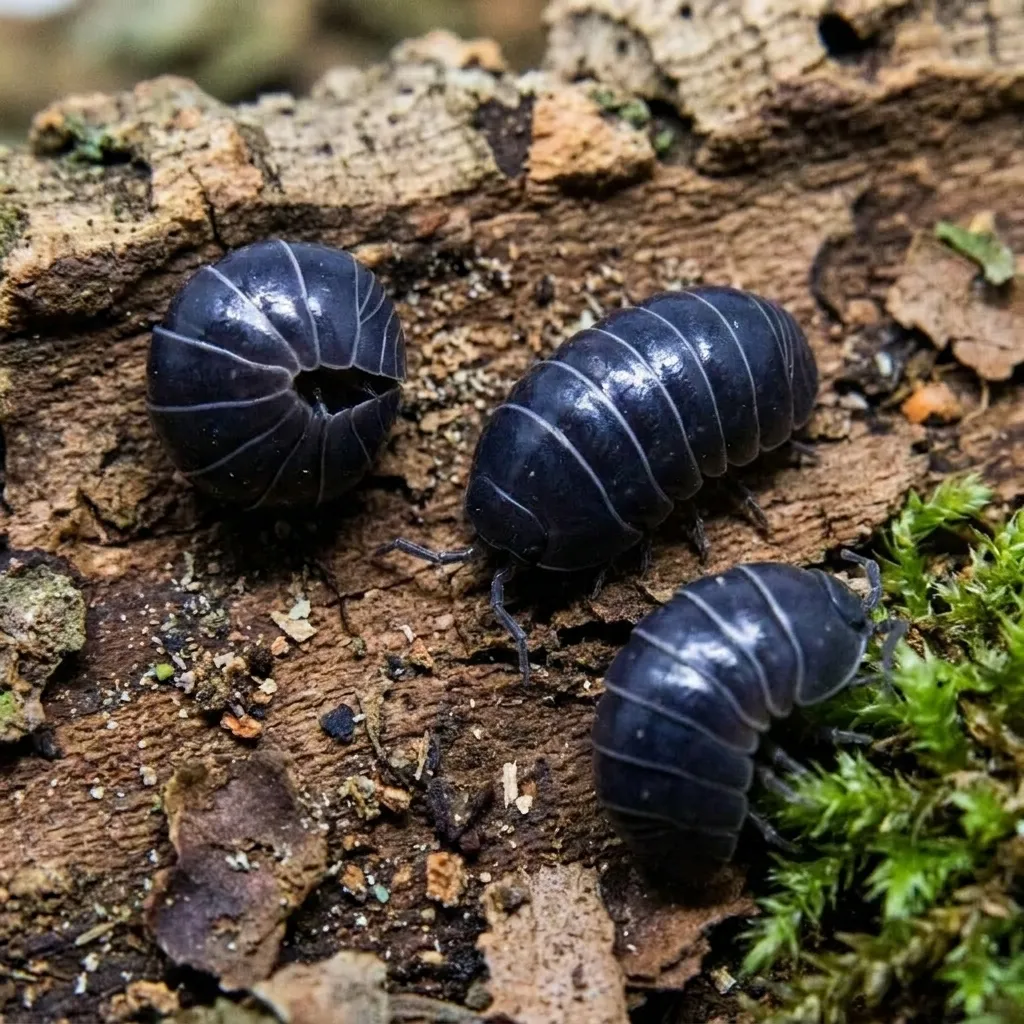


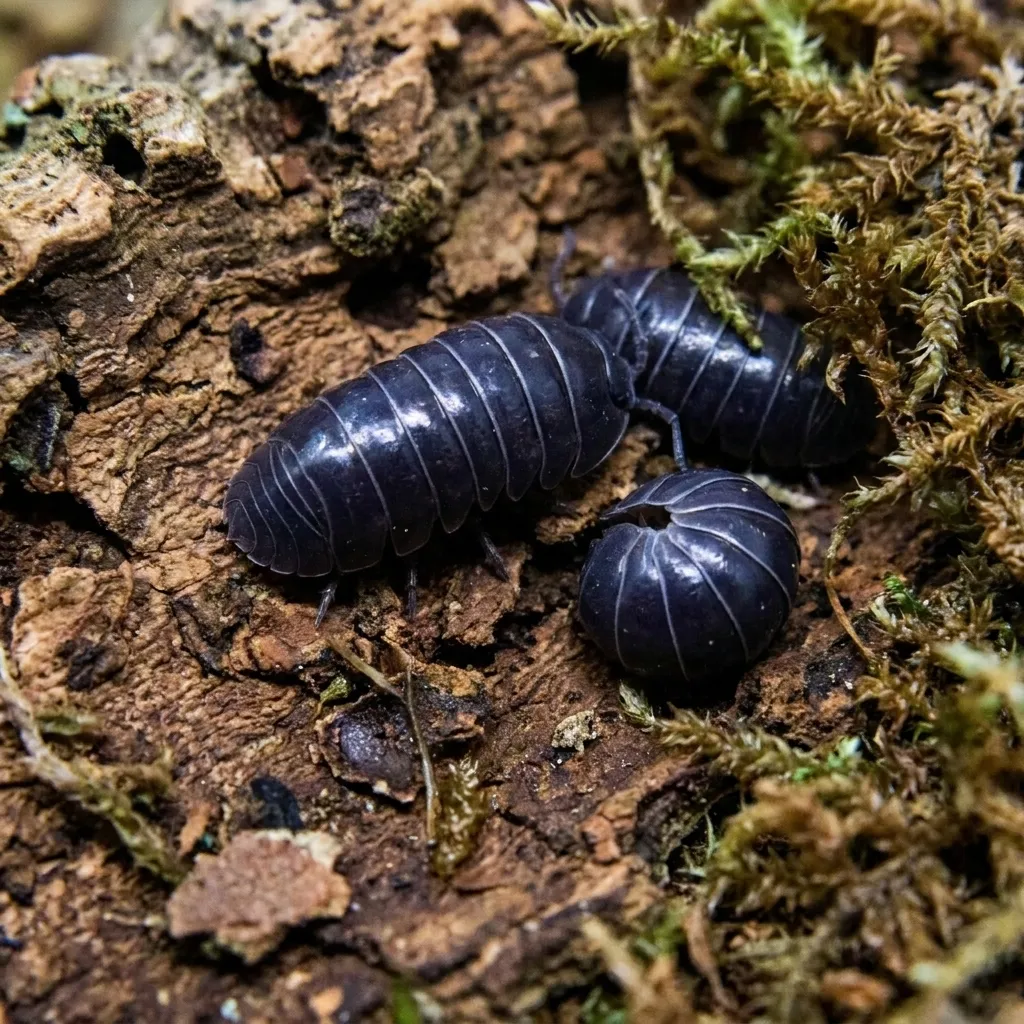
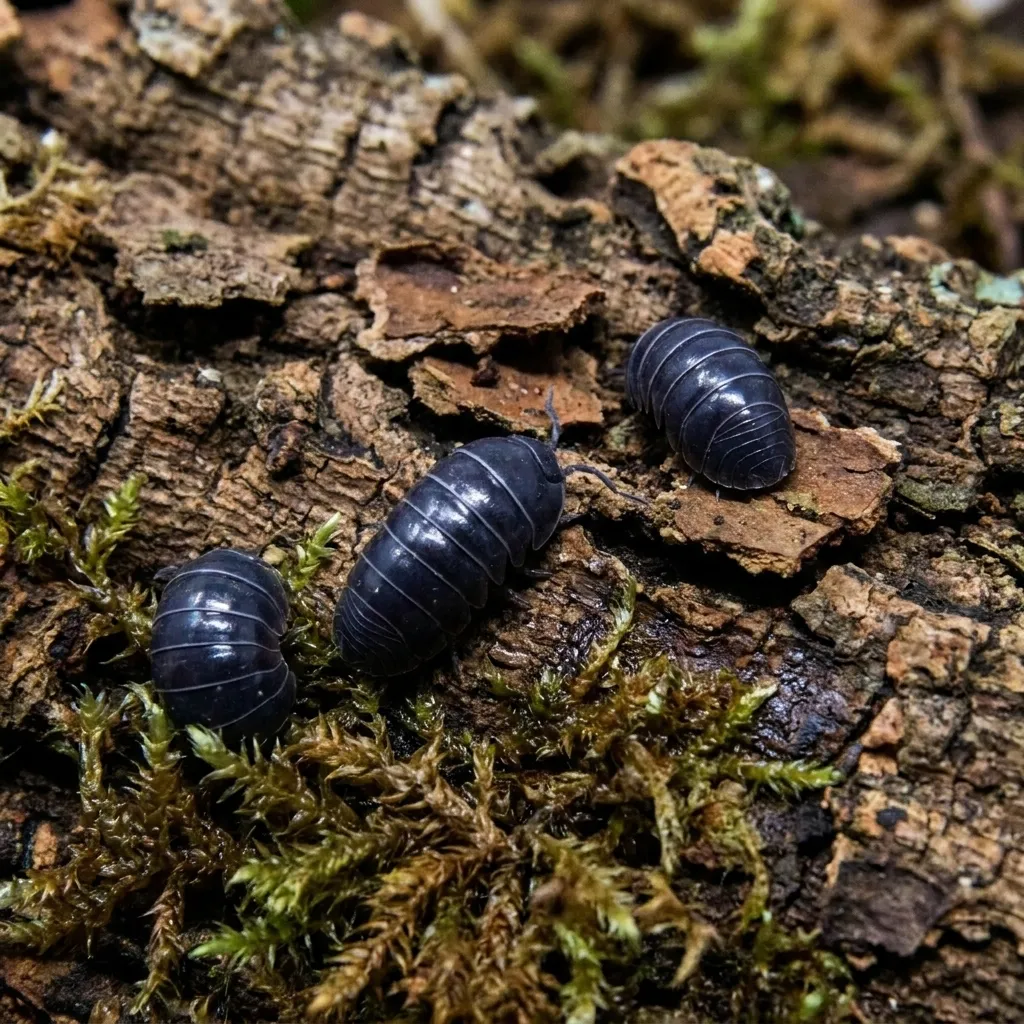
Armadillidium vulgare Wild Type Isopods for Sale
Overview
Armadillidium vulgare “Wild Type” is the foundational species of the entire isopod hobby. Most keepers first encounter this animal under garden rocks, in flower pots, or in damp leaf litter before they ever buy a designer culture. It is the common pillbug, the classic roly-poly. Moreover, it is one of the most familiar arthropods in temperate gardens worldwide.
The species was formally described by Pierre André Latreille in 1804. This makes it the oldest documented species in our Armadillidium catalog. It is native to Mediterranean Europe and has been introduced as a naturalized species in almost every suitable temperate ecosystem on the planet. Adults reach 12 to 18 mm and roll completely into a sealed ball when disturbed.
Why Keep Armadillidium vulgare Wild Type?
- The catalog’s entry-level isopod: First, this is the species we recommend before any designer morph, since it teaches keepers how to manage moisture, leaf litter, and calcium with a forgiving culture.
- Hardy bioactive workhorse: Additionally, the species breeds at a moderate-to-high pace once established, which makes it one of the more dependable cleanup crew choices for reptile and amphibian enclosures.
- The most scientifically studied terrestrial isopod: Furthermore, A. vulgare has a fully sequenced genome and is the model species for terrestrial isopod sex determination and Wolbachia endosymbiont research.
- Worldwide naturalized distribution: The species occurs as an introduced naturalized population across temperate regions globally, which means hobby cultures trace back to a well-studied, globally distributed biological resource.
- Full conglobation: Finally, as a family Armadillidiidae member, this species seals completely when rolled, which makes the classic roly-poly defensive behavior fully expressed.
Honest Note on “Wild Type” Coloration
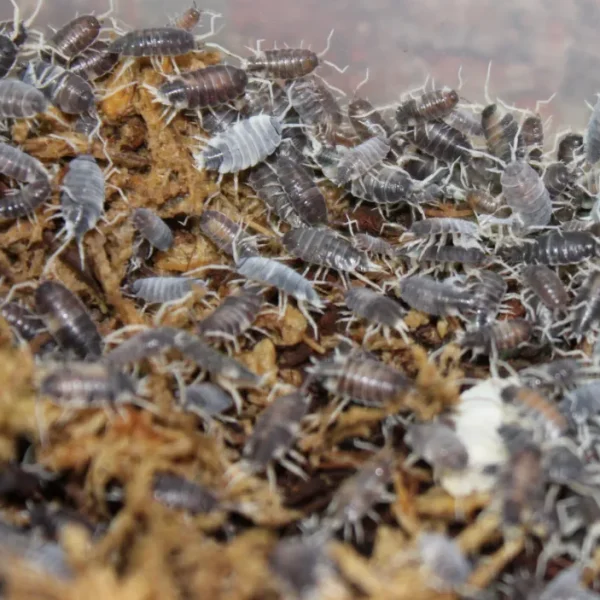
“Wild Type” means the unselected natural coloration that you would find in a wild population, not a selectively bred morph. Specifically, individuals show gray, slate, charcoal, brown, and earthy mottled tones, with subtle variation across the colony. Some animals are darker, some show lighter edges, and some have mottling.
This natural variation is normal and not a sign of culture drift. As a result, do not expect a uniform colony where every animal looks identical. If you want consistent designer color expression, look at our selectively bred morph product pages instead (linked below in the “Next Steps After Wild Type” section).
Honest Note on the Scientific Background
A. vulgare is genuinely the most extensively studied terrestrial isopod species in peer-reviewed research. The complete genome was sequenced in 2019. The species is the model organism for the study of Wolbachia endosymbionts in arthropods, including documented feminization of genetic males into phenotypic females through the wVulC Wolbachia strain.
For most keepers, this is purely background context. However, it explains why hobby cultures sometimes show female-biased sex ratios. Specifically, some lineages carry feminizing Wolbachia, which can produce broods of 80 to 90 percent female offspring. This does not affect care, but it does mean that some lines may produce mostly females over time. This can speed up colony growth.
Care and Setup
A. vulgare does well at room temperature with a clear dry-to-moist gradient and moderate ventilation. The following sections cover the practical framework we recommend for new keepers.
Temperature
Target 65 to 78°F across most of the year. Specifically, normal indoor temperatures work fine for this species in most home setups. However, avoid sustained heat above 80°F and cold rooms consistently below 60°F.
Humidity
Aim for moderate humidity overall with one consistently moist retreat zone. Keep that side hydrated with sphagnum moss and damp substrate, then let the rest of the enclosure run drier. As a result, the colony can self-select between the two humidity zones.
Substrate
Use a moisture-holding mix of soil, rotted hardwood, and organic matter at a depth of 2 to 3 inches. Add a generous layer of TC INSECTS Assorted Hardwood Leaf Litter on top. Leaf litter functions as food, cover, and humidity buffer all at once.
Food
Lead with leaf litter and decaying hardwood as the base diet. Then supplement with TC INSECTS Isopod Food for added protein and minerals, plus a calcium source like TC Calcium Ultra Fine. Wild-type vulgare is unfussy about food and will accept most standard isopod offerings.
Ventilation
Use cross-ventilation or controlled lid ventilation. Specifically, you want enough airflow to prevent stagnant pockets, but not so much that the moist retreat dries within a day. As a result, the colony can self-select between the two humidity zones.
Bioactive Use
This is one of the most reliable choices for moderate-humidity bioactive enclosures. The species processes leaf litter, shed skin, leftover food, and general organic debris in reptile and amphibian setups without much intervention. However, run a backup culture in a dedicated bin alongside the display setup. This is important, since heavy predation can keep colony numbers low in active vivariums.
Breeding Notes
A. vulgare breeds at a moderate-to-high pace once settled, which makes it one of the more productive choices among Armadillidium. Females carry developing mancae in a brood pouch, with up to 100 or more eggs brooded at a time in larger individuals. Generally, the colony grows steadily and produces visible juveniles within a few months of stable conditions.
For best results, leave the colony undisturbed during the first six to eight weeks. Then add fresh leaf litter before the existing layer is fully consumed, and avoid frequent digging through the substrate. As mentioned in the scientific background note, some lines produce female-biased broods due to feminizing Wolbachia. This can accelerate colony growth.
Best For
- First-time isopod keepers learning culture maintenance
- Bioactive reptile and amphibian enclosures needing a workhorse cleanup species
- Planted vivariums and terrariums with moderate humidity
- Temperate cleanup crew cultures
- Educational and classroom setups
- Backup or maintenance cultures for keepers running designer morph lines
Not Best For
- Sealed, fully wet tropical setups suited to high-humidity Cubaris species
- Hot tropical setups running consistently above 80°F
- Keepers expecting bright designer-morph coloration (look at selectively bred lines instead)
- Display tanks where collector species would be more visually distinctive
- Heavy feeder use, since the rolled defensive posture and harder exoskeleton make this a poor feeder pick compared with softer-bodied species
Next Steps After Wild Type
Once you are comfortable keeping wild-type A. vulgare, the rest of the Armadillidium catalog gives you natural next steps for color, pattern, locality, and hybrid interest. Each of these uses essentially the same care framework as wild-type vulgare. Therefore, the husbandry skills transfer directly.
- Armadillidium maculatum “Champagne Zebra” — beige base with white zebra stripes; documented Batesian mimicry of the pill millipede.
- Armadillidium versicolor “Ceska” — smaller European species with natural variegation and Czech-associated locality framing.
- Armadillidium scaberrimum “Sandstone” — textured tuberculated shell (“scaberrimum” = “most rough” in Latin).
- Armadillidium depressum “Magic Potion” — designer dalmatian morph isolated by TJ Ombrelle.
- Armadillidium badium — Sicilian endemic with documented type-locality provenance from Budde-Lund 1885.
- Twisted Clown — documented hybrid line crossing A. klugii with A. versicolor.
Receiving and Acclimation
Open your package promptly when it arrives and inspect the cup calmly before moving anything. Wild-type vulgare often arrive curled up or hidden in moss and shipping paper, so check slowly rather than dumping the culture.
Prepare the enclosure before opening the cup. The habitat should already have moderate-humidity substrate with one moist retreat zone, deep leaf litter, bark, and a calcium source. Then place the shipping material into the enclosure and let the isopods move out on their own. Finally, keep the setup quiet for the first week while the colony settles.
It is normal for new arrivals to stay curled or hidden for the first several days. Specifically, rolling isopods often respond to shipping stress by enrolling defensively or burrowing into leaf litter until they feel secure.
Recommended Add-Ons
- TC INSECTS Isopod Habitat Kit — a complete starter setup that gives this beginner culture proper substrate, leaf litter, moss, and feed from day one.
- TC INSECTS Assorted Hardwood Leaf Litter — the core food and cover layer that should never run out in a wild-type vulgare culture.
- TC INSECTS Isopod Food — supplemental protein and minerals beyond leaf litter, fed in small portions to support active reproduction.
- TC Calcium Ultra Fine — supports healthy molts and exoskeleton development for the rolling body of this species.
- Springtails — pair with vulgare in bioactive setups to manage mold around the moist retreat zone while the isopods process the larger debris.
Frequently Asked Questions
Is this the same animal as the common pillbug or roly poly?
Yes. Armadillidium vulgare is the species behind multiple familiar common names: pill bug, roly poly, doodle bug, potato bug, slater, carpenter, and common pill woodlouse. As a result, this is the animal most people first see under garden rocks before they ever hear the Latin name.
Why is this species called “Wild Type”?
“Wild Type” means the natural unselected coloration that occurs in wild populations, with gray, slate, charcoal, brown, and earthy mottled tones. Specifically, this is not a selectively bred morph like our Champagne Zebra or Magic Potion product lines. Individual animals show natural variation, which is part of the species character.
Is this species good for beginners?
Yes. A. vulgare is one of the most beginner-friendly isopod species in the hobby. It tolerates a wide moisture range, breeds reliably under normal room conditions, and accepts most standard isopod foods. As a result, this is the species we recommend before any designer or collector morph.
How fast does this species breed?
Moderate to high once established. Larger females can brood up to 100 or more eggs at a time, and the colony usually produces visible juveniles within a few months of stable conditions. Generally, this is one of the more productive choices among Armadillidium species in the hobby.
Can I use these as a feeder for my reptile?
Generally, no. The rolled defensive posture and harder exoskeleton make wild-type vulgare a poor feeder choice compared with softer-bodied species. Instead, they work better as a cleanup crew that lives in the enclosure long-term rather than as a feeder offering.
Why are some cultures female-biased?
Some A. vulgare lineages carry feminizing Wolbachia bacterial endosymbionts. Specifically, the wVulC Wolbachia strain converts ZZ genetic males into phenotypic females, producing broods of 80 to 90 percent female offspring. This is documented in peer-reviewed research and does not affect care, although it can speed up colony growth by increasing the proportion of breeding females.
Learn More About Armadillidium vulgare
Because A. vulgare is the most extensively studied terrestrial isopod species, peer-reviewed and educational resources are abundant. The following non-competitor references cover the species at different depth levels.
-
Wikipedia: Armadillidium vulgare. The main species reference covering Latreille’s 1804 original description, the worldwide naturalized distribution, common names, full synonym list, and connection to Wolbachia research. Useful as a starting point for understanding the species’ biology and hobby relevance.
-
Animal Diversity Web: Armadillidium vulgare. An educational species account covering habitat, food habits, reproduction, and natural behavior. Useful for new keepers who want a structured beginner-friendly overview from a university-hosted resource.
-
Molecular Biology and Evolution: A. vulgare genome paper. The 2019 peer-reviewed publication of the complete A. vulgare genome, with detailed coverage of the species’ sex chromosome biology and Wolbachia endosymbiont relationships. Useful for science-minded keepers who want the primary research source behind the species’ status as a model organism.

Reviews
There are no reviews yet.