
Armadillidium badium Isopods for Sale
Overview
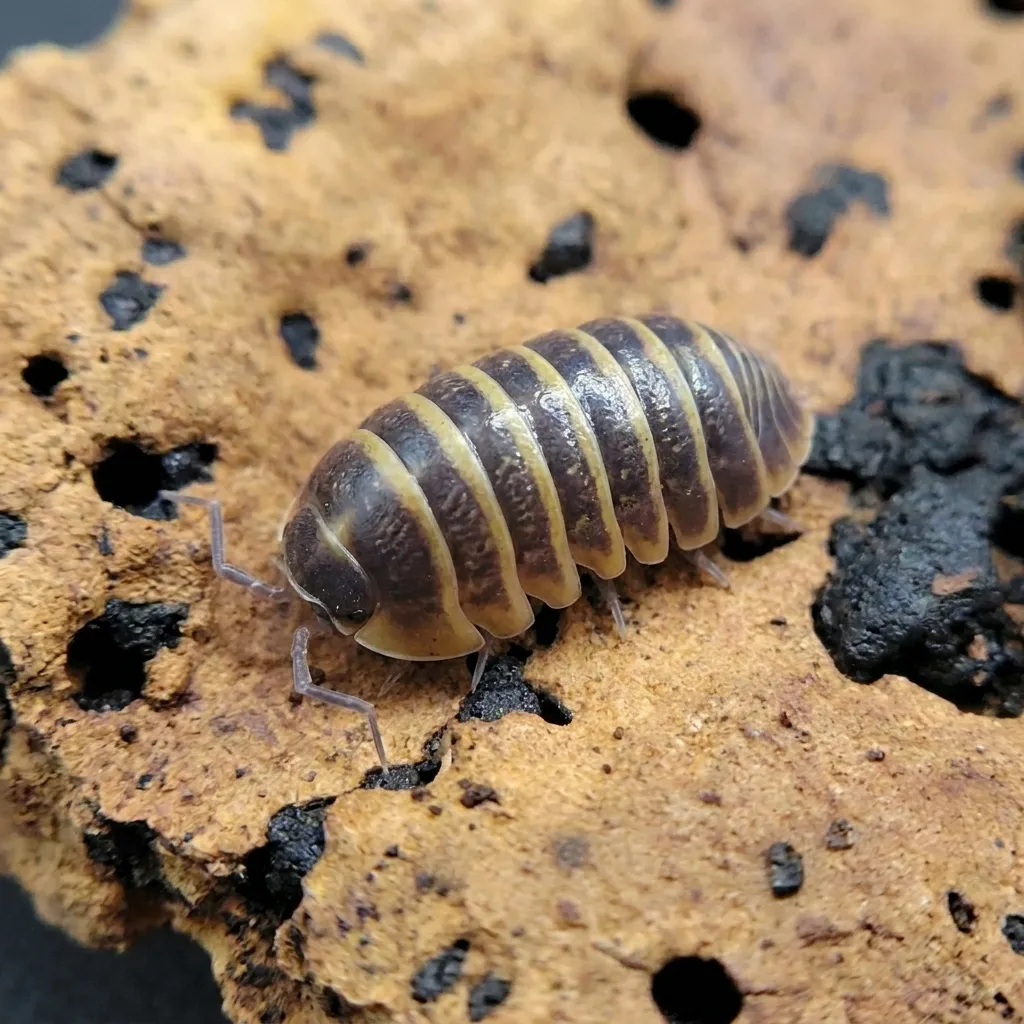
Armadillidium badium is a Mediterranean island endemic rolling pill woodlouse with documented Sicilian type-locality provenance. Gustav Budde-Lund formally described the species in 1885 in his foundational work Crustacea Isopoda Terrestria, published in Copenhagen. Sicily is listed as the type locality on the original taxonomic record. As a result, this product has the strongest formal provenance of any Armadillidium in our catalog.
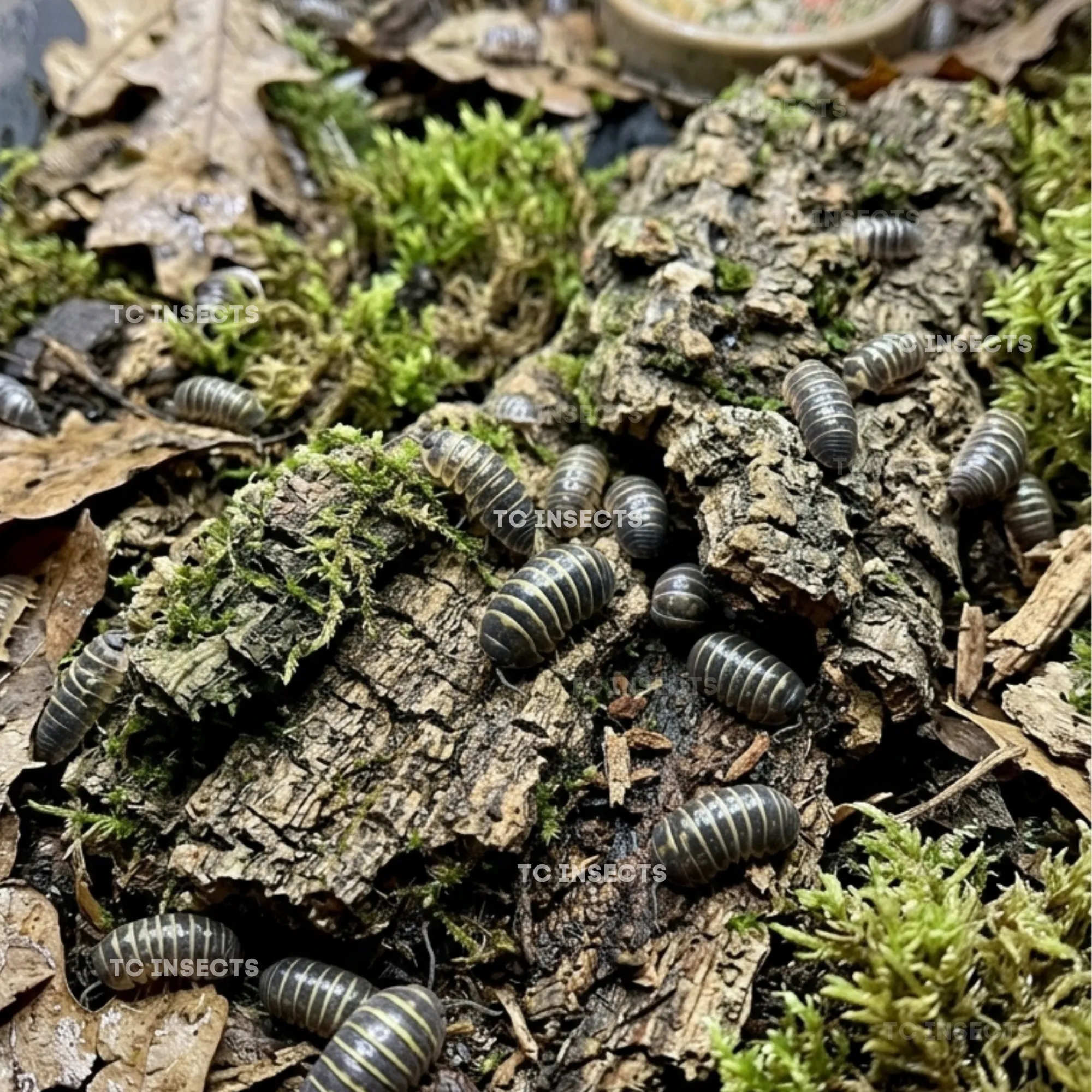
The species occurs across Sicily, Malta, Sardinia, and the Pelagian Islands. In the Pelagian Islands, a subspecies (A. badium pelagicum) was described by Arcangeli in 1957. Adults reach 15 to 20 mm and show earthy brown, reddish-brown, tan, and yellowish tones depending on the specific hobby line.
Why Keep Armadillidium badium?
- Documented type locality: First, Sicily is listed as the species’ type locality on the WoRMS taxonomic record, which is a stronger provenance reference than most hobby Armadillidium can claim.
- Mediterranean island endemic: Additionally, the species’ Sicily-Malta-Sardinia-Pelagian range is geographically distinct from continental European Armadillidium, which gives this line a different biogeographic story.
- Multiple documented hobby lines: Furthermore, the species supports real line distinctions like Casteldaccia (a Sicilian municipality), High Yellow, Yellow Mix, and Calico color variations.
- Mid-size body with earthy coloration: The 15-20 mm adult size pairs naturally with cork bark, weathered wood, and Mediterranean-style decor.
- Full conglobation: Finally, as a family Armadillidiidae member, A. badium rolls completely into a sealed ball, unlike Armadillidium depressum “Magic Potion”, which leaves a gap.
Honest Note on Hobby Line Variations
Several hobby lines of A. badium circulate in the trade. Casteldaccia is the most commonly cited and refers to a real Sicilian municipality. Casteldaccia is a town in the Metropolitan City of Palermo. High Yellow and Yellow Mix are color labels describing animals with more yellow expression than the default brown wild-type tone. Calico is another hobby color label.
However, hobby line provenance is not always documented to the same standard as the formal Budde-Lund 1885 type locality. Some sellers ship “Casteldaccia” lines that have been in captive breeding for many generations. Therefore, the geographic accuracy of the label may have drifted. As a result, we treat these as hobby line designations rather than guaranteed wild collection records.
Honest Note on Subspecies and Synonyms
The species has real taxonomic depth at subspecies level. Specifically, A. badium pelagicum Arcangeli 1957 was described from the Pelagian Islands. The Pelagian Islands are a small archipelago between Sicily and Tunisia. Additionally, Armadillidium degneri Strouhal 1937 is listed as a synonym of A. badium on the taxonomic record.
For practical hobby purposes, this means a culture labeled simply “A. badium” is almost always the nominate A. badium badium. Identifying whether a specific culture is actually the nominate form or the pelagicum subspecies requires direct comparison to type specimens. This is beyond what hobby keepers can verify. Therefore, the practical care framework is the same regardless.
Honest Note on Color Variation
Individual A. badium animals show real color variation, with brown, reddish-brown, tan, yellowish, and slightly darker tones appearing within the same line. This is normal for the species and not a sign of culture drift. Specifically, the “Yellow Mix” hobby label exists because some lines show stronger yellow expression than others.
Color also shifts with age and molt cycle. Recently molted animals often look lighter and more brilliant, while older animals may show more uniform tones. As a result, a healthy mixed-age colony will show a range of expressions at any given time.
Care and Setup
A. badium does well at room temperature with a clear dry-to-moist gradient, strong ventilation, and Mediterranean-style husbandry. The following sections cover the practical framework we recommend.
Temperature
Target 65 to 78°F across most of the year. Normal indoor temperatures suit this species well, given its origin in Mediterranean island habitats that buffer temperature extremes. However, avoid sustained heat above 80°F and cold rooms below 60°F.
Humidity
Aim for low to medium humidity overall with one consistently moist retreat zone. Keep that side hydrated with sphagnum moss and damp substrate, then let the rest of the enclosure run drier. Specifically, about one-third moist and two-thirds drier matches the species’ native island climate.
Substrate
Use a moisture-holding mix of soil, rotted hardwood, and organic matter at a depth of 2 to 3 inches. Add a generous layer of TC INSECTS Assorted Hardwood Leaf Litter on top. Mediterranean-style decor like weathered cork bark and limestone-look stone pieces pair naturally with the earthy coloration of this species.
Food
Lead with leaf litter and decaying hardwood as the base diet. Then supplement with TC INSECTS Isopod Food for added protein and minerals, plus a calcium source like TC Calcium Ultra Fine. Feed lightly given the species’ slow-to-moderate breeding pace.
Ventilation
Use cross-ventilation or strong controlled lid ventilation. Specifically, A. badium prefers stronger airflow than many tropical isopod species, which matches its native Mediterranean island habitat. As a result, undersized ventilation tends to cause problems faster with this species than with humidity-tolerant lines.
Bioactive Use
A. badium can work in moderate-humidity bioactive enclosures once the culture is established. However, run a backup culture in a dedicated bin first. The slow-to-moderate breeding pace means that rebuilding from a crashed display takes longer than with workhorse cleanup species.
Breeding Notes
A. badium breeds slowly to moderately once settled. Females carry developing mancae in a brood pouch, and stable Mediterranean-style conditions with consistent calcium support successful broods. Generally, the colony grows steadily over months rather than producing rapid population spikes.
For best results, leave the colony undisturbed during the first six to eight weeks. Then add fresh leaf litter before the existing layer is fully consumed, and avoid frequent digging through the substrate. Juveniles often hide deep in moss and leaf litter, so a quiet colony is not necessarily a struggling colony.
Best For
- Collector display cultures focused on documented Mediterranean island endemic species
- Keepers building a multi-locality Armadillidium set across different European regions
- Planted vivariums with Mediterranean-style decor at room temperature
- Bioactive setups with strong ventilation and a clear moisture gradient
- Keepers who want real type-locality provenance backed by Budde-Lund’s 1885 original description
Not Best For
- Sealed, fully wet tropical setups suited to high-humidity Cubaris species
- Hot tropical setups running consistently above 80°F
- Feeder use, since per-animal value is too high and the rolled defensive posture limits feeder availability
- Mixed-species cultures with other Armadillidium, since species identity drifts when lines blur
- Keepers expecting fast colony booms from workhorse cleanup species
- Setups with weak ventilation, since this species needs stronger airflow than many tropical lines
Origin and Locality Notes
Armadillidium badium was formally described by Gustav Budde-Lund in 1885, in his foundational taxonomic work Crustacea Isopoda Terrestria, per Familias et Genera et Species Descripta, published in Copenhagen. Sicily is listed as the species’ type locality on the original taxonomic record, which is the formal scientific reference for where the species was first collected and described.
The species’ broader range covers Sicily, Malta, Sardinia, and the Pelagian Islands. A subspecies, A. badium pelagicum, was described by Arcangeli in 1957 from the Pelagian Islands. The hobby line “Casteldaccia” refers to a real municipality in the Metropolitan City of Palermo, Sicily, which gives that line designation a verifiable geographic reference even when the captive-breeding history is undocumented.
Receiving and Acclimation
Open your package promptly when it arrives and inspect the cup calmly before moving anything. Rolling isopods often arrive curled up or hidden in moss and shipping paper, so check slowly rather than dumping the culture.
Prepare the enclosure before opening the cup. The habitat should already have moderate-to-dry substrate with one moist retreat zone, deep leaf litter, bark, and a calcium source. Then place the shipping material into the enclosure and let the isopods move out on their own. Finally, keep the setup quiet for the first week while the colony settles.
It is normal for new arrivals to stay curled or hidden for the first several days. Specifically, the earthy coloration of this species blends well with bark and leaf litter, so a quiet colony is usually a settled colony, not a missing one.
Recommended Add-Ons
- TC INSECTS Isopod Habitat Kit — a complete starter setup that gives this Mediterranean culture proper substrate, leaf litter, moss, and feed from day one.
- TC INSECTS Assorted Hardwood Leaf Litter — the core food and cover layer that should never run out in an A. badium culture.
- TC INSECTS Isopod Food — supplemental protein and minerals beyond leaf litter, fed in small portions to match the slow-to-moderate breeding pace.
- TC Calcium Ultra Fine — supports healthy molts and exoskeleton development for the mid-size rolling body of this species.
- Springtails — pair well with A. badium in moderate-humidity bioactive setups to help manage mold around the moist retreat zone.
Frequently Asked Questions
Where is Armadillidium badium actually from?
Sicily is listed as the species’ type locality on the WoRMS taxonomic record, based on Budde-Lund’s 1885 original description. The broader range covers Sicily, Malta, Sardinia, and the Pelagian Islands. As a result, this is a Mediterranean island endemic species rather than a continental European species.
What is “Casteldaccia”?
Casteldaccia is a real Italian municipality in the Metropolitan City of Palermo, Sicily. Specifically, the hobby line labeled “Casteldaccia” traces back to stock associated with that locality. As a result, this is one of the more geographically verifiable hobby line designations among Armadillidium species, although the captive-breeding history may not be fully documented.
Is there a subspecies?
Yes. A. badium pelagicum Arcangeli 1957 was described from the Pelagian Islands. However, identifying whether a specific hobby culture is the nominate A. badium badium or the pelagicum subspecies requires direct comparison to type specimens, which is beyond what hobby keepers can verify. Generally, cultures labeled simply “A. badium” are the nominate form.
Why do individuals look so different from each other?
Natural color variation is built into the species, with brown, reddish-brown, tan, yellowish, and darker tones appearing across the same line. Specifically, the “Yellow Mix” hobby label exists because some lines show stronger yellow expression than others. Color also shifts with age and molt cycle, so a mixed-age colony will show a range of expressions at any given time.
How does A. badium compare to other Armadillidium species?
A. badium sits in the mid-size range, with adults around 15 to 20 mm. That places it close to Armadillidium scaberrimum “Sandstone” in size. However, it has a Mediterranean island origin instead of a Balkan one. It is larger than Armadillidium versicolor “Ceska”, which reaches only about 10 mm.
Are A. badium beginner-friendly?
Generally yes. They tolerate room temperatures well, and the low-to-medium humidity profile is forgiving once the moisture gradient is set. However, first-time keepers should still set up strong ventilation and keep calcium and leaf litter available consistently, since slow-to-moderate breeders need stable conditions for the colony to build.
Learn More About Armadillidium badium
Because A. badium has documented type-locality provenance and real taxonomic depth, the following non-competitor references give keepers solid background on the species and its biology.
-
World Register of Marine Species: Armadillidium badium badium Budde-Lund, 1885. The authoritative taxonomic record, with Sicily listed as the type locality and Budde-Lund’s 1885 original description cited directly. Useful for buyers who want to verify the species and confirm the documented Sicilian provenance.
-
PubMed Central: Terrestrial isopods, soil, and litter interactions. An open-access review of how land isopods interact with leaf litter, moisture, and substrate. Useful for keepers who want the science behind why deep hardwood leaf cover and stable moderate humidity matter for a slow-to-moderate breeding species like this one.


Reviews
There are no reviews yet.