Complimentary FedEx 2-Day on orders over $250 Complimentary Overnight shipping on orders over $400 Live Arrival Guarantee on every order Family-owned insect farm - Houston, Texas

Shop

Showing 417–432 of 499 resultsSorted by latest

  • Sale! Medium | 3/4" |  Red Runner Roaches

    Medium | 3/4" | Red Runner Roaches

    $8.00 - $79.00

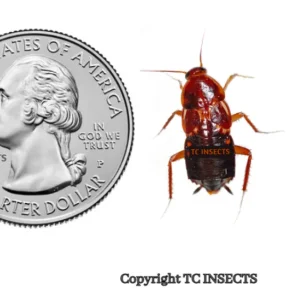
    Red runner roaches, Blatta lateralis, are a fast-moving feeder roach and a strong cricket alternative. This medium 3/4″ size suits mid-sized reptiles like adult leopard geckos and smaller bearded dragons. Their quick movement triggers a feeding response, they do not climb smooth surfaces, and they breed readily. They are high in protein, so dust them with calcium before feeding.

    • Species: Blatta lateralis (Turkestan, rusty red roach)
    • Size: Medium, about 3/4″
    • Feeds: Mid-sized reptiles and adult leopard geckos
    • Handy: Fast-moving, non-climbing, breeds quickly
    • Care: Keep warm, dust with calcium before feeding

    Medium Red Runner Roaches for Sale: a fast-moving 3/4″ feeder roach and cricket alternative for mid-sized insectivores.

    Best For: keepers of mid-sized reptiles who want active prey, plus colony keepers feeding off mid-size roaches.

    Select optionsLoading Done This product has multiple variants. The options may be chosen on the product page
  • Sale! Small | 1/2" |  Red Runner Roaches

    Small | 1/2" | Red Runner Roaches

    $6.00 - $59.00

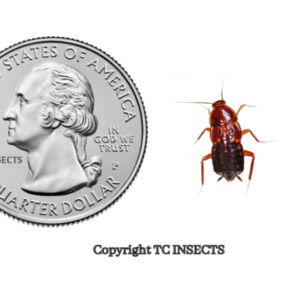
    Red runner roaches, Blatta lateralis, are a fast-moving feeder roach and a strong cricket alternative. This small 1/2″ size suits small-to-mid reptiles and growing juveniles. Their quick movement triggers a feeding response, they do not climb smooth surfaces, and they breed readily. They are high in protein, so dust them with calcium before feeding.

    • Species: Blatta lateralis (Turkestan, rusty red roach)
    • Size: Small, about 1/2″
    • Feeds: Small-to-mid reptiles and growing juveniles
    • Handy: Fast-moving, non-climbing, breeds quickly
    • Care: Keep warm, dust with calcium before feeding

    Small Red Runner Roaches for Sale: a fast-moving 1/2″ feeder roach and cricket alternative for small-to-mid insectivores.

    Best For: keepers of small-to-mid reptiles and growing juveniles who want active prey, or anyone growing a colony.

    Select optionsLoading Done This product has multiple variants. The options may be chosen on the product page
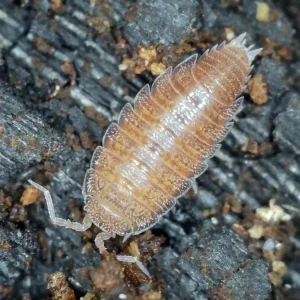
  • Sale! Dwarf Purple isopods culture cup with moist substrate and leaf litter

    Trichoniscus sp. "Dwarf Purple" Isopods

    $9.99 - $279.99

    Pronounced: Try-koh-NIS-kus species “Dwarf Purple”

    Care Level: Beginner to intermediate (moisture-sensitive)

    Adult Size: 2 to 4 mm

    Reproductive Rate: Moderate to high once established

    Temperature: 68 to 78°F

    Humidity: Medium-high to high, around 70 to 90% with a moist retreat

    Scientific Name: Trichoniscus sp. “Dwarf Purple”

    Appearance: Tiny soft-bodied isopods with subtle purple, lavender, or plum tones visible on close inspection


    Dwarf Purple Isopods for Sale: Live Trichoniscus sp. “Dwarf Purple” used as a small-scale cleanup crew and microfauna layer in humid bioactive terrariums, planted vivariums, and amphibian enclosures.

    Best For: Humid bioactive vivariums, dart frog and amphibian enclosures, planted terrariums, and keepers who want a working microfauna species rather than a visible display animal.

    A tiny live cleanup crew isopod sold in the hobby as Trichoniscus sp. “Dwarf Purple.” Adults reach only 2 to 4 mm, so this species lives almost entirely inside leaf litter and substrate rather than on the surface. Subtle purple, lavender, or plum tones are visible on close inspection but do not show at normal viewing distance. This is a working microfauna species for humid bioactive setups, not a display animal. The most common buyer mistake is expecting them to be visible like Powder morphs, which they are not.

    Select optionsLoading Done This product has multiple variants. The options may be chosen on the product page
  • Sold OutUltraviolet springtails (Lepidocyrtus violaceus) showing metallic purple and blue iridescent scales on substrate in a TC INSECTS culture.

    Lepidocyrtus violaceus | Ultraviolet Springtails

    $49.99

    Pronounced: leh-pih-doh-SIR-tus vye-oh-LAY-see-us

    Care Level: Beginner to intermediate

    Adult Size: 1 to 4 mm

    Reproductive Rate: Moderate, steady under stable conditions

    Temperature: Standard room temperature

    Humidity: Moist substrate with good airflow

    Scientific Name: Lepidocyrtus violaceus

    Origin: Original TC INSECTS hobby trade introduction, collected in Baytown Texas in 2021

    Color Note: Scaled body that shifts between metallic purple, blue, baby blue, and pink under bright light, and gold under low light

    Ultraviolet Springtails for Sale: A metallic iridescent display-grade springtail originally introduced by TC INSECTS, sold elsewhere as the Blacklight Springtail, used for visual display, microfauna variety, and collector cultures.

    Best For: Display and collector cultures, bioactive vivariums with planted bright areas, educational setups, photography projects, and rack variety alongside tropical workhorse springtails.

    Read moreLoading Done
  • Orange Head Roaches (Eublaberus posticus)

    Orange Head Roaches (Eublaberus posticus)

    $1.99 - $259.98
    • Species: Eublaberus posticus
    • Type: Large-bodied feeder roach, dubia alternative
    • Feeds: Bearded dragons, tegus, monitors, larger reptiles
    • Handy: Non-climbing, non-flying, prolific breeder
    • Care: Keep warm, dust with calcium before feeding

    Orange Head Roaches for Sale: a meaty, easy-to-breed feeder roach for larger reptiles.

    Best For: keepers of bearded dragons, tegus, and monitors who want a substantial staple or a self-sustaining colony.

    Orange head roaches, Eublaberus posticus, are a meaty, prolific feeder roach and a practical alternative to dubia. They are large-bodied, so you feed fewer to satisfy a big appetite, and their glossy orange color often triggers a feeding response. They cannot climb smooth surfaces or fly, which makes them easy to contain. They suit larger insectivores.

    Select optionsLoading Done This product has multiple variants. The options may be chosen on the product page
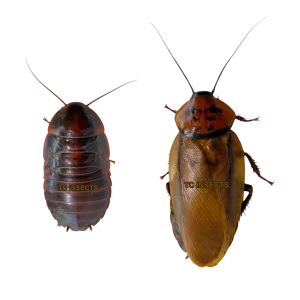
  • Sale! Powder Oreo Isopods for sale

    Porcellionides Pruinosus "Powder Oreo Crumble" Isopods

    $8.50 - $249.99

    Pronounced: Por-sell-ee-on-EYE-deez proo-ih-NO-sus

    Care Level: Beginner

    Adult Size: 1 to 1.25 cm

    Reproductive Rate: Very high once established

    Temperature: 70 to 85°F

    Humidity: 45 to 80% with a humid retreat

    Scientific Name: Porcellionides pruinosus “Powder Oreo Crumble”

    Appearance: Random black-and-white patterned exoskeleton with a powdery surface coat, no two individuals identical, soft exoskeleton, long-legged and quick on the surface

    Best For: Display vivariums, collector cultures, and bioactive setups

    A designer captive-bred morph of Porcellionides pruinosus with a random black-and-white “crumble” pattern that looks different on every individual. Unlike the solid Powder Blue and Powder Orange morphs, Oreo Crumble is a collector-driven pick that doubles as a working bioactive culture. Our line traces back to a TC INSECTS mother culture started in 2019, bred in-house, with the same fast surface-active behavior the Powder species is known for.

    Select optionsLoading Done This product has multiple variants. The options may be chosen on the product page
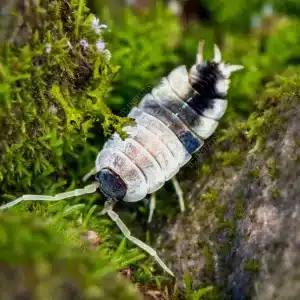
  • Sale! Brilliant orange and white male alongside larger grey-black female Philoscia sp. Thai isopod with documented pronounced sexual dimorphism on substrate, captive-bred Thai-origin Latreille 1804 Philosciidae isopod from TC INSECTS

    Philoscia sp. "Thai" Isopods

    $15.99 - $109.99

    Pronounced: fi-LOSS-ee-ah Thai (hobby name) or ag-NAH-rah mad-uh-gas-kar-ee-EN-sis

    Care Level: Beginner to intermediate

    Adult Size: About 10 to 17 mm (females larger than males)

    Reproductive Rate: High once established

    Temperature: 70 to 80°F

    Humidity: Moderate to humid with a clear moisture gradient and strong ventilation

    Scientific Name: Agnara madagascariensis (Budde-Lund, 1885), long sold in the hobby as Philoscia sp. “Thai”

    Appearance: Sexually dimorphic, with orange-and-red males and larger gray-patterned females

    Philoscia sp. Thai Isopods for Sale: Live cultures of a small, fast-breeding tropical isopod best known for visible color differences between males and females, suitable for bioactive vivariums and keepers who want a behaviorally interesting culture.

    Best For: Bioactive terrariums, planted vivariums, reptile and amphibian enclosures with stable humidity, and keepers who appreciate visible sexual dimorphism in a small functional culture.

    Philoscia sp. “Thai” isopods are one of the few hobby cultures that show pronounced sexual dimorphism: smaller males display bright orange and red coloration while larger females stay gray with subtle patterning. Recent hobby community work has reidentified this culture as Agnara madagascariensis, formally placing it in the family Agnaridae rather than under the long-used Philoscia placeholder name. TC INSECTS has bred this line continuously from a mother culture started in late 2019.

    Select optionsLoading Done This product has multiple variants. The options may be chosen on the product page
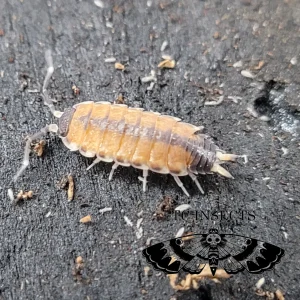
  • Sale! Porcellionides Pruinosus "Powder White" Isopods

    Porcellionides Pruinosus "Powder White" Isopods

    $8.50 - $249.99

    Pronounced: Por-sell-ee-on-EYE-deez proo-ih-NO-sus

    Care Level: Beginner

    Adult Size: 1 to 1.25 cm

    Reproductive Rate: Very high once established

    Temperature: 70 to 85°F

    The lightest solid color form of Porcellionides pruinosus, with a chalky, almost frosted appearance over a pale base. Where Powder Blue reads cool gray and Powder Orange reads warm, Powder White gives the strongest light-on-dark contrast in planted vivariums and dart frog tanks. Our line traces back to a TC INSECTS mother culture started in 2017. We breed this colony in-house, so it has been on standard isopod husbandry for years rather than arriving as a recently flipped batch.

    Humidity: 45 to 80% with a humid retreat

    Scientific Name: Porcellionides pruinosus “Powder White”

    Appearance: Chalky, frosted white coat over a pale base, soft exoskeleton, long-legged and quick on the surface

    Best For: Dark-substrate display vivariums, bioactive cleanup, and occasional soft-bodied feeders

    Select optionsLoading Done This product has multiple variants. The options may be chosen on the product page
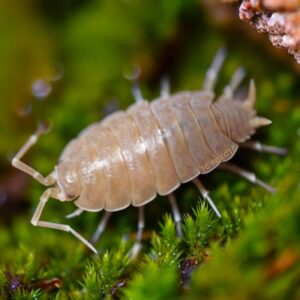
  • Sale! Powder Blue Isopods for sale

    Porcellionides Pruinosus "Powder Blue" Isopods

    $8.50 - $249.00

    Pronounced: Por-sell-ee-on-EYE-deez proo-ih-NO-sus

    Care Level: Beginner

    Adult Size: 1 to 1.25 cm

    Reproductive Rate: Very high once established

    Temperature: 70 to 85°F

    Humidity: 45 to 80% with a humid retreat

    Scientific Name: Porcellionides pruinosus “Powder Blue”

    Appearance: Dusty powder-blue coat over a darker gray base, softer exoskeleton, long-legged and quick-moving

    Best For: Bioactive vivariums, display cultures, and occasional soft-bodied feeders

    Fast, surface-active, and one of the easier isopods to keep productive once a colony settles in. Our Porcellionides pruinosus “Powder Blue” line traces back to a TC INSECTS mother culture started in 2017, which means this is a long-running, in-house bred colony rather than a freshly imported lot. The dusty powder-blue coat over a darker base makes them noticeable on the surface, and the softer exoskeleton makes them a usable occasional feeder when dusted with calcium.

    Select optionsLoading Done This product has multiple variants. The options may be chosen on the product page
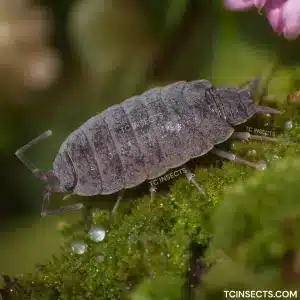
  • Sale! powder orange isopods for sale

    Porcellionides Pruinosus 'Powder Orange' Isopods

    $8.50 - $249.99

    Pronounced: Por-sell-ee-on-EYE-deez proo-ih-NO-sus

    Care Level: Beginner

    Adult Size: 1 to 1.25 cm

    Reproductive Rate: Very high once established

    Temperature: 70 to 85°F

    Humidity: 45 to 80% with a humid retreat

    Scientific Name: Porcellionides pruinosus “Powder Orange”

    Appearance: Warm orange dorsal coloration with a powdery surface coat, soft exoskeleton, long-legged and quick on the surface

    Best For: Display vivariums, bioactive cleanup, and occasional soft-bodied feeders

    The warm orange color form of Porcellionides pruinosus, and one of the most popular display isopods in the hobby for a reason. The orange reads bright against dark substrate and leaf litter, which is hard to match with most other isopod species. Our Powder Orange line comes from a TC INSECTS mother culture started in 2017, so it is an established in-house bred colony rather than a freshly imported lot. Surface-active, quick moving, and productive once a starter group settles in.

    Select optionsLoading Done This product has multiple variants. The options may be chosen on the product page
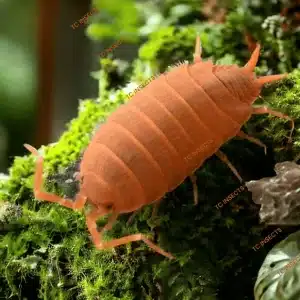
  • Sale! Clown Isopods for Sale | TCINSECT.COM

    Armadillidium klugii 'Pudding' Isopods

    $20.00 - $79.99

    Pronounced: ar-ma-dill-IH-dee-um KLOO-jee-eye

    Care Level: Intermediate

    Adult Size: About 15 to 21 mm

    Reproductive Rate: Slow to establish, then moderately prolific once stable

    Temperature: 70 to 80°F (slightly elevated 74-79°F often improves activity)

    Humidity: Low to moderate with a clear moist retreat and steady ventilation

    Scientific Name: Armadillidium klugii Brandt, 1833

    Appearance: Chocolate to black conglobating body with three rows of yellow and white spots running front to back, and a transparent white lateral skirt instead of the red skirt of standard Clown morphs

    Pudding Isopods for Sale: Live Armadillidium klugii “Pudding” cultures from TC INSECTS, bred from an in-house mother culture established in 2018, suited to display vivariums and collectors building a multi-morph Clown shelf.

    Best For: Display vivariums featuring dark elegant patterning, multi-morph A. klugii Clown collector shelves, semi-arid bioactive setups with a moist refuge, and intermediate keepers comfortable with slower-establishing cultures.

    Armadillidium klugii “Pudding” is one of several captive-selected color morphs of the famous Clown Isopod, described by Brandt in 1833 from the Balkan Adriatic coast. Specifically, the Pudding morph lacks the red lateral skirt that defines the standard Clown / Montenegro / Dubrovnik forms. Instead, it shows a chocolate-to-black body with rows of yellow and white spots and a transparent white lateral edge. Notably, the species is documented as a Batesian mimic of the Mediterranean black widow (Latrodectus tredecimguttatus). As a result, the red-spotted warning coloration of standard Clown morphs may deter predators that mistake the harmless animal for the venomous spider.

    Select optionsLoading Done This product has multiple variants. The options may be chosen on the product page
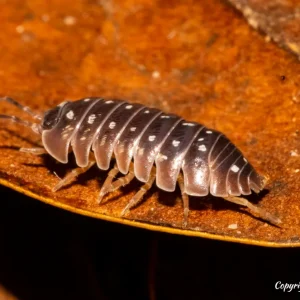
  • Sold Out Sale! Armadillidium klugii Dubrovnik isopods on bark and moss in a bioactive terrarium setup

    Armadillidium klugii 'Dubrovnik' Isopods

    $24.99 - $69.99

    Pronounced: Ar-ma-dill-IDD-ee-um KLOO-gee-eye

    Care Level: Beginner to intermediate

    Adult Size: About 15 to 21 mm

    Reproductive Rate: Moderate; steady once established

    Temperature: 68 to 78°F

    Humidity: Moderate with a clear dry-to-moist gradient

    Scientific Name: Armadillidium klugii Brandt, 1833 “Dubrovnik”

    Common Names: Clown Isopod, Dubrovnik Clown

    Diagnostic Feature: Three rows of dots running front-to-back

    Armadillidium klugii Dubrovnik Isopods: A live Croatian Adriatic locality line of the Clown Isopod, sold as the catalog anchor page for A. klugii, with documented Brandt 1833 species history and Batesian mimicry biology.

    Best For: Display vivariums, collector cultures, multi-morph Armadillidium catalog sets, and keepers building a paired Clown Isopod set across A. klugii Dubrovnik and the closely related A. werneri Greater Clown.

    Armadillidium klugii “Dubrovnik” is the established hobby Clown Isopod locality line, named after the Croatian coastal city of Dubrovnik on the Adriatic. Specifically, the species was described by Johann Friedrich Brandt in 1833. Additionally, the species shows documented Batesian mimicry of the Mediterranean black widow spider Latrodectus tredecimguttatus. As a result, the red, yellow, and white spotted pattern on a grayish-brown base resembles the warning coloration of a venomous spider that shares the species’ native range. Furthermore, three rows of dots run front-to-back, which distinguishes this species from the closely related A. werneri Greater Clown (five rows).

    Select optionsLoading Done This product has multiple variants. The options may be chosen on the product page
  • Sale! Porcellio Sevilla isopods on cork bark in a dry bioactive setup

    Porcellio Sp. - "Sevilla" Isopods

    $3.99 - $129.99
    • Pronounced: por-SELL-ee-oh seh-VEE-yah
    • Care Level: Beginner to intermediate
    • Adult Size: Around 2.5 to 2.7 cm (roughly 1 inch)
    • Reproductive Rate: Moderate to good once established
    • Temperature: 68 to 78°F
    • Humidity: Drier setup with one reliable moist retreat and strong ventilation
    • Scientific Name: Porcellio sp. “Sevilla”
    • Appearance: Bold gray body with a clean pale white skirt along the edges, active and visible on cork and dark substrate

    Porcellio Sevilla Isopods for Sale: Live Porcellio sp. “Sevilla” shipped as a mixed-size captive-bred starter group for display cultures, dry bioactive setups, and keepers building a larger Iberian Porcellio collection.

    Best For: Display cultures, dry to moderately humid bioactive terrariums, ventilated reptile enclosures, and keepers who want a large, visible, constantly active isopod that handles a drier moisture gradient.

    Porcellio sp. “Sevilla” moves constantly. Unlike species that vanish into deep substrate or stay hidden under bark all day, Sevilla isopods graze along the surface, climb cork bark, and stay visibly active in a way that makes the colony interesting to watch. Their gray body and pale white skirt show cleanly against dark substrate and wood. That activity level is what separates them from most other large Porcellio in the hobby.

    Select optionsLoading Done This product has multiple variants. The options may be chosen on the product page
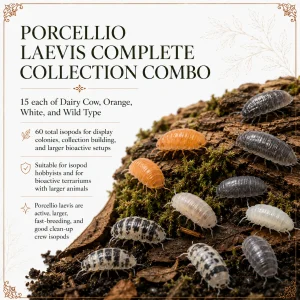
  • Sale! Laevis Isopods for Sale | TCINSECT.COM

    Porcellio laevis - "Complete Collection Combo"

    Original price was: $60.00.Current price is: $55.00.


    • Species: Porcellio laevis, four morphs
    • Includes: 15 each Dairy Cow, Orange, White, Wild Type
    • Role: Bioactive cleanup crew and display colonies
    • Tip: House each morph separately to keep colors pure
    • Care: Moist substrate, leaf litter, protein, a calcium source

    Porcellio laevis Combo for Sale: 60 isopods in four morphs, a head start on a collection or cleanup crew.

    Best For: hobbyists building a laevis collection, breeders starting color lines, and keepers of larger reptiles or planted vivariums.


    This Porcellio laevis combo ships 60 live isopods in four popular morphs: 15 Dairy Cow, 15 Orange, 15 White, and 15 Wild Type. It is a simple way to start a four-morph collection, begin separate cultures, or seed an active cleanup crew. These large, bold isopods stay visible and breed well once settled, so they suit display and larger bioactive setups.

    Add to cartLoading Done
  • Sale! Porcellio laevis White isopods on bark and moss in a bioactive terrarium setup

    Porcellio laevis - "White" Isopods

    $14.99 - $99.99
    • Pronounced: por-SELL-ee-oh LEE-vis
    • Care Level: Beginner-friendly
    • Adult Size: About 15 to 20 mm
    • Reproductive Rate: Fast once established
    • Temperature: 70 to 80°F preferred
    • Humidity: Moderate to humid with a clear moisture gradient
    • Scientific Name: Porcellio laevis Latreille, 1804
    • Appearance: Pure, solid white on a smooth glossy shell — the highest-contrast laevis morph on dark substrate

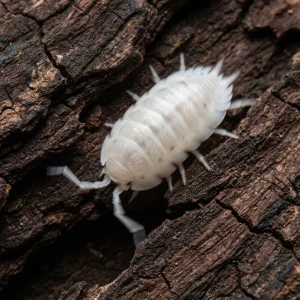
    Porcellio laevis White Isopods for Sale: Live captive-bred Porcellio laevis “White” from TC INSECTS, the morph isolated from within the Dairy Cow line that represents complete pigment absence — and the most visible laevis morph in any dark-substrate or heavily planted bioactive setup.

    Best For: Bioactive terrariums and planted vivariums with dark soil where maximum cleanup crew visibility matters, keepers who want a pure white morph on the smooth glossy laevis shell, display cultures built around stark color contrast, and anyone who already keeps Dairy Cow or Orange and wants the full laevis morph trio.

    The White morph shares every care, behavior, and husbandry trait with Dairy Cow and Orange laevis. The difference is complete pigment absence rather than partial absence or recessive expression — producing pure solid white on the same smooth species known for active surface behavior. Keep separate bins to maintain color purity if that matters for your collection.

    Select optionsLoading Done This product has multiple variants. The options may be chosen on the product page
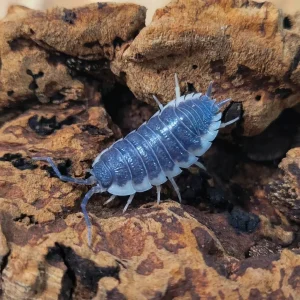
  • Sale! Porcellio laevis Wild Type isopods on bark and moss in a bioactive terrarium setup

    Porcellio laevis - "Wild Type" Isopods

    $7.99 - $39.99
    • Pronounced: por-SELL-ee-oh LEE-vis
    • Care Level: Beginner-friendly
    • Adult Size: Up to about 15 to 20 mm
    • Reproductive Rate: Fast once established
    • Temperature: 68 to 78°F recommended
    • Humidity: Moderate to humid with a moisture gradient
    • Scientific Name: Porcellio laevis Latreille, 1804
    • Appearance: Natural gray to brownish-gray — the unmodified reference coloring of the species, unchanged from wild populations

    Porcellio laevis Wild Type Isopods for Sale: Live captive-bred Porcellio laevis “Wild Type” from TC INSECTS, the natural base form of the species before any color mutation — the same hardy, fast-breeding cleanup crew in the coloring that blends into bark, leaf litter, and dark substrate.

    Best For: Naturalistic and planted terrariums where a hidden, blending cleanup crew suits the aesthetic better than a colorful one, mixed-animal bioactive setups where camouflage reduces predation pressure on the isopod colony, keepers who want a robust laevis culture without maintaining a specific color line, and first-time isopod keepers who want the simplest reliable introduction to the species.

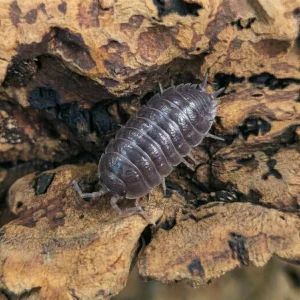
    Wild Type shares every care, behavior, and husbandry trait with Dairy Cow, Orange, and White laevis. The difference is that no color mutation has been isolated into this line. You get the species as it exists naturally — which is the right call for certain setups and a valid preference on its own.

    Select optionsLoading Done This product has multiple variants. The options may be chosen on the product page