Lepidocyrtus violaceus Ultraviolet Springtails for Sale
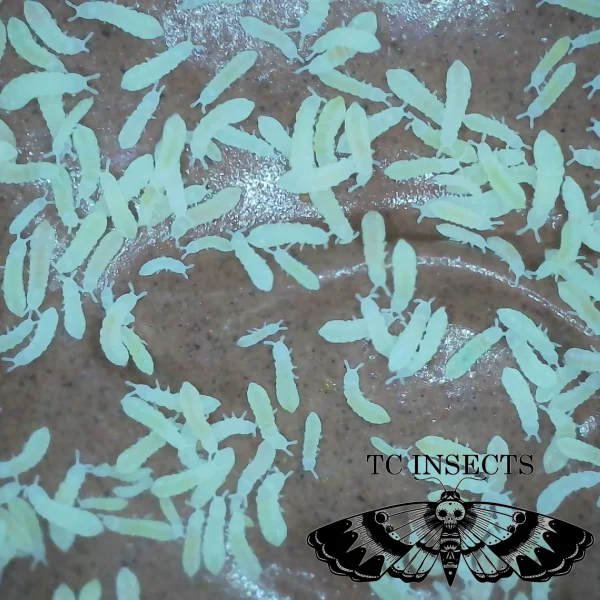
The Ultraviolet Springtail is the iridescent showpiece of the springtail world, and one of the most visually distinctive cultures available in the live insect hobby. TC INSECTS introduced this species to the market under the name “Ultraviolet” because of the way its scaled body refracts light. Under lighting, the body shifts through metallic purple, blue, baby blue, and pink. In low-light or dark conditions, the body shifts toward a gold tone. As a result, this is the rare springtail bought primarily for visual display rather than cleanup volume.
Customers may also see this species sold elsewhere under the name “Blacklight Springtail.” Both common names refer to the same metallic-scaled springtail. Most importantly, TC INSECTS produces this culture in-house and was the original introducer of the species to the hobby market under the Ultraviolet name. Honest note up front: this is a display-grade culture, not a high-volume cleanup workhorse.
Overview
Most springtails are bought blind. You drop in a cup of tiny white specks and trust them to do their job. The Ultraviolet flips that completely. This is a springtail you buy to look at. The metallic sheen comes from microscopic scales on the body that refract light, similar to the way butterfly wing scales create structural color. As a result, color shifts depending on light angle, brightness, and viewing background.
If you are building a varied culture rack, the Ultraviolet pairs well with other live springtails covering different cleanup, production, and habitat roles. Most keepers run this alongside a tropical white workhorse rather than as their primary culture.
Pronunciation
leh-pih-doh-SIR-tus vye-oh-LAY-see-us
Care Level
Beginner to intermediate. Care is straightforward, but the culture builds more slowly than mass-producing tropical springtails. As a result, this species rewards patience and steady husbandry rather than rapid harvesting.
Appearance and Color
The Ultraviolet is built around its scales. Each individual carries a layer of fine reflective scales across the body, and these scales refract light differently depending on the angle. Under bright light, the body reads as metallic purple with waves of blue, baby blue, and pink. In darker conditions, the same body shifts toward a gold tone.
Body shape is the typical elongated Lepidocyrtus form, similar to other scaled springtails in the genus. However, the color intensity and shifting hues set this species apart from the more common silver and metallic Lepidocyrtus sold in the hobby.
Adult Size
1 to 4 mm, depending on maturity. This is in the medium size range for springtails, larger than tropical whites but smaller than display species like the Woolly Mammoth.
Reproductive Rate
Moderate. Cultures build steadily under good conditions, but they do not reach the explosive reproductive output of tropical white springtails. As a result, this culture is sold mainly as a display and collector species rather than for cleanup volume.
Ultraviolet Springtail Care
Temperature
Standard room temperature works well. Avoid placing the culture near heat lamps, sunny windows, or cold drafts. Stable temperature matters more than hitting an exact number.
Humidity
Keep the culture moist with good airflow. The substrate should stay visibly damp but never flooded. Springtails need moisture access at all times, and the Ultraviolet is no exception. Furthermore, scaled springtails tend to lose color vibrancy if the culture becomes too dry or too stagnant, so balance matters.
Culture Setup
- Container with a tight lid and good ventilation. Scaled springtails can jump and escape loose lids.
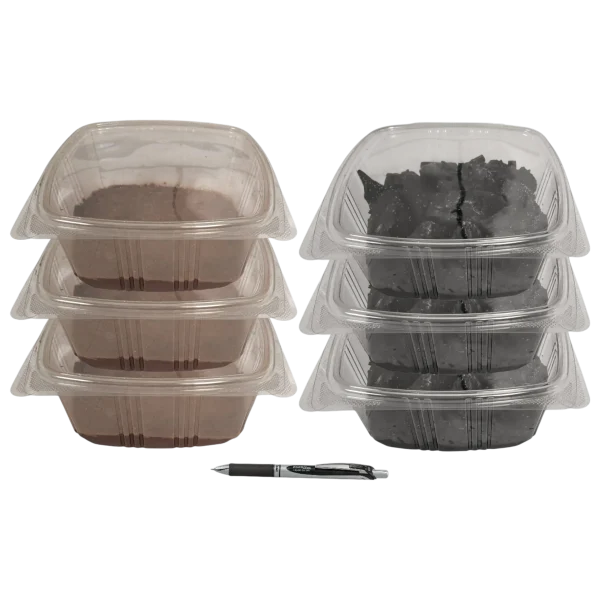
- Substrate of moist soil, a soil and charcoal mix, or coco-based culture medium.
- Leaf litter or bark on top for grazing surface and humidity refuge.
- Light placement matters for display. Bright indirect light brings out the color.
Diet and Feeding
Biofilm, Mold, and Organic Matter
The Ultraviolet helps consume mold, fungi, biofilm, and small organic debris when added to a bioactive enclosure. However, this is not a mass-production cleanup species. Treat it as a supporting cleanup crew member with display value, not as a mold removal guarantee. Airflow and watering habits matter more than springtail count for actual mold control.
Supplemental Food
In a dedicated culture, feed light pinches of a measured springtail food like TC INSECTS Springtail Culture Booster. A prepared diet keeps the culture cleaner than raw food scraps. Furthermore, balanced nutrition appears to support scale color, while erratic feeding can leave individuals looking dull.
Feeding Notes
- Feed lightly. Overfeeding crashes cultures faster than underfeeding.
- Add the next pinch only after the previous food is mostly gone.
- Remove visibly moldy food chunks if they sour the substrate.
- Spot mist if the surface looks dry.
Display and Observation
This is the section that matters most for the Ultraviolet, because color is the whole reason customers buy it. Place the culture under bright indirect light to bring out the metallic purple, blue, and pink hues. By contrast, lower light or shadow brings out the gold tone. As a result, the same culture can look like two different species depending on viewing conditions.
For best display, use a clear culture container with minimal opaque cover, light substrate background, and at least one piece of dark bark or charcoal to provide visual contrast.
Breeding and Culture Growth
Cultures grow steadily under stable conditions. Because the Ultraviolet reproduces more slowly than mass-production species, keepers should plan for weeks rather than days before noticeable population growth. For long-term success, keep at least one backup culture in a separate container so a crashed main culture does not require a reorder.
Culture Maintenance
- Keep one main culture and at least one backup culture.
- Refresh substrate when it becomes packed, sour-smelling, or fouled.
- Avoid mixing the Ultraviolet with aggressive fast-breeding species that will outcompete it.
- Monitor color. Dull or pale individuals usually signal stress, dry conditions, or poor feeding.
Best Uses
- Display and collector cultures where keepers actually want to enjoy looking at their springtails.
- Bioactive vivariums with bright planted areas where the color reads against natural backgrounds.
- Educational and presentation setups, since the color shift between light and shadow is striking.
- Microfauna diversity alongside high-production tropical species in a varied rack.
- Photography and macro-video projects, since the color shifts photograph well.
Not Best For
- Bone-dry desert-style setups. This species needs moisture.
- Primary cleanup duty in heavily fouled enclosures. Pair with a faster-breeding workhorse.
- Keepers expecting explosive numbers. Reproduction is steady but not explosive.
- Setups stored in dark cabinets where the color cannot be seen. The display value is the point.
Receiving and Acclimation Guidance
Open the culture indoors in a draft-free area away from pets and direct sun. Let it sit at room temperature for a few hours before feeding or transferring. If the substrate looks shipping-dry, mist lightly. Do not flood the culture trying to rehydrate it. After unpacking, place the container under indirect lighting and let the colony settle for several days before judging color vibrancy.
Frequently Asked Questions
Is the Ultraviolet the same as the Blacklight Springtail?
Yes. Both common names refer to the same metallic-scaled Lepidocyrtus violaceus springtail. TC INSECTS introduced this species under the Ultraviolet name. Other sellers have since used the “Blacklight” common name. The product is the same species.
Why does the color change between bright and dark conditions?
The body is covered in microscopic scales that refract light. Under bright light, the scales produce metallic purple, blue, and pink. In darker conditions, the refraction shifts and the body reads as gold. This is structural color, similar to how butterfly wings change with viewing angle.
Can I keep Ultraviolet springtails with isopods?
Yes. In bioactive enclosures they coexist with most common isopods. However, for a clear display culture, keep them separate so the color stays the visual focus.
How fast do they reproduce?
Moderately. Slower than tropical white springtails but steady under good conditions. Most keepers see clear population growth within a few weeks of starting a culture.
Will they keep my vivarium clean?
They contribute, but they are not a primary cleanup workhorse. Most keepers run them alongside a faster-breeding white springtail that handles bulk cleanup, while the Ultraviolet adds visual and collector value.
Are they hard to see?
No. At 1 to 4 mm and with their metallic coloration, Ultraviolet springtails are noticeably easier to spot than typical white tropical springtails, especially against dark backgrounds or under good lighting.
Learn More About Springtails and Bioactive Care
- TC INSECTS Springtail Care Guide: In-house TC INSECTS guide covering springtail care, culture setup, feeding, and troubleshooting.
- GBIF: Lepidocyrtus violaceus Species Page: Biodiversity database record with global distribution and taxonomy for Lepidocyrtus violaceus.
- Encyclopedia of Life: Lepidocyrtus: Background reference on the