

Ceratophysella isabellae “Lilac” Springtails for Sale
Overview
Lilac springtails are colorful live springtails used as cleanup crew microfauna for bioactive terrariums, vivariums, isopod cultures, planted setups, reptile enclosures, amphibian habitats, and springtail culture projects. Customers receive live Ceratophysella isabellae “Lilac” springtails in the selected count.
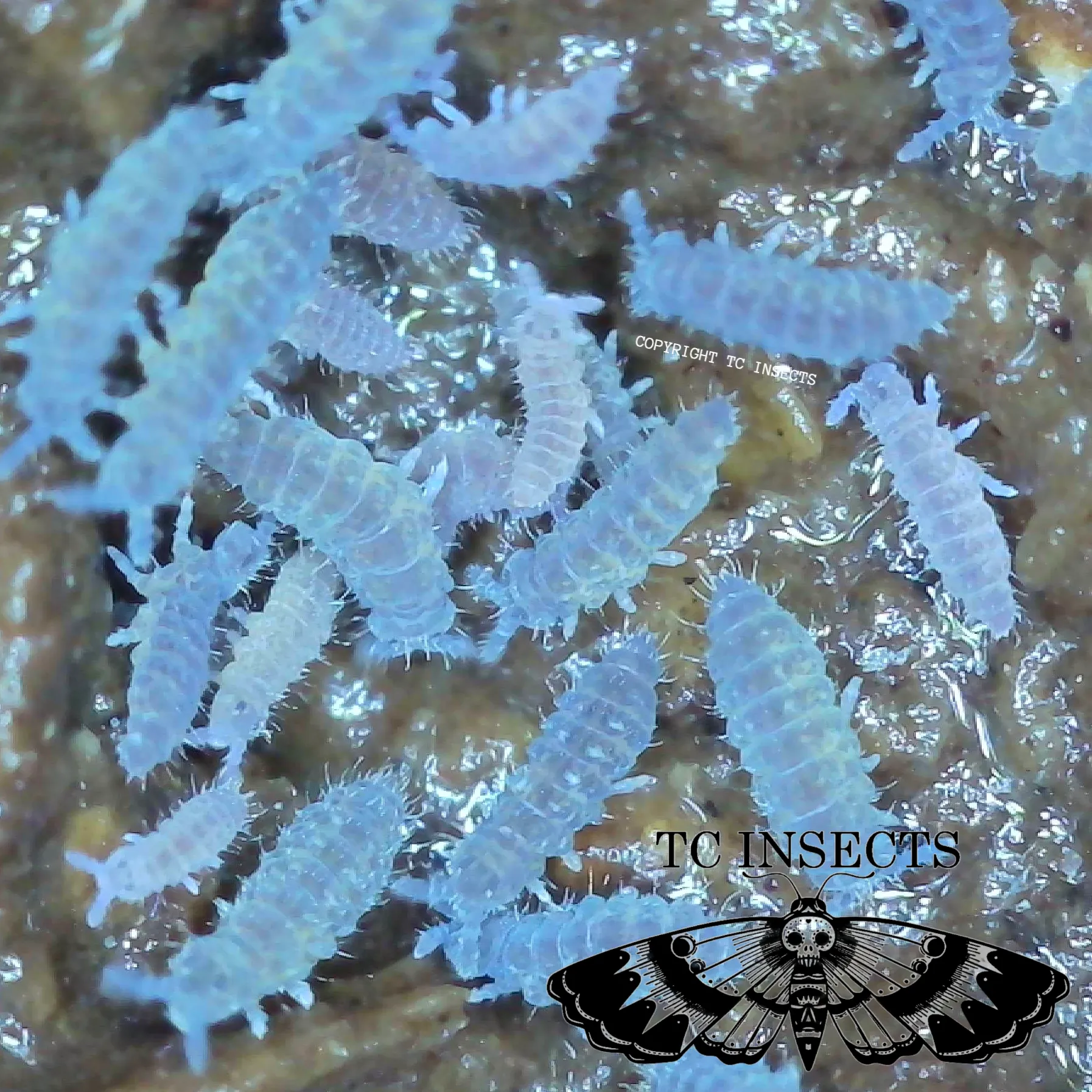
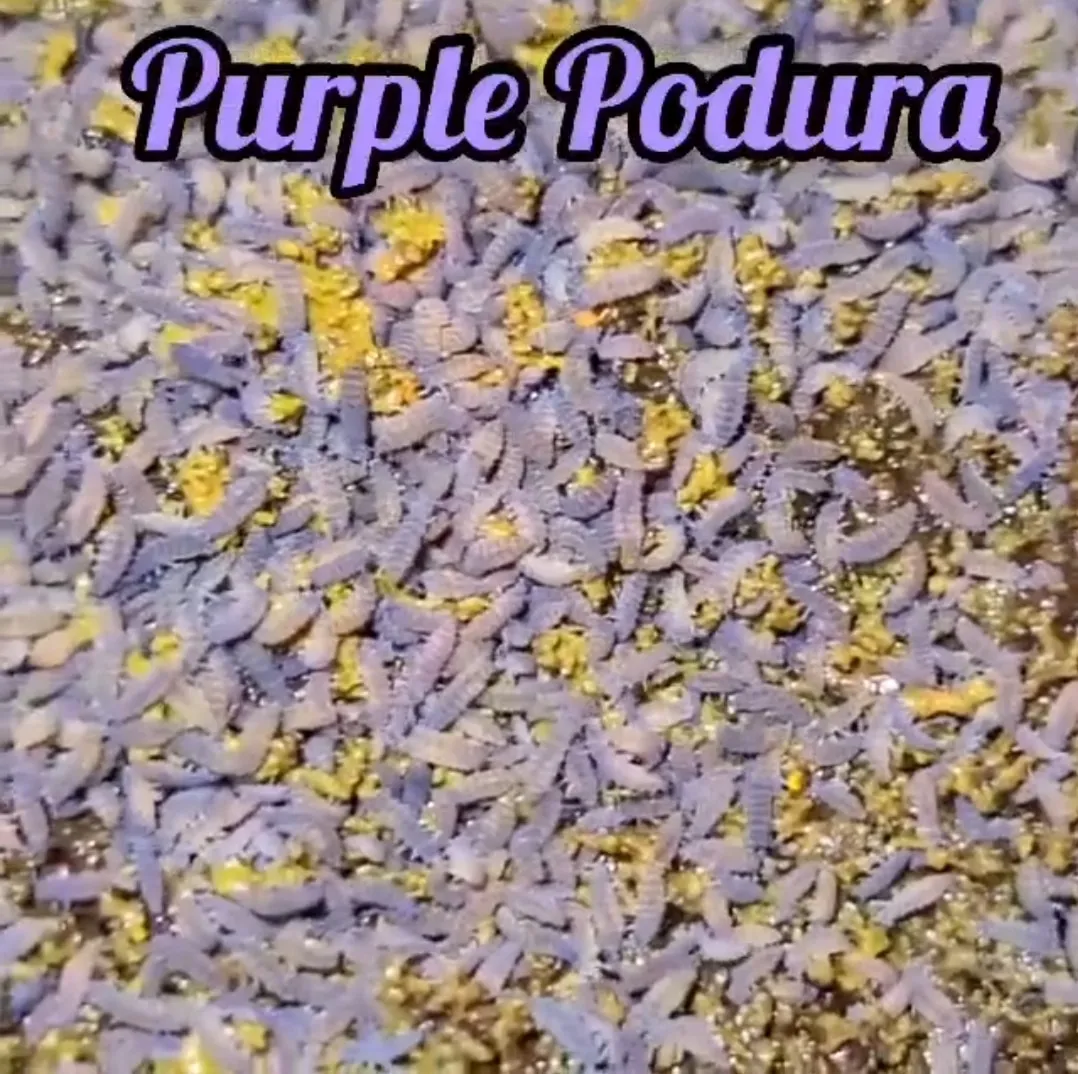
This species is known for its soft lilac, lavender, bluish-purple, or violet-toned coloration. Unlike standard white springtails, Lilac springtails add subtle color and visual interest to culture cups, bioactive displays, and springtail collections.
Lilac springtails help consume mold, fungi, biofilm, bacteria, algae, and small decomposing organic material. They are useful as part of a bioactive cleanup crew, but they are also valued as a collector springtail and tiny supplemental feeder for suitable micro insectivores.
Pronounced
Ceratophysella: Seh-rah-toh-fih-SELL-uh
isabellae: iz-uh-BELL-ee
Lilac: Lie-lack
Care Level
Care Level: Easy to Intermediate
Lilac springtails are productive when kept moist, lightly fed, and protected from temperature extremes. They should not be kept completely dry. They do best in humid, well-ventilated cultures with a moist substrate, moss, leaf litter, or clay-style culture medium.
Appearance and Size
Lilac springtails are small, plump springtails with a soft purple, lavender, lilac, bluish-gray, or violet appearance. Color can vary based on lighting, age, culture medium, density, and moisture.
They are usually seen moving across moist substrate, clay, plaster, charcoal, moss, leaf litter, bark, or food areas. Their color makes them more visually interesting than many standard white springtail cultures, but they are still tiny and may require close inspection.
Adult Size
Adult Size: Very small, commonly around 1 to 3 mm
Their small size allows them to move through substrate pockets, moss, leaf litter, bark texture, and springtail culture media. This makes them useful for bioactive terrariums, isopod bins, planted vivariums, and microfauna culture projects.
Reproductive Rate
Reproductive Rate: Moderate to High once established
Lilac springtails can reproduce well in humid, stable cultures. They usually perform best when kept with consistent moisture, light feeding, and good airflow.
Lilac Springtail Care
Lilac springtails do best in moist culture media with light feeding and good airflow. They need stable moisture to stay active and reproduce, but the culture should not be flooded, sour, or stagnant.
A good culture should include a moist surface, food, airflow, and enough structure for the springtails to gather and reproduce. In bioactive enclosures, add them near moist substrate, moss, leaf litter, bark, or shaded humid pockets.
Avoid dry culture media, chemical cleaners, pesticide-treated materials, direct heat lamps, and heavy overfeeding. Also, avoid leaving live springtail cultures in hot cars, direct sunlight, or sealed areas with extreme heat.
Lilac Springtail Husbandry
Temperature
Temperature: 65 to 78°F preferred
Lilac springtails do well at stable room temperatures. A practical target range around 68 to 75°F works well for most cultures.
Avoid direct sun, hot windowsills, reptile basking zones, and sudden temperature swings. Extreme heat can crash springtail cultures quickly.
Humidity
Humidity: High humidity with good ventilation
Lilac springtails prefer consistently moist conditions. Keep the culture damp, but not swampy. The goal is a moist, breathable culture with no sour odor.
A good setup should include:
- Moist culture medium
- High humidity
- Good airflow
- No standing dirty water
- No sour odor
- Stable room temperature
- Protected surface areas
If the culture dries out, activity and reproduction may slow. If it stays too wet without airflow, mold and odor can become a problem.
Springtail Culture Setup
Lilac springtails can be kept in culture cups, clay cultures, plaster cultures, charcoal cultures, coco cultures, or substrate-based cultures. They are flexible, but they usually perform best when moisture and airflow are balanced.
Good culture and enclosure materials include:
- Springtail clay
- Bio-Plaster
- Charcoal
- Moist organic substrate
- Leaf litter
- Bark
- Moss
- TC INSECTS Springtail Culture Booster
- Bioactive substrate
For long-term success, keep a backup culture. This is especially helpful if you plan to use Lilac springtails for terrarium seeding, isopod bins, or micro feeder projects.
Lilac Springtail Diet
Lilac springtails feed on fungi, mold, biofilm, bacteria, algae, decaying plant material, and prepared springtail foods. In culture, they benefit from light supplemental feeding.
Biofilm, Mold, and Fungal Growth
Lilac springtails help consume mold, fungal growth, biofilm, and tiny organic debris. This makes them useful in bioactive terrariums, vivariums, and isopod cultures where moisture and organic material are present.
However, springtails do not replace proper enclosure maintenance. If mold becomes heavy, reduce overfeeding, remove spoiled food, improve airflow, and check the moisture balance.
Leaf Litter, Moss, and Organic Matter
Leaf litter, moss, and organic substrate help support springtails by creating natural grazing areas, humidity pockets, and hiding spaces.
Useful habitat materials include:
- Leaf litter
- Sphagnum moss
- Cork bark
- Hardwood bark
- Bioactive substrate
- Organic soil
- Small pieces of decaying plant material
These materials give Lilac springtails protected areas to feed, hide, and reproduce.
Supplemental Springtail Food
Use TC INSECTS Springtail Culture Booster to support Lilac springtail culture growth and productivity. A prepared springtail diet helps keep cultures active and easier to maintain between enclosure seedings.
Good feeding options include:
- TC INSECTS Springtail Culture Booster
- Small amounts of yeast-based springtail feed
- Small amounts of grain-based springtail food
- Natural biofilm in mature substrate
- Fungi and microorganisms in leaf litter
- Algae on damp culture surfaces
Feeding Notes
Feeding Notes: Feed lightly and increase only when the culture is consuming food well.
A small amount of food is usually enough. Too much food can mold heavily, sour the culture, attract pests, or cause odor. Add more only after most of the previous feeding has been consumed.
Lilac Springtail Breeding
Lilac springtails can breed well once established. Their color and productivity make them a strong choice for keepers who want a collector springtail that can also function in bioactive systems.
To support breeding, provide:
- Stable moisture
- Stable room temperatures
- Light feeding
- Clean culture medium
- Good airflow
- A backup culture when possible
Avoid letting cultures dry out completely. Also, avoid keeping cultures sealed, soggy, or overloaded with food.
Females
Females: Sexing springtails is not needed for normal culture maintenance. Keep the culture stable and allow the population to grow naturally.
Males
Males: Customers do not need to separate males or create breeding groups. Culture success depends more on moisture, food, temperature, airflow, and cleanliness.
Culture Maintenance
Check cultures regularly to make sure moisture remains available. Feed lightly, refresh food only when needed, and avoid letting old food sour.
If the culture becomes dense, seed part of it into a bioactive enclosure while keeping part as a backup culture.
Lilac Springtail Natural Habitat
Ceratophysella isabellae is a springtail in the family Hypogastruridae. In the hobby, the Lilac form is kept for its purple-lilac coloration, cleanup crew use, and collector value.
Because exact culture origin can vary in the hobby, care should focus on practical captive needs rather than overclaiming a precise locality. In captivity, Lilac springtails should be kept as moisture-associated microfauna that do well in moist, organic, well-ventilated cultures.
Best Uses for Lilac Springtails
Lilac springtails are a strong choice for keepers who want a colorful springtail culture with cleanup crew value.
Best uses include:
- Bioactive terrariums
- Planted vivariums
- Isopod cultures
- Springtail backup cultures
- Collector springtail cultures
- Mold control support
- Naturalistic terrarium systems
- Dart frog vivariums
- Humid reptile habitats
- Small supplemental feeder use for suitable micro insectivores
- Springtail culture projects
Lilac springtails are especially useful for keepers who want both cleanup crew function and visual color. Their lavender-purple color makes them more noticeable and collectible than many standard white springtails.
Receiving and Acclimation Guidance
When your Lilac springtails arrive, open the package indoors and inspect the culture carefully. These springtails are small, so look closely for movement on the culture medium, cup walls, food areas, and moist surfaces.
Keep the culture moist after arrival. If the medium looks dry, lightly mist or add a small amount of clean water depending on the culture type. Do not flood the culture unless the medium is designed for that style of maintenance.
To add springtails to a terrarium, place them near moist substrate, moss, leaf litter, bark, or a shaded humid area. Then cover lightly so they can move into protected spaces.
Helpful receiving tips:
- Open indoors
- Keep away from heat and direct sun
- Maintain moisture
- Feed lightly after arrival
- Seed near damp substrate and leaf litter
- Avoid chemical sprays
- Avoid pesticide-treated decor
- Keep a backup culture if possible
- Do not let the culture dry out completely
Recommended Add-On: Springtail Culture Booster
Support your Lilac springtail culture with Springtail Culture Booster. A prepared springtail diet helps keep cultures active, productive, and easier to maintain between enclosure seedings.
For Lilac springtails, feed lightly in one visible spot near moisture. This helps you monitor feeding activity without overloading the entire culture.
Best used for:
- Maintaining springtail cultures
- Supporting reproduction
- Feeding backup cultures
- Boosting culture activity
- Keeping springtails available for future bioactive setups
Use a small amount at a time. If food remains uneaten, reduce the next feeding.
Recommended Add-On: Ultra Habitat Kit
Give your Lilac springtails a ready-to-use bioactive base with the Ultra Habitat Kit. This is a premade habitat setup designed so keepers can add isopods, springtails, and other compatible cleanup crew species directly into a prepared environment.
The Ultra Habitat Kit helps customers avoid starting with a bare container. Instead, it gives springtails and isopods a more complete habitat with moisture-holding areas, hiding spaces, grazing surfaces, and bioactive materials that support a living cleanup crew system.
It includes useful habitat components such as rotten soft wood, flake soil, moss, charcoal, calcium, worm castings, and other bioactive materials that help create a naturalistic setup for springtails and isopods.
This is useful for customers setting up:
- Bioactive cleanup crew cultures
- Isopod starter habitats
- Springtail culture habitats
- Naturalistic observation setups
- Planted terrarium cleanup crew bases
- Backup cultures for future enclosure seeding
For best results, add Lilac springtails near the moist side, moss, leaf litter, or substrate pockets. Keep part of the habitat moist, provide ventilation, and feed lightly with TC INSECTS Springtail Culture Booster as needed.
Frequently Asked Questions
Are Lilac springtails beginner-friendly?
Yes. Lilac springtails can be beginner-friendly if kept moist, lightly fed, and protected from overheating or drying out.
Are Ceratophysella isabellae springtails actually purple?
Yes, the Lilac form usually shows a soft lilac, lavender, bluish-purple, or violet tone. Color can vary with lighting, age, and culture conditions.
Are Lilac springtails good for bioactive terrariums?
Yes. They can help consume mold, fungi, biofilm, and small organic debris in bioactive terrariums, vivariums, and isopod cultures.
What do Lilac springtails eat?
They feed on mold, fungi, biofilm, bacteria, algae, decaying organic material, and prepared springtail food.
Can Lilac springtails live with isopods?
Yes. They can work well in isopod cultures when moisture, food, ventilation, and cover are balanced.
Can Lilac springtails be used as feeders?
Yes, they can be used as tiny supplemental feeders for suitable dart frogs, froglets, micro geckos, and other micro insectivores. Their main use is cleanup crew and culture maintenance.
Should I keep a backup culture?
Yes. A backup culture is a good idea if you plan to seed terrariums, feed small animals, or maintain this springtail long term.
Why do I not see many springtails right away?
Springtails are small and may hide in the culture medium after shipping. Keep them moist, feed lightly, and check food areas or cup walls for movement.
Learn More About Springtails and Bioactive Care
Check out the TC INSECTS Springtail Care Blog Here
• Plazi Treatment: Ceratophysella isabellae
Taxonomy reference for Ceratophysella isabellae, originally described by Fjellberg in 1985.
https://treatment.plazi.org/GgServer/html/266B5D55F750FFC2FF7EFAED4506FA59/18
• World Collembola Catalog: Hypogastruridae
Taxonomy reference listing Ceratophysella isabellae within Hypogastruridae and Collembola.
https://www.collembola.org/taxa/hypogast.htm
• University of Minnesota Extension: Springtails
Educational resource about springtails feeding on fungi, pollen, algae, and decaying organic matter in moist habitats.
https://extension.umn.edu/nuisance-insects/springtails
• Penn State Extension: Springtails
Educational resource explaining springtails, damp environments, mold, mildew, fungi, bacteria, and decaying plant material.
https://extension.psu.edu/springtails/
• Colorado State University Extension: Springtails
Educational overview explaining springtails, moisture, organic matter, fungi, algae, bacteria, and decaying plant material.
https://extension.colostate.edu/resource/springtails/
Final Notes
Lilac springtails are a strong choice for keepers who want a colorful, useful, and collectible springtail culture. They help process mold, fungi, biofilm, and small organic debris while adding soft purple color to the bioactive cleanup crew layer.
For best results, provide moisture, airflow, light feeding, stable temperatures, and a backup culture. Use TC INSECTS Springtail Culture Booster sparingly to support growth without overfeeding.




Reviews
There are no reviews yet.