Complimentary FedEx 2-Day on orders over $250 Complimentary Overnight shipping on orders over $400 Live Arrival Guarantee on every order Family-owned insect farm - Houston, Texas

Shop

Showing 321–336 of 499 results

  • Sale! Nesodillo arcangelii Purple Ghost isopods on moss and bark in a humid terrarium setup

    Nesodillo Arcangelii Sp. 'Purple Ghost'

    $24.99 - $219.99

    Pronounced: neh-so-DILL-oh ar-kan-JEL-ee-eye

    Care Level: Intermediate

    Adult Size: Small to medium, often around 8 to 12 mm

    Reproductive Rate: Moderate once established

    Temperature: 72 to 78°F

    Humidity: Moderate to high with a clear moisture gradient

    Scientific Name: Nesodillo arcangelii sp. “Purple Ghost” (sold in the hobby trade; taxonomy is debated)

    Appearance: Pale lavender-gray to soft ghost-toned body, rounded and compact, with subtle color that shifts under different lighting

    Purple Ghost Isopods for Sale: Live Nesodillo arcangelii sp. “Purple Ghost” cultures from TC INSECTS, sold for display, breeding, and tropical bioactive use in stable, leaf-litter-rich setups.

    Best For: Collector shelves, tropical display cultures, planted vivariums, and intermediate keepers who can hold steady humidity and resist the urge to dig through the colony too often.

    Purple Ghost isopods are a collector-tier tropical morph with a soft lavender-gray, ghost-toned body that shows up best against dark bark, moss, and damp leaf litter. They breed at a moderate pace once settled and tend to stay hidden during the day, so buyers should think of them as a slow-build display and breeder culture rather than a fast cleanup crew. Color is subtle and lighting-dependent, not bright purple.
    Select optionsLoading Done This product has multiple variants. The options may be chosen on the product page
  • Sale! Cubaris Shiro Utsuri for sale

    Nesodillo Arcangellii 'Shiro Utsuri'

    $34.99 - $109.99

    Pronounced: SHE-roh oot-SOO-ree (nay-soh-DEE-loh ar-kan-JEL-ee-eye)

    Care Level: Intermediate

    Adult Size: Approximately 2 cm

    Reproductive Rate: Moderate once established

    Temperature: 70 to 80 F

    Humidity: High, with a consistently moist zone

    Scientific Name: Nesodillo arcangelii “Shiro Utsuri”

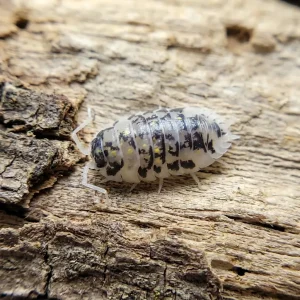
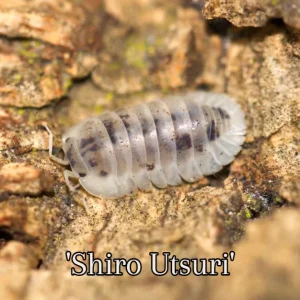
    Appearance: White to off-white base with irregular black blotches, broad flatter body shape, and a pale skirt along the body margin.

    Shiro Utsuri Isopods for Sale: A koi-patterned collector morph in the Armadillidae family that works best as a display species in a humid bioactive setup rather than a heavy-duty cleanup crew.

    Best For: Keepers building a display vivarium, collectors filling out the Armadillidae shelf, and intermediate hobbyists ready to step beyond Porcellio and Porcellionides species.

    Shiro Utsuri Isopods are a Japanese-isolated morph of Nesodillo arcangelii, named after the koi fish pattern they resemble. The body carries a creamy white base broken by bold black blotches and a clean white skirt around the edge. They are active above the substrate, more visible than many Armadillidae morphs, and better suited to humid display setups than to dry or heavily disturbed enclosures.

    Select optionsLoading Done This product has multiple variants. The options may be chosen on the product page
  • Sale! Nesodillo Arcangelii Silver Ghost for sale

    Nesodillo Arcangellii 'Silver Ghost'

    $24.99 - $94.99

    Pronounced: neh-soh-DEE-loh ar-kan-JEL-ee-eye

    Care Level: Beginner to intermediate

    Adult Size: About 15 to 20 mm

    Reproductive Rate: Prolific once established

    Temperature: 70 to 80°F

    Humidity: High (75 to 95%) with consistent moisture throughout

    Scientific Name: Nesodillo arcangelii Verhoeff, 1928 (formerly traded as Cubaris sp. “Silver Ghost”)

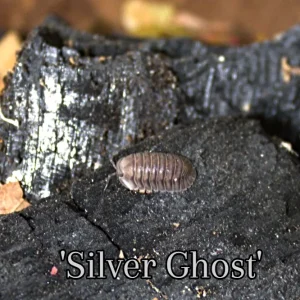
    Appearance: Semi-translucent silvery-gray body with a broad, flatter shape than Cubaris species, conglobates loosely when disturbed

    Silver Ghost Isopods for Sale: Live cultures of this Taiwanese Nesodillo arcangelii morph, ideal for high-humidity tropical bioactive setups and collectors interested in modern taxonomic reclassifications.

    Best For: Tropical bioactive vivariums, dart frog enclosures, planted tropical setups, and collectors building an Asian pill bug shelf with documented taxonomy.

    Silver Ghost is a Taiwanese tropical pill bug in the genus Nesodillo, formerly traded in the hobby as Cubaris sp. “Silver Ghost” before being properly reclassified. Specifically, the species Nesodillo arcangelii was described by Karl Wilhelm Verhoeff in 1928 in a paper titled “Isopods from Formosa” (Formosa is the old name for Taiwan). Notably, the species name honors Giuseppe Arcangeli, an Italian zoologist who worked on Armadillidae taxonomy. The genus Nesodillo belongs to the family Armadillidae, which is distinct from the European Armadillidiidae. Importantly, this is a high-humidity tropical species rather than a Mediterranean one. As a result, husbandry needs differ substantially from the more commonly kept Armadillidium pill bugs.

    Select optionsLoading Done This product has multiple variants. The options may be chosen on the product page
  • Sale! Yeti Isopod for sale

    Nesodillo Archangeli 'Yeti'

    $27.99 - $74.99

    Pronounced: Ness-oh-DILL-oh ar-kan-JELL-ee-eye, “Yeti”

    Care Level: Beginner-friendly

    Adult Size: About 12 to 20 mm

    Reproductive Rate: Prolific once established

    Temperature: 72 to 80°F, warmer end preferred

    Humidity: Consistent 75%+ with no drying out

    Scientific Name: Nesodillo arcangelii Verhoeff, 1928 “Yeti”

    Family: Armadillidae (NOT Armadillidiidae)

    Native Range: Taiwan (East Asia/Pacific)

    Nesodillo arcangelii Yeti Isopods: A live albino-variant Asian tropical isopod with semi-translucent body, sold as the albino version of the popular Shiro Utsuri morph and the catalog’s first Armadillidae family product.

    Best For: High-humidity tropical display vivariums, beginner-friendly bright white display species, keepers building cross-family isopod catalogs, and bioactive setups that run consistently moist without drying retreats.

    Nesodillo arcangelii “Yeti” is the albino variant of the popular “Shiro Utsuri” isopod. Specifically, the species was described by Karl Wilhelm Verhoeff in 1928. Additionally, the species was previously traded under the Cubaris sp. designation before being reclassified into the genus Nesodillo. As a result, this is a documented taxonomic update in the hobby. Furthermore, the Yeti morph shows an all-white body including the eyes, with a semi-translucent exoskeleton.

    Select optionsLoading Done This product has multiple variants. The options may be chosen on the product page
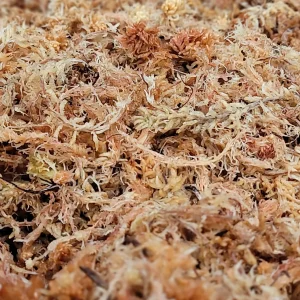
  • New Zealand long fiber sphagnum moss for reptile terrariums, isopod cultures, and bioactive enclosures

    New Zealand Sphagnum Moss: Long Fiber

    $5.99 - $15.99

    Product Type: Long fiber sphagnum moss, sold bagged

    Origin: New Zealand, a recognized hobby standard for high-grade sphagnum

    Texture: Long-fiber, fluffy, and visually presentable

    Primary Function: Moisture retention and humid retreat zones in isopod and springtail cultures

    Biology Note: Isopods rely on damp conditions to support pleopodal gill respiration, which makes consistent moisture important

    Available Sizes: 1 qt, 2 qts, and 4 qts (1 gallon)

    Pair With: Substrate, leaf litter, and feed as part of a complete culture setup

    Sphagnum Moss for Sale: Long-fiber New Zealand sphagnum moss for layering into isopod, springtail, and bioactive cultures as a moisture-retention component and humid retreat zone.

    Best For: Isopod and springtail cultures needing reliable humid retreats, dart frog and other vivarium setups, established cultures being refreshed, and any humid bioactive enclosure where consistent moisture matters.

    New Zealand Long Fiber Sphagnum Moss is a standalone moisture-retention component for isopod, springtail, and bioactive cultures. The long fibers hold water steadily, which helps create the consistently damp microclimates that isopods need to breathe properly through their pleopodal gill structures. The fluffy texture also makes it visually distinctive when used as a top dressing or humid retreat zone, in addition to its functional moisture-holding role.

    Select optionsLoading Done This product has multiple variants. The options may be chosen on the product page
  • Sold OutLive Niambia capensis African Cape isopods in a starter culture

    Niambia capensis "African cape isopod"

    $5.00 - $25.00
    Select optionsLoading Done This product has multiple variants. The options may be chosen on the product page
  • Sold OutMalaysian Night Dweller (Nocticola sp.)

    Nocticola sp. "Malaysian Micro Roach"

    $10.00 - $30.00

    The Little Kenyan Roach (Paraplecta cf. minutissima “Kenya”) is the smallest roach we sell at just 8 to 10 mm adult size, with newborn nymphs the size of fruit flies. Native to the Mara-Narok region of Kenya in East

    Africa. The “cf.” in the scientific name means this captive line tentatively matches the formally described Paraplecta minutissima, but the identification has not been confirmed. Adult males have small vestigial wings and

    can climb smooth surfaces weakly; females and nymphs cannot climb at all. Non-flying. This species fills a unique feeder role for very small insectivores like dart frogs, mantid nymphs, tarantula slings, juvenile geckos,

    and other tiny reptiles and amphibians that struggle with larger feeder roaches. Sold in counts of 30, 100, or 300 mixed nymphs.

    • Pronounced: par-uh-PLEK-tuh sif min-yoo-TISS-ih-muh
    • Care Level: Beginner-friendly, very easy and prolific
    • Adult Size: Males about 8 mm; females about 10 mm
    • Climbing/Flying: Adult males climb weakly; females and nymphs cannot climb; no flight at any stage
    • Temperature: 70 to 85°F (tolerates 64 to 86°F)
    • Humidity: Wide range tolerated; substrate should stay consistently damp
    • Scientific Name: Paraplecta cf. minutissima “Kenya”
    • Locality: Mara-Narok region, Kenya
    • Identity Status: Tentative match to P. minutissima, not confirmed

    Little Kenyan Roaches for Sale: This Paraplecta cf. minutissima “Kenya” line is the smallest roach in our catalog and the best feeder we sell for very small insectivores like dart frogs, mantid nymphs, and tarantula slings.

    Best For: Dart frog keepers, mantid breeders, tarantula sling owners, very small reptile and amphibian keepers, and bioactive setups needing a tiny feeder species.

    Select optionsLoading Done This product has multiple variants. The options may be chosen on the product page
  • Sold Out Sale! Oniscus asellus Mardi Gras isopods on bark and moss in a bioactive terrarium setup

    Oniscus Asellus 'Mardi Gras'

    $27.99 - $159.99

    Pronounced: Oh-NISS-kuss ah-SELL-us

    Care Level: Beginner to intermediate

    Adult Size: Roughly 15 to 18 mm at full adult size for the species

    Reproductive Rate: Moderate once established

    Temperature: 65 to 75°F (avoid prolonged heat)

    Humidity: Moderate to moderate-high with damp substrate and good airflow

    Scientific Name: Oniscus asellus “Mardi Gras”

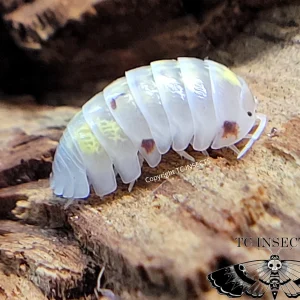
    Appearance: Dalmatian-style black and white patterning with bright yellow spots, varying by individual

    Mardi Gras Isopods for Sale: A live Oniscus asellus color morph sold for display keepers, temperate vivariums, and amphibian setups where a cooler, patterned cleanup crew works better than a tropical species.

    Best For: Cool to moderate display cultures, temperate planted vivariums, amphibian enclosures with stable cooler conditions, and keepers who want a designer morph with documented genetics.

    Mardi Gras isopods are a designer color morph of the common shiny woodlouse, Oniscus asellus, sold for keepers who want bold black-and-white dalmatian patterning with bright yellow spots. Unlike many hobby-trade isopods, this is a fully described temperate European species with documented biology and a documented morph history. The Mardi Gras line was isolated through selective breeding for the dalmatian-style pigment expression that leaves yellow spots untouched.

    Select optionsLoading Done This product has multiple variants. The options may be chosen on the product page
  • Sale! Little Soil springtails culture with tiny Onychiurinae springtails

    Onychiuninae Sp. | Little Soil Springtails

    $7.99 - $49.99

    Pronounced: On-ee-kee-yoo-RYE-nee

    Care Level: Easy to Intermediate

    Adult Size: Very small, usually around 1 mm or less

    Reproductive Rate: High once established

    Temperature: 69 to 80°F preferred

    Humidity: Moist to semi-dry, with moisture access

    Scientific Name: Onychiurinae sp.

    Color Note: Pale to white, tiny, chubby, and slow-moving compared with many surface-running springtails.

    Little Soil Springtails for Sale

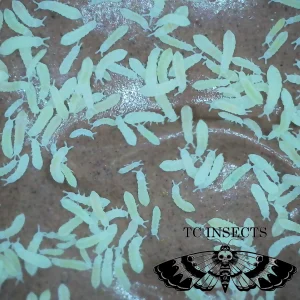
    Little Soil springtails, Onychiurinae sp., are tiny, chubby, soil-dwelling springtails used as cleanup crew microfauna for bioactive terrariums, vivariums, isopod cultures, planted setups, and feeder microfauna projects.

    Best for soil-based bioactive terrariums, isopod cultures, planted vivariums, mold control support, springtail backup cultures, and small supplemental feeder use for suitable reptiles or amphibians.

    Select optionsLoading Done This product has multiple variants. The options may be chosen on the product page
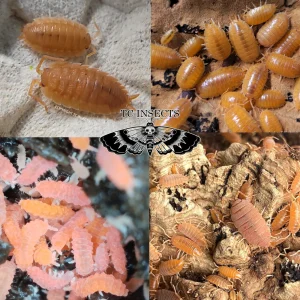
  • Orange Dalmatian (Armadillidium vulgare) - Free Shipping

    Orange Dalmatian (Armadillidium vulgare) - Free Shipping

    $30.00
    • Common/Trade Name: Orange Dalmatian (Armadillidium vulgare)
    • Care Level: Intermediate – provide stable, species-appropriate conditions
    • Best For: Display cultures and bioactive terrariums
    • Setup: Moisture gradient with a damp zone, leaf litter, cork bark, and a calcium source
    • Shipping: Ships FREE nationwide with Live Arrival Guarantee
    Add to cartLoading Done
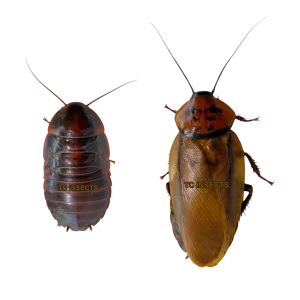
  • Orange Head Roaches (Eublaberus posticus)

    Orange Head Roaches (Eublaberus posticus)

    $1.99 - $259.98
    • Species: Eublaberus posticus
    • Type: Large-bodied feeder roach, dubia alternative
    • Feeds: Bearded dragons, tegus, monitors, larger reptiles
    • Handy: Non-climbing, non-flying, prolific breeder
    • Care: Keep warm, dust with calcium before feeding

    Orange Head Roaches for Sale: a meaty, easy-to-breed feeder roach for larger reptiles.

    Best For: keepers of bearded dragons, tegus, and monitors who want a substantial staple or a self-sustaining colony.

    Orange head roaches, Eublaberus posticus, are a meaty, prolific feeder roach and a practical alternative to dubia. They are large-bodied, so you feed fewer to satisfy a big appetite, and their glossy orange color often triggers a feeding response. They cannot climb smooth surfaces or fly, which makes them easy to contain. They suit larger insectivores.

    Select optionsLoading Done This product has multiple variants. The options may be chosen on the product page
  • Orange Isopods and Springtails

    Orange Sunset Party Mix

    $29.99 - $219.00


    Bundle Type: Multi-species orange-themed isopod mix

    Species Included: Porcellio laevis “Orange,” Porcellio scaber “Orange,” Porcellionides pruinosus “Powder Orange”

    Bonus: 10-count Florida Orange Springtails included with every quantity

    Quantity Options: 25, 100, 250, 500, or 1000 isopods, with scaled springtail bonuses

    Care Level: Beginner to Intermediate

    Ratio: Random, not balanced between species

    Best Use: Discounted entry point for orange-themed bioactive enclosures or sampler purchases

    Orange Sunset Party Mix for Sale: A discounted multi-species bundle of three orange isopod lines plus bonus springtails, suited to keepers who want orange-themed bioactive coverage across multiple species at once.

    Best For: Beginner and intermediate keepers seeding orange-themed bioactive setups, sampler buyers wanting to try multiple orange lines, and budget-conscious shoppers looking for combined value over single-species pricing.

    The Orange Sunset Party Mix is a multi-species bundle of orange-themed isopods at a discounted bundle price. The mix includes three different orange color lines, Porcellio laevis “Orange,” Porcellio scaber “Orange,” and Porcellionides pruinosus “Powder Orange,” plus a bonus 10-count of Florida Orange Springtails. The species ratio is random, so each order arrives as an assortment rather than equal counts of each line, which buyers should plan for.

    Select optionsLoading Done This product has multiple variants. The options may be chosen on the product page
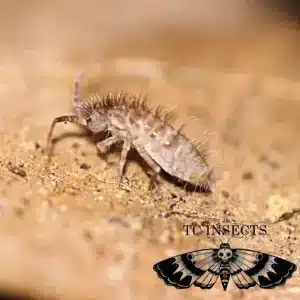
  • Sold Out Sale! Woolly Mammoth springtail (Orchesella villosa), a 4 to 6 mm hairy springtail species, on substrate in a TC INSECTS culture.

    Orchesella villosa | Woolly Mammoth Springtails

    $14.99 - $199.99

    Pronounced: or-keh-SELL-uh vih-LOH-suh

    Care Level: Beginner to intermediate

    Adult Size: 4 to 6 mm, one of the largest springtails in the hobby trade

    Reproductive Rate: Moderate in a stable culture, slower than tropical white springtails

    Temperature: Standard room temperature

    Humidity: Moist substrate with strong airflow

    Scientific Name: Orchesella villosa

    Origin: Widespread in temperate environments, captive stock not tied to a specific locality

    Color Note: Slender elongated body with densely hairy texture, variable mottled patterning

    Woolly Mammoth Springtails for Sale: The largest springtail TC INSECTS sells, a 4 to 6 mm display-grade culture used for visible microfauna, collector setups, and bioactive enclosures with strong airflow.

    Best For: Display and collector cultures, educational setups, bioactive enclosures with good ventilation, and keepers who want a springtail they can actually see without a magnifier.

    Select optionsLoading Done This product has multiple variants. The options may be chosen on the product page
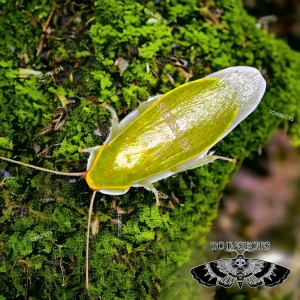
  • green banana roach for sale

    Panchlora nivea "Green Banana Roach"

    $19.00 - $49.99

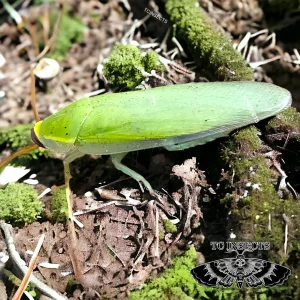
    The Green Banana Roach (Panchlora nivea) is one of the most visually striking feeder roaches in the hobby. Adult females are bright pale-green with a yellow stripe along the sides, reach about 24 mm (just under an

    inch), and have long transparent wings that make them strong fliers. Males are smaller and similar in color. Nymphs are brown and burrow in substrate, so a young colony looks like a completely different species until

    they mature. The species was formally described by Linnaeus himself back in 1758 and arrived in the US riding on Cuban banana shipments. The soft body makes this one of the best small feeder roaches we sell for dart

    frogs, smaller geckos, and juvenile reptiles. Sold in counts of 25, 50, or 100 mixed nymphs.

    • Pronounced: pan-CHLOR-uh NI-vee-uh
    • Care Level: Intermediate, due to flying-toward-lights containment
    • Adult Size: Females up to about 24 mm; males 12 to 15 mm (smaller)
    • Climbing/Flying: Adults of both sexes climb smooth surfaces and are strong fliers attracted to lights
    • Temperature: 75 to 85°F
    • Humidity: Wide range tolerated; substrate should stay moist
    • Adult Lifespan: 6 to 12 months
    • Scientific Name: Panchlora nivea
    • Origin: Cuba (native); naturalized along US Gulf Coast

    Green Banana Roaches for Sale: These soft-bodied Panchlora nivea are the best small feeder roach we sell for dart frogs, smaller geckos, and juvenile reptiles, with the bonus of being one of the most visually striking species in the hobby.

    Best For: Reptile and amphibian keepers wanting a soft-bodied feeder, dart frog and small gecko owners, bioactive terrarium hobbyists wanting a colorful display species, and breeders looking for a fast-producing colony.

    Select optionsLoading Done This product has multiple variants. The options may be chosen on the product page
  • Giant Green Banana Roaches for sale

    Panchlora sp. giant "Giant Green Banana Roach"

    $26.00 - $130.00

    The Giant Green Banana Roach is the larger sister species of our standard Green Banana Roach, sold in the hobby as Panchlora sp. “Giant” because the exact species identification has not been formally confirmed. Adult

    females reach about 28 mm (just over an inch), males about 18 mm. Pale green adults, brown burrowing nymphs, same soft-bodied feeder use as the standard species but with a bigger adult body that makes them a more

    substantial meal for slightly larger reptiles. Slightly more fragile in culture than the standard species and slower-breeding, which is why this listing costs more per nymph. Sold in counts of 10, 25, 50, or 100 mixed

    nymphs.

    • Pronounced: pan-CHLOR-uh es-pee
    • Care Level: Easy overall, but less forgiving than standard Green Banana Roaches
    • Adult Size: Females about 28 mm; males about 18 mm
    • Climbing/Flying: Adults of both sexes climb; males fly strongly, female flight is uncertain
    • Temperature: 72 to 85°F
    • Humidity: Wide range tolerated; substrate should stay moist
    • Scientific Name: Panchlora sp. “Giant” (possibly Panchlora exoleta, unconfirmed)
    • Color: Pale green adults, brown nymphs

    Giant Green Banana Roaches for Sale: This Panchlora sp. “Giant” line is the larger and rarer sister species of standard Green Banana Roaches, with a more substantial adult body for keepers who want a bigger soft-bodied feeder.

    Best For: Reptile keepers wanting a larger soft-bodied feeder than standard Green Banana Roaches, collectors building out the Panchlora genus, and display keepers drawn to the pale-green adult coloration.

    Select optionsLoading Done This product has multiple variants. The options may be chosen on the product page
  • Sale! Buy Pantropical Jumping Spider For Sale

    Pantropical Jumping Spider

    Original price was: $89.99.Current price is: $49.99.

    The Pantropical Jumping Spider (Plexippus paykulli) is a globally distributed jumping spider native to tropical Southeast Asia and Africa. The species has spread worldwide through human commerce — established

    populations now exist across the southern United States (Florida, Gulf Coast, south Texas), Australia, the Mediterranean, and the Maldives. Adult females reach 9-12 mm body length, males slightly smaller (9-11 mm).

    The species is documented as commensal with humans: it lives on exterior walls, eaves, and near artificial light sources where it hunts insects attracted to the lights. Greyish-brown base coloration with dramatic red

    accents on males — sexes look so different they could be mistaken for separate species. Named in honor of Swedish entomologist Gustaf von Paykull (1757-1826). Single specimen sale. Ships FedEx only.

    • Pronounced: PLEK-sih-pus pay-KUL-eye
    • Care Level: Beginner-friendly (similar to Bold Jumping Spider)
    • Adult Size: Females 9-12 mm body; males 9-11 mm body
    • Climbing/Flying: Excellent climber; cannot fly (jumps for movement)
    • Temperature: 72 to 82°F (room temperature works)
    • Humidity: 50 to 60% ambient
    • Adult Lifespan: 1-2 years typically (some sources claim up to 3)
    • Enclosure: Small vertical container (4x4x7 inches max); NOT a large terrarium
    • Feeding: 1-2 small prey items per week; small crickets, flies, fruit flies (NOT mealworms)
    • Scientific Name: Plexippus paykulli
    • Family: Salticidae (jumping spider family)
    • Native Range: Southeast Asia and Africa; introduced to Americas, Australia, Mediterranean
    • Shipping: FedEx only — USPS shipping not available

    Pantropical Jumping Spiders for Sale: This Plexippus paykulli line is the globally distributed building-dwelling jumping spider, an excellent second jumper for keepers already familiar with our Bold Jumping Spider.

    Best For: Existing jumping spider keepers wanting a second species, photographers drawn to the dramatic male coloration, Florida and Gulf Coast residents already familiar with the wild populations, and hobbyists interested in commensal-with-humans biology.

    Add to cartLoading Done