
Mardi Gras Isopods for Sale
Overview
Mardi Gras isopods are a designer color morph of Oniscus asellus, the common shiny woodlouse. The base species was first described by Linnaeus in 1758 and ranks among the most studied woodlice in the world. Native to the British Isles, Western Europe, and Northern Europe, it has also established widely in North America. As a result, husbandry data for this species is unusually reliable compared with many hobby-trade lines.
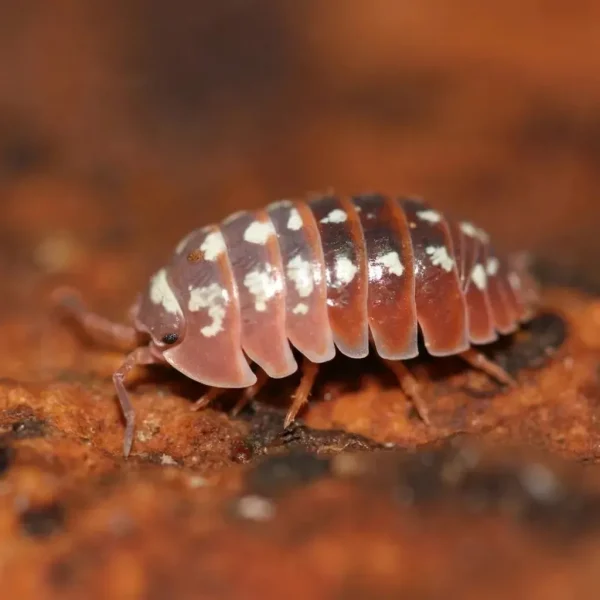
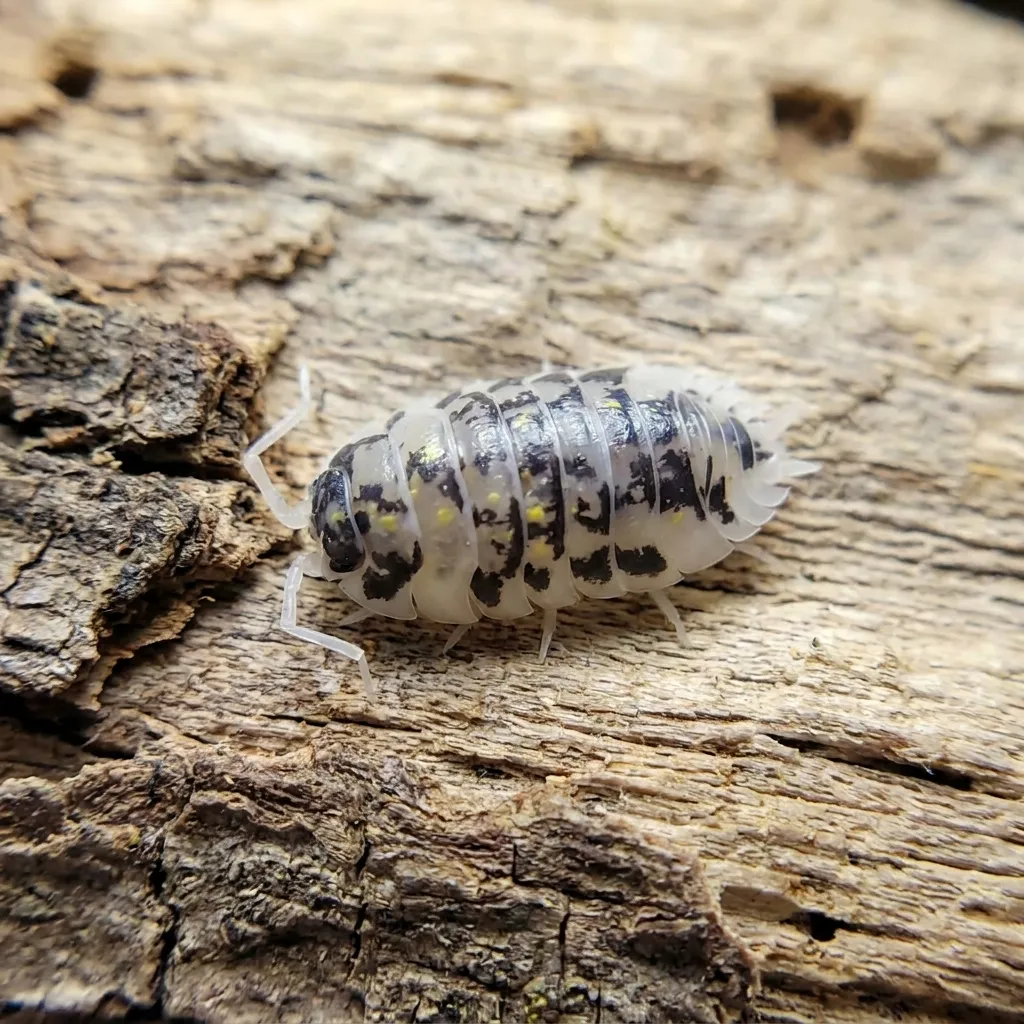
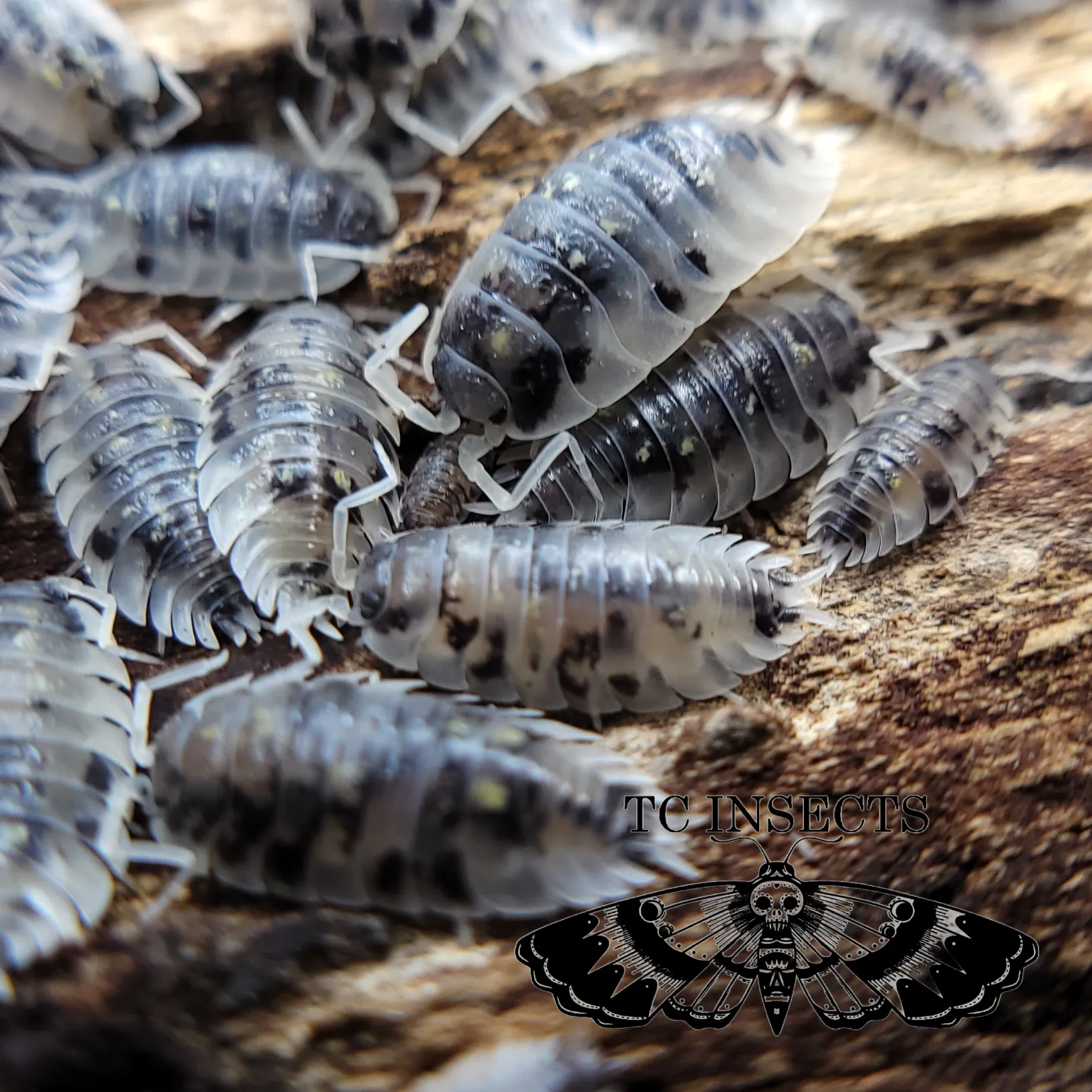
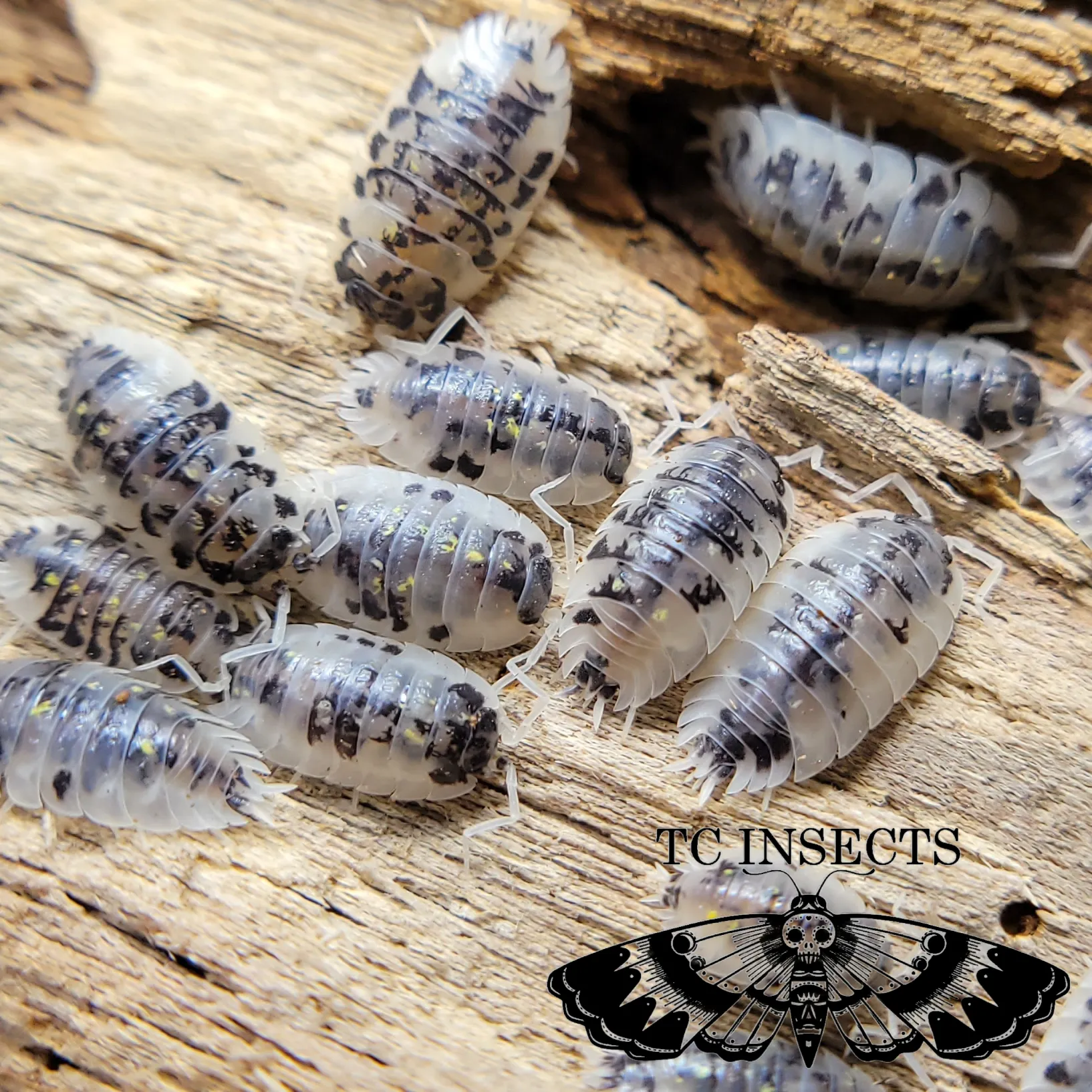
The Mardi Gras morph displays a black-and-white dalmatian-style pattern with bright yellow spots. The underlying genetics affect dark pigmentation but leave yellow expression intact, which is what gives the morph its signature look. However, individual patterning varies, and juveniles often appear different from adults until they mature.
Why Keep Mardi Gras Isopods?
- Strong display patterning: First, the contrast between black, white, and yellow stands out against most substrate types and leaf litter.
- Documented morph history: Additionally, the line traces back to selective breeding by TJ Ombrelle, which gives this morph clearer provenance than many hobby-trade names.
- Temperate species fit: Mardi Gras isopods suit cool to moderate enclosures, which makes them useful for keepers running temperate setups instead of tropical ones.
- Workable breeding pace: Furthermore, settled colonies reproduce at a moderate rate without overwhelming an enclosure.
- Reliable adult size: Finally, the 15 to 18 mm species size class makes individuals easy to see and photograph in a display tank.
Honest Note on Long-Term Pattern Stability
Mardi Gras is a designer color morph, not a fixed species trait. Pattern expression varies between individuals, and offspring can drift toward darker or lighter forms over generations if breeders do not selectively cull. Specifically, the dalmatian/yellow-spot look depends on continuing to select breeders that show the trait clearly.
If you plan to maintain the morph long-term, plan to select your breeders rather than letting the colony random-mate indefinitely. Some keepers report that pattern intensity weakens after several uncontrolled generations. This is normal for dalmatian-style morphs across multiple isopod species and is not unique to this line.
Honest Note for Tropical Isopod Keepers
Mardi Gras isopods are temperate, not tropical. As a result, the husbandry differs from species like Cubaris murina “Little Sea” or Filippinodillo sp. “Giant Banahaw”. Specifically, this species struggles in sustained heat above 80°F and prefers cooler, damper conditions. Keepers used to tropical isopods often overheat or over-humidify Mardi Gras cultures by default.
If your room temperature consistently runs warm, plan to keep the culture in a cooler spot, such as a basement, a north-facing room, or a temperature-controlled cabinet. Conversely, if you already keep amphibians or temperate species at cooler conditions, this morph will fit naturally into that environment.
Care and Setup
Mardi Gras isopods do well in a cool, damp setup with steady airflow and abundant leaf litter. The following sections cover the practical husbandry framework we recommend.
Temperature
Target 65 to 75°F across most of the year. Brief swings inside that range are fine. However, prolonged heat above 80°F stresses the colony and slows breeding sharply. Cool basements and shaded rooms often work better than warm reptile-room shelves.
Humidity
Aim for moderate to moderate-high humidity overall. Keep the substrate damp throughout rather than running a strong wet-to-dry gradient like a tropical species. However, never let the substrate sit waterlogged, since stagnant moisture causes mold and substrate breakdown faster than the colony can manage.
Substrate
Use a moisture-holding mix of soil, rotted hardwood, and organic matter at a depth of 2 to 3 inches. Add a generous layer of TC INSECTS Assorted Hardwood Leaf Litter on top. Leaf litter is especially important for this species, since wild populations live heavily under bark and decaying leaves.
Food
Lead with leaf litter and decaying hardwood as the base diet. Then supplement with TC INSECTS Isopod Food for added protein and minerals, plus a calcium source like TC Calcium Ultra Fine. Oniscus asellus responds well to a varied diet that includes occasional protein, since hobby reports note stronger growth when protein is part of the rotation.
Ventilation
Use cross-ventilation or controlled lid ventilation. Specifically, you want enough airflow to prevent stagnant pockets, but not so much that the substrate dries within a day. Cool, damp, and breathable is the target combination for this species.
Bioactive Use
Mardi Gras isopods can work in temperate or cool-leaning bioactive enclosures. However, they are not the best fit for warm tropical vivariums. Pair them with cool-tolerant springtails and amphibian-safe setups for the strongest long-term results, and run a backup culture in a dedicated bin before adding them to a display tank.
Breeding Notes
Mardi Gras isopods breed at a moderate pace once settled. Females carry developing mancae in a brood pouch, and stable cool temperatures support successful broods. Generally, the colony grows steadily rather than producing population spikes like Dairy Cow isopods or Powder Orange.
For best morph maintenance, select the most clearly patterned individuals as breeders over time. Otherwise, the colony can drift toward darker or less defined offspring. Additionally, add fresh leaf litter before the existing layer is consumed, and avoid frequent substrate disruption.
Best For
- Display cultures focused on bold black, white, and yellow patterning
- Temperate planted vivariums with cool to moderate temperatures
- Amphibian enclosures with cool-tolerant species and stable humidity
- Collector shelves that include designer color morphs alongside species lines
- Keepers who want a documented morph with selectable breeding potential
Not Best For
- Warm tropical vivariums sitting consistently above 80°F
- Bearded dragon or other hot reptile enclosures, since the temperature mismatch is significant
- Feeder use, since per-animal value is high for a designer morph and breeding is moderate
- Keepers expecting fast cleanup-crew turnover like Dwarf White isopods
- Random-mate colonies where morph drift over generations would be a problem
Origin and Locality Notes
Oniscus asellus is native to the British Isles, Western Europe, and Northern Europe. Additionally, it has established widely in North America as a synanthropic species, which means it commonly lives in gardens, walls, and outbuildings around human settlement. Adults reach roughly 15 to 18 mm in length, making this one of the larger native European woodlice.
The Mardi Gras morph is a captive-bred designer line, not a wild-collected form. Hobby reports trace the line to selective breeding by TJ Ombrelle, who isolated the dalmatian-style pigment expression that defines the morph. Therefore, this is a captive-line product with documented hobby provenance rather than a wild locality designation.
Receiving and Acclimation
Open your package promptly when it arrives and inspect the cup calmly before moving anything. After shipping, Mardi Gras isopods often hide in moss, leaf litter, or packing material, so check slowly rather than dumping the culture.
Prepare the enclosure before opening the cup. The habitat should already have damp substrate, leaf litter, bark, and a calcium source. Then place the shipping material into the enclosure and let the isopods move out on their own. Finally, keep the setup in a cool, quiet spot for the first week while the colony settles.
It is normal for new arrivals to hide for the first several days, especially if room temperature is warmer than ideal. Move the culture to a cooler location if needed before changing humidity or food.
Recommended Add-Ons
- TC INSECTS Isopod Habitat Kit — a complete starter setup that gives this morph proper substrate, leaf litter, moss, and feed from day one.
- TC INSECTS Assorted Hardwood Leaf Litter — the core food and cover layer for Oniscus asellus, which lives heavily under leaf litter in the wild.
- TC INSECTS Isopod Food — supplemental protein and minerals beyond leaf litter, since this species responds well to a varied diet.
- TC Calcium Ultra Fine — supports healthy molts and exoskeleton development for the species size class.
- Springtails — pair well with Mardi Gras isopods in temperate bioactive setups to help manage mold on damp substrate.
Frequently Asked Questions
Are Mardi Gras isopods beginner-friendly?
Generally yes, as long as the room stays cool. They are forgiving in most respects, but they do not tolerate sustained heat well. First-time keepers running warm reptile rooms may want a more heat-tolerant species like Dairy Cow isopods instead.
Is the Mardi Gras morph the same as the species or a separate line?
It is a selectively bred color morph of the same species, Oniscus asellus. The morph traces to isolation work by TJ Ombrelle, who selected for dalmatian-style pigment expression with yellow spots. So this is a captive line within a fully described species, not a separate species.
Will the pattern hold over generations?
Only if you select for it. Specifically, dalmatian-style morphs can drift toward darker or less defined offspring if the colony random-mates without selection. Therefore, keepers who want to maintain the morph long-term should pick their cleanest-patterned individuals as breeders over time.
Can Mardi Gras isopods live in a bioactive terrarium?
Yes, as long as the terrarium runs cool to moderate. They fit temperate setups, planted vivariums for cool-tolerant species, and amphibian enclosures with stable cool conditions. However, they are not the right pick for warm tropical vivariums above 80°F.
How fast do they breed?
Moderate once established. They do not produce the population booms seen with workhorse cleanup species. Generally, plan this as a steady, slow-building display colony rather than a quick-turnaround culture.
What temperature is too warm?
Sustained temperatures above 80°F stress this species. Brief warm spikes are usually tolerated, but consistent heat causes hiding, reduced feeding, and slower breeding. As a result, room placement matters: a cool basement or a north-facing shelf often works better than a warm reptile-room rack.
Learn More About Oniscus asellus
Because Oniscus asellus is one of the most thoroughly studied woodlouse species in the world, the following non-competitor references give keepers solid background for husbandry decisions.
-
World Register of Marine Species: Oniscus asellus Linnaeus, 1758. The authoritative taxonomic record, with the accepted name, original Linnaean description, and full synonym list. Useful for buyers who want to verify the species and its history.
-
PubMed Central: Terrestrial isopods, soil, and litter interactions. An open-access review of how land isopods interact with leaf litter, moisture, and substrate. Useful for keepers who want the science behind why deep hardwood leaf cover and stable damp conditions matter for a temperate species like this one.