
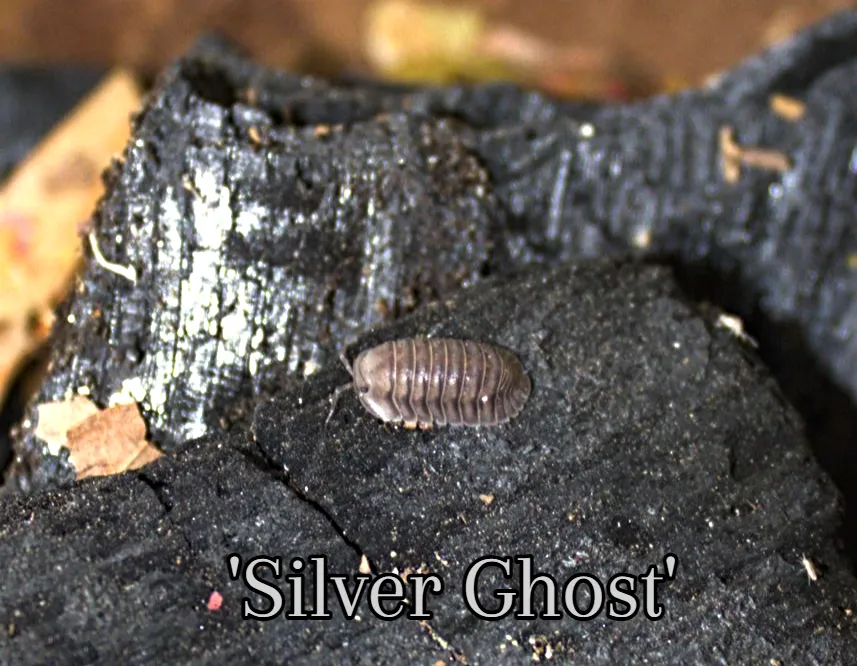
Silver Ghost Isopods for Sale
Silver Ghost is a Taiwanese tropical pill bug in the genus Nesodillo. This listing is a live culture from TC INSECTS. Specifically, the species was formerly traded in the hobby as Cubaris sp. “Silver Ghost” before being
properly reclassified into Nesodillo. The species Nesodillo arcangelii was described by Karl Wilhelm Verhoeff in 1928. Notably, Verhoeff’s original paper was titled “Isopods from Formosa” and published in the Berlin
Zoological Museum bulletin. Importantly, Formosa is the old name for Taiwan. As a result, the documented type locality is Taiwan, not generic Southeast Asia.
Overview
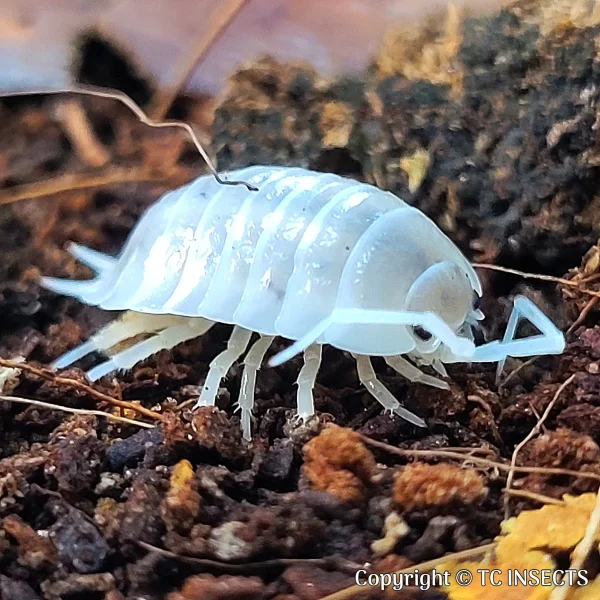
Adults reach about 15 to 20 mm. Generally, the body is broad and flatter than typical Cubaris species. Specifically, the silvery-gray body has a semi-translucent quality that gives the morph its “Silver Ghost” trade name. In
addition, the animal conglobates loosely when disturbed. As a result, it resembles a pillbug rather than a fully closed ball.
Notably, the species belongs to the family Armadillidae. Importantly, this family is distinct from Armadillidiidae, which contains the European Armadillidium pill bugs. As a result, care needs differ substantially.
Specifically, Nesodillo is a tropical genus requiring high humidity rather than the semi-arid Mediterranean conditions favored by Armadillidium.
Why Keep Silver Ghost?
- Semi-translucent silvery body: The pale ghostly coloration creates a distinctive visual signature uncommon in the isopod hobby.
- Documented Taiwanese species: First, the parent species was described by Verhoeff in 1928 from Taiwan. In addition, the locality is real rather than a hobby trade label.
- Modern reclassification interest: Notably, the genus move from Cubaris to Nesodillo reflects a real taxonomic correction. As a result, collectors interested in hobby taxonomy gain a documented case study.
- Prolific once established: Specifically, this species reproduces readily in stable tropical setups, unlike slower Armadillidium species.
- Beginner-friendly tropical species: In addition, the care window is reasonably forgiving for keepers comfortable with high humidity.
Honest Note on the Cubaris to Nesodillo Reclassification
Silver Ghost was originally sold in the hobby as Cubaris sp. “Silver Ghost” before being properly placed into Nesodillo. Specifically, careful examination showed the species belongs to Nesodillo arcangelii, described by
Verhoeff in 1928. Importantly, the older Cubaris sp. labels still appear on some seller sites and in older hobby references. As a result, you may see this animal listed under either genus depending on the source. Notably, this
is similar in pattern to the Merulanella to Ardentiella reclassification that affected our Ardentiella sp. “Scarlet” listing. As a result, both products illustrate the ongoing refinement of isopod taxonomy.
Honest Note on the Arcangeli Eponym
The species name arcangelii honors Giuseppe Arcangeli, an Italian zoologist who worked extensively on Armadillidae taxonomy in the early twentieth century. Notably, Arcangeli is the same eponym associated with the
genus Cristarmadillidium, which he established in 1936. As a result, this Silver Ghost listing shares an etymological link with our Cristarmadillidium muricatum “Pineapple Spiky” product. Specifically, both species
reference Arcangeli’s contributions to isopod systematics, though they are in different genera and from different regions.
Honest Note on Genus and Family Placement
The genus Nesodillo was described by Verhoeff in 1926. Specifically, the name combines the Greek nesos (“island”) with a suffix referring to pill bugs. Importantly, Nesodillo belongs to the family Armadillidae. In contrast,
the more commonly kept European Armadillidium species belong to Armadillidiidae. Notably, these are two distinct families despite the similar names. As a result, husbandry approaches differ. The genus currently
contains 23 species distributed across South and Southeast Asia, Japan, New Caledonia, and nearby regions.
Care and Setup
Silver Ghost care is built around four things: stable warmth, high consistent humidity, deep organic substrate, and reliable calcium availability. Importantly, this is a tropical species. Therefore, husbandry differs from the semi-arid Mediterranean approach used for Armadillidium pill bugs.
Temperature
Aim for 70 to 80°F as the everyday range. Generally, room temperature works for most keepers. However, avoid sustained heat above the mid-80s. Also, avoid cold drafts. Notably, stable warmth supports breeding more than wider temperature swings.
Humidity
Aim for high humidity in the 75 to 95% range. Specifically, the substrate should stay consistently moist throughout. Importantly, dry conditions can be fatal for this species. As a result, mist regularly and check moisture daily during the establishment period. In contrast to Armadillidium, this species does not need a clearly drier opposite side.
Substrate
Use a deep tropical isopod substrate blend at least 2 to 3 inches deep. For example, a coco fiber base mixed with decomposed hardwood, sphagnum moss, and leaf litter works well. In addition, include some crushed limestone or oyster shell for calcium support. Notably, the substrate should hold moisture without becoming swampy or anaerobic.
Food
Leaf litter and decaying hardwood should always be available. In addition, supplement with TC INSECTS Isopod Food, calcium, and small portions of vegetables. For example, carrot, squash, and sweet potato are common picks. Notably, this species benefits from occasional protein. As a result, dried shrimp or fish-based foods support colony growth.
Ventilation
Use moderate ventilation. Specifically, some airflow prevents stagnant conditions. However, too much ventilation will dry the substrate too quickly. As a result, balance airflow with consistent humidity. For example, a vented lid with limited side vents often works well for tropical species.
Bioactive Use
Overall, Silver Ghost suits high-humidity bioactive enclosures excellently. For example, it works well in dart frog vivariums, planted tropical setups, and amphibian habitats. Specifically, the species tolerates consistently moist conditions better than most pill bugs. In addition, the silvery body adds a distinctive look to dark tropical substrates.
Breeding Notes
Mature females carry developing young in a brood pouch called a marsupium. Then, they release small juveniles that hide in damp substrate and leaf litter. Generally, reproduction is prolific once the culture stabilizes.
Specifically, new cultures may produce visible juveniles within several weeks of stable conditions. In addition, larger starter counts establish more reliably. This is because they include more breeding-age adults from the
start.
Importantly, juveniles often take several molts to develop the full adult silvery coloration. Specifically, young animals may look more uniformly pale or gray. Therefore, be patient with juveniles that look less defined than
their parents.
Best For
- Tropical bioactive vivariums with consistent high humidity
- Dart frog and amphibian enclosures with moist substrate
- Planted tropical terrariums with leaf litter and decaying wood
- Collectors building an Asian pill bug shelf with documented taxonomy
- Intermediate keepers interested in modern hobby reclassifications
Not Best For
- Dry semi-arid setups (instead, choose an Armadillidium vulgare Gem Mix)
- Mediterranean-themed displays (instead, use an A. klugii “Montenegro”)
- Sole feeder cultures (the species is too valuable as a display and breeder for feeder use)
- Sterile or completely freshly built enclosures with no leaf litter or decaying wood
- Enclosures with poor moisture retention (dry conditions can be fatal for this species)
Origin and Hobby Line Notes
The species N. arcangelii was described by Verhoeff in 1928 from Taiwanese specimens. Specifically, the type locality is documented as Formosa, which is the old name for Taiwan. Notably, the genus extends across South
and Southeast Asia, with 23 species in total. The Silver Ghost morph is one of several color forms within the species or species-complex. For example, related morphs include Purple Ghost and Shiro Utsuri. As a result,
manage the culture as a captive tropical line with documented husbandry needs.
Receiving and Acclimation
First, bring the package indoors as soon as it arrives. Then, open it in a calm area away from direct sun, heat, or cold drafts. Importantly, prepare the enclosure before opening the cup. Specifically, the setup should already
have deep moist substrate, leaf litter, bark hides, and calcium. Notably, a tropical setup with consistent high humidity is essential for this species.
Next, gently tip the cup contents, including shipping material, directly onto the moist substrate. Often, some animals will stay curled or hidden during the first few days. This is because shipping stresses live isopods.
Therefore, feed lightly during the first week. Then, increase feeding once the colony becomes more active. Finally, avoid digging through the culture during this settling period.
Recommended Add-Ons
- TC INSECTS Ultra Isopod Habitat Kit for a richer tropical setup with deeper moisture retention
- TC INSECTS Assorted Hardwood Leaf Litter for food, cover, and the natural grazing layer
- TC INSECTS Isopod Food for protein-rich supplementation
- TC Calcium Ultra Fine for healthy molts
- Springtails to complement the Silver Ghost culture in tropical bioactive setups
Frequently Asked Questions
Why is Silver Ghost now Nesodillo instead of Cubaris?
The species was originally sold in the hobby as Cubaris sp. “Silver Ghost.” Specifically, careful examination revealed it actually belongs to Nesodillo arcangelii, described by Verhoeff in 1928. Importantly, this is a real taxonomic correction. As a result, modern listings use the proper Nesodillo name. However, older references still use the Cubaris sp. label.
Who is the species named after?
The species name arcangelii honors Giuseppe Arcangeli, an Italian zoologist who worked on Armadillidae taxonomy in the early twentieth century. Notably, Arcangeli is also the same eponym associated with the genus Cristarmadillidium, which appears in our Pineapple Spiky product.
What is the difference between Nesodillo and Armadillidium?
Both are genera of pill bugs, but they belong to different families. Specifically, Nesodillo is in the family Armadillidae. In contrast, Armadillidium is in the family Armadillidiidae. Importantly, Nesodillo is a tropical Asian genus. Meanwhile, Armadillidium is a European Mediterranean genus. As a result, husbandry needs differ substantially.
Are Silver Ghost isopods beginner-friendly?
Generally yes for keepers comfortable with tropical husbandry. Specifically, the species needs high humidity (75 to 95%) and warm temperatures. Importantly, dry conditions can be fatal. Therefore, first-time keepers should be prepared to maintain consistent moisture. In addition, prolific breeding makes the species rewarding once established.
Do Silver Ghost and Purple Ghost come from the same species?
Yes. Specifically, both are color morphs within the N. arcangelii complex (or closely related species). Notably, Purple Ghost shows a similar body shape but with purple-to-violet coloration instead of silvery-gray. In addition, related morphs include Shiro Utsuri, which is named after a Japanese koi fish pattern.
Will the silvery color fade in juveniles?
No, but juveniles may look less defined. Specifically, young animals often appear more uniformly pale or gray. Then, they develop the full adult silvery coloration over several molts. Therefore, be patient with juveniles that look less ghostly than their parents.
Learn More About Nesodillo and Asian Pill Bugs
The following references offer useful background on the genus, the species, and the broader pill bug family.
-
Wikipedia: Nesodillo (Verhoeff, 1926). Specifically, a useful overview of the genus, including the family placement in Armadillidae, the 23 currently accepted species, and the South and Southeast Asian distribution.
-
British Myriapod and Isopod Group: Woodlouse and Waterlouse Recording Scheme. Specifically, background on the wider terrestrial isopod group from a long-running scientific recording body. In addition, it is helpful for understanding how pill bugs and other woodlice live, feed, and reproduce.
-
Natural History Museum: Giant isopods, curious crustaceans on the ocean floor. Specifically, a short, plain-language overview from the NHM. In addition, it puts the woodlouse family in context with their marine relatives.



Reviews
There are no reviews yet.