


Green Banana Roaches for Sale
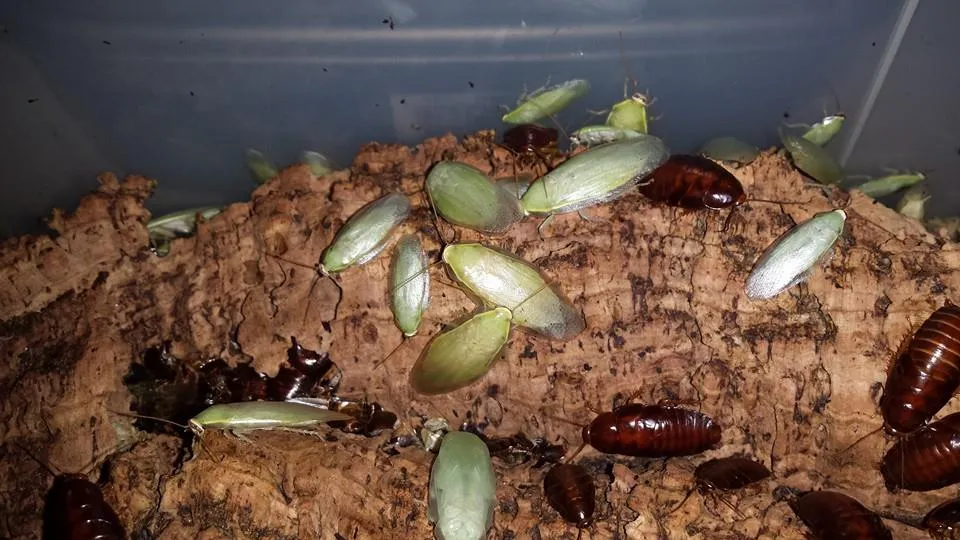
The Green Banana Roach (Panchlora nivea), also called the Cuban Cockroach, is a small bright-green roach native to Cuba and the Caribbean. It is one of the most visually striking feeder roaches in the hobby and one of
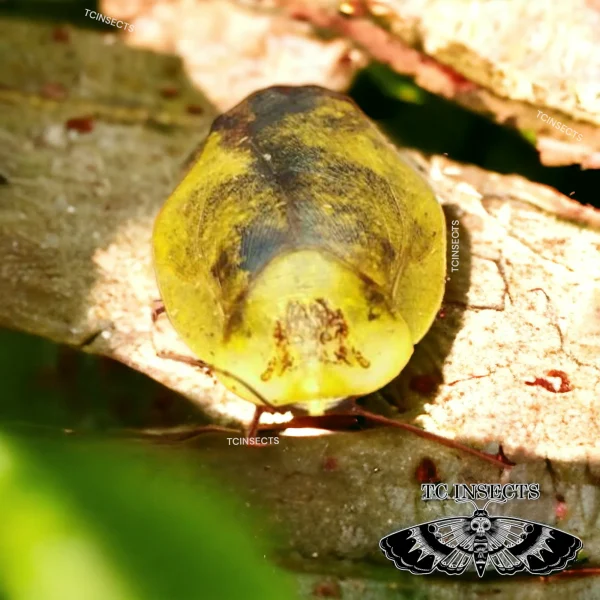
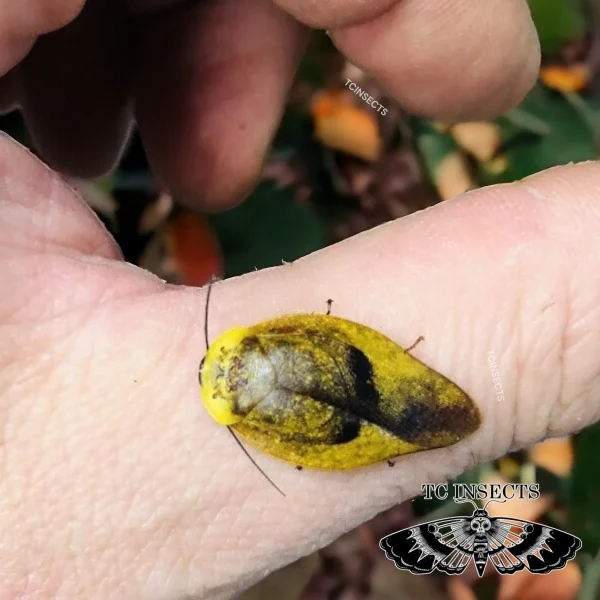
the most useful for keepers feeding soft-bodied prey to dart frogs, smaller geckos, juvenile bearded dragons, and other reptiles and amphibians. Adult females reach up to about 24 mm with pale green coloration and a
yellow stripe along the sides; males are smaller (12 to 15 mm) and similarly colored. Nymphs look completely different from adults: brown, burrowing, and easily mistaken for a separate species. Sold in counts of 25, 50, or
100 mixed nymphs to feeder users and display keepers.
Overview
Green Banana Roaches sit at a unique crossroads in the exotic roach world: they work as both a soft-bodied feeder for picky insectivores AND as a colorful display species in bioactive setups. The species belongs to the
family Blaberidae like our other exotic roaches, but in its own subfamily Panchlorinae. Females give birth to live babies rather than laying eggs. Adults of both sexes have long transparent wings and are strong fliers,
attracted to lights at night — which is the main containment consideration for this species. Adult lifespan is short (6 to 12 months) compared to the long-lived hissers, but females breed quickly enough to maintain a
productive colony. The species was formally described by Linnaeus in 1758, making it one of the oldest scientifically named cockroach species in the world.
Honest Note: They Really Did Travel on Banana Boats
The common name is not random. The story is documented: Green Banana Roaches are native to Cuba, where they live in trees, shrubs, and leaf piles. Starting in the early 1900s, Cuban banana shipments to the United
States carried hitchhiking roaches that escaped at port and established themselves in the warm Gulf Coast region. Today, naturalized populations exist from Florida through coastal Texas, with the densest populations in
Florida. They survived because the climate matches their tropical home and because they prefer outdoor habitat (trees, lumber piles, leaf piles) rather than human houses. They are a tropical outdoor roach that just
happens to ride along when bananas move.
This documented natural-spread history is also why some buyers in Florida may need to check local rules before keeping them — they are already established in the wild there.
Honest Note: Brown Babies, Green Adults (Same Species)
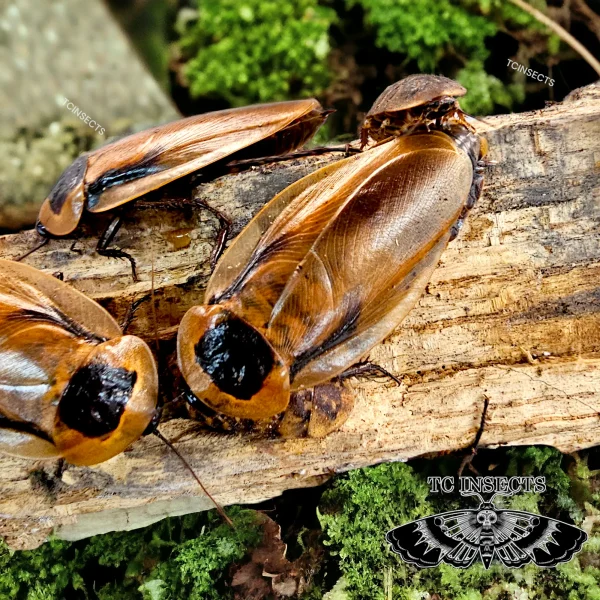
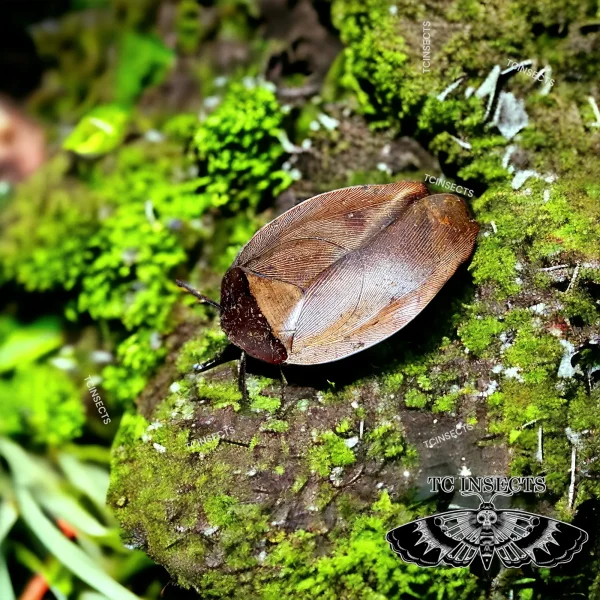
This is the most common confusion first-time buyers have with Green Banana Roaches. Nymphs and adults look like completely different animals:
- Nymphs (babies): Dark brown to black, no green color. Spend most of their time burrowed in substrate. If you watch the substrate carefully, you can see them digging.
- Adults: Bright pale-green to yellowish-green with a yellow stripe along the sides. Active on the surface, especially at night. Long transparent wings.
The color change happens gradually over multiple molts as nymphs grow up. So a 25-count nymph order looks like nothing but small brown roaches at first; the bright green you came for shows up as they mature. If you want to see the famous green color right away, you’d need to order adults from a different source, but most hobby breeders sell mixed nymphs because adults are short-lived and harder to ship.
Honest Note: They Fly Toward Lights (Which Is Bad for Containment)
This is the husbandry detail you need to take seriously. Adult Green Banana Roaches are strong fliers, nocturnal, and attracted to lights — same as moths. So when an adult escapes:
- It flies toward the nearest light source
- That usually means a window with a streetlight outside, or a lamp in the room
- From there it can get into other rooms or out an open window
Practical setup advice:
- Use a gasket container (a sealed lid that locks shut) OR a tight-fitting container with a silicone/petroleum jelly barrier around the inside top edge.
- Open the enclosure only in a closed room with windows closed and curtains drawn — never near a lit window at night.
- Turn off room lights before opening the enclosure if possible. They are less active in the dark.
- If feeding to reptiles, transfer the roaches into the reptile enclosure in a closed area, not in an open room.
This isn’t hard to manage, but it’s a real and specific risk that doesn’t apply to the non-flying roaches in most of our catalog.
Honest Note: Adults Are Short-Lived
Adult Green Banana Roaches live only 6 to 12 months, much shorter than the hissers (2 to 5 years) or large display roaches like our Blaberus (1 to 2 years). This affects how you should think about colony planning:
- You can’t keep one as a single long-term pet. They live too short for that, and they prefer colony life anyway.
- The colony stays productive because the babies keep coming. Females reproduce fast and produce many nymphs over their short adult life. So even though individual adults don’t live long, the colony as a whole stays going.
- For breeders, plan multiple overlapping generations. Start with a mixed-nymph group rather than same-age stock so you always have animals at different life stages.
Why It’s the Best Soft-Bodied Feeder Roach We Sell
The body texture is genuinely different from most feeder roaches. Most cockroaches, including Dubia, have a fairly hard outer shell. Green Banana Roaches are lightly sclerotized, which in plain English means their outer shell is much thinner and softer. That matters for feeding because:
- Soft-bodied insectivores can actually digest them. Dart frogs, small geckos, juvenile bearded dragons, and salamanders that struggle with hard-shelled Dubia handle Green Banana Roaches comfortably.
- The green color triggers feeding response. Multiple reptile keepers report that the bright movement of green adults gets a stronger feeding response from reluctant eaters than the duller browns of most feeders.
- Nymphs are small enough for tiny reptiles. The small nymph size suits hatchling and juvenile reptiles where larger feeders like adult Dubia or hisser nymphs are too big.
- Soft body is easier on reptile digestion. Less chitin means lower risk of impaction, especially relevant for younger reptiles still developing strong digestive enzymes.
Care and Setup
Husbandry is straightforward, with the flying containment as the main wrinkle.
Enclosure
Use a gasket-sealed container (sealed lid that locks shut) OR a tight-fitting container with a silicone or petroleum jelly band around the inside top edge as backup. A 5 to 10 gallon size works for 25 to 50 starter nymphs. Stack egg flats vertically for cover and climbing surface.
Temperature
75 to 85°F is the active range, with 78 to 82°F driving best breeding. They tolerate brief cool dips but won’t breed actively below 72°F. A heat mat on the side of the enclosure handles temperature in cool rooms.
Humidity and Substrate
Moist substrate is important because the nymphs burrow and need damp dirt to do so. Two to three inches of coco fiber, peat moss, or organic potting soil. Keep the substrate damp (like a wrung-out sponge) but not soaking wet. Mist lightly every few days. Good airflow through vented sides keeps the air from getting stale.
Food
Despite the name, they don’t eat just bananas. They are omnivores that prefer sweet and starchy foods. Offer fresh fruit (bananas, apples, pears, melon), starchy vegetables (squash, sweet potato), and dry food like Supreme Feed Premium Roach Formula. They love banana, hence the name, and a slice of banana on the substrate is a near-guaranteed way to bring nymphs up out of the dirt for observation.
Hydration
The moist substrate provides most water. Hydro-Thirst Insect Water Crystals work as a spill-proof backup. Avoid open water dishes because nymphs drown easily.
Bioactive Setup Option
Green Banana Roaches do well in bioactive terrariums with isopods and springtails as the cleanup crew. The roaches contribute to the bioactive ecosystem and the cleanup crew keeps the substrate healthy. This is one of the few feeder roaches that genuinely thrives in bioactive setups.
Breeding Notes
Females give birth to live nymphs and the species is described as “fast producing” by the live page, which matches the documented hobby reality. A starter group of 25 to 50 mixed nymphs typically reaches productive
breeding output within a few months under warm conditions. Because adults are short-lived, colony stability depends on overlapping generations rather than long-lived breeders. Plan for ongoing nymph production rather
than a single breeding event. Nymphs reach adulthood in about 4 to 5 months under good conditions.
Best For
- Dart frog keepers needing a soft-bodied feeder for picky eaters
- Small gecko owners (crested geckos, gargoyle geckos, smaller day geckos)
- Juvenile bearded dragon and other juvenile reptile owners
- Salamander and other amphibian keepers
- Bioactive terrarium hobbyists wanting a colorful display species that also functions as cleanup
- Hobbyists moving up from Dubia to a more visually striking feeder option
Not Best For
- Setups without secure climb-and-fly-proof containment
- Larger reptile keepers needing more meat per feeder (use our standard hissers or larger Dubia instead)
- Keepers wanting a single long-lived pet, since adults only live 6-12 months
- Buyers in jurisdictions that restrict this species; Florida residents should check local rules due to established naturalized populations
- Anyone planning to release roaches outdoors under any circumstances, especially important since this species is already naturalized in parts of the southern US
Origin and Locality Notes
The Green Banana Roach is native to Cuba and the broader Caribbean, with naturalized populations established along the US Gulf Coast from Florida through coastal Texas via documented historical introduction on
banana shipments. One verified observation as far north as Moncks Corner, South Carolina is on record. The species was first described by Linnaeus in his 1758 *Systema Naturae*, making it one of the oldest scientifically
named cockroach species. The genus *Panchlora* includes several other species hobby breeders work with, some of which we sell as separate products in our catalog.
Receiving and Acclimation
Your order ships with ventilation and bedding suited to transit. On arrival, open the package in a closed room with the lights off or dim — this is important for an adult-flying species attracted to lights. Transfer th
e nymphs into a prepared moist-substrate enclosure with hides and a hydration source. Give them a day or two to settle and burrow before disturbing them. As with every live insect we sell, do not release them into the
wild; this applies with extra force to a species already naturalized in parts of the southern US.
Recommended Add-Ons
- Hydro-Thirst Insect Water Crystals for safe drowning-free hydration in the moist enclosure.
- Supreme Feed Premium Roach Formula for a quality dry diet alongside fresh fruits and vegetables.
- Live Springtails for bioactive cleanup in the moist substrate setup.
- Live Isopods as additional bioactive cleanup, especially for the breakdown of leftover fruit.
- Dubia Roaches for keepers wanting both a soft-bodied feeder (Green Banana Roaches) and a hard-bodied feeder (Dubia) for different reptile species or life stages.
Verified Customer Feedback
This product has a verified five-star review from June 2023: “Every roach arrived safely. Packaging was done well. This is a really beautiful species and the roaches from TC INSECTS are high quality.” — Kenneth Drake, verified owner.
Frequently Asked Questions
Did they really get their name from banana boats?
Yes, this is the documented historical origin. Cuban banana shipments to US ports in the early 1900s carried hitchhiking roaches that established naturalized populations in the southern US. The Texas Invasive Species
Institute and other entomology sources document this introduction route. The “banana” common name reflects both the historical spread and the species’ fondness for banana as a food.
Why do my babies look like a completely different roach than the picture?
Because they are nymphs (babies). Nymphs are brown and burrow in the dirt; adults are the bright green animal in our product photos. The color change happens gradually over several molts as the nymphs grow up. This
isn’t a quality issue with your order — it’s just how the species develops.
Are they legal where I live?
For most US states, yes. They are sold legally as feeder and pet roaches across nearly all states. The exception worth checking is Florida specifically, where the species already has established naturalized populations and
some local rules may apply. If you’re in Florida or another Gulf Coast state, check with your state agriculture department before ordering. We do not ship to states where the species is restricted.
Can my dart frog or small reptile actually eat them?
Yes, and this is the main reason most buyers choose this species. The soft body is much easier for soft-jawed insectivores like dart frogs, small geckos, and amphibians to handle than the hard-shelled Dubia or crickets. The bright green color also tends to trigger a stronger feeding response from picky eaters.
Do they bite or smell?
No. They have no defensive bite, and a clean, well-ventilated enclosure produces no noticeable odor. They are docile when handled, though they may fly off your hand if startled.
How do they compare to your other green or colorful roaches?
This species (P. nivea) is the smaller, more widely available, and least expensive of the green roaches. Our larger Panchlora sp. “Giant Green Banana Roach” is the bigger relative for keepers wanting a more substantial display animal. Both come from the same genus but differ in size and price.
Learn More About Panchlora nivea
These references give keepers background on the species and its hobby and natural history.
-
Wikipedia: Panchlora nivea. The species profile, including the Linnaeus 1758 description, the documented size range with male/female dimorphism, the US naturalized range (Florida through Texas, with one South Carolina record), and the banana-shipment introduction route.
-
Texas Invasive Species Institute: Cuban Cockroach (Panchlora nivea). A documented profile of the species’ US naturalized range and ecology, useful background for buyers wanting to understand the legal-status context in southern US states.
-
BugGuide: Green Banana Cockroach (Panchlora nivea). A community-sourced North American insect identification resource with verified observation photos showing adult coloration in wild specimens and the brown-nymph-to-green-adult transition.
KENNETH DRAKE (verified owner) –
Every roach arrived safely. Packaging was done well. This is a really beautiful species and the roaches from tcinsects are high quality.