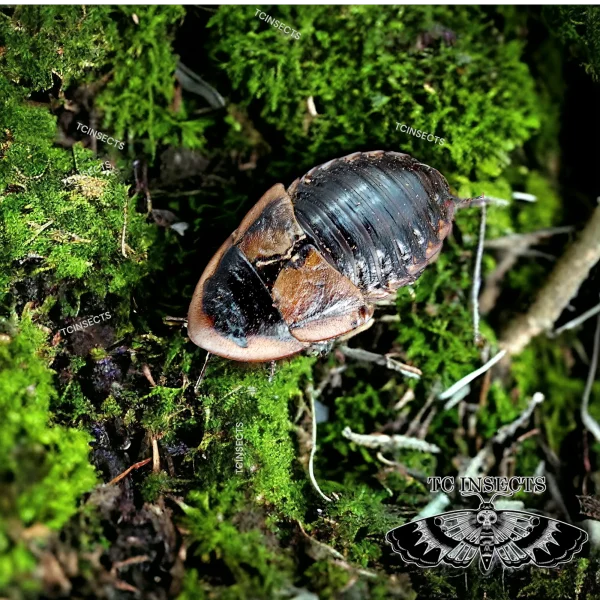
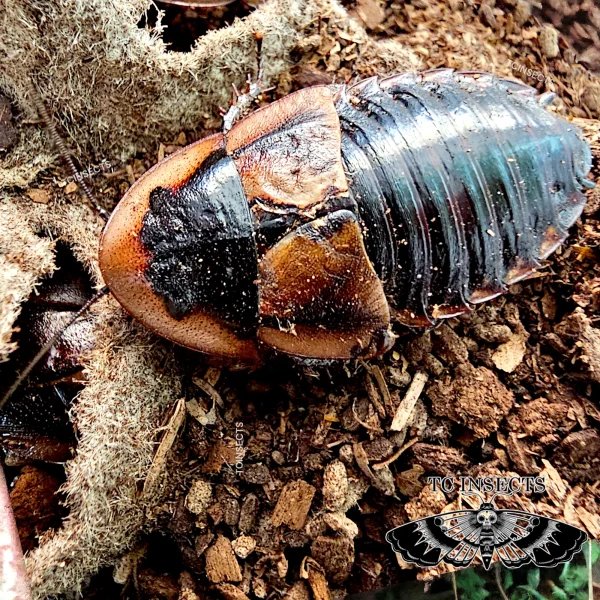
Madagascar Hissing Cockroaches for Sale
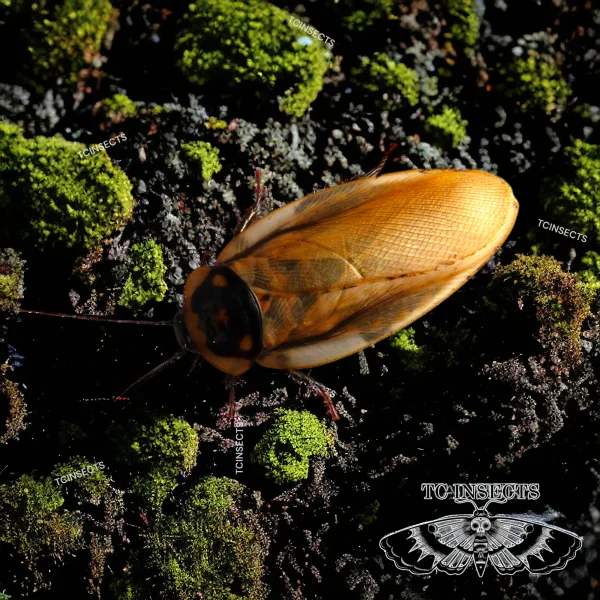
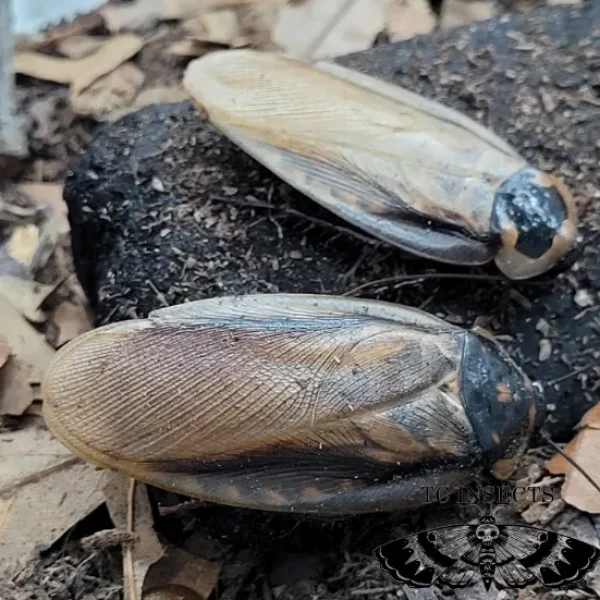
The Madagascar Hissing Cockroach (Gromphadorhina portentosa) is the most well-known exotic roach in the world. Adults reach about 2 to 3 inches long with a dark mahogany-to-black body, are completely wingless,
and live 2 to 5 years. The “hissing” name comes from their unique ability among insects to actually make sound — not by rubbing body parts together like a cricket, but by forcing air through modified breathing holes on
the abdomen. This is the standard beginner pet roach, a classroom and zoo favorite, and one of the most popular display invertebrates in the world. Available as small nymphs or sex-selected adults, in counts from 1 up to
250.
Overview
Madagascar Hissing Cockroaches come from the tropical lowland rainforests of Madagascar, the large island off the southeast African coast. They live on the forest floor and in rotting logs, feeding on decaying plant
matter. In captivity they are easy to keep, docile enough to be handled, and breed reliably. Like other large roaches in the family Blaberidae, females give birth to live babies rather than laying eggs. Females are smaller than
males and lack the prominent “horns” males use to fight rivals. The species has been kept in classrooms, zoos, and homes for decades, which means care information is widely documented and beginner-friendly.
Honest Note: How the Hissing Actually Works
Most bugs that make noise do it by rubbing body parts together (a cricket rubs its wings, for example). Madagascar Hissers are different — they actually make sound by breathing. They have special breathing holes (called spiracles) on the sides of their abdomen. When they force air out hard through those holes, you hear the hiss. They are the only insect species known to do this.
Researchers have identified three different kinds of hiss:
- Scared hiss: When something startles or grabs them, they hiss to try to scare a predator off. This is the one you’ll hear if you pick yours up suddenly.
- Fight hiss: Adult males hiss at each other when fighting over territory or females. It sounds different from the scared hiss and signals “back down.”
- Love hiss: A male’s mating call to a female sounds different again. Quieter and more rhythmic.
You’ll mostly hear the scared hiss when handling them. If you keep a colony with multiple adult males, you’ll start hearing the fight hiss too. Both are normal.
Honest Note: Your Hisser Might Have Tiny Mites on It (That’s Normal)
One thing that surprises a lot of first-time buyers: Madagascar Hissers often have very small white or tan mites crawling around on their bodies. These are not a sign of disease and not harmful to the roach or to you. They have lived alongside hissers for generations and just ride along eating microscopic debris. Per university entomology programs, these mites:
- Do not bite people
- Cannot infest your house or your pets
- Don’t hurt the roach itself
- Are completely normal on healthy hisser colonies
If you really want a mite-free roach, lightly brush or rinse them off during routine cleaning, but most keepers just leave them alone. They are part of the package.
Honest Note: US Hisser Stocks Are Sometimes Mixed With a Related Species
This matters mainly to people who want a pure pedigreed roach for breeding records or research. Over decades of captive breeding in the US, *Gromphadorhina portentosa* stocks have sometimes been crossed
(intentionally or by accident) with the closely related *Princisia vanwaerebeki*, another hissing roach from Madagascar. The two look very similar and many hobby colonies are documented mixes.
For pet keepers, classroom use, and feeder colonies, this doesn’t matter at all — the husbandry and behavior are the same. For dedicated *G. portentosa* breeders or research programs wanting verified pure stock, this is a
known hobby reality to be aware of.
Honest Note: Handling Is Fine, But Don’t Touch a White One
Hissers are one of the few roaches where regular handling is fine. They are calm, slow, and don’t bite. They might hiss when first picked up, but they settle down quickly. With one major exception:
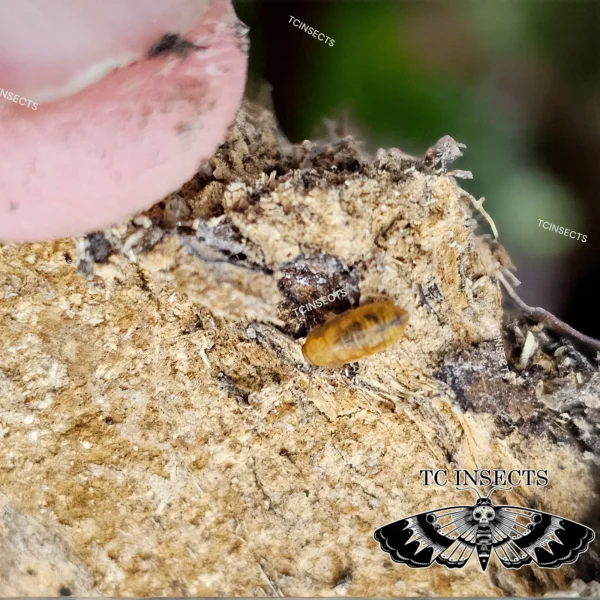
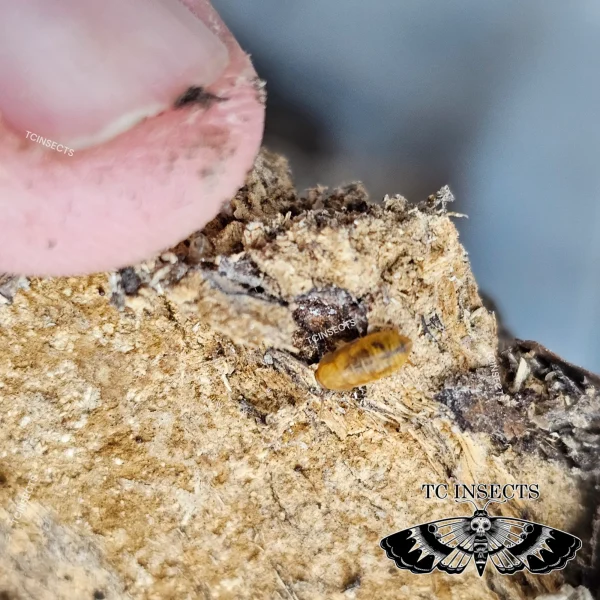
Right after a hisser molts (sheds its outer shell), it is briefly white while the new shell hardens. During this window — usually a few hours to a day — the new shell is soft and fragile, and the roach is vulnerable to injury.
Do not handle a white hisser. Wait until it darkens back to its normal brown or black color, then it is safe to pick up again.
Why Males Have Those Big Bumps on Their Heads
Looking at an adult hisser, you might notice two big bumps just behind the head — that’s not the head itself. The head is small and tucked underneath. The bumps are called “horns” and they’re how males fight each other.
Male hissers establish territory and dominance by pushing each other with these horns, like miniature rhinos. The winner gets the prime spot and the females; the loser backs off. Females and nymphs have smaller bumps
in the same place, so the horns are also the easiest way to tell adult males from adult females.
Sex and Size Selection
This product is sold with two purchase decisions to make:
- Size: 3/8″ to 1/2″ Nymphs (small babies, cheapest, grow to adults in your care over several months) OR Adult Male / Adult Female (sex-selected, ready to display or breed immediately, more expensive per animal).
- Quantity: 1, 10, 25, 50, 100, or 250 — single animal for a pet, modest groups for breeding, bulk for feeder use or classroom programs.
If you want a small starter group for a single tank or terrarium, a few nymphs work well and let you watch them grow. If you want a breeding colony from day one, sex-selected adults skip the wait. If you’re feeding larger reptiles, the bulk counts give you a productive feeder source.
Why Keep Madagascar Hissing Cockroaches?
- The most famous exotic roach in the world. Iconic enough that even non-keepers recognize it.
- Docile and handleable. Unlike most exotic roaches, you can actually pick these up regularly. Great for kids and classroom outreach.
- Long-lived. 2 to 5 year lifespan is exceptional for an invertebrate pet.
- They actually make sound. Unique among insects, and genuinely cool when you hear it for the first time.
- Easy to keep. Wide tolerance for temperature, humidity, and food. Hard to kill them with normal care.
- Dual feeder and pet use. The substantial body size makes them a meaningful meal for larger reptiles, monitors, and tegus.
Care and Setup
Husbandry is genuinely simple, which is why this species is the standard beginner exotic roach.
Enclosure
A 10 to 20 gallon container suits a small starter colony of 5 to 10 hissers. They climb glass with no problem, so the lid must be secure. A thin band of petroleum jelly around the top inside rim of the enclosure adds extra protection against escapes.
Temperature
72 to 85°F is the working range, with 75 to 82°F being the sweet spot for breeding. They tolerate brief dips into the 60s without harm but won’t breed actively at lower temperatures. A heat mat on the side of the enclosure handles temperature control in a cool room.
Humidity
They tolerate a wide humidity range, which is part of why they are so forgiving for beginners. Aim for moderate humidity (around 50 to 65%) by lightly misting one corner of the enclosure every few days. Avoid soaking wet substrate.
Substrate
One to two inches of coco fiber, organic potting soil, or aspen bedding works well. They don’t burrow deeply, so depth matters less than for our porcelain roaches. Add a layer of dry leaves or sphagnum moss on top for hiding cover.
Habitat Structure
Stack egg flats vertically for cover and surface area, or use cork bark and hollow wood pieces for a more natural look. They use vertical surfaces extensively, so structures matter more than floor space.
Food
Not picky. Fresh vegetables (carrots, leafy greens, squash), fruit (apples, bananas), and dry food. Supreme Feed Premium Roach Formula or Supreme Feed Dubia work as a dry staple. They eat substantially and breed faster on a richer diet.
Hydration
A shallow dish of Hydro-Thirst Insect Water Crystals is the safest hydration option (no drowning risk). Light misting also provides drinking droplets on enclosure walls.
Ventilation
Vented lid or vented sides give airflow they like. Stagnant humid air causes more problems than slight dryness.
As a Feeder for Reptiles
The substantial adult body size makes Madagascar Hissers a meaningful meal for larger reptiles like monitor lizards, tegus, large bearded dragons, and larger frogs. Their nutritional profile is broadly similar to Dubia roaches of equal size:
Note that hissers have a harder exoskeleton than Dubia or silkworms, so they suit reptiles with strong jaws. For softer-bodied feeders, our Dubia roaches or BSFL are better matches.
Breeding Notes
Hissers breed reliably and the species is described across hobby and academic sources as “very easy” to reproduce in captivity. Females give birth to live nymphs, typically 20 to 60 per brood, with multiple broods per adult
lifetime. Nymphs reach adulthood in about 6 to 8 months under good conditions, and adults continue breeding for several years. For a stable productive colony, aim for a ratio of one male to three or four females; too
many males together leads to constant fighting and dominance hisses that disrupt the colony.
Best For
- First-time roach keepers wanting a forgiving, docile species
- Classrooms, science programs, zoos, and educational outreach
- Families with kids old enough to handle insects gently
- Reptile keepers with larger species needing a substantial feeder
- Tarantula keepers wanting a large-bodied feeder for adult tarantulas
- Hobby collectors filling out a “famous roach species” lineup
Not Best For
- Keepers wanting roaches that fly (this species is wingless)
- Soft-bodied feeder use; the hard exoskeleton is too tough for small reptiles or amphibians
- Setups without a secure climb-proof lid, since hissers climb glass easily
- Anyone unsettled by the harmless mites that often live on hisser bodies
- Customers in jurisdictions that restrict non-native cockroach species; check local rules (some US states regulate this species)
- Anyone planning to release roaches outdoors under any circumstances
Origin and Locality Notes
Gromphadorhina portentosa is native exclusively to the island of Madagascar, off the southeast African coast. Their natural habitat is the tropical lowland rainforest floor, where they live in rotting logs and decaying plant
litter. The species was formally described by Schaum in 1853. Worldwide distribution beyond Madagascar is limited to captive populations in homes, classrooms, zoos, and research labs. Note that captive stocks in the US
have sometimes been crossed with the related *Princisia vanwaerebeki*, so “pure pedigreed” *G. portentosa* may be harder to find than buyers assume.
Receiving and Acclimation
Your order ships with ventilation and bedding suited to transit. On arrival, open the package in a clean contained area and transfer the roaches into a prepared enclosure with substrate, hides, and a hydration source. Give
them a day or two to settle before handling. As with every live insect we sell, do not release them into the wild; some US states explicitly restrict this species.
Recommended Add-Ons
- Hydro-Thirst Insect Water Crystals for safe drowning-free hydration.
- Supreme Feed Premium Roach Formula for a quality dry diet alongside fresh fruits and vegetables.
- Supreme Feed Dubia 5lb for keepers maintaining larger colonies or using hissers as feeders.
- Orange Head Roaches (Eublaberus posticus) for keepers wanting a softer-bodied feeder alongside hisser display animals.
- Dubia Roaches for the standard softer-bodied feeder that pairs well with hissers as a display species.
Frequently Asked Questions
How do I tell males from females?
Look at the two bumps behind the head. Adult males have big prominent “horns” they use to fight rivals. Adult females have much smaller, smoother bumps in the same place. If you order Adult Male or Adult Female sizes from us, we sort them for you.
What do the different hisses mean?
Three kinds. A startled hiss happens when you pick them up or surprise them. A fight hiss happens between adult males arguing over territory or females. A mating hiss is a quieter rhythmic sound the male makes during courtship. The startled hiss is the one most beginners will hear; the others come with established colonies.
Why does my hisser have little bugs crawling on it?
Those are harmless mites that ride on most Madagascar Hissers. They don’t bite, can’t infest your house, and don’t hurt the roach. Per university entomology programs, they’re completely normal. You can brush them off during cleaning or just leave them alone.
Can my kid safely handle a hissing cockroach?
Yes, with adult supervision and gentle handling. Hissers are docile, slow, don’t bite, and can be picked up regularly. The main rules: support the body, don’t squeeze, and don’t handle a white roach (one that just molted — its shell is too soft).
Can I breed them at home?
Yes, easily. Set up an enclosure with substrate, hides, food, and water. Buy 1 male and 3 or 4 females, or several nymphs to grow up together. Females give birth to live babies (no eggs to incubate), and you’ll see new nymphs within a few months. This is one of the easiest cockroaches to breed at any experience level.
How is this different from your other exotic roaches?
Several ways. Hissers are wingless (most exotic roaches have wings even if they can’t fly well). They are docile and handleable (most exotic roaches are not). They are easy and forgiving (many exotic roaches are demanding). And they actually make sound, which no other exotic roach in our catalog does. Beginners almost always start here.
Learn More About Madagascar Hissing Cockroaches
These references give keepers background on the species, its biology, and its educational use.
-
Oklahoma State University Extension: Madagascar Hissing Cockroaches Information and Care. A detailed care and biology sheet written for classroom and pet keepers, covering size, sexing, handling, and life cycle.
-
University of Michigan Animal Diversity Web: Gromphadorhina portentosa. An academic-level species profile with citations to the original research on hissing behavior, dominance, and courtship signaling.
-
Oxford Bioscience Horizons: Testing the disturbance hiss as anti-predatory response. A peer-reviewed study on the disturbance hiss specifically, with background on all three hiss types and the academic literature behind hisser communication.
|
COMMON HISSER ROACH CHECKLIST
|
|
| Can they fly? | NO |
| Can they climb? | Yes Barrier Required |
| Can I breed them? | VERY EASY |
| Do they smell? | NO (keep clean) |
Common Hisser Roach Natural Habitat:
Widespread across the deciduous forest of Madagascar.

TC INSECTS FEEDER NUTRITION TABLE
The Nutritional Contents of the Hisser Roach will be similar to Dubia of equal size.
| Species | Protein % | Fat % | Fiber % | Calcium_(mg/kg) | Phosphorus_(mg/kg) |
| Crickets | 15.3 | 3.2 | 2.1 | 275 | 2510 |
| Dubia | 22.9 | 7.1 | 2.8 | 798 | 2623 |
| BSFL | 17.4 | 13.8 | 2.9 | 9380 | 3540 |
| Superworms | 19.6 | 17.6 | 2.5 | 180 | 2350 |
| Mealworms | 18.7 | 13.3 | 2.6 | 169 | 2980 |
| Silkworms | 9.6 | 1.1 | 1 | 185 | 2400 |
| Fruit Flies | 21.5 | 6 | 2 | 526 | 4000 |
| Spikes | 17 | 12.5 | 2 | 5230 | 3540 |
| Hornworms | 9 | 3 | 0.5 | 470 | 2000 |