

Eublaberus distanti “Ivory”
Ivory Roaches for Sale
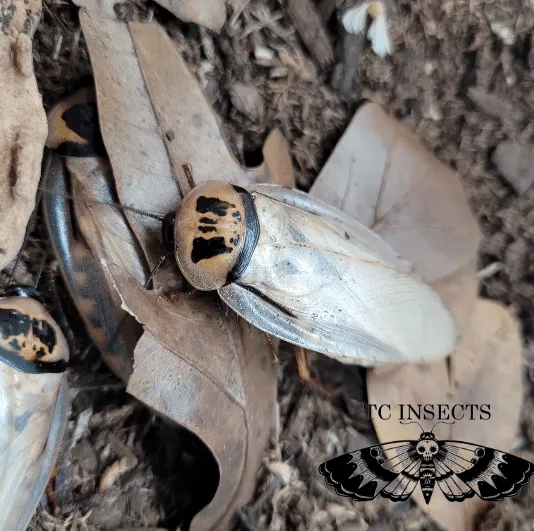
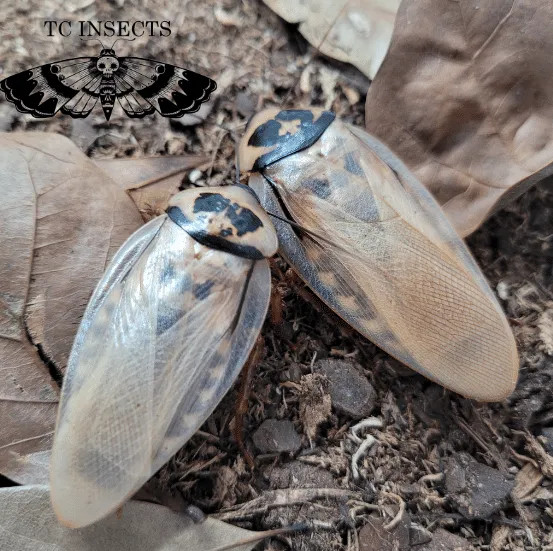
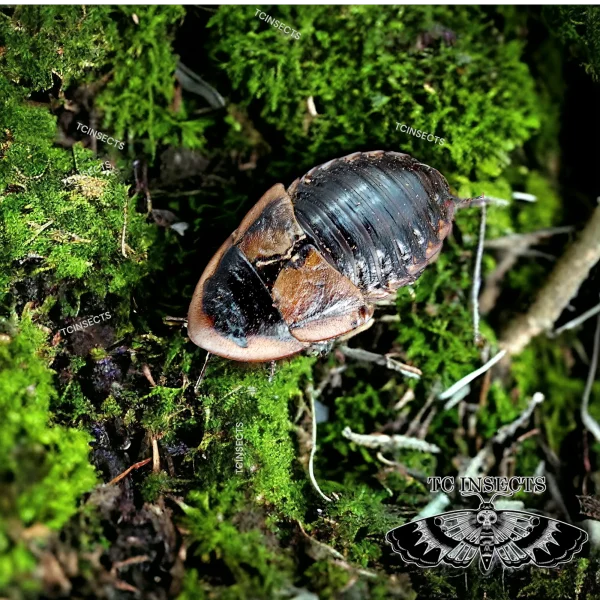
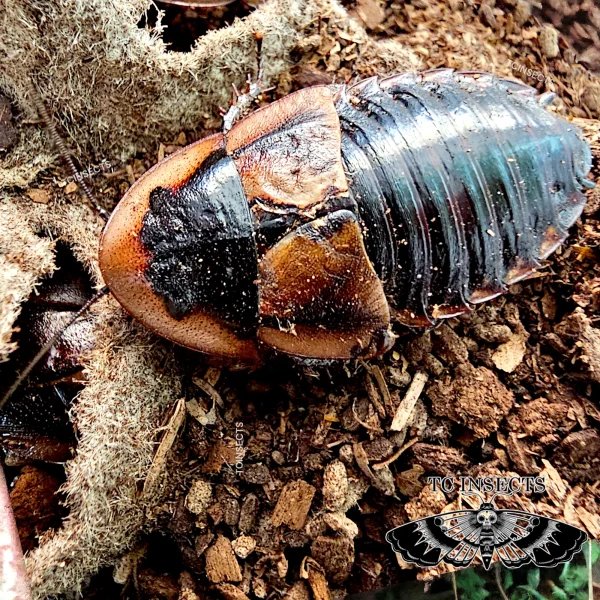
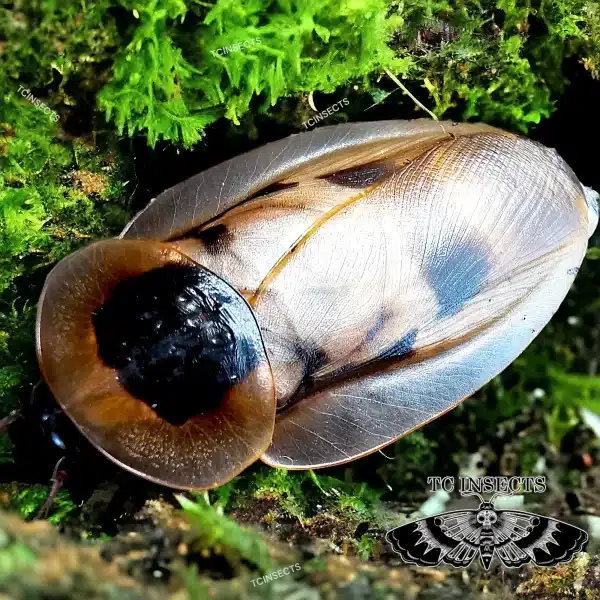
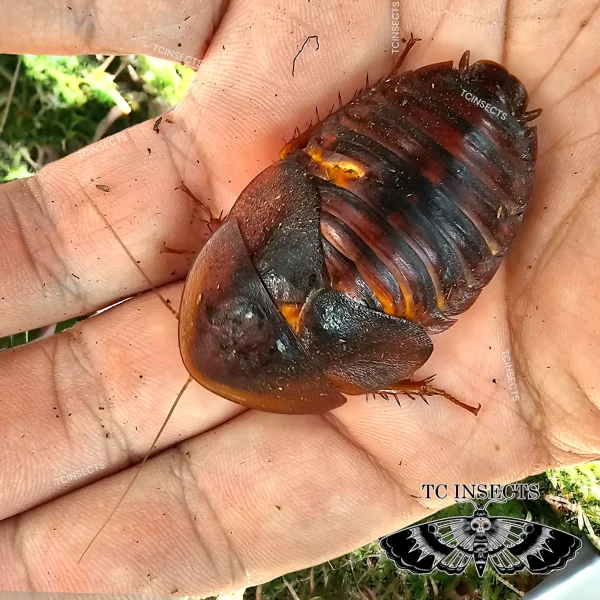
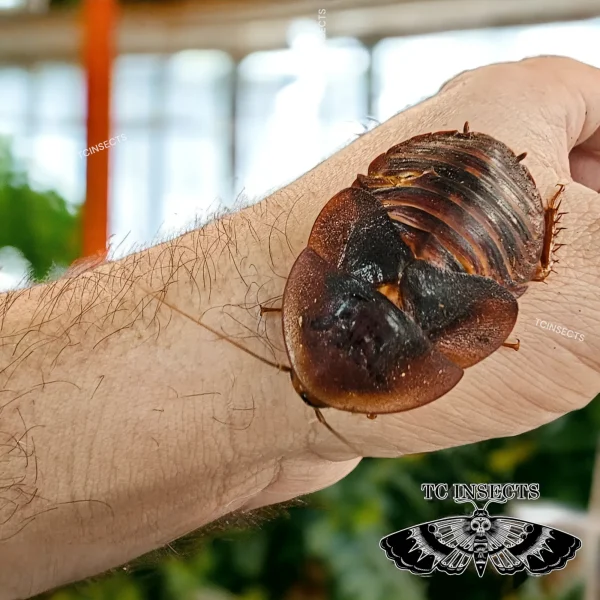
The Ivory Roach is a hobby name for a lighter color form of Eublaberus distanti, a sizable burrowing cockroach from the caves and forests of Central and South America. Collectors are drawn to the shiny ivory-cream wings
and the dark ink-blotch markings on the front thorax segment, which give the species its trade name. Unlike many feeder roaches, this is primarily a display and composter species, calm in the hand and easy to contain
because nymphs and adults cannot climb smooth surfaces and adults do not fly. We sell them as mixed nymphs in counts from 1 up to 100, so you can buy a single specimen, a small group, or a starter colony.
Overview
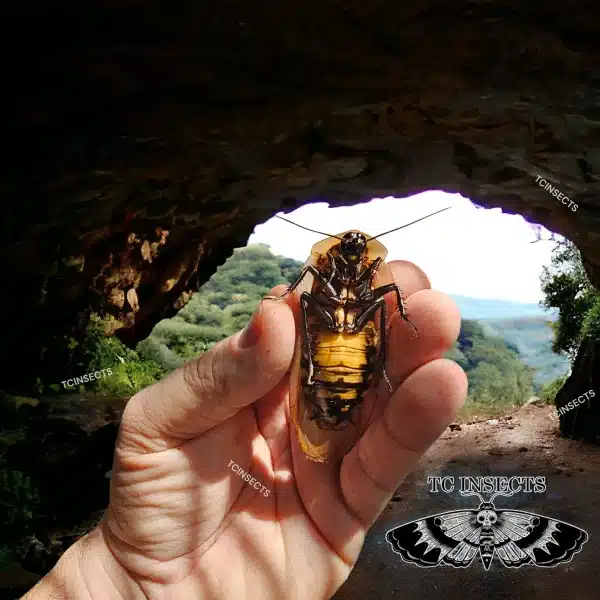
This is a large, slow-moving roach that ends up comparable in body size to a full-grown Dubia or a Madagascar hissing cockroach. Adults reach roughly 51 to 54 mm, with males generally smaller than females and with
slightly longer wings. Both sexes have wings, but they do not fly. The species is a substrate-dweller: nymphs and even some adults will use their flattened front thorax segment to burrow into a few inches of bedding when
they want to hide.
Because it is calm, non-climbing, non-flying, and a willing composter, this species suits hobbyists who want something more striking than a Dubia without the husbandry demands of more sensitive exotic roaches.
Why Keep Ivory Roaches?
- Striking display species. Ivory-cream wings and dark thorax markings make this an unusually photogenic adult roach.
- Easy containment. No climbing on smooth surfaces and no flight in adults, so a basic enclosure holds them.
- Calm temperament. They tolerate gentle handling and are not flighty under bright light.
- Bioactive composter. They process organic waste, fruit and vegetable scraps, and leaf litter alongside their main diet.
- Manageable husbandry. Wide temperature and humidity tolerance, no specialized lighting, and a forgiving diet.
Honest Note on the “Ivory” Name
“Ivory” is a hobby trade name used in the keeper community for this lighter color form of Eublaberus distanti. In the wider scientific and natural-history literature, the same species is more often called the six-spotted,
four-spotted, or Trinidad bat-cave cockroach. You may see any of those names attached to similar roaches from other sellers. The animal you receive from us is Eublaberus distanti, sold under the “Ivory” trade name to
describe the cream-to-ivory wing color this line displays as adults.
Honest Note on Use as a Feeder
The live listing page mentions feeder use, and Ivory Roaches can be offered to larger insectivores. Be honest about the trade-off, though. Published feeder-roach comparisons have noted higher fat content in Eublaberus
than in several common alternatives, which makes them a less efficient protein-per-bite feeder than Dubia or some other staples. If you want a calm, easy display roach that occasionally feeds out, this species works. If you
mainly want a high-volume reptile feeder, Dubia Roaches are the better choice.
Care and Setup
Husbandry is forgiving, with one clear requirement: a substrate deep enough to burrow into.
Temperature
Anywhere from 68 to 85°F works. They reproduce more readily at the warmer end of that range. Room temperature in most homes is fine for keeping a small group alive and healthy.
Humidity
They tolerate a wide humidity range, but the substrate should stay on the drier side. Damp, waterlogged substrate causes molting problems, which is the most common avoidable issue in captivity.
Substrate Depth and Burrowing
Provide 2 to 5 inches of substrate so nymphs can burrow naturally. A mix of coco fiber and some leaf litter works well. The burrowing behavior is normal and important: do not flatten it out, and do not provide a shallow tray expecting them to live on the surface.
Habitat Structure
Add cork bark, hollow wood pieces, or stacked egg flats so they have caves and crevices, which mirrors their wild habitat in tree hollows and cave walls. Smooth-walled enclosures are fine, since this species cannot climb smooth surfaces.
Food
They are not picky. Fresh fruit and vegetables, leafy greens, and a quality dry feed such as Supreme Feed Dubia all work. A small amount of higher-protein food, such as dry dog food or beans, supports growth in young nymphs. Remove uneaten produce before it spoils.
Hydration
They need consistent moisture but not an open water dish, which can drown nymphs. Use water crystals such as Hydro-Thirst Insect Water Crystals or soak produce to provide water safely.
Ventilation
Use a vented or mesh lid. Good airflow keeps the substrate from staying damp, which is exactly what this species prefers.
Breeding Notes
This species gives birth to live nymphs, like most blaberid roaches. A warm enclosure with deep substrate, consistent food, and stable hydration will produce offspring without intervention. A starter group of nymphs
raised together generally develops into a small breeding colony within several months, so the 40 or 100 count is the practical starting point if breeding is the goal.
Best For
-
- Exotic invertebrate collectors who want a calm, non-climbing display species
- Bioactive terrarium keepers wanting a substantial composter
- Hobbyists building a small breeding group of an easy exotic roach
- Keepers interested in burrowing behavior and natural substrate use
- First-time exotic roach buyers stepping up from Dubia
Not Best For
- High-volume reptile feeding, where Dubia are more efficient nutritionally
- Shallow display setups, since they need a deep substrate to burrow
- Keepers who want a heavily active, surface-visible species at all times
- Customers in jurisdictions that restrict non-native cockroach species, check local rules
- Anyone planning to release roaches outdoors under any circumstances
Origin and Locality Notes
Eublaberus distanti is native to Central and South America, with documented populations in Trinidad and Tobago, Guatemala, Costa Rica, Panama, Colombia, French Guiana, Suriname, Guyana, Brazil, and Peru. Wild
populations are primarily cave-dwelling, especially in guano-rich bat caves, and they are also found in rotting logs, decaying leaf litter, and tree hollows. The “Ivory” trade name applied here describes a hobby line of this
species selected for its lighter wing color, not a separate species or locality.

Receiving and Acclimation
Your order ships with ventilation and bedding suited to transit. On arrival, open the package in a clean, contained area. Transfer the nymphs into a prepared enclosure with several inches of substrate, hides, and a water
source. Give them a day to settle and burrow before disturbing them, since they are calmer once they have buried in. As with every live insect we sell, do not release them into the wild.
Recommended Add-Ons
- Hydro-Thirst Insect Water Crystals for safe hydration without an open water dish.
- Supreme Feed Dubia 5lb as a quality dry feed that also works for this species.
- Hemiblabera tenebricosa “Horseshoe Crab Roach” for collectors building an exotic roach collection.
- Panchlora nivea “Green Banana Roach” for an arboreal, flying contrast species.
- Isopods as cleanup crew companions in a bioactive enclosure.
Frequently Asked Questions
Is this a display species or a feeder?
Primarily a display and composter, secondarily a possible feeder. The size, calm temperament, and non-climbing, non-flying nature make it a strong display roach. For volume feeder use, Dubia Roaches are the more efficient pick.
Why is it called Ivory if the scientific name is Eublaberus distanti?
“Ivory” is a hobby trade name for this lighter cream-colored form of the species. In wider scientific literature it is the six-spotted, four-spotted, or Trinidad bat-cave cockroach. The species is the same; the trade name describes the color line we sell.
Do I really need 2 to 5 inches of substrate?
Yes. This is a burrowing species, and shallow substrate causes stress and molting issues. Give them depth and they thrive; skip it and you fight the species’ natural behavior.
Can they climb or escape?
No. They cannot climb smooth surfaces at any life stage, and adults have wings but do not fly. A vented, smooth-walled enclosure with a secure lid holds them easily.
How are they different from Dubia roaches?
They are larger, calmer, more striking in color, and more substrate-driven. Dubia are smaller, faster-breeding, and built for high-volume feeder use. Ivory Roaches are kept for display and composting first, feeder use second.
How do they rank as a feeder nutritionally?
Published feeder-roach comparisons have noted higher fat content in Eublaberus than in several common alternatives. They can still be offered occasionally, but they are not the efficient daily-feeder choice that Dubia are.
Learn More About Eublaberus distanti
These references give keepers background on the species behind the Ivory trade name and on how it lives in the wild and in captivity.
-
iNaturalist: Trinidad bat-cave roach (Eublaberus distanti). A community-sourced species profile with photos, distribution data, and verified observations across the native range. Useful for collectors who want to see the species in its natural settings.
-
University of Florida Featured Creatures. A university entomology resource on cockroach biology and identification, useful as general background for keepers learning the broader family.
-
Amateur Entomologists’ Society: Blattodea (Cockroaches). An overview of cockroach order biology, including the live-bearing reproductive strategy that Eublaberus distanti shares with most blaberid roaches.
Reviews
There are no reviews yet.