
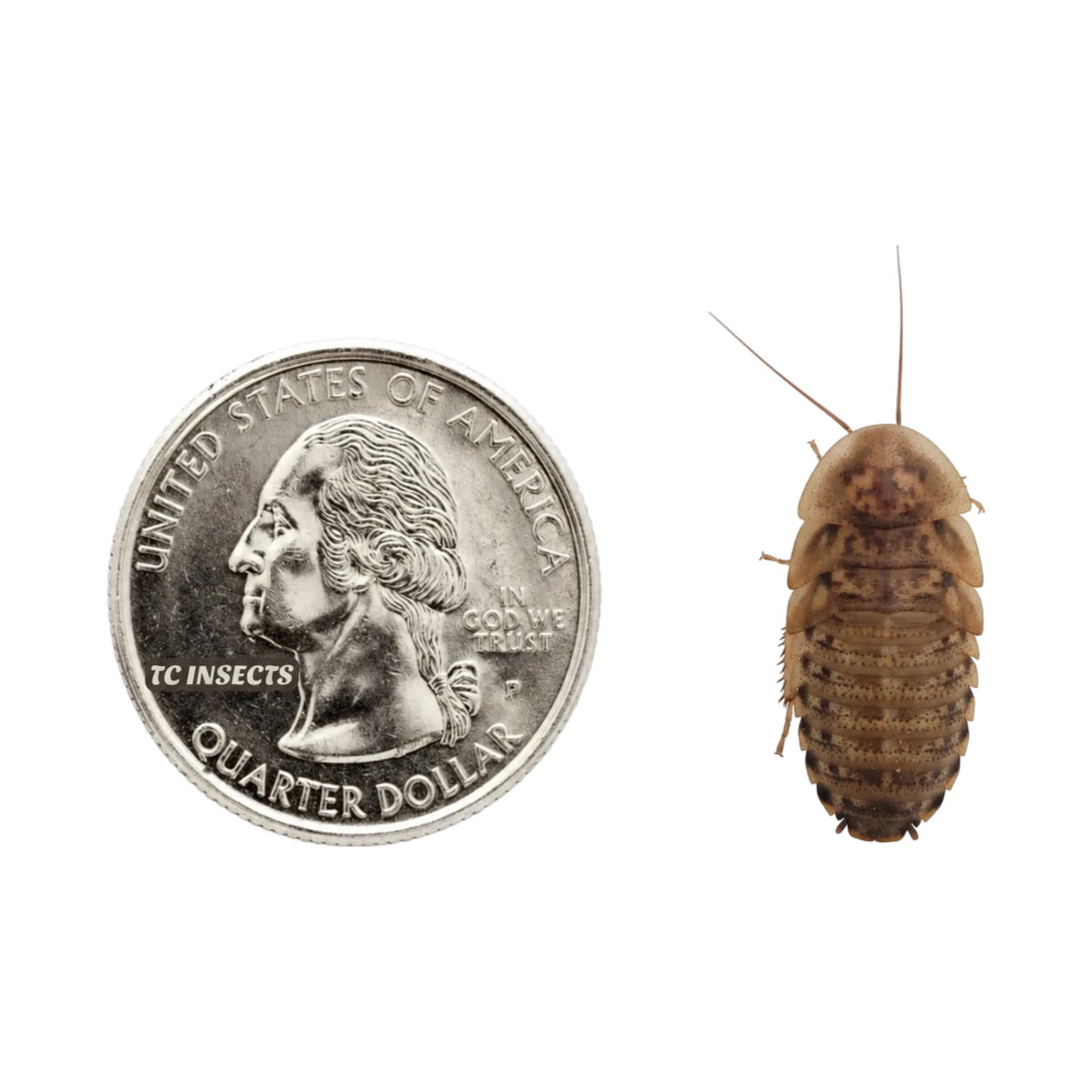
Medium Dubia Roaches for Sale
Medium Dubia Roaches are 3/4 inch late-instar nymphs of Blaptica dubia, the size most adult bearded dragon keepers feed on a regular schedule. At this stage you will often see wing buds forming on the back, which is normal late-juvenile development and not a defect. They are still pre-adult, but they are close enough in weight and bulk to deliver a substantial meal. For other sizes in the ladder, see the full Live Dubia Roaches category.
Overview
3/4 inch is the size where Dubia start to look distinctly roach-shaped rather than pill-bug-shaped, and where individual nymphs begin to carry real per-bug weight. Adult bearded dragon keepers tend to stay on this size for years because it satisfies the prey-size rule without forcing the speed of feed-out you get with 1/2 inch nymphs. Larger animals can take this size as well, though very large adults may prefer the Large or Adult sizes.
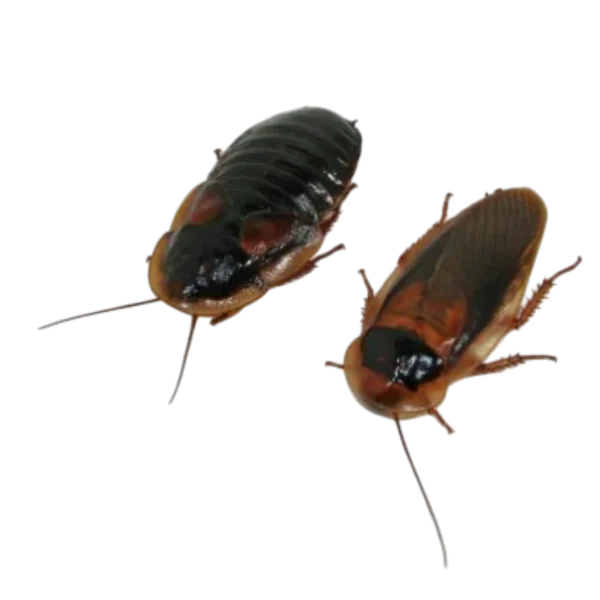
This species is sexually dimorphic at adulthood: males develop full wings, females retain short wing stubs. At 3/4 inch, some nymphs begin showing the early signs of that split, but most are still pre-reproductive.
Published Nutritional Content (TC INSECTS Reference Values)
- Protein: 22.9%
- Fat: 7.1%
- Fiber: 2.8%
- Calcium: 275 mg
- Phosphorus: 2,510 mg
These values reflect Dubia before dusting or gut-loading. Raw Dubia run higher in phosphorus than calcium, which is why dusting and gut-loading remain important even at this size, where keepers sometimes assume a bigger bug solves the calcium problem on its own. It does not.
Why Keep Medium Dubia Roaches?
- Sized for adult bearded dragons. 3/4 inch fits the space-between-the-eyes rule for most adult dragons without overshooting.
- Heavy per-bug weight. Fewer feeders cover the same meal size, which speeds up daily feeding and reduces handling.
- Effective gut-loading. Larger digestive capacity means gut-loaded calcium, leafy greens, and produce transfer well into the reptile.
- Quiet and contained. No chirping, no climbing smooth glass, no jumping. Easy to manage during feeding even outside an enclosure.
- Practical for size-rotation feeding. Many keepers run a medium-and-large rotation to vary prey size week to week.
Honest Note on Wing Buds and Late-Instar Appearance
Some buyers receive their order and notice small dark patches or raised tissue on the back of the nymphs. These are wing buds, the developmental precursors to adult wings. They are normal at this size, not damage or diseased. Males will eventually develop full functional wings (though they rarely fly), and females will keep short wing stubs. If you specifically want a uniform pre-wing look, the Small 1/2 inch size is generally before wing-bud appearance.
Honest Note on Cost-Per-Bug
3/4 inch is the size where the math starts to shift. Per bug, mediums cost more than smaller sizes, because each one is significantly heavier and represents more grow-out time on our end. If you feed multiple animals or maintain consistent heavy demand, this is the price point at which a colony starter often pays for itself within a few months. The 100 Count Dubia Colony Starter and the 50 Count Dubia Colony Starter are both built for that transition.
Care and Setup
Care at this size is still short-term holding rather than long-term breeding husbandry. The difference at 3/4 inch is that holding for an extended period will move some nymphs into adulthood, which changes their feeder utility.
Temperature
Room temperature works for short-term holding. Cooler (around 70 to 75°F) slows molts and helps you keep nymphs at 3/4 inch longer. Warmer (80 to 85°F) accelerates the final molts and pushes nymphs toward adult size faster than you may want.
Humidity
Moderate. A water gel cube or a small dish of water crystals provides hydration without flooding. Standing water is unnecessary and risky for the smaller bugs in the bin.
Substrate
None needed. Use a smooth-walled plastic tub with vertical egg flats for surface area and hiding.
Food
Offer a dry chow such as Supreme Feed Dubia, plus small portions of fresh vegetables, greens, or fruit. Pull uneaten produce before it spoils. Gut-load for 24 to 48 hours before feeding to maximize the nutritional transfer at this size.
Ventilation
Use a vented or mesh lid. Stagnant humidity over frass buildup will crash a holding bin quickly, especially with the heavier biomass of medium-size nymphs.
Calcium Dusting
Dust with a fine calcium powder like TC Calcium Ultra Fine right before feeding. Larger feeders do not deliver more usable calcium on their own. Dusting and proper UVB still matter, and at this size each dusted bug delivers more total nutrition per feeding event.
Breeding Notes
Most 3/4 inch nymphs are pre-reproductive but not far from maturity. Held warm and well-fed, some will reach adulthood within a few weeks. If you want to start a producing colony quickly, the prebuilt 100 Count Dubia Colony Starter reaches breeding output sooner than raising up 3/4 inch nymphs. If colony scale is the goal, that is generally the better starting point.
Best For
- Adult bearded dragons on a regular feeding schedule
- Established large veiled, panther, and Jackson’s chameleons
- Larger frogs and toads, including adult Pacman frogs
- Adult tarantulas of mid to larger species
- Keepers running a planned medium-and-large size rotation
- Buyers building toward a colony who want a few bulk feeder orders first
Not Best For
- Hatchling or very young insectivores, which still need 1/4 inch or smaller
- Juvenile bearded dragons that should still be on 1/2 inch
- Customers in Florida, Louisiana, or Hawaii, where Dubia cannot legally be shipped
- Keepers wanting an instant breeding colony, since a colony starter is more efficient
Origin and Locality Notes
Dubia roaches are native to Central and South America and are commonly associated with Argentina, Brazil, and surrounding regions in the published literature. They are tropical and do not establish outside warm, humid environments, which is part of the basis for USDA permit-controlled interstate shipment within the continental United States. Our stock is captive-bred and maintained as an established feeder line.
Receiving and Acclimation
Each order ships with ventilation and a hydration source sized for transit. On arrival, open the package in a clean, contained area. Transfer the nymphs into a smooth-walled bin with egg flats, dry chow, and water crystals. Let them settle at room temperature for several hours before feeding any out. Shipping stress can briefly slow activity at this size, especially in cooler weather.
TC INSECTS holds USDA permits to ship Dubia roaches within the continental United States, excluding Florida, Louisiana, and Hawaii. Customers in Florida and Louisiana can legally receive Discoid roaches as an alternative. A copy of the permit is available by email to proper authorities on request. Do not release any feeder insect into the wild.
Recommended Add-Ons
- 100 Count Dubia Colony Starter for keepers ready to produce their own feeders at this price point.
- 50 Count Dubia Colony Starter for smaller setups or test-runs before scaling up.
- Large Dubia Roaches for size variety in a medium-and-large feeding rotation.
- Supreme Feed Dubia 5lb for efficient bulk feed when running heavier orders.
- TC Calcium Ultra Fine for pre-feeding calcium dusting.
Frequently Asked Questions
How many medium Dubia should I feed my adult bearded dragon?
Most adult dragons take a small number of medium Dubia per feeding rather than the high counts juveniles eat. Specifics depend on the animal’s age, weight, activity, and overall diet plan. Generally, adults eat fewer feeders less often, balanced with more greens.
Why does my dragon ignore them sometimes?
Slow-moving prey can read as “not food” to an adult reptile that already eats well. Lightly tapping the bowl, offering by tweezers, or placing the Dubia on a leaf in the line of sight usually triggers a feeding response. Picky adults may also benefit from variety: rotate in Large Dubia, hornworms, or silkworms.
How does this size compare with superworms?
Superworms move more, which can be helpful for reluctant feeders. Medium Dubia generally offer a better protein-to-fat ratio and far less chitin per meal than superworms, which makes them a more sustainable staple. Many keepers use Dubia daily and rotate superworms in occasionally.
Is bigger always better at the adult stage?
Not necessarily. Going straight to adult Dubia for a smaller adult animal can overshoot the space-between-the-eyes rule. Medium is generally the safer staple, with larger sizes used for genuinely big adults like large monitors or large tegus.
When should I switch to adult Dubia?
When 3/4 inch nymphs visibly look small relative to your animal’s head, or when you specifically want sexually mature feeders for occasional feedings. Some keepers never fully switch and stay on medium plus large indefinitely.
Can I let some grow up into a small colony?
You can, but you will wait weeks for the final molts and additional time for females to begin producing nymphs. The 100 Count Colony Starter reaches that point faster and is built around an adult-to-nymph ratio designed for output.
Learn More About Dubia Roaches and Reptile Nutrition
These references give keepers background on Dubia biology and on the broader nutrition picture for insectivores, both of which matter at the medium feeder stage.
- Auburn University: Biology of Blaptica dubia (Hao Wu thesis). A peer-reviewed academic look at Dubia reproduction, lifecycle, and parental care. Useful for keepers thinking through the move from buying feeders to running a colony.
- PubMed: A Fresh Look at Metabolic Bone Diseases in Reptiles and Amphibians. A veterinary review of UVB, calcium, phosphorus, and vitamin D3 in reptile bone health. Worth reading once if you are committing to long-term feeder rotation for a growing or breeding animal.

Reviews
There are no reviews yet.