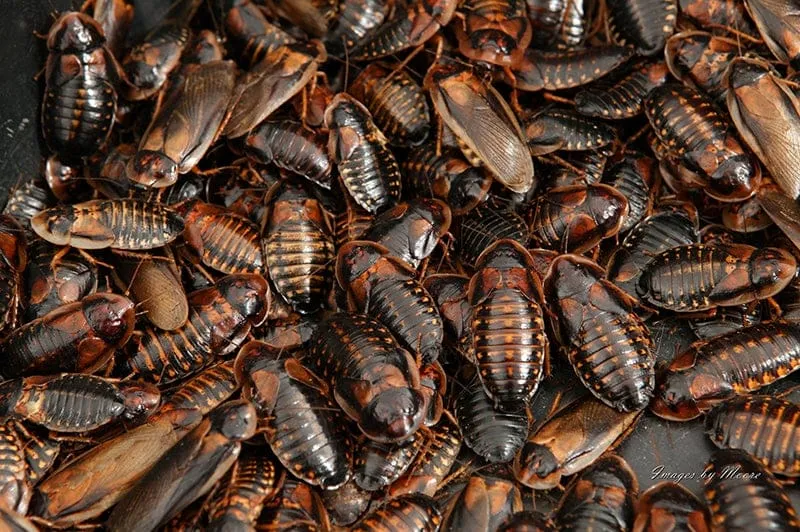
Dubia Colony Starter for Sale
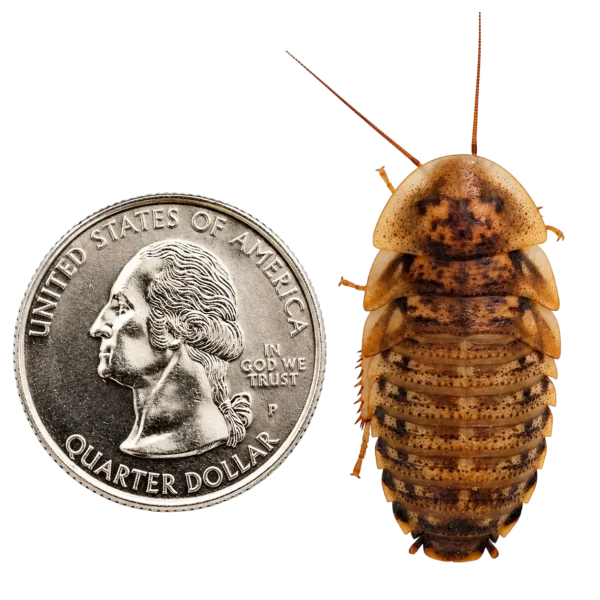
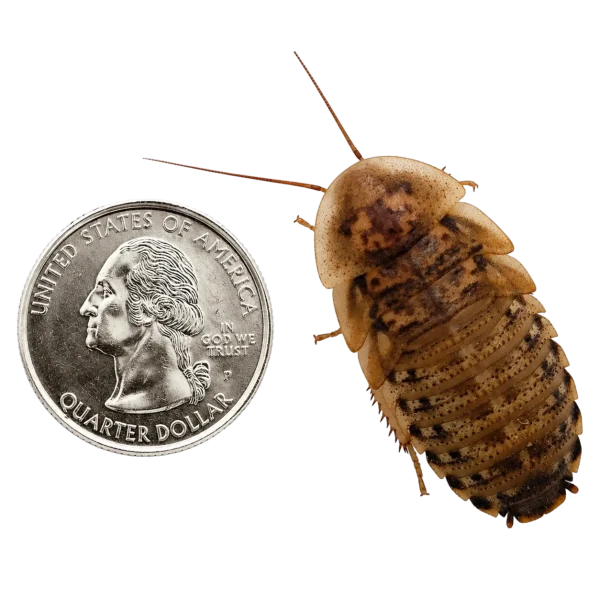
This Dubia Colony Starter is built for keepers who are tired of reordering feeders and want to grow their own. Instead of a single feeder grade, you receive a working base for a colony: breeding adults plus a spread of nymphs of Blaptica dubia. It is the smaller of our two colony kits, sized for one or a few animals rather than a large collection. If you keep many reptiles, the 100 Count Dubia Colony Starter scales up faster.
What You Receive
Every order is put together to give a small colony a real chance to establish:
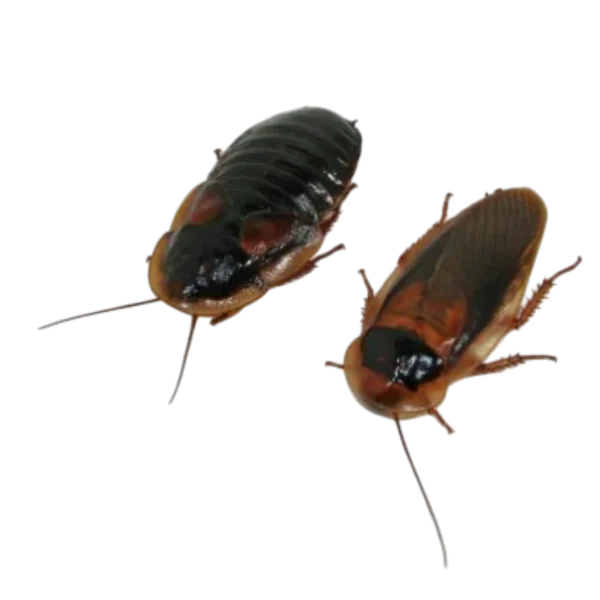
- 3 adult females, the reproductive core of the colony.
- 2 adult males, enough to fertilize without crowding.
- 50 mixed nymphs with a 10% over-count, so you also get growing stock that matures into your next generation of breeders.
That female-weighted adult ratio matters. Females produce the nymphs, so starting with more females than males gives the colony a productive head start.
Buffalo Beetle Cleanup Crew (Free Upon Request)
For a limited time, we add a free Buffalo Beetle (Alphitobius diaperinus) cleanup crew to colony orders, but only if you ask. Buffalo Beetles and their larvae break down dead roaches, shed skins, and leftover debris, which helps keep a colony bin from molding. They work quietly alongside the roaches without harming them. To get them, add a request in your order notes at checkout. If you do not request them, they will not be included, since not every keeper wants them.
Why Buy a Dubia Colony Starter?
- Stop reordering feeders. A maintained colony can supply feeders on a recurring basis instead of repeat purchases.
- Starts pre-sexed. The adult females and males arrive ready to breed, so you skip months of grow-out.
- Built-in next generation. The mixed nymphs mature into future breeders, so the colony renews itself.
- Optional free cleanup crew. Buffalo Beetles help manage mold and debris when you request them.
- Beginner-friendly scale. Fifty bugs is manageable for a first colony without overwhelming a new keeper.
Honest Note on Establishment Time
A colony is not an instant feeder supply. After arrival, the adults need time to settle and reproduce, and the nymphs need time to grow. Under warm, well-fed conditions a colony generally takes a few months before it produces feeders at a useful pace. Plan to keep buying feeders in the meantime. A bag of Large Dubia or another size can bridge the gap while this colony matures.
Honest Note on the 50-Count Scale
This kit suits one or a few animals. It is not sized to feed a large collection from day one, and pushing a small colony too hard early will stall it. If you keep many insectivores or feed heavily, start with the 100 Count Colony Starter instead, which begins with more stock and reaches a productive size sooner.
Care and Setup
Unlike a feeder order, a colony is meant to live and grow, so setup focuses on reproduction rather than short-term holding.
Temperature
Heat drives reproduction. A colony kept around 85 to 90°F produces far faster than one at room temperature. Many keepers use a heat mat or a warm room. Cooler temperatures will not kill the colony, but output drops sharply.
Humidity
Moderate humidity is enough. Water crystals are the safest hydration source, since open water drowns nymphs. Keeping a hydration source available also supports female reproduction.
Substrate
None needed. Stacked vertical egg flats in a smooth-walled bin give the colony the surface area and harborage it needs to climb, hide, and breed.
Food
Feed a quality dry diet such as Dubia Superfood or Supreme Feed Dubia, plus fresh produce for moisture and variety. A consistently fed colony reproduces more reliably than one fed sporadically.
Ventilation
Use a vented or mesh lid. As the colony grows, frass and humidity build quickly, so steady airflow keeps the bin healthy and reduces mold, especially if you skip the Buffalo Beetles.
Cleanup Crew
If you requested Buffalo Beetles, add them to the bin and let them work. They reduce mold and break down waste, but they do not replace occasional bin maintenance and frass removal as the colony scales up.
Breeding Notes
The species gives birth to live nymphs rather than laying egg cases, so a settled colony with warmth and food produces broods on a recurring cycle. The adult females in this kit are your initial producers, while the included nymphs become your next wave of breeders as they mature. Keep the colony warm and fed, avoid harvesting the adult females early, and let the population build before you start feeding heavily from it.
Best For
- Keepers with one or a few insectivores who want to grow their own feeders
- First-time colony owners who want a manageable starting scale
- Anyone trying to cut down on repeat feeder orders over time
- Keepers who want a low-noise, low-odor feeder colony
- Buyers who want an optional free cleanup crew built into the setup
Not Best For
- Keepers who need feeders immediately, since a colony takes months to produce
- Large collections that need volume from day one, where the 100 count fits better
- Customers in Florida, where this colony cannot be shipped
- Customers in Louisiana or Hawaii, where Dubia shipping is restricted
- Keepers unwilling to provide steady heat, since output stalls when cool
Origin and Locality Notes
Dubia roaches are native to Central and South America and are commonly associated with Argentina, Brazil, and surrounding regions in the published literature. They are tropical and do not establish in cooler, drier climates, which underpins the USDA permit-controlled interstate shipment within the continental United States. Our colony stock comes from an established captive-bred breeding line.
Receiving and Acclimation
Your colony ships with ventilation and a hydration source sized for transit. On arrival, open the box in a clean, contained area and transfer everything into a prepared bin with stacked egg flats, dry chow, and water crystals. Let the colony settle for a day before disturbing it, since shipping is stressful and adults reproduce better once calm. If you requested Buffalo Beetles, add them at the same time. In cold weather, warm the colony gradually to room temperature, then up to breeding temperature.
This colony cannot be shipped to Florida. TC INSECTS holds USDA permits to ship Dubia roaches within the continental United States, with restrictions in Louisiana and Hawaii where applicable. Customers in Florida and Louisiana can legally receive Discoid roaches as an alternative. A copy of the permit is available by email to proper authorities on request. Do not release any feeder insect into the wild.
Recommended Add-Ons
- Dubia Superfood 1lb for a nutrient-focused diet that supports steady colony reproduction.
- Supreme Feed Dubia 1lb as an everyday dry feed sized for a small colony.
- 100 Count Dubia Colony Starter if you decide you need a larger colony from the start.
- Large Dubia Roaches to keep feeding while this colony establishes over the first few months.
- TC Calcium Ultra Fine for dusting feeders you harvest from the colony before feeding.
Frequently Asked Questions
How long before this colony produces enough to feed from?
Plan on a few months under warm, well-fed conditions before output is useful. Heat is the biggest factor. Keep buying feeders in the meantime and let the colony build before you harvest heavily.
How do I get the free Buffalo Beetles?
Add a request in your order notes at checkout. They are included only on request, since not every keeper wants them. If you do not ask, they will not be added.
What do the Buffalo Beetles actually do?
They and their larvae break down dead roaches, shed skins, and debris, which helps keep the colony bin from molding. They work alongside the roaches without harming them, similar to a cleanup crew in a bioactive setup.
Should I get this or the 100 count?
Choose this 50 count for one or a few animals or a first colony. Choose the 100 Count Colony Starter if you keep several insectivores or feed heavily, since it reaches productive scale sooner.
Can I feed some of these bugs right away?
You can feed a few of the nymphs, but try not to touch the adult females early, since they are your producers. Harvesting breeders too soon slows the colony. Let it establish first, then harvest the surplus.
Why can’t this ship to Florida?
State and federal regulations restrict shipping Blaptica dubia into Florida, along with Louisiana and Hawaii. Florida and Louisiana customers can typically receive Discoid roaches instead. Contact us by email if you are unsure about your state.
Learn More About Dubia Colonies and Cleanup Crews
These references give keepers background on Dubia reproduction and on the cleanup insects that keep a colony bin healthy.
- Auburn University: Biology of Blaptica dubia (Hao Wu thesis). A peer-reviewed academic study of Dubia reproduction, live birth, and lifecycle. The most useful background for understanding how your colony will grow and produce.
- University of Florida Featured Creatures: Lesser Mealworm (Alphitobius diaperinus). A university profile of the Buffalo Beetle, the same insect offered as a cleanup crew here. Explains its biology and why it thrives on organic debris.