
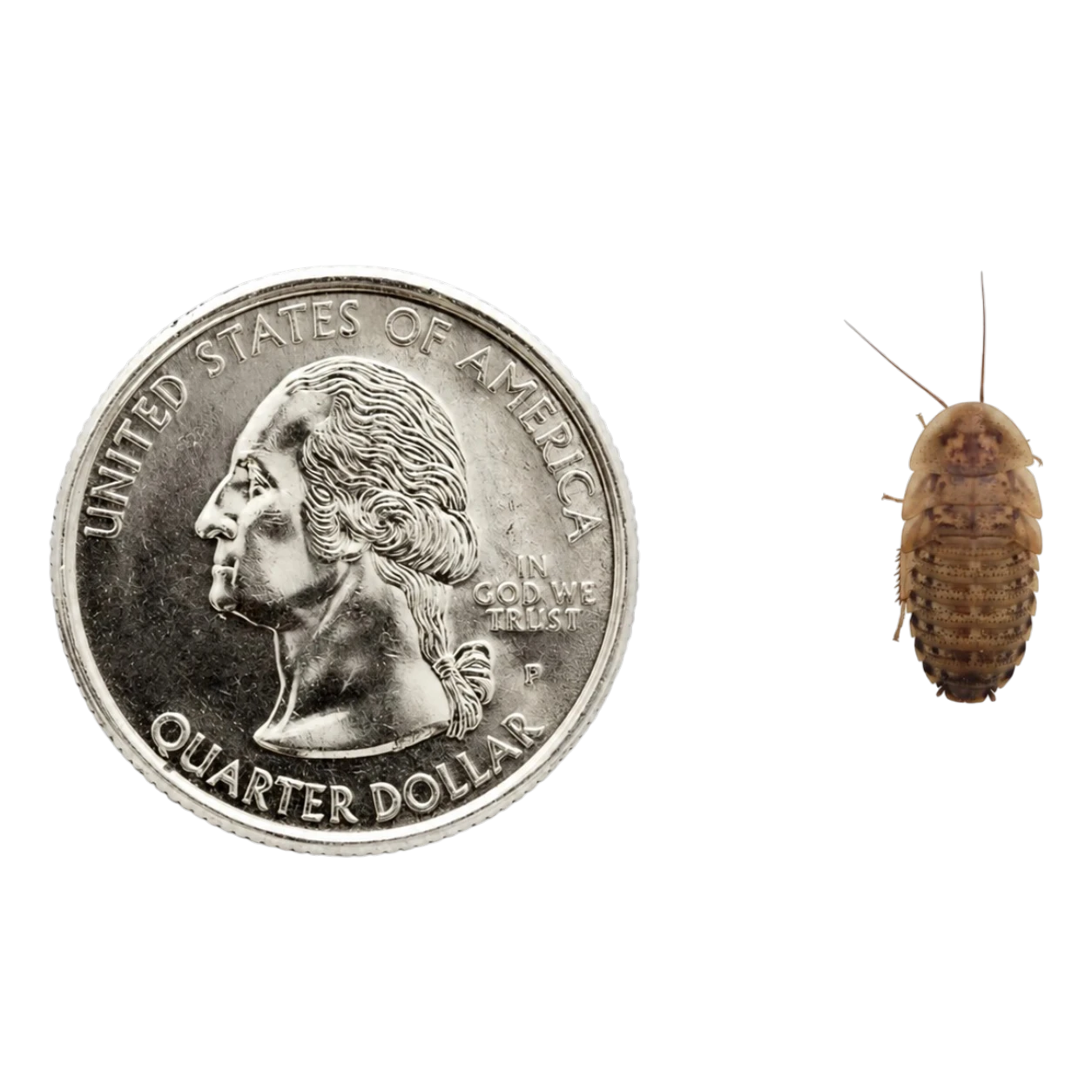
Small Dubia Roaches for Sale
If your animal has outgrown 1/4 inch feeders but is not yet ready for medium or adult Dubia, this is the size most keepers settle into. Small Dubia Roaches are 1/2 inch Blaptica dubia nymphs, large enough to be a real meal for juvenile and sub-adult insectivores but still well within the prey-size rule for most growing reptiles. They are quiet, contained, and easy to manage in a holding bin. For other sizes, check the full Live Dubia Roaches category.
Overview
The 1/2 inch size sits in the middle of the Dubia size ladder. Smaller than this and you are feeding hatchlings; larger than this and you are feeding adult animals or starting a colony. Most keepers cycle through this size for the longest stretch of their animal’s life, because it covers the juvenile and sub-adult phase when growth and appetite are both high.
The species itself is sexually dimorphic at adulthood, with winged males and short-winged females. At 1/2 inch the sex is generally not yet obvious, and the nymphs in this listing are still pre-reproductive.
Published Nutritional Content (TC INSECTS Reference Values)
- Protein: 22.9%
- Fat: 7.1%
- Fiber: 2.8%
- Calcium: 275 mg
- Phosphorus: 2,510 mg
These values reflect Dubia as a feeder before dusting or gut-loading. The calcium-to-phosphorus ratio in raw Dubia is skewed toward phosphorus, which is why dusting with calcium powder and gut-loading with calcium-rich foods matters for growing reptiles.
Why Keep Small Dubia Roaches?
- The juvenile-stage workhorse. Most growing insectivores spend more time on the 1/2 inch size than on any other Dubia size class.
- Heavier per-bug weight than extra small. You spend less time tweezer-feeding to hit a target meal size.
- Easy to gut-load. Their digestive capacity at this size makes 24 to 48 hour gut-loading effective, so the calcium and produce you feed them transfers to your reptile.
- Contained behavior. They cannot climb smooth glass or acrylic and they do not jump, which makes feeding manageable inside or outside the enclosure.
- Lower odor than crickets. Keepers running multiple holding bins generally find Dubia bins easier to live with than cricket bins.
Honest Note on the Pre-Fly Size Window
Once Dubia get larger than about 1/2 inch, they begin developing wing buds in the later instars, and adult males eventually develop full wings (though they rarely fly). At this listing size you are still well inside the pre-wing window, which is what many keepers specifically want. If you prefer fully grown adults with visible sexual dimorphism, look at the Adult Dubia Roaches . If you are building a colony, the Dubia Colony Starter is a faster path than feeder nymphs.
Honest Note on Weight vs Count
Our feeders ship by weight, so the headcount on the label is a reference based on average nymph weight at this size. Real orders can come in slightly over or under that count because individual nymph weights vary. The weight you pay for stays consistent, and we generally aim a little over rather than under.
Care and Setup
Treat this as short-term holding between arrival and feed-out, not as long-term breeding husbandry. The goal is to keep the nymphs alive, hydrated, and well gut-loaded.
Temperature
Room temperature works for short-term holding. If you want to slow molting and hold the 1/2 inch size longer, keep them on the cooler end (around 70 to 75°F). For faster turnover and more active feeding, push toward 80 to 85°F.
Humidity
Moderate. A small water gel cube or a dish of water crystals prevents dehydration without flooding the bin. Skip open standing water.
Substrate
None needed. A smooth-walled plastic tub with vertical egg flat sections gives the nymphs surface area to climb and hide.
Food
Offer a dry roach chow such as Supreme Feed Dubia or the 1lb size, plus small portions of fresh vegetables, greens, or fruit. Pull uneaten produce before it molds. Gut-load for 24 to 48 hours before offering to your reptile.
Ventilation
Use a vented or mesh lid. Stagnant, humid air combined with frass buildup is the fastest way to crash a holding bin.
Calcium Dusting
Dust nymphs with a fine calcium powder like TC Calcium Ultra Fine right before feeding. Because raw Dubia run high in phosphorus relative to calcium, dusting plus appropriate UVB and a balanced diet supports healthy bone development. Dusting alone does not replace UVB or correct husbandry.
Breeding Notes
This SKU is a feeder size and is sold as feeder stock, not breeder stock. Females are not yet sexually mature at 1/2 inch and need additional molts before they can produce nymphs. If you are setting up a breeding colony, the Dubia Colony Starter mixes adults and nymphs in a ratio designed to produce offspring faster than raising 1/2 inch nymphs up to maturity.
Best For
- Juvenile and sub-adult bearded dragons that have outgrown 1/4 inch feeders
- Established veiled, panther, and Jackson’s chameleons
- Adult crested geckos and gargoyle geckos that take Dubia
- Adult leopard geckos as part of a varied feeder rotation
- Larger frogs and toads, including adult Pacman frogs that accept Dubia
- Mid-sized tarantulas and large jumping spider species
- Keepers running a multi-size Dubia feeding routine
Not Best For
- Very small hatchlings that still need 1/4 inch nymphs or smaller
- Large adult monitors or tegus, which do better on adult-size Dubia
- Customers in Florida, Louisiana, or Hawaii, where Dubia cannot legally be shipped
- Keepers wanting an instant breeding colony, since these nymphs are not yet mature
- Picky eaters that strike only at fast-moving prey, since Dubia move slowly
Origin and Locality Notes
Dubia roaches are native to Central and South America and are commonly associated with Argentina, Brazil, and surrounding regions in the published literature. They are tropical and do not establish in colder, drier climates, which is part of the basis for USDA permit-controlled interstate shipment within the continental United States. Our stock is captive-bred and maintained as a long-running feeder line.
Receiving and Acclimation
Each order ships with ventilation and a hydration source sized for transit. On arrival, open the package in a clean, contained area in case any nymphs sit near the lid. Transfer them to a smooth-walled bin with egg flats, dry chow, and water crystals. Let them settle at room temperature for several hours before feeding any out, since shipping stress can briefly reduce activity.
TC INSECTS holds USDA permits for shipment of Dubia roaches within the continental United States, excluding Florida, Louisiana, and Hawaii. Customers in Florida and Louisiana can legally receive Discoid roaches as an alternative. A copy of the permit is available by email to proper authorities on request. Do not release any feeder insect into the wild.
Recommended Add-Ons
- Supreme Feed Dubia 5lb for cost-effective dry feed when running a regular feeding rotation.
- TC Calcium Ultra Fine for dusting feeders before offering to growing reptiles.
- Adult Dubia Roaches for keepers who also need larger feeders for sub-adult or adult animals.
- Dubia Colony Starter for keepers ready to move from buying feeders to producing their own.
- Feeder Insect Mix Packs for adding variety alongside Dubia.
Frequently Asked Questions
How do I know my animal is ready to move up from 1/4 inch to 1/2 inch Dubia?
Use the space-between-the-eyes rule. If a 1/4 inch nymph now looks small compared with that gap, and your animal swallows it without effort, it is generally time to test a few 1/2 inch nymphs. Animals usually move up gradually rather than overnight.
How long should I gut-load these before feeding?
Most keepers gut-load for 24 to 48 hours. At 1/2 inch, the nymphs have enough digestive volume to actually carry the gut-loaded material into your reptile, which is part of why this size is more nutritionally useful per bug than extra small.
How does this size compare with crickets?
1/2 inch Dubia and similarly sized crickets deliver comparable meal sizes, but Dubia stay quieter, do not chirp, do not climb smooth surfaces, and produce less odor in a holding bin. Crickets generally outperform on movement-driven feeding response, while Dubia outperform on convenience and gut-load reliability.
Are these big enough for an adult crested gecko?
Generally yes. Adult crested geckos that accept feeder roaches usually do well on 1/2 inch Dubia. Offer one or two at a time and watch your gecko’s response before scaling up the count.
Will the count be exact?
The count is a reference based on average nymph weight at this size. Real orders often run slightly over or under because individual nymphs vary in weight. The weight you pay for stays consistent.
Can I keep some of these to grow up into a colony?
You can, but it takes several months and several molts before females reach sexual maturity. If a producing colony is the goal, the Dubia Colony Starter reaches that point much faster than raising up feeder-size nymphs.
Learn More About Dubia Roaches and Reptile Nutrition
These references give keepers background on Dubia biology and reptile calcium health, which both shape how this size feeds out.
- Auburn University: Biology of Blaptica dubia (Hao Wu thesis). A peer-reviewed academic study of Dubia reproduction, parental care, and lifecycle. Useful background for keepers planning the move from buying feeders to raising their own.
- PubMed: A Fresh Look at Metabolic Bone Diseases in Reptiles and Amphibians. A veterinary review covering the role of UVB, calcium, phosphorus, and vitamin D3 in reptile bone health. Helpful context for why the calcium-to-phosphorus ratio in raw Dubia matters.

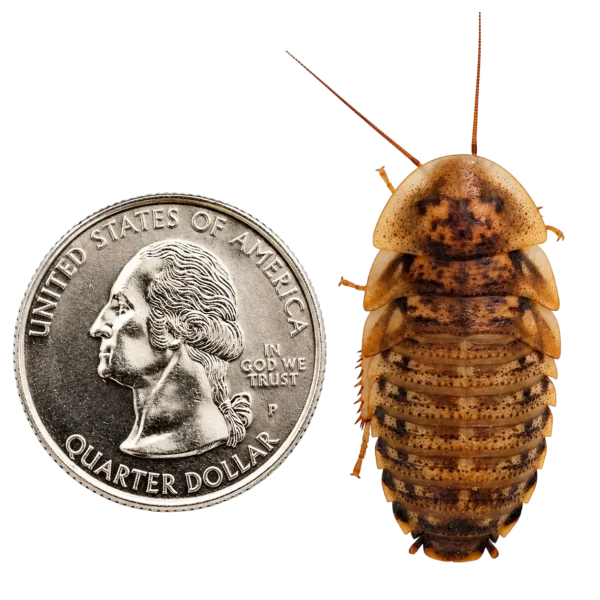

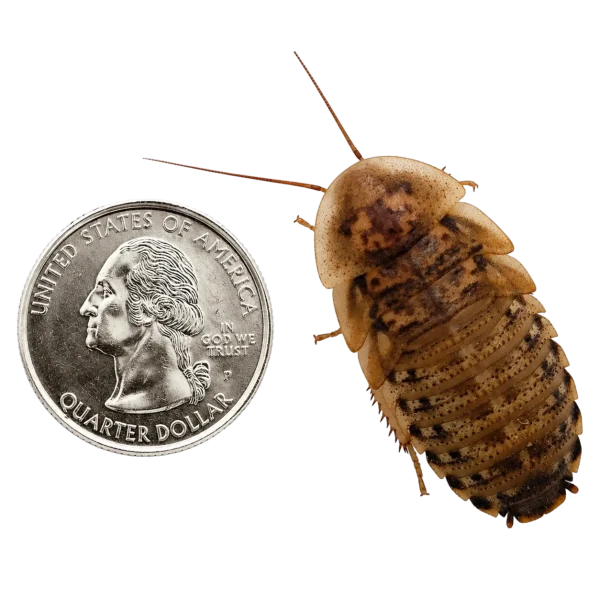
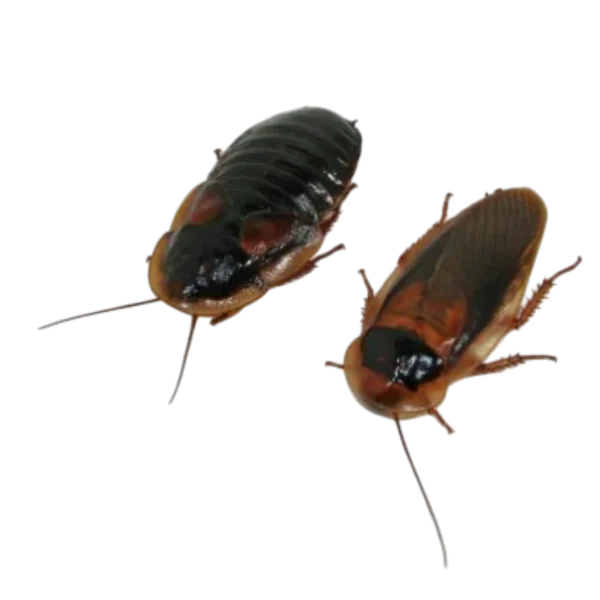
Robert Myers (verified owner) –
Got my first Dubia from TC. They are so a cute little bugs. Would recommend!