


Peruvian Black-Head Roaches for Sale
The Peruvian Black-Head Roach is the long-standing hobby common name for Blaberus parabolicus. The “Colombia” suffix on this particular line marks where our stock originates, and it carries some weight in the
collector community: the Colombia line is regarded as a closer match to the original 1868 species description than the older Peruvian-sourced lines that have been in captivity for decades. The animal you receive shows the
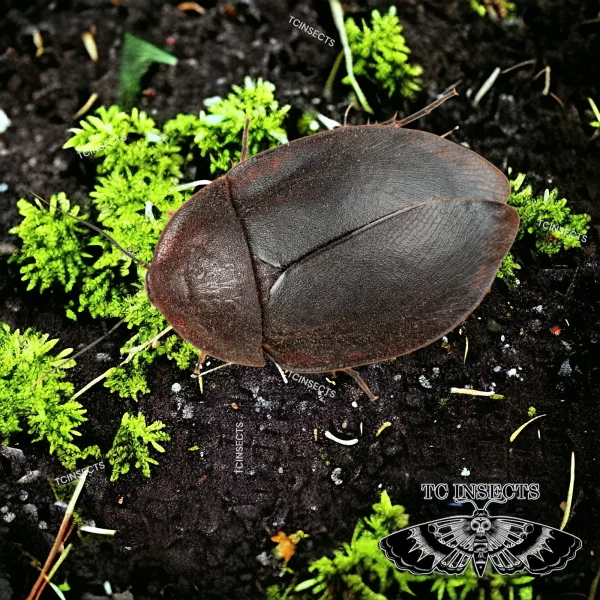
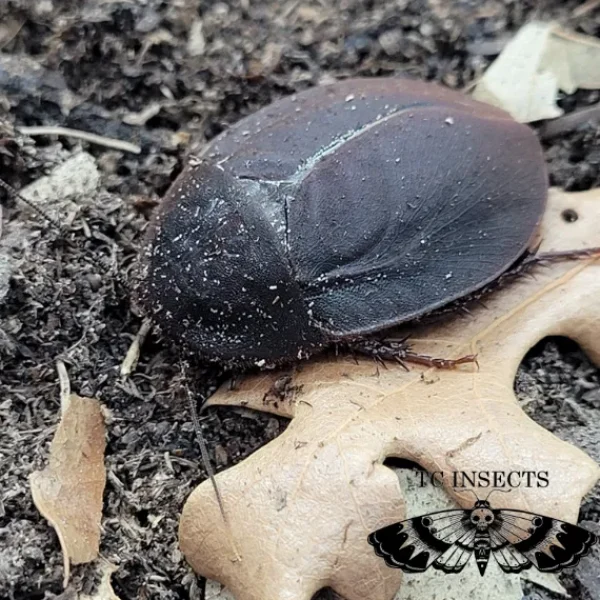
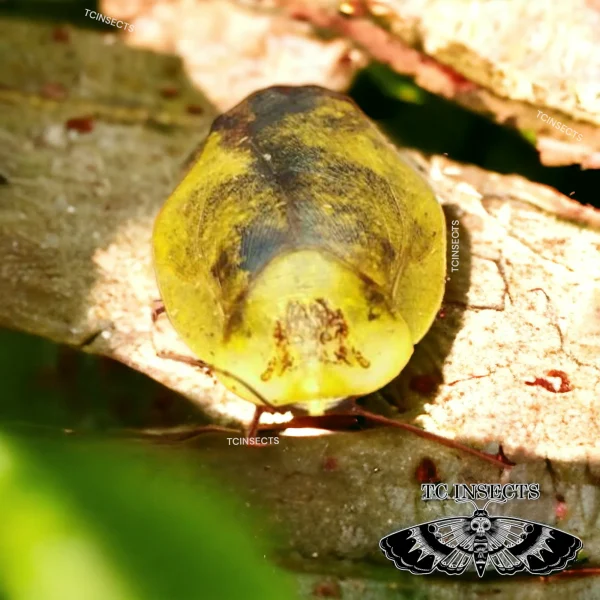
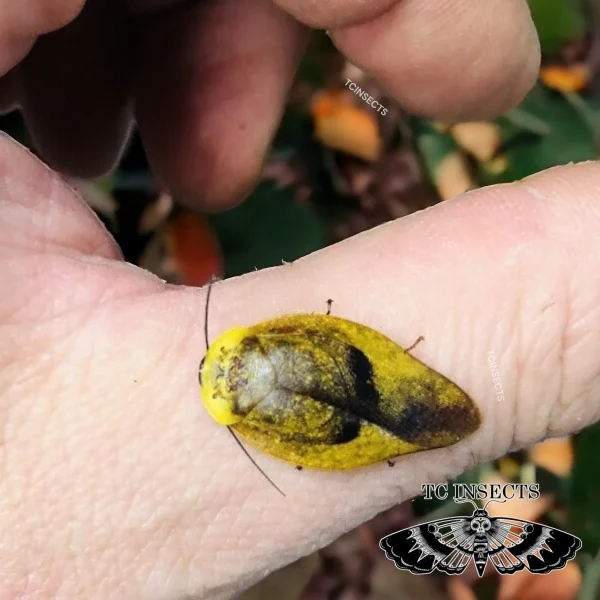
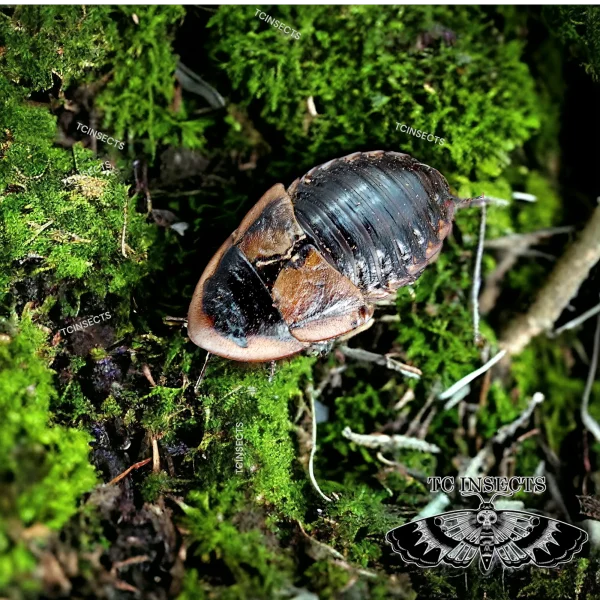
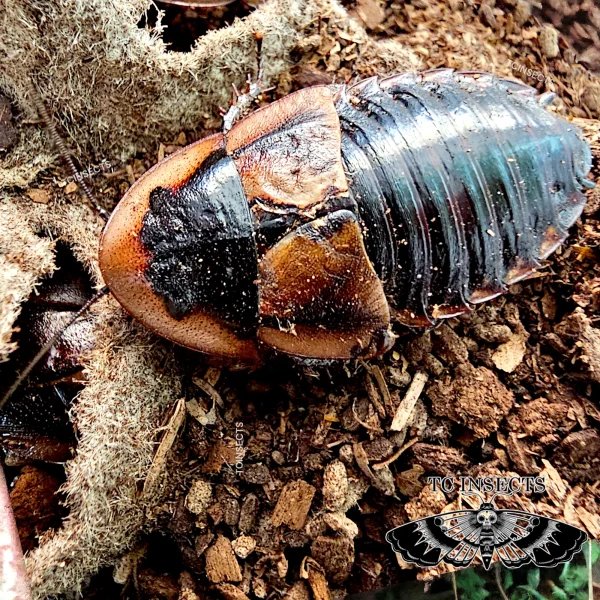
species’ classic look: a glossy black head, dark brown body, and a distinct yellow-orange spot on the pronotum. This is a collector display species, sold in small counts of 1 or 5 mixed nymphs.
Overview
This is a large blaberid roach reaching roughly 59 to 63 mm at maturity, with well-conditioned adults sometimes pushing larger. Both sexes have wings but neither flies, and no life stage can climb smooth surfaces, which
makes containment straightforward. Females give birth to live nymphs rather than laying egg cases. The species is calm and slow-moving, which fits the display purpose. Care is forgiving with one firm requirement: keep
substrate consistently moist.
A Different Genus from Eublaberus
If you already keep one of our Eublaberus species (Ivory, Headlamp, or Orange Head), it helps to know that Blaberus is a related but separate genus. Both are blaberid roaches and share traits like non-climbing, non-
flying, and live-bearing reproduction. The genera differ in proportions and pronotum structure, and they have one important practical difference, covered in the hybridization note below.
Honest Note on the “Peruvian Black-Head” Common Name
The species was first described in 1868 from material that included Colombia, but the captive hobby got its early stock largely from Peru, which is why “Peruvian Black-Head” became the common name. This line traces
back to Colombia, so the locality marker is honest. Both names refer to Blaberus parabolicus. Some keepers report that the Colombia line shows traits closer to the original species description than older Peruvian captive
lines, which is part of why collectors specifically seek it out.
Honest Note on Hybridization
This is the important difference from the Eublaberus species in our catalog. Blaberus species can and do hybridize with each other in mixed enclosures, and the hobby has decades of muddied “fusca x giganteus” and
similar cross-bred lines as evidence. If you keep multiple Blaberus species, house them separately to preserve line purity. If you mix them, accept that the offspring will not be pure B. parabolicus or pure of any other
species. This concern does not apply to housing Blaberus alongside Eublaberus in separate enclosures.
Why Keep Peruvian Black-Head Roaches?
- Striking display species. The black-head, brown-body, yellow-orange spot pattern is one of the more visually distinctive larger blaberids.
- Large and substantial. Adults reach a real display size, comparable to other large Blaberus species.
- Calm and easy to contain. No climbing on smooth surfaces, no flight, and a slow-moving temperament.
- Colombia line authenticity. For collectors who care about line purity and provenance, this is the closer match to original descriptions.
- Bioactive composter. Like other blaberid roaches, they process leaf litter, organic debris, and fresh produce in a humid setup.
Care and Setup
Husbandry is forgiving except for moisture, which matters more here than for some drier-loving species.
Temperature
70 to 85°F is the active range. They tolerate the lower end but reproduce better in the warmer half of the window. A heat mat on the side of the enclosure works well in a cool room.
Humidity and Substrate
Substrate should be kept moist, not waterlogged. A mix of coco fiber, peat, or potting soil works well, with one to two inches of depth. Adding leaf litter and sphagnum moss helps hold moisture and gives nymphs cover.
Habitat Structure
Add cork bark, hollow wood pieces, vertically slanted bark, or stacked egg flats for cover. Smooth-walled enclosures are fine since this species cannot climb. A 5 to 10 gallon tank suits a small starter group.
Food
They are not picky. Quality dry feed such as Supreme Feed Premium Roach Formula or Supreme Feed Dubia 5lb, plus fresh fruit and vegetables for moisture and variety. A little higher-protein food (dry dog food, beans) supports growing nymphs.
Hydration
Provide a real water source, not just occasional misting. Water crystals such as Hydro-Thirst Insect Water Crystals are the safest option, since open dishes drown nymphs. Soaked produce also works as a supplemental hydration source.
Ventilation
Use a vented or mesh lid. Good airflow is what allows you to keep substrate moist without growing mold. Stagnant humid air crashes a bin faster than dryness does.
Preventing Phorid Flies
Remove dead roaches promptly. Decaying bodies can attract phorid flies, which are small parasitic insects that can harm a roach colony. Routine bin cleanliness prevents this.
Breeding Notes
Like other blaberids, this species gives birth to live nymphs. Gestation runs roughly 2 to 4 months depending on temperature and feeding, and broods of 20 to 30 nymphs are typical. Nymphs take several months to reach
adulthood and several more before they molt into reproductive adults. Roach Crossing and similar hobby sources note that this species grows more slowly than some other large Blaberus, so plan accordingly if breeding is
the goal. A starter group of 5 mixed nymphs develops into a small breeding cluster over many months under good conditions.
Best For
- Collectors building a Blaberus lineup who want the Colombia line specifically
- Display keepers who want a large, striking, non-climbing species
- Hobbyists who already keep Eublaberus and want a different genus in the collection
- Bioactive terrarium keepers wanting a moisture-loving composter
- Patient collectors comfortable with a slower-growing species
Not Best For
- Volume reptile feeding, where Dubia and Orange Heads are far more efficient
- Keepers planning to house multiple Blaberus species in one enclosure
- Dry setups, since this species needs consistent moisture
- Customers in jurisdictions that restrict non-native cockroach species; check local rules
- Anyone planning to release roaches outdoors under any circumstances
Origin and Locality Notes
Blaberus parabolicus has a wide native range across northern South America, with populations recorded in Colombia, Suriname, Brazil, Peru, Ecuador, and Bolivia. This particular line is sourced from Colombia, hence the
“Colombia” suffix. The species was formally described by Walker in 1868 and has been kept in the captive hobby for decades under the common name “Peruvian Black-Head Roach,” reflecting the dominant early-import
locality rather than the full natural range.
Receiving and Acclimation
Your order ships with ventilation and bedding suited to transit. On arrival, open the package in a clean, contained area and transfer the nymphs into a prepared enclosure with damp substrate, leaf litter, hides, and a safe
hydration source. Give them a day to settle and burrow before disturbing them, since they are calmer once they have hidden in moist substrate. As with every live insect we sell, do not release them into the wild.
Recommended Add-Ons
- Hydro-Thirst Insect Water Crystals for safe, spill-proof hydration in a moist enclosure.
- Supreme Feed Premium Roach Formula for a quality dry diet that supports growth in a slower-developing species.
- Blaberus cf. peruvianus “Peruvian Cave Roach” for collectors building a multi-species Blaberus lineup in separate enclosures.
- Byrsotria fumigata “Cuban Burrowing Roach” for a different burrowing display species.
- Eublaberus distanti “Ivory” for collectors adding a non-hybridizing species from a different genus.
Frequently Asked Questions
Why is it called “Peruvian Black-Head” if this line is from Colombia?
The hobby common name dates to early captive imports from Peru, which set the name “Peruvian Black-Head Roach” before this Colombia line was established. The species itself ranges across Colombia, Peru, and several neighboring countries, so both names are accurate. Some collectors prefer the Colombia line for its closer match to the original 1868 description.
How does this differ from other Blaberus species?
The distinct black head, dark brown body, and yellow-orange pronotum spot set it apart visually. Compared with the larger Blaberus giganteus or B. cf. peruvianus, this species is smaller-bodied but more striking in color contrast. It also grows more slowly than some other large Blaberus.
Can I house this with Ivory or Orange Heads?
You can house it in the same room or on the same shelf, but not in the same enclosure. Blaberus species can hybridize, and while Ivory and Orange Head are Eublaberus (a different genus that does not hybridize with Blaberus), mixing any roach species in one bin creates feeding, hide, and behavior issues. Keep each species in its own enclosure.
Why are the count options only 1 or 5 nymphs?
This is a collector species, not a bulk feeder. Most buyers want a single specimen or a small starter group to build a colony from. 1 suits a single display or proof-of-life addition; 5 is a sensible starter group for a small breeding setup.
What is the yellow-orange spot on the back?
That is a natural pronotum marking, the shield-like plate behind the head. The contrast between the black head, the yellow-orange spot, and the dark brown body is part of why this species is sought as a display roach.
How fast do they grow?
Slowly compared with feeder roaches. Nymphs take several months to mature, and full adult size may take longer than with Dubia or Orange Heads. This is a collector species kept for years, not a quick colony to feed off.
Learn More About Blaberus parabolicus
These references give keepers background on the species behind the “Peruvian Black-Head” name and on broader cockroach biology.
-
Cockroach Species File: Blaberus parabolicus Walker, 1868. The authoritative taxonomic record for the species, including its full synonymy and distribution. Useful for collectors who want to confirm the species identity.
-
iNaturalist: Peruvian Black-Head Roach (Blaberus parabolicus). A community-sourced species page with verified observation photos from across the native range. Helpful for confirming wild appearance against captive stock.
-
Amateur Entomologists’ Society: Blattodea (Cockroaches). An overview of cockroach order biology, including the live-bearing reproductive strategy shared by all blaberid roaches like B. parabolicus.

Reviews
There are no reviews yet.