

Miami Polymorphic Roaches for Sale
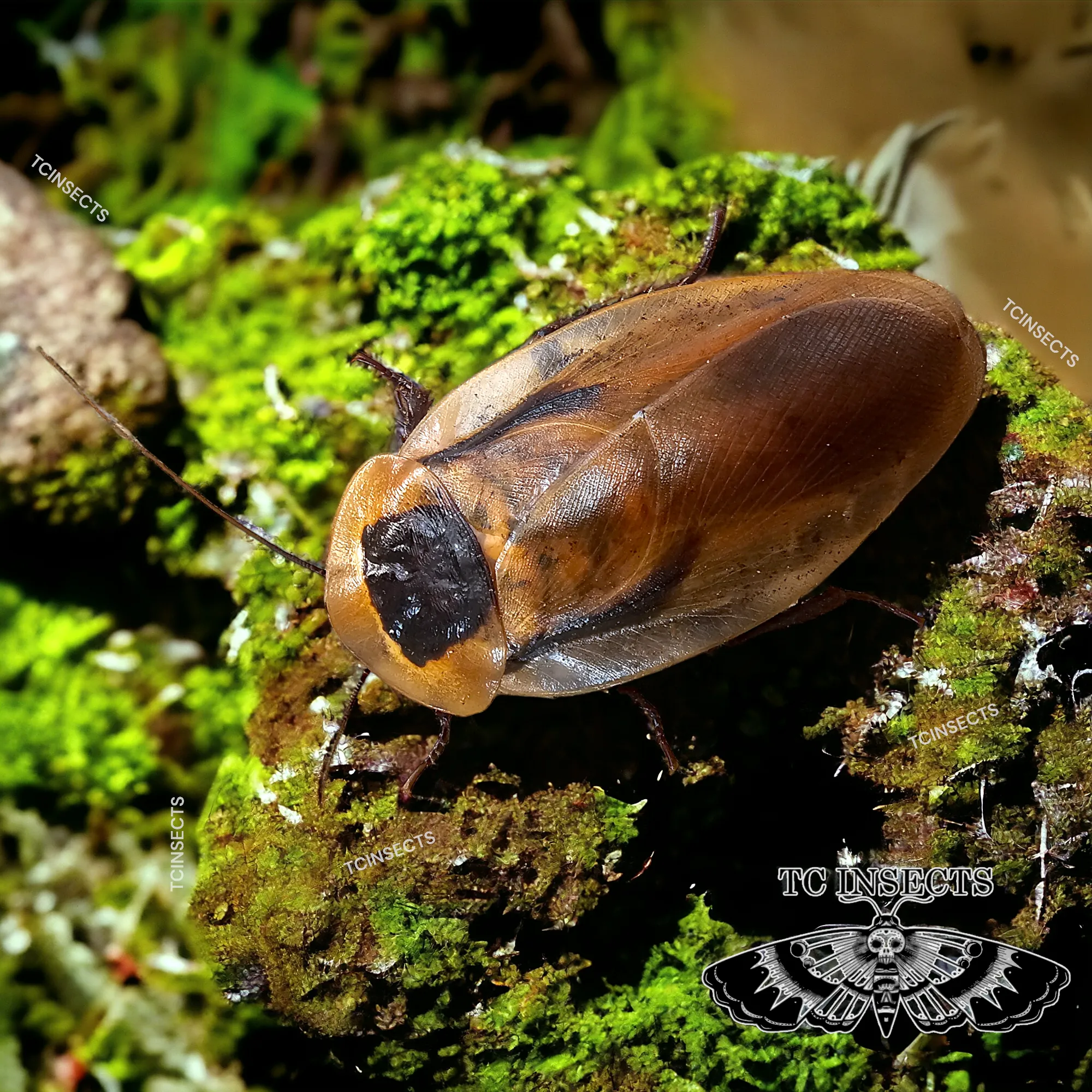
The Miami Polymorphic Roach is the hobby trade name for Blaberus atropos “Florida,” a collector line of this Neotropical species established from a small group of individuals collected under a piece of wood in Florida
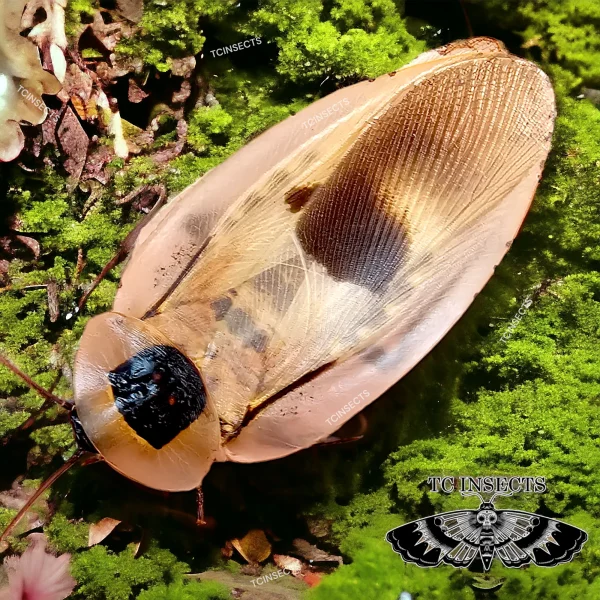
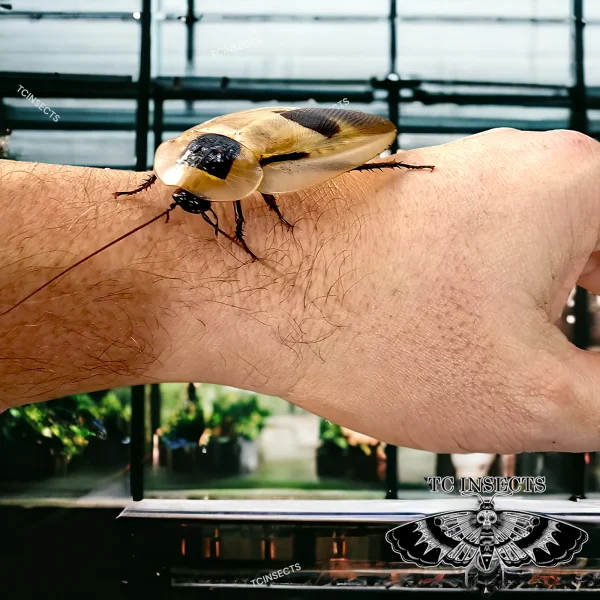
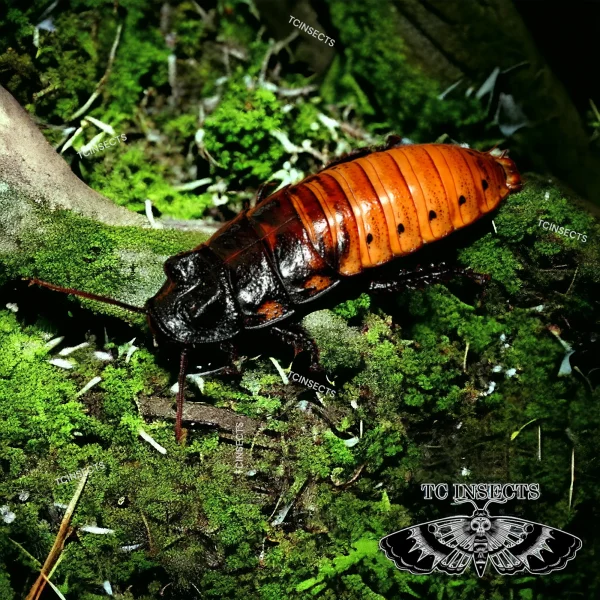
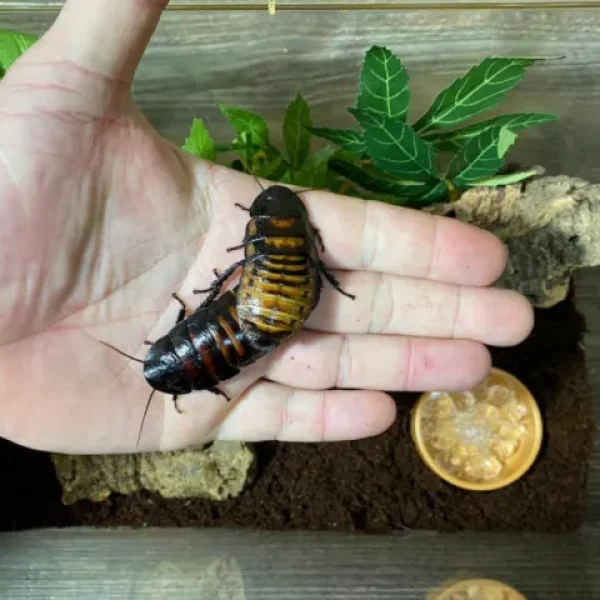
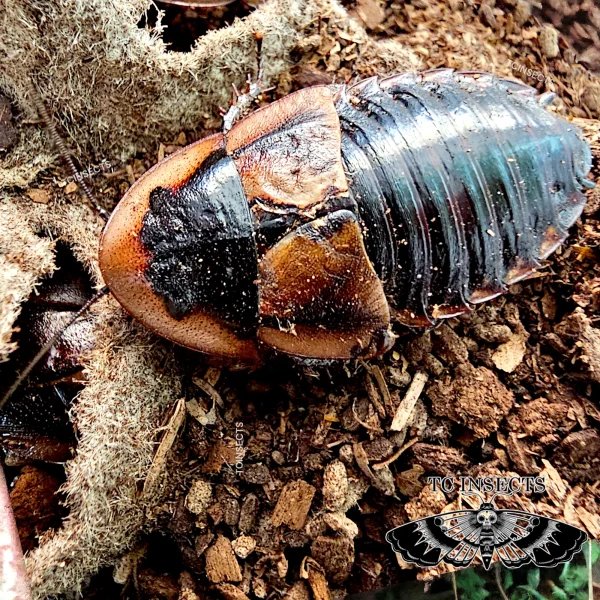
. The reason collectors seek it out is right in the name: the line is polymorphic, meaning siblings from the same founder stock display variable pronotum patterns rather than one uniform look. Adults reach roughly 50 to 54
mm, cannot climb smooth surfaces, and cannot fly. This is a pure collector species, sold in small counts of 1 or 5 mixed nymphs.
Overview
This is a moderately large blaberid roach in the same broad genus as our Peruvian Black-Head and other Blaberus species. Like its relatives, it has wings as an adult but does not fly, gives birth to live nymphs rather than
laying egg cases, and cannot climb smooth surfaces. The live page compares it to the Discoid Roach (Blaberus discoidalis), and that comparison is fair for general body shape, but the polymorphic pronotum patterns are
what set this line apart visually.
Honest Note on the “Florida” Locality vs Species Native Range
This is the most important clarification on the page. The “Florida” in the product name is the collection locality of this captive line, not the species’ native range. Blaberus atropos is a Neotropical cockroach originally native
to Trinidad, Tobago, Guyana, and surrounding parts of northern South America. The species has established feral populations in subtropical Florida, where the climate suits it, and this hobby line traces to founders
collected from that feral US population. It is not a US-native cockroach.
That history matters in two ways. First, it explains why the Florida locality marker is meaningful to collectors, since wild-collected founder stock is a known origin point. Second, it makes the do-not-release rule especially
important for this species: B. atropos has demonstrably been able to establish outside its native range, so containment is non-negotiable.
Honest Note on the Polymorphism
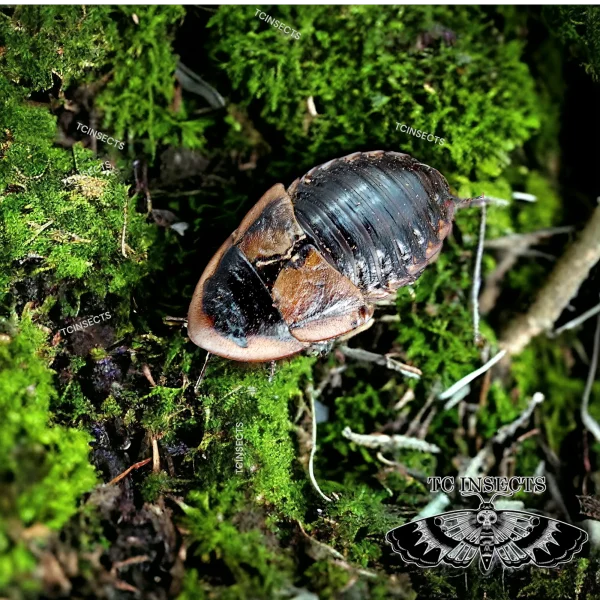
“Polymorphic” here means that individuals from the same line show different pronotum patterns. You will not get one uniform look across siblings; instead, expect a mix of markings within a single order. That variation is
the appeal. If you specifically want uniform-looking adults, this is not the line for you. If you enjoy pattern variation across a small breeding group, the polymorphism is the central reason to buy this species over more
uniform Blaberus lines.
Honest Note on Hybridization
This concern is genuinely sharper for B. atropos than for many other Blaberus. The species is also recorded under the older synonym Blaberus fusca, and the hobby has decades of muddied “fusca x giganteus” cross-bred
lines as evidence of how easily Blaberus species can hybridize in mixed enclosures. If you keep more than one Blaberus species, house them separately. Mixing them produces hybrid offspring that will not be pure of any
species, and that has already cost the hobby line purity in several cases. Housing alongside our Eublaberus species is fine in separate enclosures, since those are a different genus and do not hybridize with Blaberus.
Why Keep Miami Polymorphic Roaches?
- Pattern variability across siblings. The defining trait of this line and the reason it stands out from uniform Blaberus stocks.
- Founder-line provenance. Collectors who care about origin can trace this line to documented Florida-collected stock.
- Calm and easy to contain. Non-climbing, non-flying, slow-moving, and tolerant of a wide temperature and humidity range.
- Forgiving husbandry. The live page lists wide-range tolerance for humidity, substrate, and food, which makes this a manageable collector species.
- Bioactive composter. Processes leaf litter, organic debris, and produce alongside its main diet.
Care and Setup
Husbandry is forgiving overall, with the usual blaberid requirements: warmth, ventilation, and a real water source.
Temperature
70 to 85°F is the active range. They tolerate the lower end but reproduce better in the warmer half of the window. A heat mat on the side of the enclosure works well in a cool room.
Humidity and Substrate
This species tolerates a wider humidity range than the moisture-loving Headlamp Roach, but slightly moist substrate produces the best results. A mix of coco fiber, peat, or potting soil works well, kept slightly damp but not waterlogged. Sphagnum moss and leaf litter help hold moisture and provide cover.
Habitat Structure
Add cork bark, hollow wood pieces, or stacked egg flats for cover and hides. Smooth-walled enclosures are fine since this species cannot climb. A 5 to 10 gallon tank suits a small starter group.
Food
They are omnivorous and not picky. Quality dry feed such as Supreme Feed Premium Roach Formula or Supreme Feed Dubia, plus fresh fruits and vegetables for variety. A little higher-protein food supports growing nymphs.
Hydration
Use water crystals such as Hydro-Thirst Insect Water Crystals rather than open water dishes, which drown nymphs. Misting alone is not enough for a long-term setup.
Ventilation
Use a vented or mesh lid. Steady airflow keeps the bin healthy and lets you maintain slight substrate moisture without growing mold.
Breeding Notes
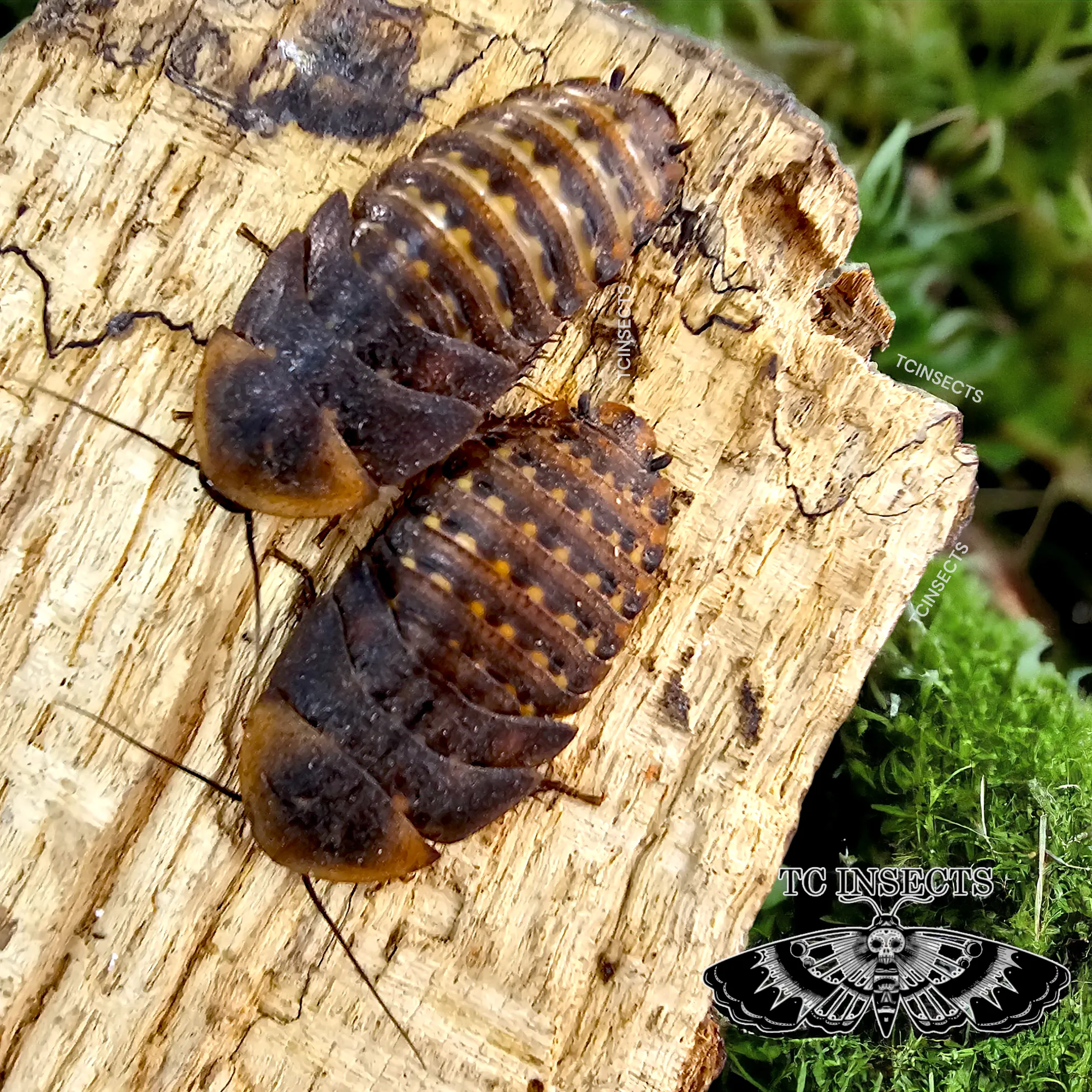
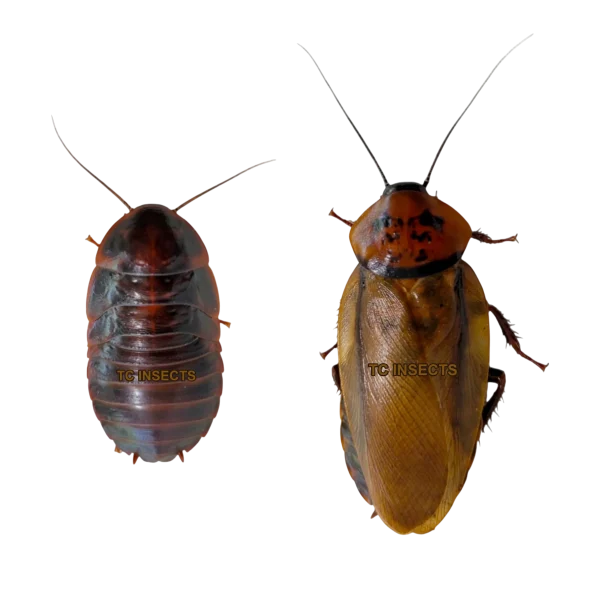
Like other blaberid roaches, this species is ovoviviparous, meaning females retain the ootheca internally and give birth to live nymphs. Litters of 30 to 40 nymphs are typical. Sexual dimorphism is present: males have
larger, more ornate wings, while females have shorter, plainer wings. Nymphs take roughly 6 to 9 months to reach adulthood under good conditions, and adults can live up to about 2 years. Newborn nymphs are pale white
and darken as they molt, gradually developing the variable pronotum patterns this line is known for.
Best For
- Collectors building a Blaberus lineup who want pattern variability in a single line
- Display keepers who enjoy seeing individual variation across siblings
- Hobbyists interested in the documented founder-line story of this hobby stock
- Keepers who already maintain Eublaberus and want a different genus in the collection
- Forgiving-husbandry buyers who do not want to fine-tune humidity and temperature
Not Best For
- Keepers planning to house multiple Blaberus species in one enclosure
- Volume reptile feeding, where Dubia and Orange Heads are far more efficient
- Buyers who specifically want uniform-looking adults, since the line is variable by design
- Customers in jurisdictions that restrict non-native cockroach species; check local rules
- Anyone planning to release roaches outdoors under any circumstances, especially given this species’ demonstrated ability to establish in subtropical US conditions
Origin and Locality Notes
Blaberus atropos was formally described by Stoll in 1813 and is native to Trinidad, Tobago, Guyana, and surrounding parts of northern South America. The species also appears under the older synonym Blaberus fusca in
some hobby references, which matters because that name shows up in the genealogy of historical hobby hybrids. The “Florida” line specifically traces to a small group of wild-collected individuals taken from a feral
population in Florida, where the species has established outside its native range. It is not a US-native cockroach.
Receiving and Acclimation
Your order ships with ventilation and bedding suited to transit. On arrival, open the package in a clean, contained area and transfer the nymphs into a prepared enclosure with slightly moist substrate, leaf litter, hides, and
a safe hydration source. Give them a day to settle before disturbing them. As with every live insect we sell, do not release them into the wild. This applies with extra force to this species, which has shown the ability to
establish outside its native range when introduced to suitable climates.
Recommended Add-Ons
- Hydro-Thirst Insect Water Crystals for safe, spill-proof hydration in a small collector enclosure.
- Supreme Feed Premium Roach Formula for a quality dry diet that supports growth and pattern development.
- Blaberus parabolicus “Colombia” for collectors building a multi-species Blaberus lineup in separate enclosures.
- Blaberus sp. “Honduras Cave Roach” for another locality-marked Blaberus in a separate enclosure.
- Eublaberus distanti “Ivory” for collectors adding a non-hybridizing species from a different genus.
Frequently Asked Questions
What does “polymorphic” mean in practice?
Individuals from this line show different pronotum patterns even when they share parents. Buy 5 nymphs and the resulting adults are likely to show several distinct markings rather than one uniform look. That variation is what collectors are paying for.
Why is it called “Florida” if the species isn’t native to Florida?
“Florida” is the locality where this captive line was founded, from a feral population that established outside the species’ native Neotropical range. The species itself is from Trinidad, Tobago, Guyana, and surrounding areas. The locality marker is honest about where the captive stock comes from, not about where the species evolved.
How does this compare to the Blaberus parabolicus “Colombia” line?
Different species in the same genus. B. parabolicus “Colombia” is the Peruvian Black-Head, valued for the black-head and yellow-orange pronotum spot, with the Colombia line considered closer to the original 1868 description. This B. atropos “Florida” line is valued for pattern variability across siblings. Both are large display species; both should be housed separately to avoid hybridization.
Can I house this with other Blaberus species?
No, not in the same enclosure. Blaberus species hybridize, and B. atropos (older name B. fusca) is one of the species historically behind muddied “fusca x giganteus” hobby lines. Keep each Blaberus species in its own bin. Housing alongside Eublaberus species in separate enclosures is fine.
Why are the count options only 1 or 5 nymphs?
This is a collector species, not a bulk feeder. Most buyers want a single specimen or a small starter group. 1 suits a display addition; 5 is a sensible starter group for a small breeding setup with enough variation to enjoy the polymorphism.
How is this different from the Discoid Roach?
The general body shape is similar, which is why our short description notes that comparison. The defining difference is the pronotum pattern variability in this line. Blaberus discoidalis shows a more uniform look across individuals; this B. atropos “Florida” line does not, by design.
Learn More About Blaberus atropos
These references give keepers background on the species, its taxonomic history, and broader cockroach biology.
- Cockroach Species File: Blaberus atropos (Stoll, 1813). The authoritative taxonomic record, including the synonymy with Blaberus fusca that matters for understanding historic hobby hybrid lines.
- iNaturalist: Atropos Roach (Blaberus atropos). A community-sourced species page with verified observation photos showing wild appearance and range. Helpful for confirming the captive line against documented wild stock.
- Wikipedia: Blaberus (genus profile). Genus-level background, including the live-bearing reproductive strategy and the husbandry baseline (above 60% relative humidity, warm conditions for reproduction) that B. atropos shares with its relatives.

Reviews
There are no reviews yet.