



Big Black Beetle Mimic Roaches for Sale
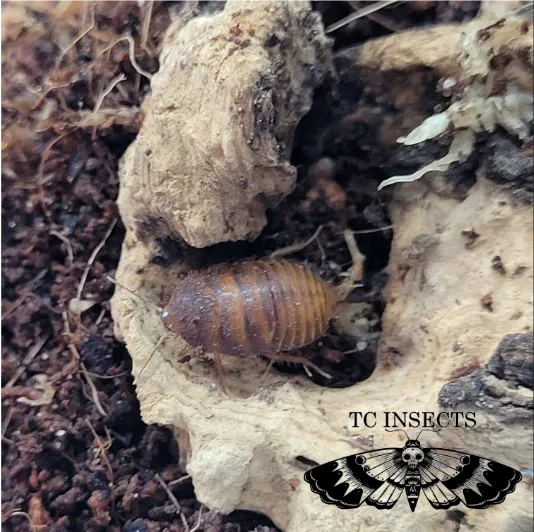
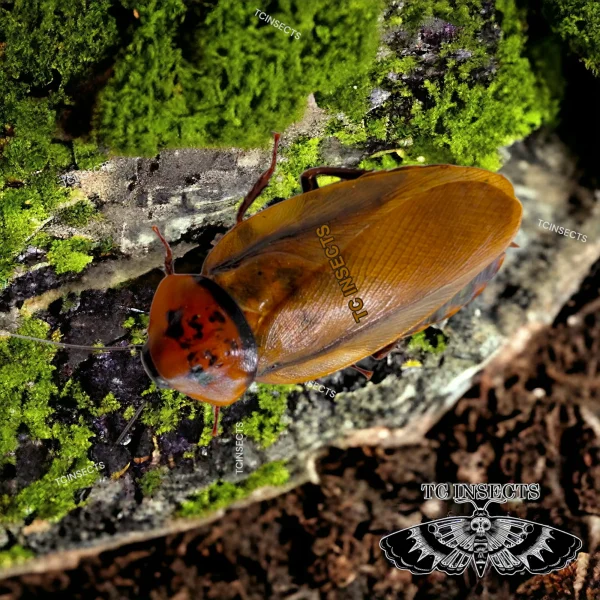
The Big Black Beetle Mimic Roach (sold in the hobby as Ergaula pilosa) is a Southeast Asian cockroach that evolved to look like a large black beetle. The velvety black body, distinctive beetle-like shape, and documented
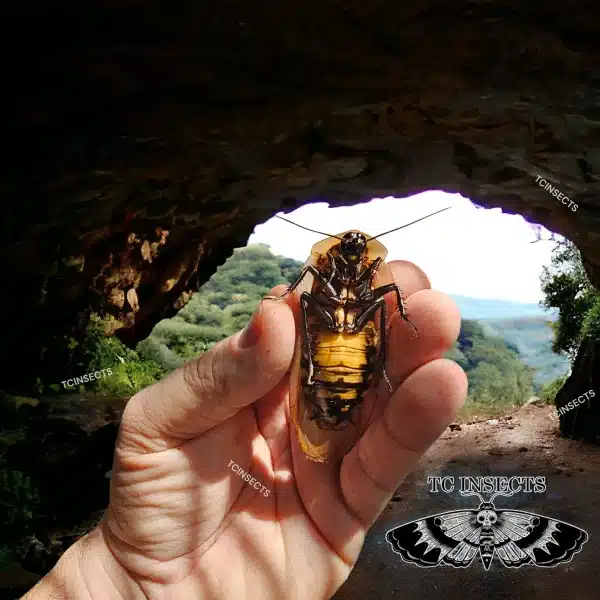
“strange, twitchy movements” all work together to fool vertebrate predators that have learned to avoid hard-shelled, chemically defended beetles. Adults reach 35 to 37 mm — a substantial roach by any measure, and the
second member of family Corydiidae (the sand roach family) in our catalog after our much smaller Compsodes schwarzi. Native to the Southeast Asian region (Cambodia, Thailand, Vietnam), this species offers display
keepers a uniquely shaped roach with documented protein density for larger reptile feeding. Sold to display keepers and feeder users in counts of 1 or 12 mixed nymphs.
Overview
Big Black Beetle Mimic Roaches are cockroaches in family Corydiidae, the sand roach family. The genus Ergaula includes about ten described species across Africa and Southeast Asia, with the hobby line we sell
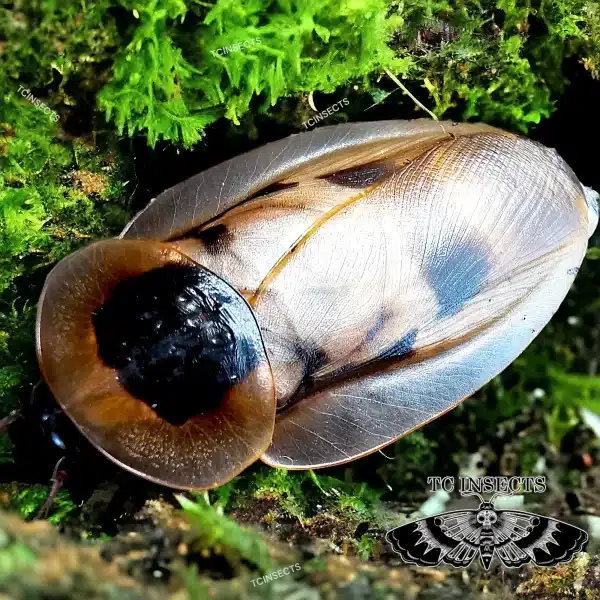
originating from the Southeast Asian region. Adults of both sexes are velvety black, with males having longer flatter wings and a more streamlined body, while females are bulkier and rounder with shorter wings. Females
lay oothecae (egg cases) and bury them in substrate where they take several months to hatch. The species is more humidity-demanding than most exotic roaches and requires a specific vertical humidity gradient (wet
below, drier above) to thrive — the one care detail buyers most need to get right.
Honest Note: The Beetle Mimicry Is Real Evolutionary Biology
This species’ common name isn’t marketing — it reflects genuine documented evolutionary biology. Here’s what’s going on in plain English:
- Hard-shelled beetles are well-defended. Many large black beetles (like darkling beetles and ground beetles) have tough exoskeletons, chemical defenses (foul-tasting compounds), or both. Vertebrate predators — birds, lizards, small mammals — learn to avoid them.
- Soft-bodied roaches are vulnerable. A typical roach has a soft body, no chemical defense, and is just protein on legs from a predator’s view.
- The mimicry is the workaround. By looking like a chemically-defended beetle (black, hard-looking, similar body shape) AND moving in beetle-like twitchy patterns rather than fluid roach movements, the Big Black Beetle Mimic Roach exploits predator learning. Predators that have learned to avoid defensive beetles also avoid this roach by mistake.
- The disguise isn’t perfect, but it’s good enough. Up close, an experienced predator could tell the difference. From a distance and at typical attack speed, the mimicry works often enough to provide real survival advantage.
For keepers, this means the species looks dramatically different from the typical roach silhouette — it really does pass for a black beetle at a glance, which is why the common name has stuck across multiple breeders.
Honest Note: The Species Identification Is Actually Uncertain
This is worth knowing about even though it doesn’t affect care. The species sold across the hobby as Ergaula pilosa may not actually be the true *E. pilosa*. Documented field research by Martin (The Wild Martin) tracking down the wild source of hobby stock found the captive line is more likely *Ergaula cf. silphoides*, a species whose documented natural range is restricted to Cambodia and Thailand per the Cockroach Species File.
What this means in plain English:
- The genus is definitely Ergaula. No question about that. The body shape, behavior, and biology all match.
- The species ID has not been formally resolved. The “pilosa” name is the hobby designation; the actual species is probably something else in the same genus.
- This puts the species in cf. territory. The “compare with” designation that we use on our Blaberus cf. peruvianus, Paraplecta cf. minutissima, and Nocticola sp. products would technically apply here too.
- For practical keeping, none of this matters. Care, biology, and feeding behavior are well-documented for the hobby line regardless of which formal species name turns out to be correct.
We list the species under its established hobby name Ergaula pilosa for search consistency with other breeders, but buyers should know the formal ID isn’t settled.
Honest Note: It’s from Southeast Asia, Not Africa
Some older hobby sources (including text on our own page) state this species is native to Africa. That appears to be incorrect:
- The genus Ergaula does include some African species. So the African attribution wasn’t completely made up — there are *Ergaula* in Africa.
- But this captive hobby line is Southeast Asian. Per documented field research (The Wild Martin’s collection work) and the Cockroach Species File entries, the captive line traces to Cambodia and Thailand specifically, not Africa.
- The Southeast Asian natural habitat is humid tropical forest. This explains the species’ high humidity requirements — they’re rainforest floor specialists, not African-savanna roaches.
The correction matters for husbandry: setting up the enclosure for Southeast Asian rainforest conditions (high humidity, moist substrate, leaf litter, warm temperatures) gives much better results than setting up for African savanna conditions (drier, more variable).
Honest Note: The Vertical Humidity Gradient
This is the one care detail that meaningfully separates this species from the rest of our catalog. Most exotic roaches do well with consistently moist or consistently dry substrate. Big Black Beetle Mimic Roaches want a VERTICAL gradient: wet at the bottom of the substrate, drier near the top. In plain English:
- Why they need it: In the wild, they live on the forest floor where leaf litter and decaying material on top stays drier while the deeper soil below stays consistently damp. Females lay eggs in the deeper damp layer; adults perch in the drier upper layer.
- How to do it: Provide 2 to 3 inches of substrate (coco fiber, peat moss, or organic potting soil). Pull back the top inch and pour or mist water on the lower layers, then put the top inch back. The bottom stays wet; the top stays drier. Repeat as needed (typically every few days to a week, depending on enclosure ventilation).
- What goes wrong without it: If you keep the whole substrate uniformly wet, the adults can’t dry off after molting and may not develop proper wings. If you keep the whole substrate uniformly dry, the eggs don’t hatch.
- Alternative approach: Some keepers report success with uniformly humid substrate plus excellent ventilation. This works because the air movement keeps the upper layer drier than the lower layer naturally. If you go this route, make sure ventilation is generous.
How It Compares to Our Compsodes schwarzi
Both species are in family Corydiidae but at dramatically different scales:
- Size: Ergaula 35-37 mm (substantial roach); Compsodes 5-6 mm (micro-feeder).
- Color: Ergaula velvety black; Compsodes yellowish-brown.
- Native range: Ergaula Southeast Asia; Compsodes US (Arizona to Florida) and Central America.
- Use case: Ergaula primarily display with feeder option; Compsodes primarily micro-feeder.
- Body shape: Ergaula beetle-mimic (rounded, hard-looking); Compsodes slender upright hooded form.
- Wild lifestyle: Ergaula tropical rainforest floor; Compsodes inside trapjaw ant nests.
- Humidity needs: Ergaula high with vertical gradient; Compsodes moderate, drier-tolerant.
- Reproduction: Both lay oothecae (egg cases), unlike most other catalog roaches that give live birth.
For Corydiidae collectors, keeping both species in separate enclosures gives the full family-level diversity picture. Same family, completely different ecological role, completely different size.
Why Keep Big Black Beetle Mimic Roaches?
- They genuinely look like beetles. The mimicry is a real visual hook for display keepers and educational setups.
- The twitchy movements are unusual. Most roaches move in fluid scurrying patterns; this species’ beetle-mimicking movements stand out.
- Protein-dense feeder option. The 35-37 mm adult body makes them substantial protein meals for larger reptiles, monitors, large lizards, and large amphibians.
- Family-level collection diversity. Adds Corydiidae representation to a collection at a more substantial size than the Compsodes.
- Sexual dimorphism is photogenic. Long-winged males vs bulky-bodied short-winged females give two different visual forms in the same colony.
- Established hobby line with documented care. Despite the species ID uncertainty, the husbandry protocols are well-documented.
Care and Setup
Husbandry is straightforward once you understand the vertical humidity gradient requirement.
Enclosure
A gallon-sized container is good for a starter culture; upgrade to a larger bin as the colony grows. Use a tight-fitting lid since adult males can climb and (rarely) fly. A 5 to 10 gallon container handles a productive colony.
Temperature
75°F and warmer is best, with 78 to 82°F driving the best breeding rate. They tolerate the 70 to 85°F range but slow down at the cooler end. They breed and grow faster at warmer temperatures.
Humidity and Substrate
This is the key care detail. Provide 2 to 3 inches of substrate (coco fiber, potting soil, or peat moss). Avoid sand — it can harm the roaches. Maintain the vertical gradient: keep the lower substrate damp and the upper layer drier. Mist or pour water on the lower layer by pulling back the top inch first.
Habitat Structure
Add a layer of decaying hardwood leaf litter on top of the substrate. This is important for nymphs’ diet and also provides the drier upper-layer microhabitat they prefer. Add branches or cork bark for adult males to perch on, especially after molting when they need to dry their wings.
Food
Primarily detritivores — they feed on decaying organic matter. A mix of leaf litter and high-protein food (dog food, cat food, chick feed, or fish feed) works well. They may not eat fruits or vegetables much, but you can offer occasional pieces as moisture sources. Supreme Feed Premium Roach Formula covers the dry food side; supplement with leaf litter for nymph development.
Hydration
The damp lower substrate provides most water. Hydro-Thirst Insect Water Crystals work as a spill-proof supplement source.
Breeding Notes
Females are oviparous (egg-laying) and bury their oothecae in substrate. Per documented hobby observations, each ootheca contains roughly 18 eggs and takes 3 to 4 months to hatch — much slower than the live-bearing
blaberids in our catalog. Nymphs take 6 to 8 months to mature into adults under good conditions, with temperature being the main factor. Adult females live around 9 months; males 2 to 4 months. The slow generation
time means starter colonies take longer to scale up than most other catalog species. Plan for at least 6 to 12 months before reaching productive feeder output.
Best For
- Display keepers drawn to the beetle mimicry and unusual movement patterns
- Larger reptile keepers wanting a protein-dense feeder option (35-37 mm adults)
- Roach collectors building Corydiidae family representation
- Hobbyists comfortable with the vertical humidity gradient husbandry requirement
- Educational keepers showing mimicry biology in invertebrate display setups
- Bioactive enthusiasts wanting a substantial Southeast Asian species in a moist setup
Not Best For
- First-time exotic roach buyers; the humidity gradient requirement and slow breeding aren’t beginner-friendly
- Keepers wanting fast colony scaling (3-4 month hatch + 6-8 month maturation means slow generation time)
- Setups that can’t maintain consistent high humidity
- Customers in jurisdictions that restrict non-native cockroach species; check local rules
- Anyone planning to release roaches outdoors under any circumstances
Origin and Locality Notes
The captive hobby line traces to Southeast Asia (Cambodia, Thailand, Vietnam region) per documented field research by The Wild Martin and Cockroach Species File entries. Despite being sold across the hobby under the
name Ergaula pilosa, documented research suggests the actual species is more likely Ergaula cf. silphoides, a Cambodia/Thailand specialist. Both possibilities place the species in family Corydiidae, subfamily Corydiinae,
alongside the desert sand roaches (Arenivaga) familiar to US hobbyists and our smaller Compsodes schwarzi “Micro Hooded Roach.” The genus Ergaula includes species across both Africa and Southeast Asia, which
explains why some older hobby sources incorrectly stated this captive line was African.
Receiving and Acclimation
Your order ships with ventilation and bedding suited to transit. On arrival, transfer the nymphs into a prepared enclosure with the vertical humidity gradient already established (damp lower substrate, drier upper layer, leaf litter on top). Give them a day or two to settle before disturbing them. As with every live insect we sell, do not release them into the wild.
Recommended Add-Ons
- Compsodes schwarzi “Micro Hooded Roach” for the natural pairing as the other Corydiidae species in our catalog. Keep both in separate enclosures for the full family-level comparison.
- Supreme Feed Premium Roach Formula for the dry food side of their detritivore diet, paired with leaf litter for nymph development.
- Hydro-Thirst Insect Water Crystals for safe spill-proof hydration as a supplement to the damp substrate.
- Live Springtails for bioactive cleanup in the moist substrate setup.
- Live Isopods for additional cleanup crew handling decaying organic matter.
Frequently Asked Questions
How does the beetle mimicry actually work?
The species evolved a body shape, color, and movement pattern that resembles hard-shelled, chemically defended black beetles (like darkling beetles). Vertebrate predators learn to avoid those defensive beetles, so they
avoid this roach by mistake. The mimicry isn’t perfect, but it provides enough survival advantage that the body and behavior have been selected for over evolutionary time.
I’ve seen this species listed as African on other sites. Which is correct?
The captive hobby line is Southeast Asian (Cambodia, Thailand, Vietnam region) per documented field research and Cockroach Species File entries. The genus Ergaula does include some African species, which probably
explains how the African attribution started, but the specific line in the hobby is Asian.
Is the species name Ergaula pilosa correct?
Honest answer: probably not. Documented field research by The Wild Martin tracking down the wild source suggests the hobby line is actually Ergaula cf. silphoides, a different species in the same genus. We list it under the established hobby name for search consistency, but buyers should know the formal ID isn’t settled.
What do they eat in the wild and in captivity?
In the wild they’re detritivores — they eat decaying plant material, leaf litter, dead insects, and forest floor organic matter. In captivity, replicate this with leaf litter on top of the substrate plus a high-protein dry food like our Supreme Feed Premium Roach Formula or fish flakes, cat food, or chick feed. They don’t eat much fresh fruit or vegetables.
Can I really feed these to my reptile?
Yes — the 35 to 37 mm adult body makes them substantial feeders for larger reptiles, monitors, large lizards, and large amphibians. They’re documented as protein-dense, which is appropriate for growing reptiles. The slower colony scaling means they’re not the most economical feeder, but they work well as occasional larger feeders alongside smaller staples.
How do I set up the vertical humidity gradient?
Provide 2 to 3 inches of substrate. To water it, pull back the top inch and pour or mist water onto the lower layers, then replace the top inch. The bottom stays damp; the top stays drier. Repeat every few days to a week depending on your enclosure’s ventilation. Avoid keeping the whole substrate uniformly wet (adults can’t dry their wings after molting) or uniformly dry (eggs won’t hatch).
Learn More About Ergaula pilosa
These references give keepers background on the genus, the family, and the documented research about the hobby line.
-
Wikipedia: Corydiidae (sand cockroach family). An overview of the family this species belongs to, including the desert sand roaches and the other Corydiidae genera relevant to hobby collectors.
-
Wikipedia: Corydiinae (sand cockroach subfamily). The subfamily including the genus Ergaula alongside the desert sand roach genus Arenivaga, useful for understanding the taxonomic relationship.
-
Wikipedia: Blattodea (cockroaches order). An overview of cockroach order biology including the various reproductive strategies (oviparous oothecae vs ovoviviparous live birth) that distinguish Corydiidae from the live-bearing Blaberidae roaches.


Reviews
There are no reviews yet.